7 Best Crypto Airdrops in 2026: And Exactly How to Qualify for Each

Here's something most airdrop guides won't say out loud: a huge chunk of the "free token" lists floating around right now are either months out of date, stuffed with junk projects, or worst case, straight-up scam bait. Not great.
So let's do this differently. Every project on this list either has a confirmed token launch, strong and credible signals from the actual team, or a points program you can still get into today. We've split confirmed drops from speculative ones, so you know exactly what you're walking into. And for each one, we've laid out the specific steps to max your odds of qualifying.
Whether you've never touched a crypto airdrop before or you've been farming since Uniswap dropped in 2020, this guide covers what's actually worth your time in 2026. And what to skip.
TL;DR: What you actually need to know
Crypto airdrops in 2026 are bigger than ever, but so is the work required to qualify for them. The days of joining a Telegram group and watching tokens land in your wallet are long gone.
Here's the short version:
Polymarket ($POLY) is the one everyone's watching, with potentially hundreds of millions in tokens at stake, and no snapshot date has been confirmed yet.
MetaMask ($MASK) has a live rewards system you can start earning through today.
Backpack Exchange ($BACK) has a confirmed TGE with Season 4 still active.
Base is speculative but carries serious upside if Coinbase pulls the trigger.
OpenSea ($SEA) is delayed but coming; long-term users stand to gain the most.
The rules are simple: use the platforms for real, protect your wallets, never share your seed phrase, and sort your taxes before you claim anything large. That's it. Everything else is in the guide below.
What is a Crypto airdrop
When a project launches its own token, it usually sets aside a chunk of that supply to hand out ”free” to existing users, early supporters, or community members. That's called an airdrop. Tokens dropped right into your wallet, no purchase required.
It's beneficial for a few good reasons:
• It rewards loyal users and spreads token ownership around
• It generates real buzz and community energy
• It bootstraps a base of actual token holders from day one, not just VC wallets
For users, it's genuinely one of the few ways to earn meaningful value in crypto without spending anything upfront, as long as you know which projects to position yourself in early.
The whole thing has evolved a lot. Early airdrops rewarded Twitter followers, and Telegram joins. In 2026, the worthwhile ones reward real on-chain activity: trading volume, liquidity, feature testing, sustained engagement over weeks or months. The bar is higher. So is the payout.
What are the 4 main types of Crypto airdrops
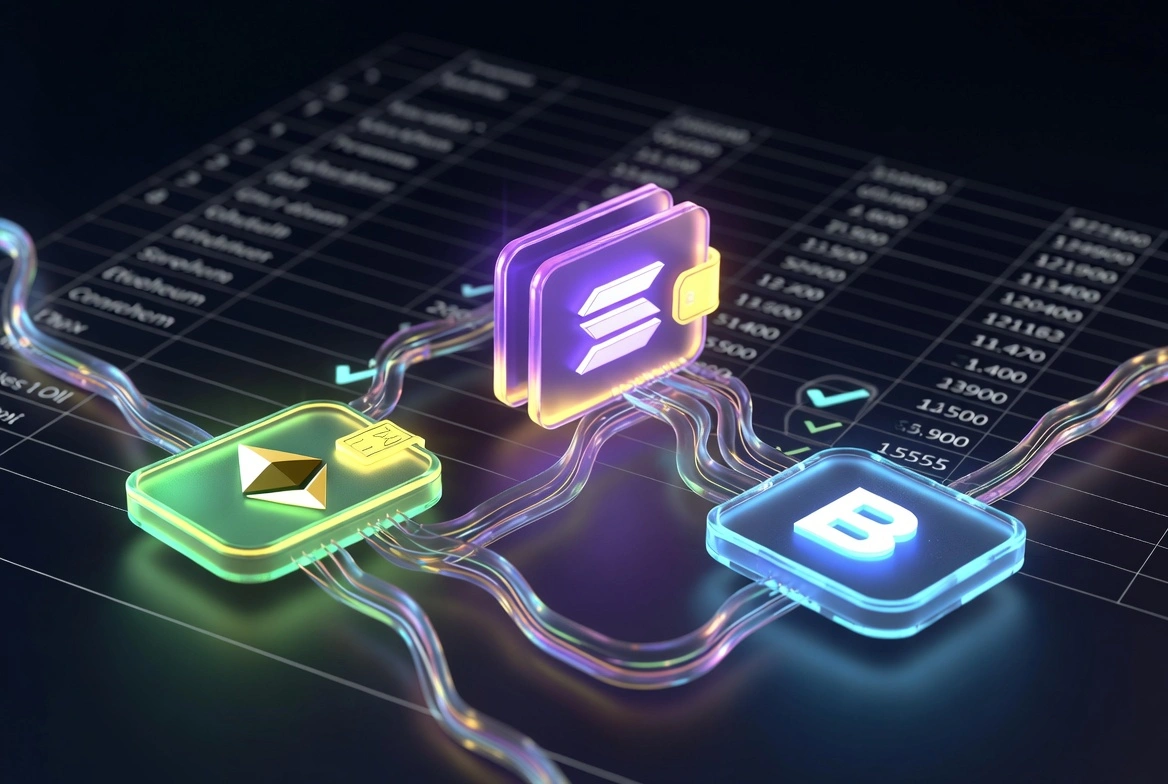
Knowing the type of drop changes your whole approach to positioning for it.
• Standard airdrops reward users for completing specific tasks such as trading, staking, bridging, and testing features. Most of the big 2026 drops fall here. More genuine activity usually means a larger allocation.
• Holder airdrops go to people holding a specific token at snapshot time. No tasks, no farming, just being in the right place with the right asset.
• Retroactive airdrops reward users who already used a protocol before any announcement. Uniswap's 2020 drop and Arbitrum's 2023 drop both worked this way. If your wallet had prior transactions, you qualified; no farming needed.
• Points-based airdrops are the dominant model right now. Projects run a points program for weeks or months, tracking your activity, volume, and engagement, then convert those points to token allocations at launch. Backpack Exchange is running exactly this model today.
For a full breakdown of historical airdrop values, CoinGecko's research on the 50 biggest crypto airdrops of all time puts the numbers in perspective.
Before you start: How to spot an airdrop scam
Don't skip this section. Crypto airdrop scams drain millions every year, and they're getting sharper.
Red flag 1: They ask for your seed phrase. No real airdrop ever needs your wallet's seed phrase or private key. Not ever. If something asks for this website, DM, or doesn't matter, close it immediately. That's a wallet drainer.
Red flag 2: Fake urgency from random accounts. Scammers clone legitimate project accounts on X and blast countdown timers claiming you have 24 hours to claim thousands of dollars. Real projects are announced through verified, checkmarked channels. Always verify the source before you click anything.
Red flag 3: Unknown sites asking for wallet connection. Before connecting your wallet to any site, cross-check the URL against the project's main site or verified socials. Use a burner wallet, a separate address you set up specifically for risky interactions, any time you're not 100% sure.
Red flag 4: "You've been selected" DMs. Legitimate projects don't cold-message users about winning airdrops. These are phishing attempts, full stop.
A couple of tools worth bookmarking: Wallet Guard simulates transactions before you sign anything, and it shows you exactly what will happen to your wallet. Revoke. Cash lets you pull permissions from sites you've previously connected to.
Quick comparison: The 7 best Crypto airdrops in 2026
Project | Token | Status | Est. Value | Still Farmable? |
Backpack Exchange | $BACK | Confirmed — TGE March 2026 | Medium–High | Yes — Season 4 active |
Polymarket | $POLY | Confirmed, date TBC | Potentially very high | Yes — active trading |
MetaMask | $MASK | Confirmed, date TBC | High | Yes — rewards points live |
Base (Coinbase L2) | TBC | Exploring, unconfirmed | Potentially very high | Yes — use the ecosystem |
OpenSea | $SEA | Confirmed, delayed | High | TGE delayed from March 30 |
Arbitrum | $ARB | completed | Est. $3K–$10K avg | N/A — learn from it |
Hyperliquid | $HYPE | completed | Est. $2.6B distributed | N/A — learn from it |
The 7 best Crypto airdrops in 2026
1. Backpack Exchange ($BACK)
Backpack is a full ecosystem built on Solana.
Three products under one roof: the Backpack Wallet (self-custody, multi-chain), Backpack Exchange (a regulated CEX with a VARA license out of Dubai, operating in 150+ countries), and Mad Lads, a blue-chip NFT collection on Solana.
The company has pulled in $37 million from backers including centralized Capital, Placeholder VC, and Delphi Digital.
In January 2025, they acquired FTX EU for $32.7 million.
Why it matters:
The TGE plan was officially posted on February 9, of 2,026. 25% of the tokens go to the community. That's 24% to points holders, 1% to Mad Lads holders, Clear structure, no ambiguity.
How to qualify:
Points are calculated weekly on Fridays based on spot and perpetual futures trading volume.
Season 4 is currently active.
Consistent high-volume trading compounds faster than one-off large trades, think regular activity, not occasional bursts.
Important caveat: Backpack actively monitors for wash trading and bans multi-account activity. Only trade genuinely. That's not just ethical advice, it's the only strategy that actually works here.
2. Polymarket ($POLY)
Polymarket is a decentralized prediction market on Polygon.
Users buy and sell shares on real-world outcomes, elections, sports, economics, and crypto.
It became genuinely mainstream when it called the 2024 U.S. presidential election with eerie accuracy.
Polymarket has passed $20 billion in total trading volume.
The platform is valued at roughly $9 billion after a $2 billion investment from the Intercontinental Exchange, the parent company of the NYSE.
$POLY has been confirmed.
A trademark was filed for the ticker in February 2026.
Why it matters for you:
This is widely considered the single largest potential airdrop of 2026; estimates hover around $750 million in value based on that $9B valuation. And as of March 2026, no snapshot date has been officially announced. The window may still be open.
How to qualify:
Spread your trading across multiple market categories: elections, sports, crypto, and economics.
Real users naturally jump between topics; bots tend to concentrate on a single area. That pattern gets noticed.
Create your own markets if the platform allows it. A longer trading history will almost certainly carry more weight than anything you start today, so start today.
3. MetaMask ($MASK)
MetaMask is the most widely used Ethereum wallet on the planet, with 30 million active users.
If you've ever done anything in DeFi or with NFTs, you've almost certainly used it.
It's the default on-ramp into Web3 for mass signaling. ConsenSys CEO Joseph Lubin told The Block that the MASK token is coming "sooner than you would expect."
The official MetaMask X account also posted what appears to be a token teaser, no specific date as of March 2026.
Why it matters:
Thirty million users plus a confirmed token. That math creates one of the most anticipated drops in years. The rewards points system is already live; that's your clearest signal about how allocations will work.
How to qualify:
Earn points through swaps, bridge transactions, and ecosystem interactions via the MetaMask wallet.
With a user base this large, the allocations will almost certainly skew heavily toward long-term users with real transaction volume, not people who swapped once last week because they heard about the airdrop.
4. Base (Coinbase's Layer 2)
Base is Coinbase's Layer 2 blockchain, which offers faster, cheaper transactions on top of Ethereum.
Coinbase is a publicly traded company. That matters for what comes next.
Brian Armstrong has confirmed the company is exploring a token.
Why it matters:
JPMorgan has estimated a $12–34 billion market cap if a token launches. That's a wide range, but even the low end would make Base one of the biggest token launches in crypto history. This is speculative, no confirmed launch, but the signals are credible enough to pay attention to.
How to qualify:
Use Base extensively and genuinely.
Bridge assets to Base, swap regularly using MetaMask, and interact with Base-native protocols regularly.
There, our wallet shows across Base's ecosystem, the better positioned you'll be if a retroactive snapshot happens.
Keep activity varied, the Arbitrum and Optimism drops made clear that multi-dimensional usage gets rewarded more than single-protocol farming.
5. OpenSea ($SEA)
OpenSea is the original NFT marketplace.
Over $35 billion in total trading volume since 2017.
It's pivoting now from a pure NFT platform to a "trade everything" marketplace covering tokens, memecoins, and digital-culture assets.
Ambitious and worth watching.
OpenSea had a March 30, 2026, TGE planned with a 50% community allocation for $SEA, the largest ever proposed by any NFT marketplace.
CEO Devin Finzer pushed the launch, citing challenging market conditions.
No new date confirmed as of this writing.
Why it matters:
When it launches, this will be one of the biggest community allocations of 2026. Users with multi-year trading histories will almost certainly see the largest claims, potentially hundreds to thousands of dollars.
How to qualify:
Historical OpenSea usage carries serious weight here.
OpenSea has been explicit about supporting long-term community members. Complete any remaining OpenSea Voyages XP tasks. Keep interacting with NFTs through the platform.
Watch the OpenSea Foundation's official X account closely for the new TGE date. It'll move fast when it's announced.
6. Arbitrum ($ARB)
Arbitrum's March 2023 airdrop was one of the largest in crypto history at that point. Plenty of wallets received tokens worth thousands, some significantly more.
Arbitrum rewarded wallets that genuinely used the network.
Bridge to Arbitrum, use apps on it, provide liquidity, all of that builds your score. The formula rewarded depth of usage, not just presence.
The lesson:
Users who bridged funds, swapped multiple tokens, provided liquidity, and spread that activity over several months were meaningfully rewarded. A single transaction barely counted. This model has since become the template for nearly every major airdrop.
7. Hyperliquid ($HYPE)
Hyperchain's HYPE drop in November 2024 has been called the most generative factor in crypto history by dollar value.
31% of the supply went to users, an unusually high percentage.
Total value distributed: estimated $2.6 billion.
Hyperliquid rewarded consistent, high-volume traders on its perpetual futures DEX.
Not a "do one thing and qualify" model, sustained engagement tracked over months.
The users who were active well before any airdrop was hinted at received the largest allocations.
The lesson:
The best allocations go to early, genuine users, not last-minute farmers who showed up the week it was announced. If you're reading this guide, the time to start engaging with current candidates is right now. Not when the announcement drops.
How CyberYozh gives airdrop hunters a serious edge
Your digital footprint matters as much as your on-chain activity. Projects like Polymarket, Backpack, and OpenSea aren't just tracking what your wallet does; they're tracking behavioral patterns, IP addresses, device fingerprints, and geographic data. Run multiple wallets from the same IP, and you'll likely get flagged as a Sybil attacker, even if every single one of those wallets is genuinely yours.
This is where CyberYozh comes in. CyberYozh is a privacy and security toolkit built specifically for users who need clean, isolated identities across wallets, sessions, and ecosystems. For airdrop hunters managing multiple positions across different chains and protocols, the operational layer is what keeps your work separate and your accounts safe.
What CyberYozh does for airdrop farmers
Clean IP separation per wallet. Every wallet you operate can use a distinct, clean residential proxy through CyberYozh's network, no shared IPs, no pattern correlation. CyberYozh solves this with its built-in IP Fraud Score tool, which vets every IP across 50+ security databases before it ever enters rotation. If you're farming Backpack Season 4 and positioning on Base simultaneously, those activities look like they're coming from entirely separate users.
Browser fingerprint isolation. Most people don't realize that platforms can identify you through browser fingerprints, even if you switch IPs, canvas data, WebGL, screen resolution, timezone, and installed fonts. CyberYozh's seamless integration with anti-detect browsers such as Multilogin, AdsPower, and Dolphin Anty generates a unique fingerprint per session, ensuring each wallet has a genuinely distinct digital presence.
Geographic flexibility for restricted airdrops. Several major airdrops, including some on this list, have blocked US-based participants due to regulatory reasons. CyberYozh's residential and mobile proxy network spans multiple jurisdictions, allowing you to access platforms from eligible geographic locations. Legitimately, cleanly, without raising flags.
Automated activity management. Maintaining genuine-looking engagement across Polymarket markets, Backpack trading sessions, and MetaMask interactions simultaneously is a logistical challenge. CyberYozh's automation tools let you schedule and rotate activity across profiles, keeping the behavioral cadence consistent without burning out.
SOCKS5, HTTP, HTTPS, and UDP protocol support for compatibility across every device and platform.
99.9% uptime with automatic IP failover, so your connection never drops mid-session.
24/7 customer support in 7 languages
Most affordable in the market, with unlimited-traffic mobile proxies starting at just $1.70/day, and static residential proxies start at $5.29/month.
The Real Cost of Not Using It
Think about the math for a second. Hyperliquid distributed $2.6 billion across its user base. Polymarket is estimated to distribute hundreds of millions. Arbitrum's average claim was worth thousands of dollars for active users. A Sybil ban, triggered by running two wallets from the same household IP, can wipe out multiple positions simultaneously.
CyberYozh isn't about gaming the system. It's about ensuring that legitimate activity across multiple ecosystems doesn't get collapsed into a single flagged identity by overzealous detection algorithms. If you're taking airdrop farming seriously in 2026, your operational security needs to match the sophistication of the projects you're farming.
You can explore CyberYozh's tools and pricing; they offer setups scaled for individual hunters and larger operations alike.
How to manage multiple airdrops at once: A practical system
If you are positioning for more than two or three of these simultaneously, organization becomes as important as the activity itself.
Use separate wallets for separate ecosystems. A dedicated EVM wallet, MetaMask or Rabby, for Ethereum-based protocols, and a separate Solana wallet (Phantom or Backpack) for Solana-based ones.
Keep a basic spreadsheet that tracks which protocols you've hit, when, and which tasks are still open.
DeBank or Zapper will give you a live view of your on-chain history across multiple chains and wallets. Worth setting up early.
Never run everything through the same wallet. If one address gets flagged for Sybil activity, keeping wallets separate protects your other positions.
Crypto airdrop tax: What you need to know
In most jurisdictions, airdrop tokens received are treated as taxable income at the time you receive them, valued at the fair market price. The IRS has confirmed this in its official virtual currency FAQ; airdropped tokens are taxable at fair market value the moment you gain control of them.
So if you receive tokens worth $2,000 at drop time, you may owe income tax on $2,000, even if the token crashes to near-zero two weeks later. And if you eventually sell at a gain from your receipt price, that gain may trigger capital gains tax on top of that.
Tools like Koinly, CoinTracker, or TokenTax can import your wallet transaction history automatically and spit out tax reports. Given the values potentially involved in 2026 drops, getting a brief consult with a crypto-savvy tax professional before claiming anything large is genuinely worth the time.
Conclusion
The airdrop landscape in 2026 is both more exciting and more demanding than it's ever been. The potential values are enormous; Polymarket alone could distribute hundreds of millions of dollars in tokens. The era of clicking a Telegram button and receiving free money is firmly over, though.
The projects worth your attention now reward sustained, genuine engagement. That's actually a good development; it means the people who put in real time and real interaction are the ones who get rewarded, not bots and last-minute farmers.
Start with the projects that genuinely interest you. Use them. Interact consistently. Protect your wallets. And never share your seed phrase with anyone, for any reason, ever.