
10 Best Data Marketplaces in 2026: Ranked for Every Use Case

For a growing category of data use cases, a traditional marketplace is the wrong tool entirely.
Pre-packaged datasets, the kind you buy from Snowflake Marketplace or AWS Data Exchange, are snapshots. They reflect what someone else collected, on their schedule, with their definition of "complete." For competitive intelligence, price tracking, SERP monitoring, and ecommerce data, that lag is a real operational problem. Prices change hourly. Rankings shift daily. A dataset refreshed last Thursday isn't useful today.
This guide covers two categories honestly: the best traditional data marketplaces for licensed, structured, and financial data, and the best web data collection infrastructure for organizations that need data to be fresh, customizable, and collected on their schedule. Understanding which category fits your use case is the most important decision in this guide.
TL;DR: Quick answers
What is a data marketplace? A platform where organizations buy, sell, or access datasets from third-party providers. This includes cloud-integrated marketplaces (Snowflake, AWS, Databricks) and web-based data collection platforms that enable users to collect live data directly.
Two fundamentally different models exist:
Buy pre-packaged data: Fast access to structured datasets, ideal for licensed financial, demographic, and research data. Tradeoff: someone else decides what's in it and when it's updated.
Collect your own web data: Real-time, fully customizable collection through proxy infrastructure. Ideal for competitive data, pricing, and SEO monitoring. Tradeoff: requires a scraping setup.
Which is right for you? If you need licensed data, regulated data, or research statistics, buy from a marketplace. If you need fresh, real-time web data at scale, collection infrastructure wins on accuracy and cost.
The two data models compared
Buy from a Marketplace | Collect with Infrastructure | |
Data freshness | Provider-dependent (days to weeks) | Real-time |
Customization | Limited to available datasets | Full control |
Best for | Financial, research, licensed data | Pricing, SEO, e-commerce, web data |
Cost at volume | High (per record) | Low (per GB of proxy) |
Technical barrier | Low | Moderate |
Example | Snowflake Marketplace | CyberYozh |
1. CyberYozh
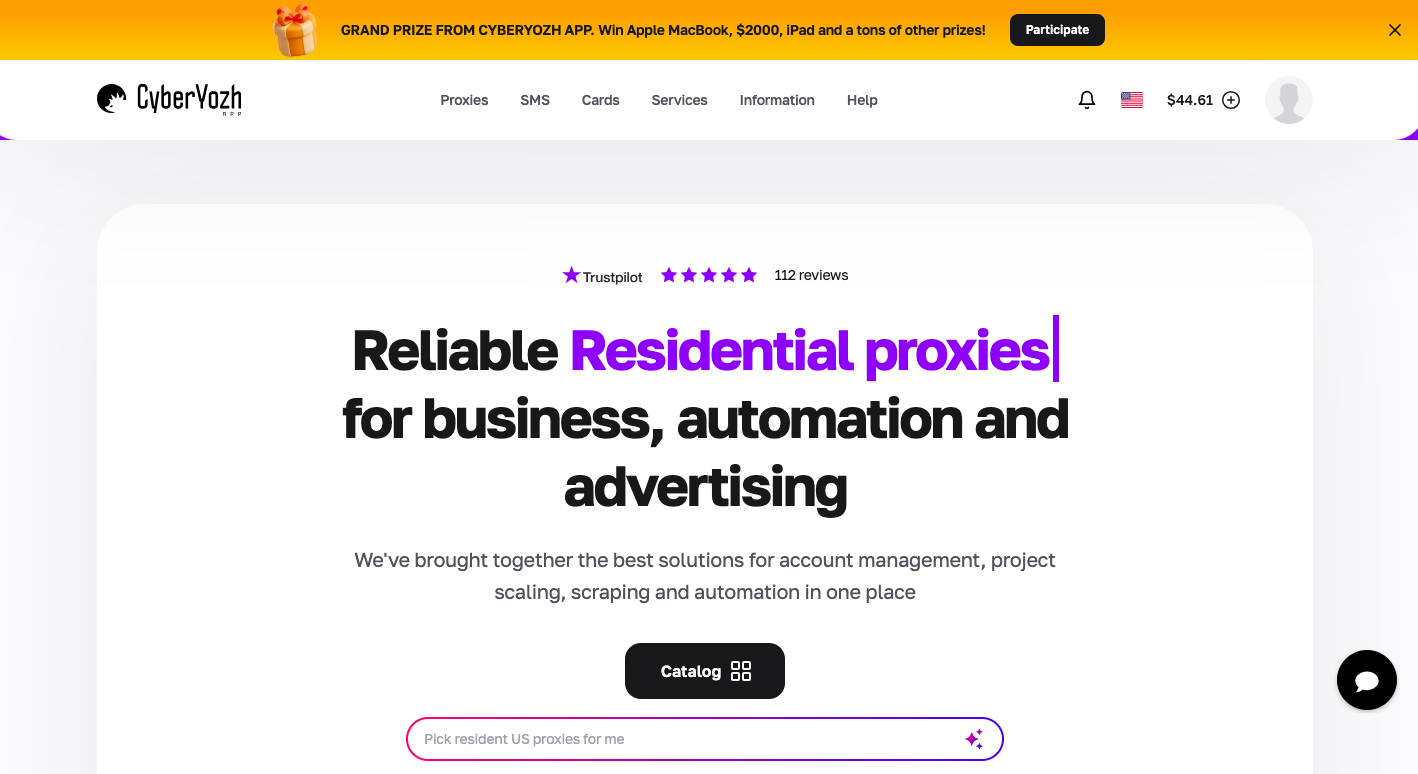
If you've ever paid $2,000/month for a dataset subscription and then discovered the data was two weeks old when you needed yesterday's competitor prices, you already understand why web data collection infrastructure exists.
CyberYozh doesn't sell you a dataset.
It gives you the infrastructure to collect exactly the data you need, at the moment you need it, formatted the way your systems expect.
The infrastructure is built around a 100M+ IP pool spanning data centers, residential proxies, and 4G/5G mobile proxies across 100+ countries.
The scale matters because it enables CyberYozh to access geo-restricted content that smaller proxy networks block, maintain session continuity across complex scraping workflows, and rotate IPs cleanly enough to sustain long-running collection jobs without accumulating bans.
What makes it operationally distinctive versus buying from a marketplace:
Competitor price monitoring: Marketplace datasets update weekly at best. With CyberYozh's infrastructure, you pull prices in real-time, the actual number your competitor is showing right now, not last Tuesday
SERP rank tracking: Search rankings are too dynamic for periodic datasets. Direct collection gives you the actual SERP, from the actual location, at the actual moment.
E-commerce product data: Inventory availability, pricing tiers, and product listings change continuously. Fresh collection catches what a static dataset misses.
Social media data: Public-facing social content, follower counts, and trending data change by the hour
Lead generation: Business directory data ages fast; fresh scraping keeps contact lists current
CyberYozh's dashboard is designed for teams that aren't proxy experts. IP rotation, session management, and the built-in fraud score checker (which validates an IP's reputation before deployment) reduce the operational complexity considerably.
24/7 support system.
On Trustpilot, CyberYozh's reviews cluster around two consistent themes: uptime that holds under production loads, and support that treats urgent issues as actually urgent. Neither quality appears in provider marketing materials, which is precisely why CyberYozh shows up repeatedly in unprompted customer feedback.

Best for: Any organization that needs data to be accurate today, competitive intelligence, price monitoring, SEO tracking, ecommerce analysis, market research, and ad verification. Sign up for free.
Pricing: budget-friendly plans start at $1.9/month.
Verdict: For real-time, customizable web data, CyberYozh's collection infrastructure is more cost-effective per data point than any dataset subscription at serious volume. If you're already paying for fresh web data via a weekly-updating marketplace, the math on switching is worth running.
2. Snowflake marketplace
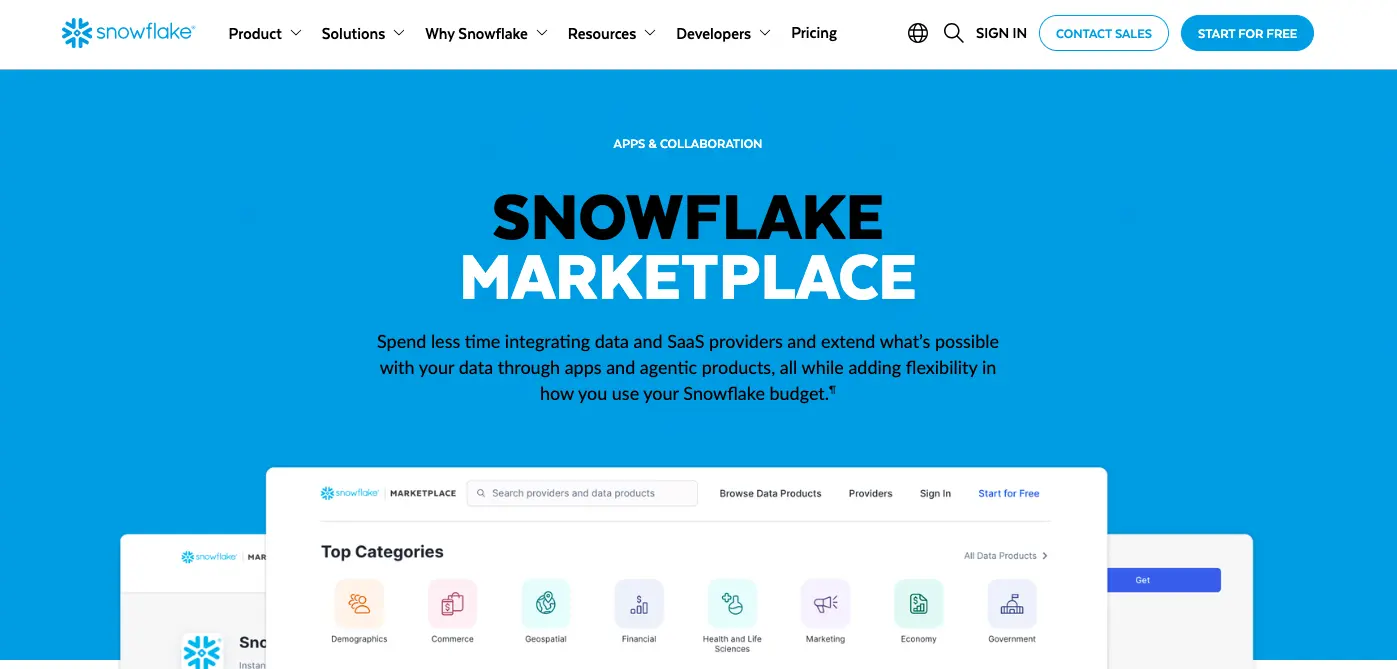
Snowflake Marketplace hosts 1,700+ datasets from 360+ providers, accessible as zero-copy, ready-to-query data within Snowflake's cloud environment. No ETL pipeline required, data is instantly queryable using Snowflake credits the moment you subscribe.
The quality and variety of datasets are good: financial market data, weather data, demographic datasets, healthcare statistics, and industry-specific enrichment data span the catalog.
The limitation is ecosystem lock-in. Snowflake Marketplace is only valuable if you're already on Snowflake. And consumption-based credit pricing ($2–4/credit) can spike unexpectedly under heavy query loads, a cost-management issue that organizations moving from traditional warehouses often underestimate.
Datasets: 1,700+ from 360+ providers
Pricing: Data free in many cases; compute via Snowflake credits ($2–4/credit)
Best for: Enterprises already on Snowflake needing curated third-party data enrichment
3. AWS data exchange
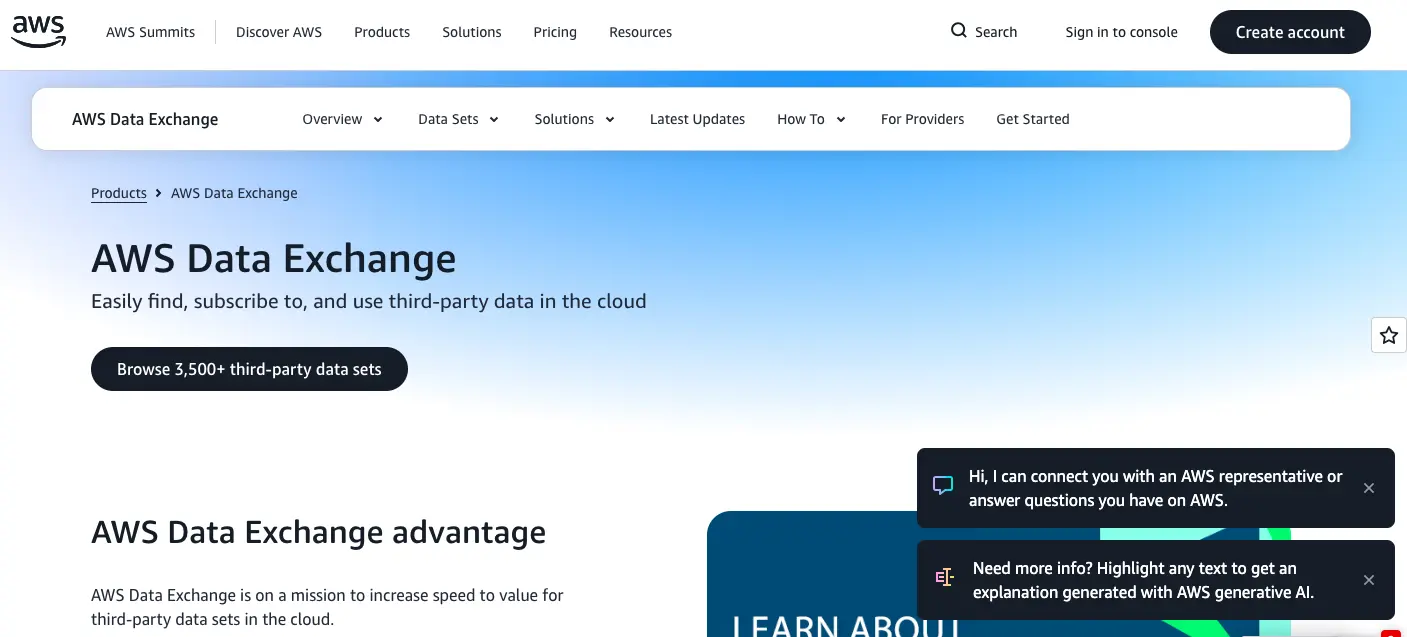
AWS Data Exchange offers a selection of raw datasets from any marketplace, with thousands of datasets from hundreds of providers across virtually every industry. Integration with S3, Athena, Redshift, and the broader AWS ecosystem means data is accessible throughout your AWS infrastructure without separate accounts or billing.
The tradeoff for that breadth is lower curation. Data quality varies significantly across providers; AWS applies less vetting than platforms such as DataZN or Databricks Marketplace. Buyers need to spend more time evaluating provider reputation and dataset freshness before committing.
Best for: AWS-native teams wanting maximum selection breadth
Pricing: Provider-set; pay-per-query for most datasets
Limitation: Much less valuable outside the AWS ecosystem
4. Databricks marketplace
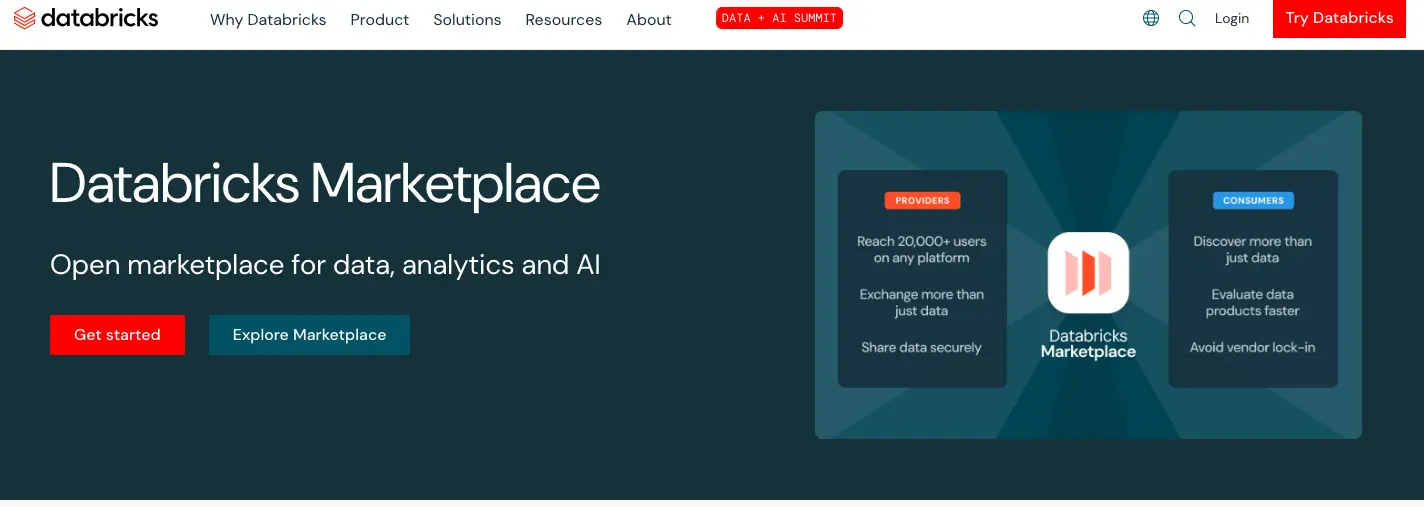
The Databricks Marketplace uniquely combines dataset access with live ML models and collaborative notebooks in a single platform, built on Delta Sharing for governed, real-time data access.
For data engineering teams running Databricks workflows, the integration value is significant, as datasets connect directly to lakehouse pipelines without copying or moving data. Governance and lineage tracking are built in, which matters for regulated industries.
Limitation: The platform is purpose-built for Databricks users. Outside that ecosystem, its advantages largely disappear.
Pricing: Pay-as-you-go via Databricks Units (DBUs)
Best for: ML-driven data teams already on the Databricks Lakehouse Platform
5. Datarade
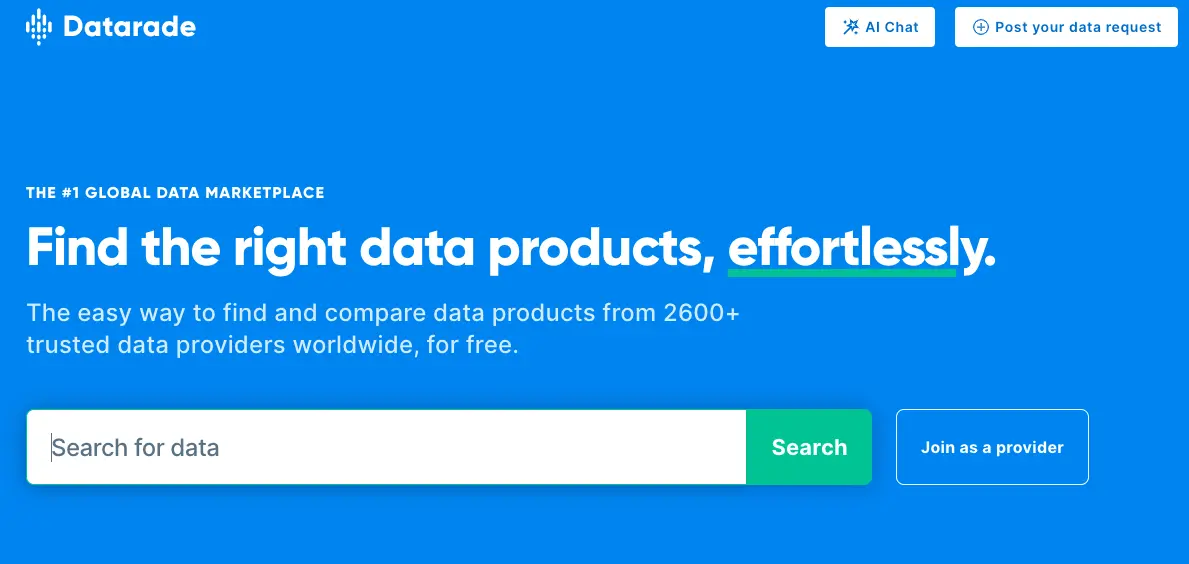
Datarade acts as a neutral broker, aggregating offerings from 3,000+ datasets across 30+ categories, allowing buyers to compare providers and negotiate pricing directly. It's free to browse and request; providers set their own pricing.
For small and mid-size businesses that need to source data without committing to a cloud platform, Datarade's broker model removes a significant barrier.
Limitation: The tradeoff is that data quality is entirely provider-dependent, and there's no integrated compute for analysis.
Best for: SMBs sourcing data without platform lock-in
Pricing: Free to use; provider-negotiated on purchase
6. Bright Data datasets
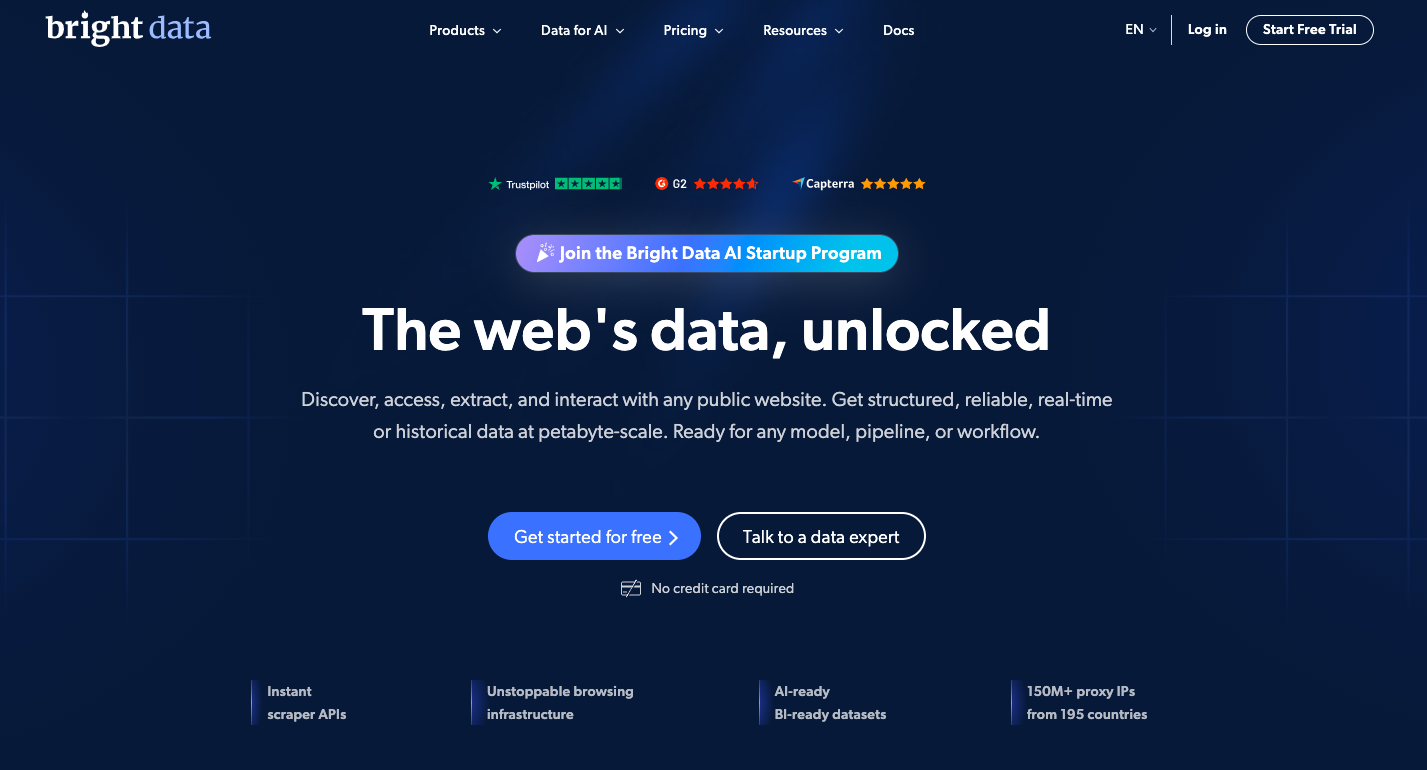
Bright Data collects and sells structured datasets from 250+ domains, including ecommerce, social media, LinkedIn, real estate, and financial categories, with a near-real-time collection cadence and compliance documentation that holds up in regulated environments.
For organizations that want structured web data without managing their own scraping infrastructure, Bright Data's dataset products offer high-quality, professionally governed data.
The limitation is cost: from $250/100K records, large-scale data needs become expensive quickly compared to collecting the same data through your own proxy infrastructure.
From: $250/100K records
Best for: B2B organizations needing high-quality pre-built web datasets with compliance documentation
7. Statista
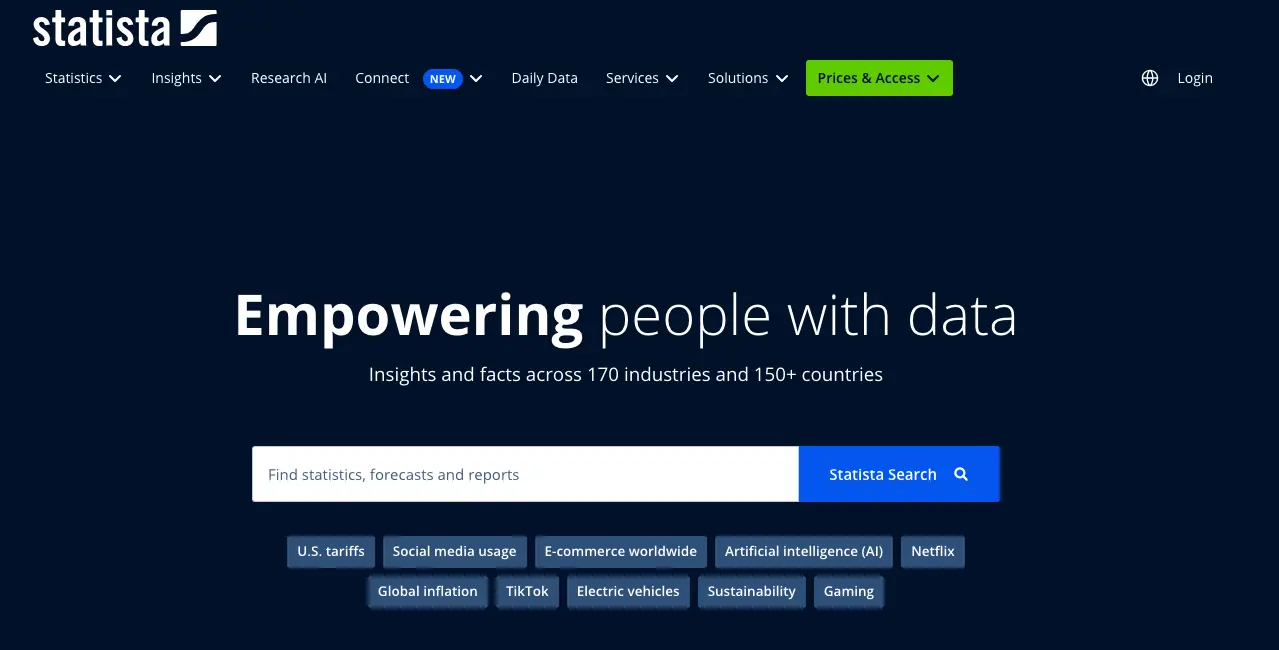
Statista's 1M+ statistics span 170+ industries, covering market sizing, consumer behavior, technology adoption, and competitive benchmarking. The data is presented in publication-ready formats with source citation and trend modeling.
This isn't operational data, it's research data. Statista works well for market sizing, investor presentations, and content marketing.
Limitation: It's the wrong tool for real-time competitive intelligence or data that feeds automated systems.
From: $149/month individual; $950/month enterprise
Best for: Research, consulting, marketing strategy
8. S&P Global Market Intelligence

S&P Global delivers institutional-grade financial analytics: private equity data, credit analysis, ESG metrics, and market intelligence used by banks, investment firms, and governments globally. The depth of historical financial records and the reliability of the data sourcing justify the enterprise pricing for the right use case.
Limitation: Outside financial and investment contexts, S&P Global is irrelevant. Inside those contexts, it's a trusted data source.
Pricing: Enterprise contract only
Best for: Investment analysis, credit risk, ESG compliance
9. Experian

Experian operates as a commercial data marketplace for consumer credit information, identity verification, and marketing audience segmentation—strong reputation in regulated industries; deep coverage for financial services and direct marketing use cases.
Compliance overhead is significant; regulated consumer data categories require legal review before deployment.
Not relevant for web data, ecommerce, or competitive intelligence use cases.
Pricing: Enterprise contract only
10. Google Dataset Search
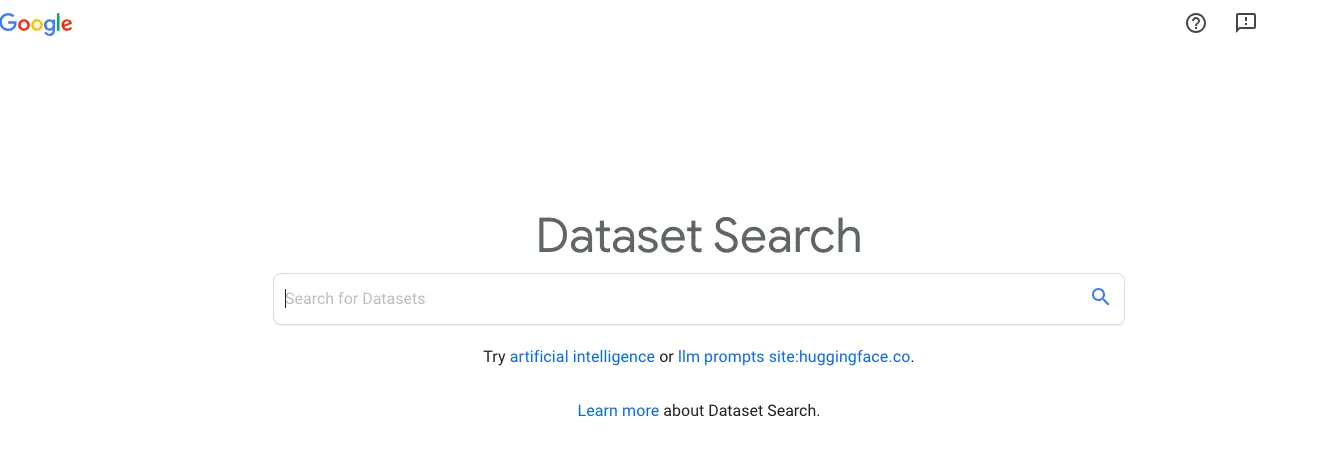
Google Dataset Search indexes publicly available datasets from research institutions, government agencies, and open data initiatives, completely free, with a simple interface.
Data quality and freshness are highly variable. Suitable for academic research, lightweight analysis, or exploratory data discovery.
Not appropriate for production business use cases.
Pricing: Free
Best for: Research, students, public data exploration
Quick comparison table
# | Platform | Type | Best For | Entry Price |
1 | CyberYozh | Web data infrastructure | Real-time custom web data | Consumption-based |
2 | Snowflake Marketplace | Cloud dataset store | Snowflake-native enterprises | $2–4/credit |
3 | AWS Data Exchange | Cloud dataset store | AWS-native teams | Pay-per-query |
4 | Databricks Marketplace | Dataset + ML platform | Data engineering/ML teams | DBU-based |
5 | Datarade | Dataset broker | SMB data buyers | Negotiated |
6 | Bright Data Datasets | Web + structured datasets | B2B web data buyers | From $250/100K records |
7 | Statista | Reports + statistics | Research and analysis | From $149/mo |
8 | S&P Global | Financial data | Investment/risk teams | Enterprise (custom) |
9 | Experian | Consumer + identity data | Financial services, marketing | Enterprise (custom) |
10 | Google Dataset Search | Public dataset index | Research, academic, lightweight | Free |
How to choose: Decision framework
If you need licensed financial, health, or legal data → Snowflake Marketplace, S&P Global, or Experian
If you're already embedded in AWS or Snowflake → AWS Data Exchange or Snowflake Marketplace, respectively
If you need ML-integrated data on Databricks → Databricks Marketplace
If you need fresh competitor pricing, SERP data, or ecommerce data → CyberYozh's web data infrastructure
If you need research statistics for presentations or strategy → Statista
If you're an SMB with no cloud platform commitment → Datarade
If you're starting with zero budget → Google Dataset Search