7 best Mango Proxy alternatives in 2026 for scraping, automation and ads
If you are looking for a Mango Proxy alternative, you probably already have a reason to leave.
Maybe support took too long. Maybe an ISP proxy felt slow on the site that actually matters to you. Maybe the price stopped making sense. Or maybe you have outgrown a setup where the proxy is only one part of the workflow and everything around it needs another tool.
Mango still offers residential, ISP, datacenter, and mobile proxies. So the question is not whether another provider has a longer feature list. It is whether the switch fixes your actual problem.
.webp "trustpilot -mangoproxy (1).webp")
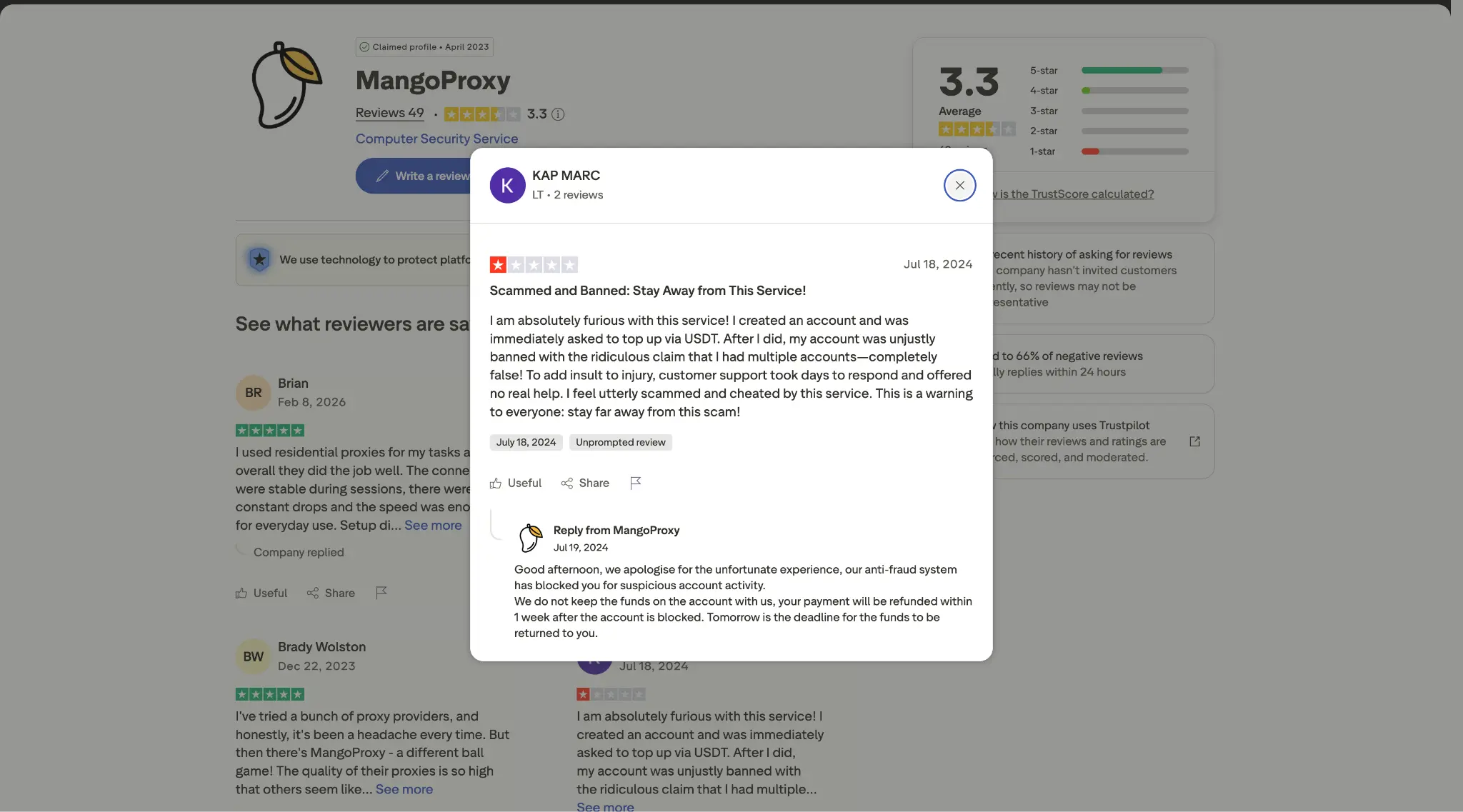
Mango Proxy's public Trustpilot reviews currently show 3.3/5 from 49 reviews. Most are positive, but recent one-star feedback includes complaints about support and ISP speed. However, we try not to be biased since reviews are individual experiences, not universal proof, but they are a good reason to test before committing.
Quick answer: For scraping, automation, advertising, and long-session workflows, we would start with CyberYozh. We combine multiple proxy networks with session controls, automation support, and IP-risk checks, so you are not just replacing one endpoint with another.
TL;DR: the best Mango Proxy alternatives in 2026
CyberYozh is our best overall choice. The other providers become more compelling when you have a narrower priority such as enterprise-scale data collection, a polished proxy-only experience, or the lowest possible entry price.
Rank | Provider | Best for | Pricing approach | Verdict |
1 | CyberYozh | Best overall: proxies + automation + IP checks | Rotating residential from $2/GB; separate rates by proxy type | Best all-round Mango replacement |
2 | Decodo | Polished proxy-first tooling | Residential from $2/GB; volume-based | Strong specialist; we offer a broader operating workflow |
3 | Bright Data | Enterprise data collection | PAYG + monthly residential volume tiers | Excellent enterprise option; heavier than most teams need |
4 | Oxylabs | Enterprise scraping | Residential from $6/GB; lower effective rates at volume | Strong at scale; expensive at small volume |
5 | SOAX | Geo-focused web data | Bundled monthly plans; rate falls with volume | Strong data platform; narrower operational fit |
6 | IPRoyal | Straightforward buying | Residential from $1.75/GB at scale; small plans higher | Simple proxy choice; fewer surrounding controls |
7 | Webshare | Cheap proxy-only jobs | Volume/commitment-based; free datacenter tier | Great budget choice; narrower network mix |
Pricing models and any “starts from” figures above were checked against the providers’ current official pricing pages. Promotions, volume discounts, and billing terms can change, so always confirm the live price for the plan you would actually buy.
Check out our proxy catalog to compare our proxies by workload before choosing another generic plan.
Why switch from Mango proxy
A provider can offer every major proxy type and still be the wrong fit. Most switches come down to support, target-site performance, session behavior, real cost, or workflow complexity.
If your task needs one IP through several steps, understand proxy rotation and sticky sessions before migrating. If location matters, test the exact country, city, or ISP rather than trusting a generic speed result.
Decision rule: Write down the one thing you need the new provider to improve. Test that first. Switching providers without changing the weak part of the workflow gets you the same problem with a new login screen.
The 7 best Mango proxy alternatives
Each option below can be useful. We rank CyberYozh first because it covers the widest mix of proxy infrastructure and the controls around it, while the others make more sense for specific priorities.
1. CyberYozh: Best overall Mango proxy alternative
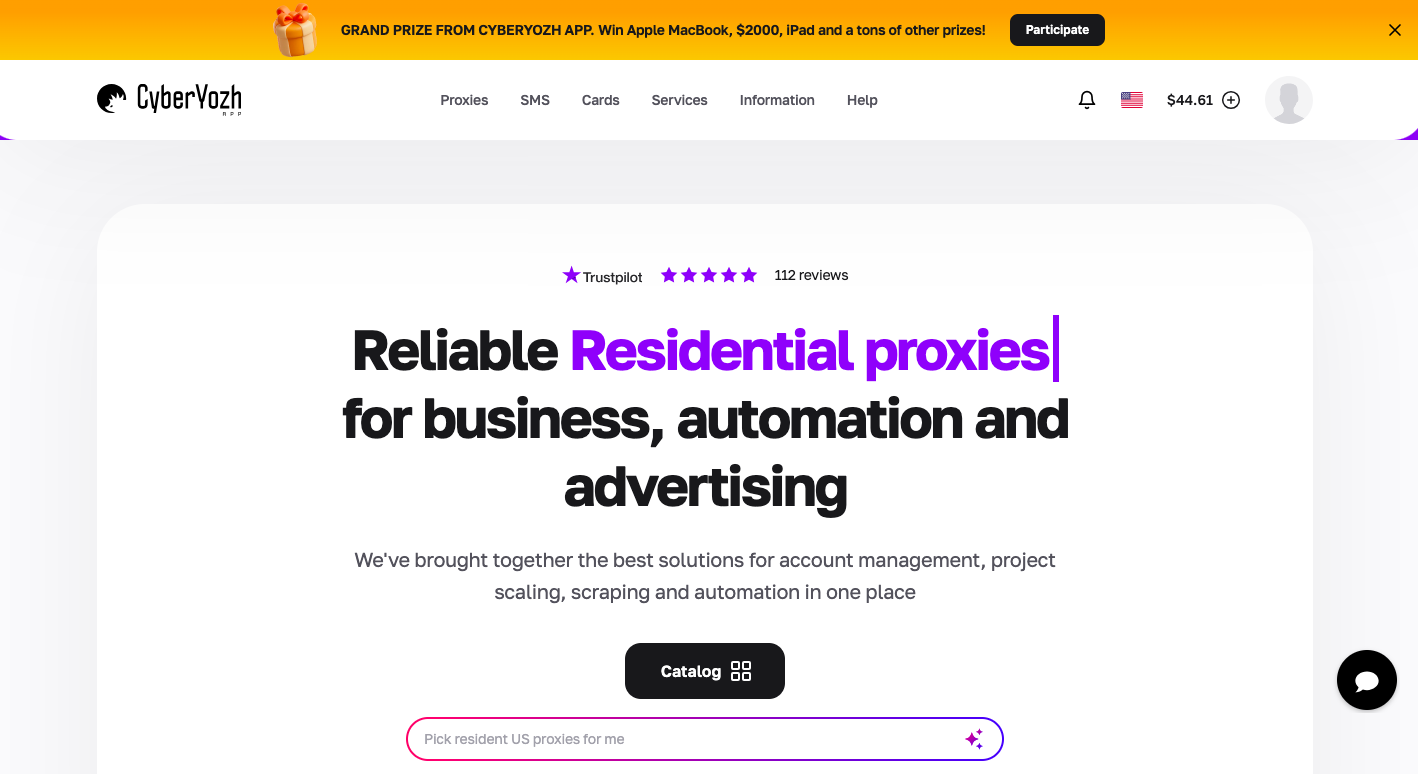
CyberYozh is a proxy-first infrastructure platform for scraping, automation, advertising, account operations, and other data-intensive workflows. Instead of offering IP access as a standalone service, we bring proxies together with tools for verification, payments, automation, and operational risk checks.
For distributed scraping and other workloads that benefit from frequent IP changes, you can use our rotating residential proxies. When you need a more consistent residential-style identity, ISP proxies are a better fit. CyberYozh also offers datacenter and LTE/5G mobile options for workloads with different speed, location, and session requirements.
Key CyberYozh features:
Different proxy types for different jobs. Choose from rotating residential, static residential, ISP, datacenter, or LTE/5G mobile proxies depending on what you are trying to do.
Rotating and sticky sessions. Rotate IPs when you need wider distribution, or keep the same IP for longer sessions when consistency matters.
Flexible location targeting. Choose the location that fits your scraping, testing, automation, or account workflow.
More control over mobile proxies. Supported LTE/5G proxies can change IPs manually or through the API, with additional options such as UDP, VPN/VLESS, and OS fingerprint controls.
Built for automation. Connect proxies to web automation workflows or tools like Puppeteer, Postman, Scrapy, Playwright, and Selenium. You can also use the API to manage proxies, sessions, and IP changes automatically.
SMS activation and phone numbers. Get virtual or residential numbers for receiving verification messages, with filtering by country and service.
Protocol support: HTTPS, HTTP, SOCKS5, UDP
Major antidetect compatibility along with inbuilt fingerprinting options.
Virtual cards. Create and manage CyberYozh virtual cards for ads, subscriptions, and other online payments, with spending controls and separate cards for different projects.
Fraud and IP quality checks. Use Fraud Score and IP quality tools to check IPs, phone numbers, and cards before spending time troubleshooting the wrong part of your setup.
Scraping and crawling tools. Yozh Crawler and Yozh Scraper help collect website data and turn it into useful formats such as JSON, CSV, Excel, Parquet, database-ready data, or API output.
For teams running automated processes, proxies can also plug directly into our broader web automation infrastructure, so the network does not have to sit in isolation from the tools using it.
Why this matters: A proxy problem is not always an IP problem. A workflow can fail because of network quality, session behavior, payment infrastructure, phone verification, or another layer entirely. CyberYozh gives you more of those layers in one place.
Mango Proxy | CyberYozh | |
Best fit | General proxy buying | Mixed scraping, automation, ads and long sessions |
Controls | Proxy/API features | Sessions + automation + IP-risk signals |
Verdict | Capable proxy provider | Best overall replacement |
Why CyberYozh ranks #1: You can change network type without changing the entire operating model. That matters when one project needs rotating residential, another needs a stable ISP IP, and another needs mobile carrier traffic.
Explore CyberYozh and test the exact network, location, and session pattern that Mango is not solving for you.
2. Decodo
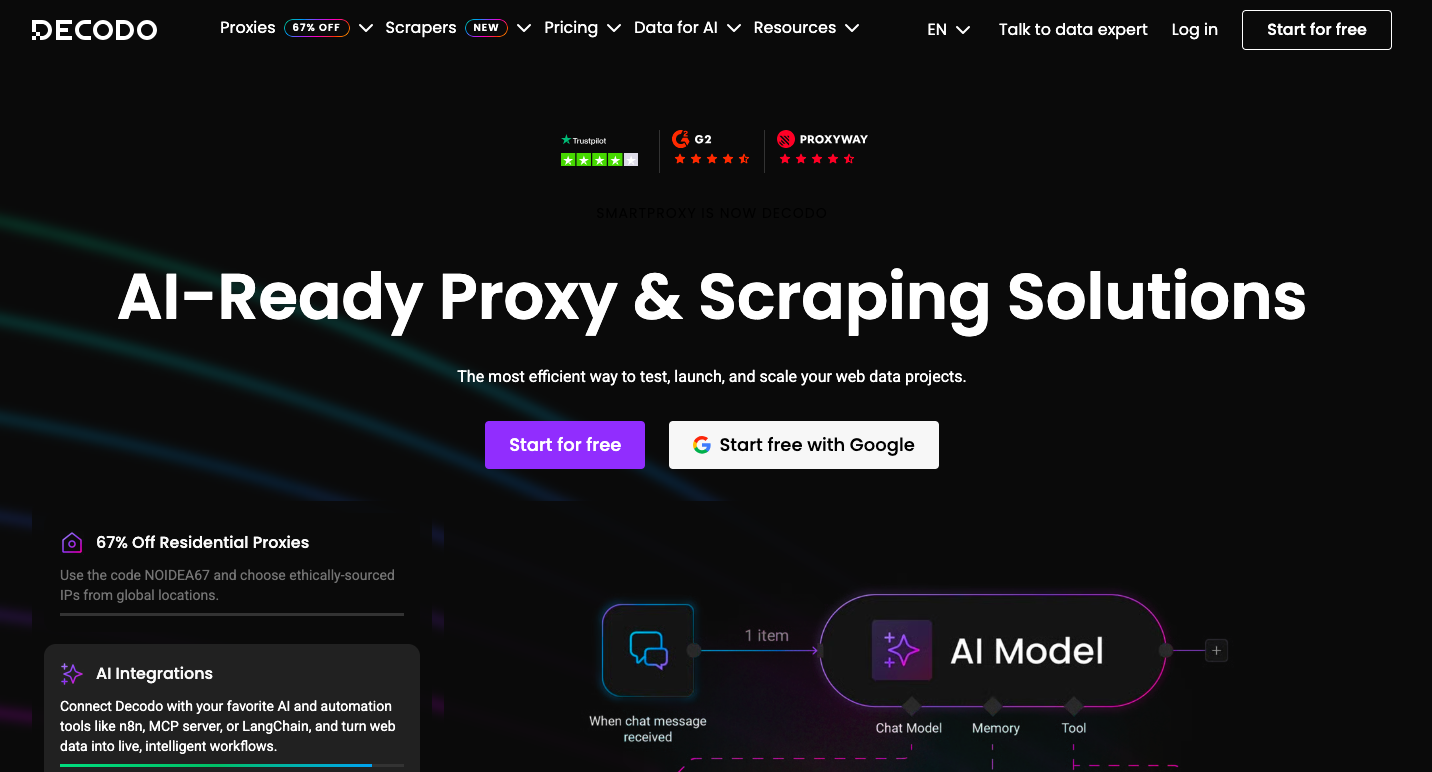
Decodo is a strong second choice when your priority is polished proxy infrastructure, precise targeting, and mature scraping integrations.
Its residential plans support HTTP(S), SOCKS5, rotating and sticky sessions, plus granular geographic targeting. Decodo advertises residential proxies from $2/GB, with the actual rate depending on plan and volume. That matters because the lowest headline rate is not the same as the rate on every package.
Cons:
Usage-based costs grow with traffic, and wider risk/operations tooling may stay separate.
Pros:
Excellent targeting, a mature dashboard, and a scraping stack.
Decodo | Mango | CyberYozh |
Best for proxy-first data teams | Broad general proxy menu | Best overall for proxy + operations |
Strong targeting and integrations | Familiar buying model | Automation and IP-risk tools included in the workflow |
Read our CyberYozh vs Decodo comparison for the deeper breakdown.
3. Bright Data
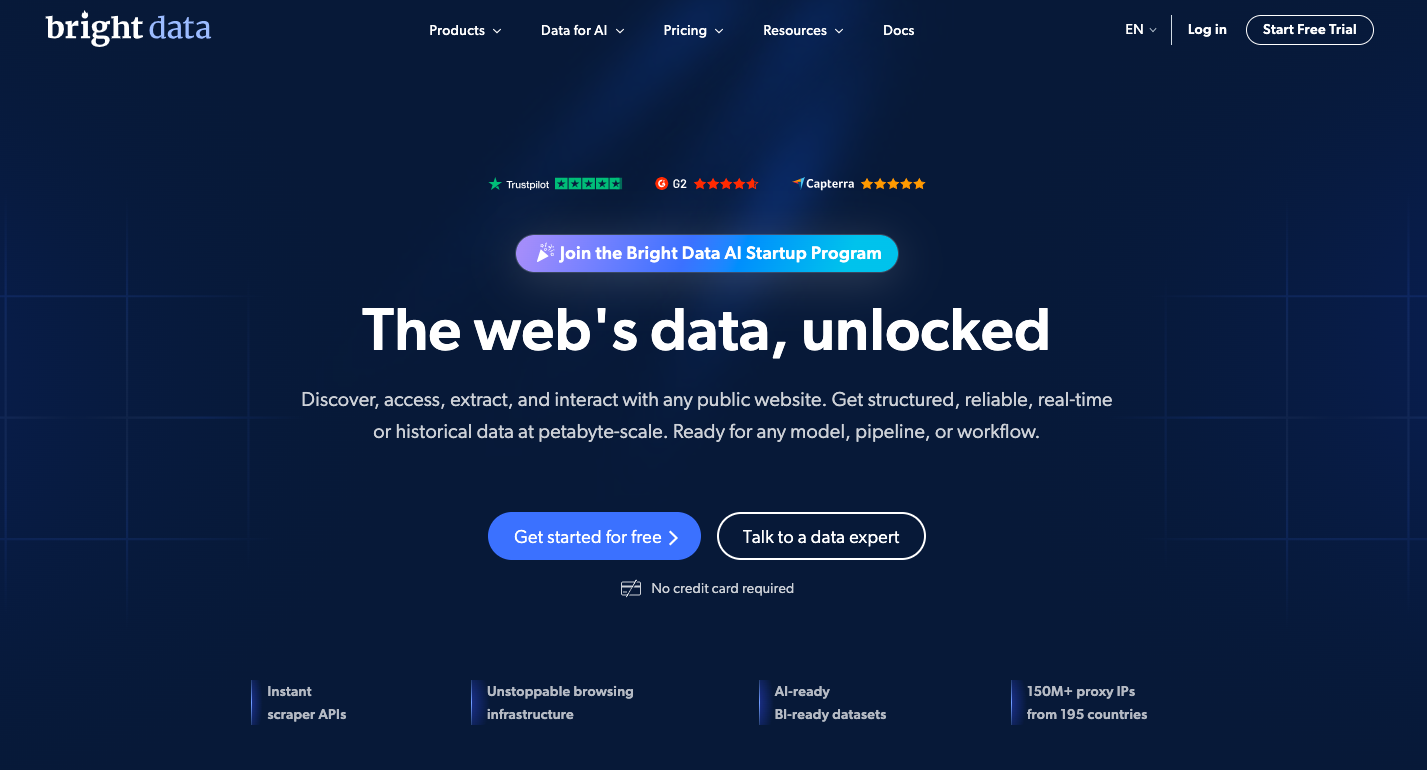
Bright Data makes sense when enterprise scale is genuinely the job. Its residential network currently advertises 400M+ monthly IPs across 195 countries and deep geo-targeting. Residential pricing is structured around PAYG and monthly volume tiers, with promotions and committed volume affecting the rate.
The reason to choose Bright Data is its enterprise-scale targeting and data tooling, not one temporary per-GB figure. That scale is valuable for large data teams. For an agency or smaller automation operation leaving Mango because the setup is already too heavy, it can be more platform than you need.
Cons:
Higher practical entry cost and complexity.
Pros:
Huge infrastructure and mature data tooling.
Bright Data | Mango | CyberYozh |
Best for enterprise data | General proxy access | Best overall for most mixed teams |
Maximum scale | Simpler stack | Lower-friction proxy + automation workflow |
See CyberYozh vs Bright Data if enterprise tooling is part of your shortlist.
4. Oxylabs
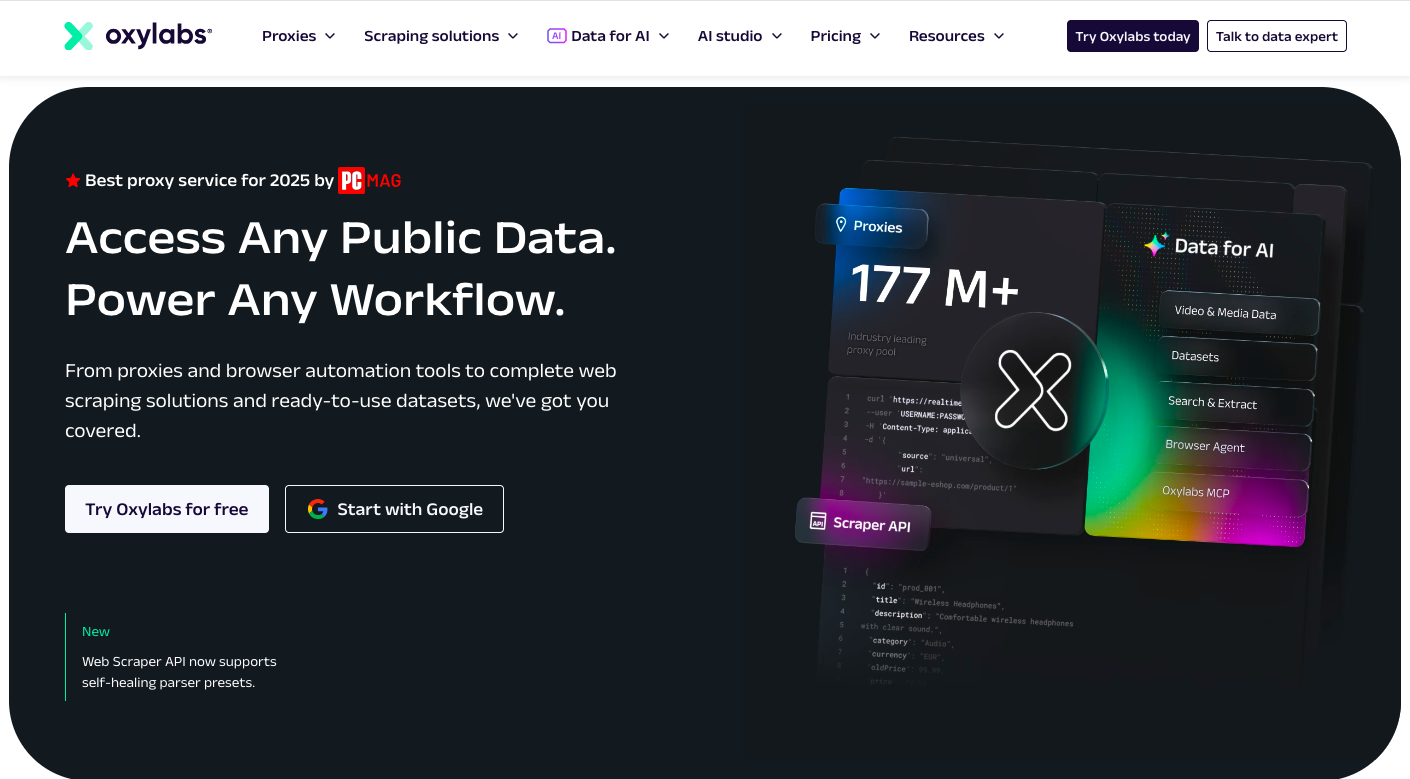
Oxylabs is built for serious production scraping. Its residential plans include sticky sessions, flexible rotation, multiple protocols, and unlimited concurrent sessions. Residential proxies currently start from $6/GB on its main pricing page, with larger-volume plans reducing the effective rate.
It is a better fit when enterprise scraping support and scale justify that pricing structure. The value improves as traffic grows. Smaller workloads pay a high per-GB price for infrastructure they may not fully use.
Cons:
Expensive small-volume entry.
Pros:
Strong enterprise scraping stack and flexible sessions.
Oxylabs | Mango | CyberYozh |
Best for enterprise scraping | General proxy use | Best overall for mixed scraping + operations |
Excellent at scale | Easier entry | More flexible for smaller teams |
Read our CyberYozh vs Oxylabs comparison.
5. SOAX
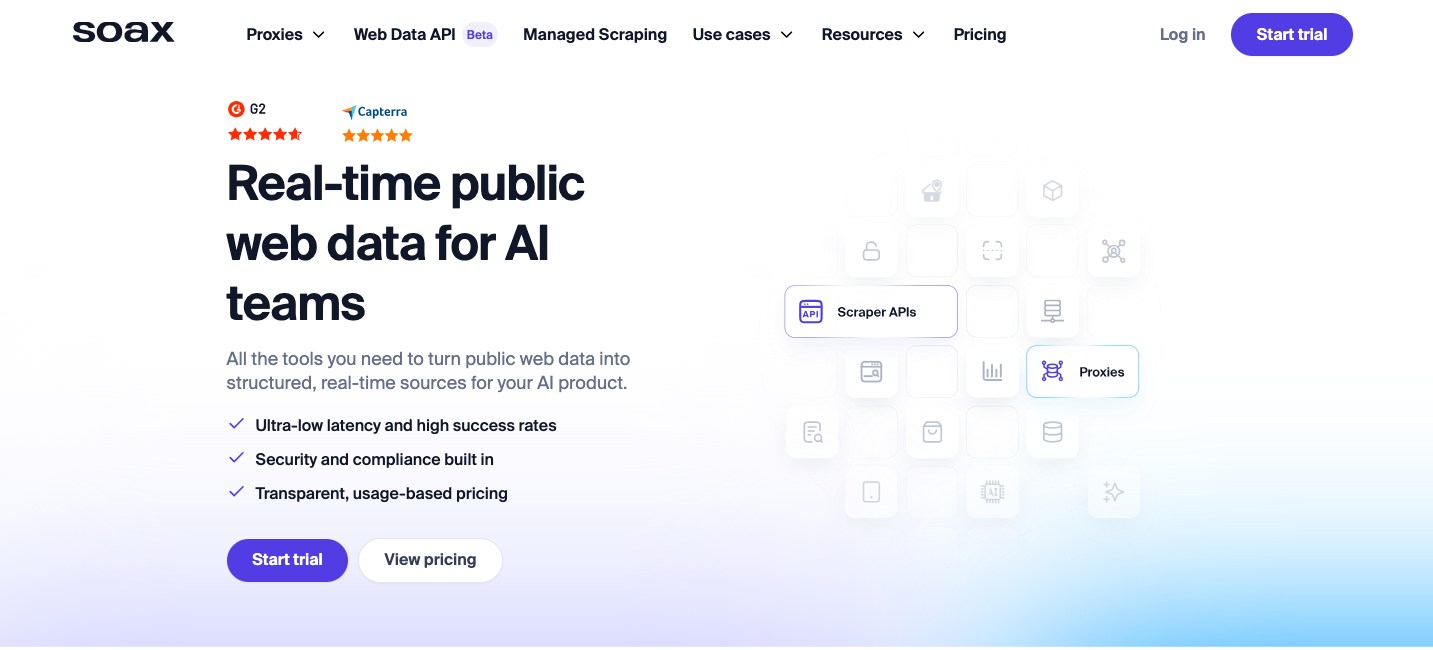
SOAX is strongest when targeted data extraction is the center of the workflow. Its bundled plans can cover residential, mobile, ISP, and datacenter proxies alongside Web Data API, with sticky or rotating sessions and granular targeting.
Pricing is subscription-based (sandbox plans begin at $0 and builder plans start from $200/month) and scales with included traffic, so the effective rate falls as volume increases. That makes SOAX more attractive for repeat data operations than tiny one-off tests.
Cons:
The monthly-plan structure can be heavier for small tests, and the platform is more data-centric than our wider proxy-first workflow.
Pros:
Unified proxy/data credits and strong geo controls.
SOAX | Mango | CyberYozh |
Best for geo-focused data | General proxy capacity | Best overall for ads, automation and mixed proxy work |
Unified data access | Simple categories | Broader operational controls |
See our CyberYozh vs SOAX comparison.
6. IPRoyal
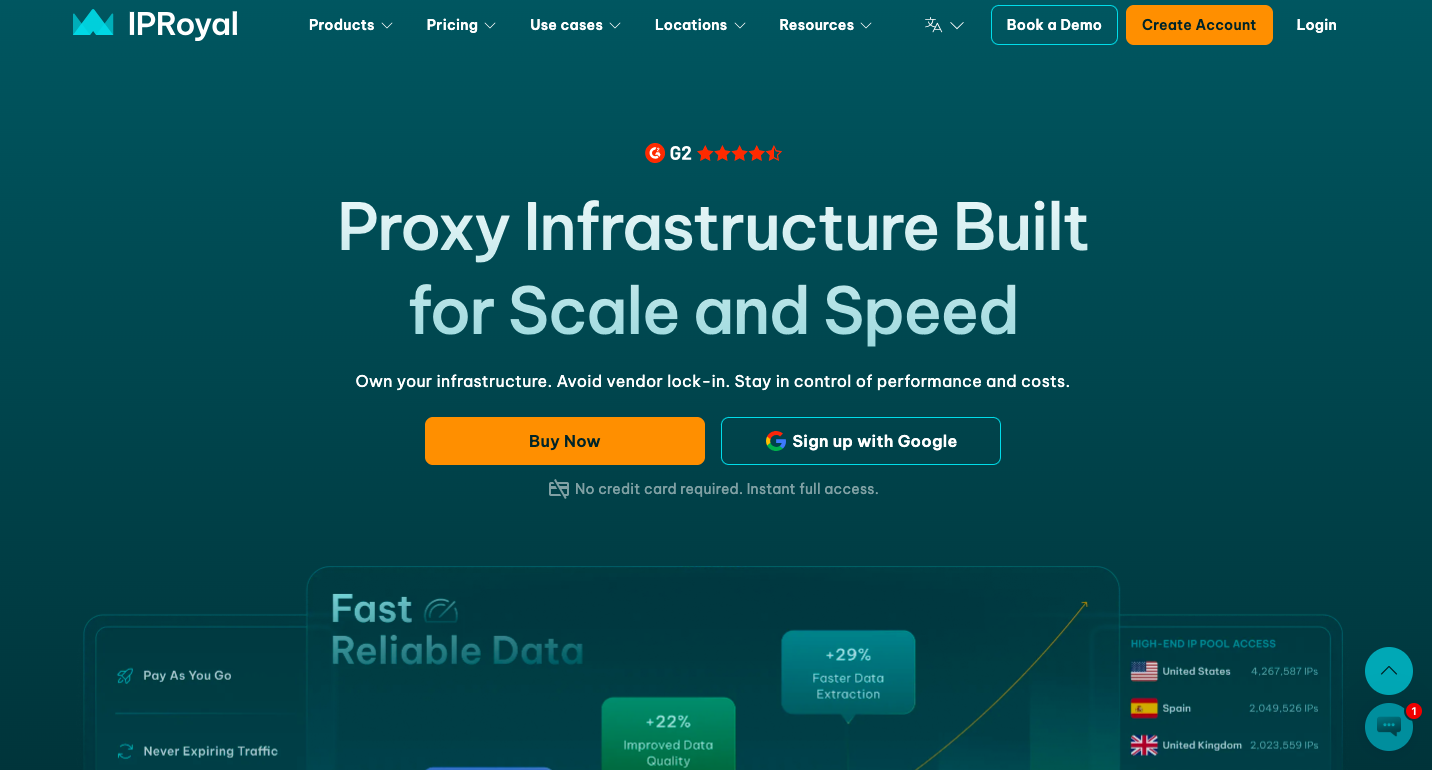
IPRoyal is easy to understand because its catalog is split clearly across residential, ISP, datacenter, and mobile proxies. IPRoyal advertises residential proxies from $1.75/GB at higher-volume pricing, while smaller packages cost more per GB. The headline rate is therefore useful only after you check the volume and billing model you actually need.
Cons:
Smaller residential packages cost more per GB than the headline starting rate, and the surrounding automation/risk workflow is narrower.
Pros:
Clear categories and flexible buying.
IPRoyal | Mango | CyberYozh |
Best for simple purchasing | Similar broad menu | Best overall connected workflow |
Familiar proxy products | Familiar proxy products | Proxies + automation + IP checks |
Read CyberYozh vs IPRoyal or our guide to IPRoyal alternatives.
7. Webshare
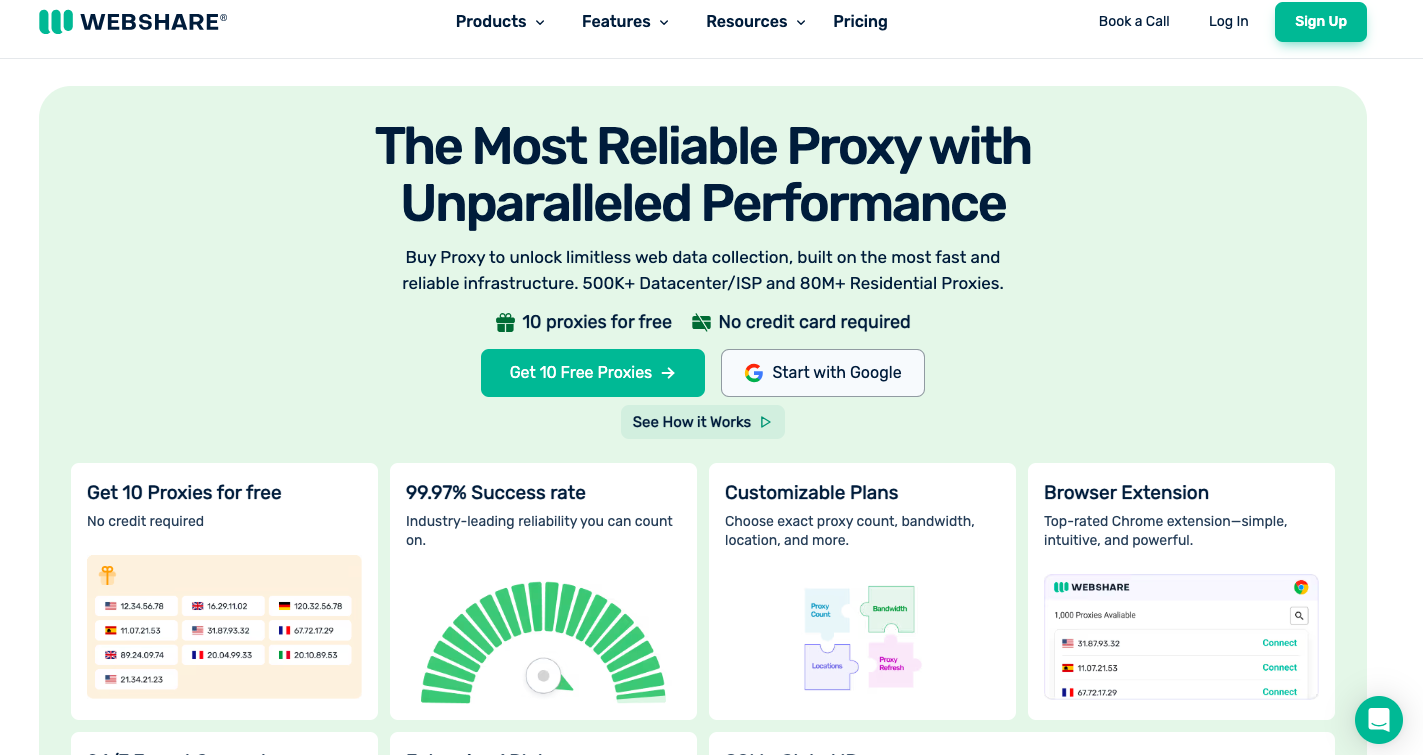
Webshare belongs here because sometimes the correct answer really is “I need inexpensive proxies.” Its strength is low-cost entry: it offers a free datacenter tier, plus rotating and static residential options that get cheaper with larger volume or longer commitments. That makes it easy to test, but pricing should still be judged against the exact billing term and traffic level you need.
Its current core catalog focuses on datacenter, static residential/ISP, and rotating residential. That is enough for many scraping jobs, but it is not the closest replacement if your Mango workflow depends on mobile proxies.
Cons:
Narrower network and workflow mix.
Pros:
Low entry cost and simple setup.
Webshare | Mango | CyberYozh |
Best budget option | Broader proxy menu | Best overall network + workflow option |
Cheap residential/DC | Includes mobile | Includes mobile plus automation/risk controls |
Read CyberYozh vs Webshare for the detailed comparison.
Buyer warning: Do not compare providers by the smallest number in the pricing table. Compare the tier you will actually buy, the session model you need, and the cost of the extra tools or manual workaround around it.
What to test before switching from Mango Proxy
Test the problem that pushed you away from Mango before moving production traffic.
Test | Check this |
Target-site speed | The actual sites and protocol you use |
Session stability | Whether the IP lasts through the full workflow |
Geo accuracy | Country, city, ISP or ASN when required |
IP quality | Reputation and network signals |
Rotation | Per-request, timed or sticky behavior |
Support | One real technical question before a large purchase |
Billing | Traffic, expiry, renewal and top-up rules |
Start small. Run the same target through the networks you are considering and measure the workflow, not just the connection speed.
Final thoughts
If you are looking for a Mango Proxy alternative, keep the reason for switching in front of you.
If it is speed, test the target. If it is support, test support. If it is price, calculate your real tier. If it is session stability, fix the rotation model. And if it is workflow fragmentation, do not replace one fragmented setup with another.
Every provider here has a reason to exist. But for the mix this article is about- scraping, automation, advertising, different proxy networks, and more control around the connection- we would still start with CyberYozh.
Explore CyberYozh IP reputation checks, choose the network around the job, and test the exact workflow that pushed you away from Mango before you scale it.