
Best Web Scraping APIs in 2026: Free and Paid Options Compared
You need product prices, search results or reviews from hundreds of websites, and copying them by hand isn’t an option. A free web scraping API does the heavy lifting: you send a link, and it sends back clean data. The hard part is choosing one, because prices range from free to hundreds of dollars a month, and the cheapest option on paper isn’t always the cheapest in practice.
This guide compares 10 options, including a free web scraping API you can run yourself, using independent test results and each provider’s current pricing.
Quick answer
The best web scraping API depends on your budget and skills. If you want a free web scraping API and don’t mind a short setup, Yozh Scraper by CyberYozh is free and open source, so you pay only for proxy traffic. If you want a fully managed service, Zyte posted the highest success rate in independent testing, Decodo is the cheapest per page, and Firecrawl suits AI projects.
TL;DR
A web scraping API turns any web page into ready-to-use data
Managed APIs charge per request, and hard sites like Google can cost several times more per page
A free web scraping API like Yozh Scraper cuts costs, but you run it yourself
Independent tests show big gaps in success rates, so check them before you pay
What is a web scraping API
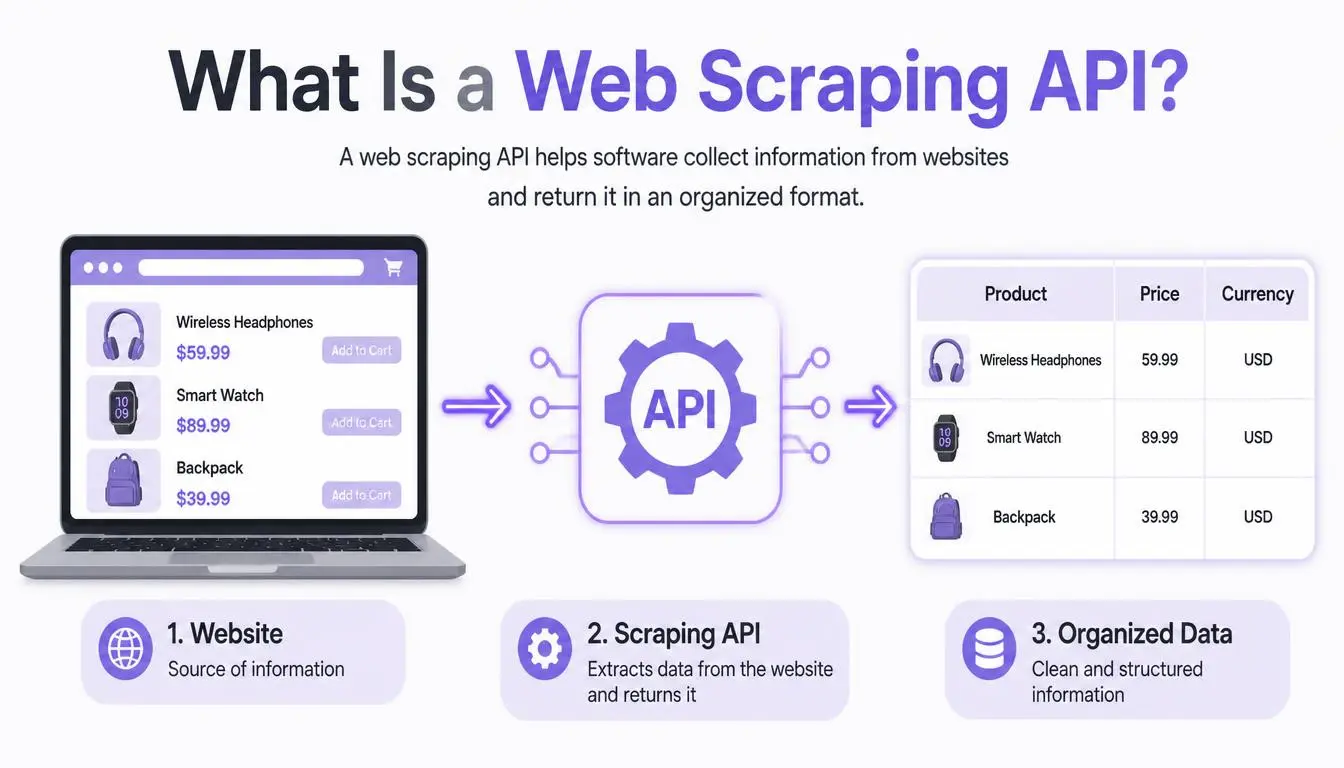
A web scraping API is a service that visits a web page and returns the information you want, such as prices, titles, or reviews. Instead of building and maintaining your own scraper, you send a request and get the data back.
Web scraping and APIs work together like this: the API handles the messy parts, including loading the page, getting past blocks and pulling out the right details, so you can focus on using the data. New to scraping in general? Start with our explainer on what web scraping is.
Web scraping APIs vs web scraping services
People often mix these up, so here’s the difference:
Web scraping APIs are tools. You decide what to collect and when, and the API fetches it.
Web scraping services (also called data scraping services) are done for you. A company builds the scraper, runs it and delivers a finished dataset.
Choose an API if you want control and lower costs. Choose a data scraping service if you don't have a technical team and have a fixed budget for a one-off project.
How we compared these APIs
We looked at four things that matter most to buyers:
Success rate on well-protected websites, from independent testing
Real cost per 1,000 pages, not just the starting price
Ease of use, including free plans and trials
Extras like AI-ready output and MCP support, which lets AI assistants use the tool directly
Pricing comes from each provider’s official page, checked in October 2026. We didn’t run our own tests, so success rates come from Proxyway’s web scraping API benchmark.
Expert insight: In Proxyway’s benchmark on protected websites, success rates ranged from about 93% for Zyte to about 34% for Firecrawl. A cheap API that fails half its requests can cost more than a pricier one that works.
Web scraping and APIs at a glance
Option | Starting price | Free option | Best for |
Yozh Scraper (CyberYozh) | Free + proxy traffic from $2/GB | Yes, open source | Low-cost, high-volume scraping |
Zyte API | Pay as you go | $5 trial credit | Highest success rate |
Decodo | From $19/month | Free plan | Lowest cost per page |
Oxylabs | From $30/month | $5 free credit | Enterprise projects |
Bright Data | $1.50 per 1,000 records | 5,000 records/month | Ready-made scrapers |
ScrapingBee | From $19/month | 1,000 credits | Simple setup |
ScraperAPI | From $49/month | 7-day trial | Amazon and e-commerce |
ZenRows | From $19/month | 5,000 credits/month | Developers on a budget |
Scrape.do | From $29/month | 1,000 credits | Cheap credits |
Firecrawl | From $16/month (yearly) | 1,000 credits/month | AI and LLM projects |
The 10 best web scraping and API tools in 2026
Each tool below is rated on independent success rates, real cost per 1,000 pages and free options, starting with Yozh Scraper, a free web scraping API you host yourself, followed by nine managed APIs from Zyte to Firecrawl.
1. Yozh Scraper by CyberYozh: best free web scraping API
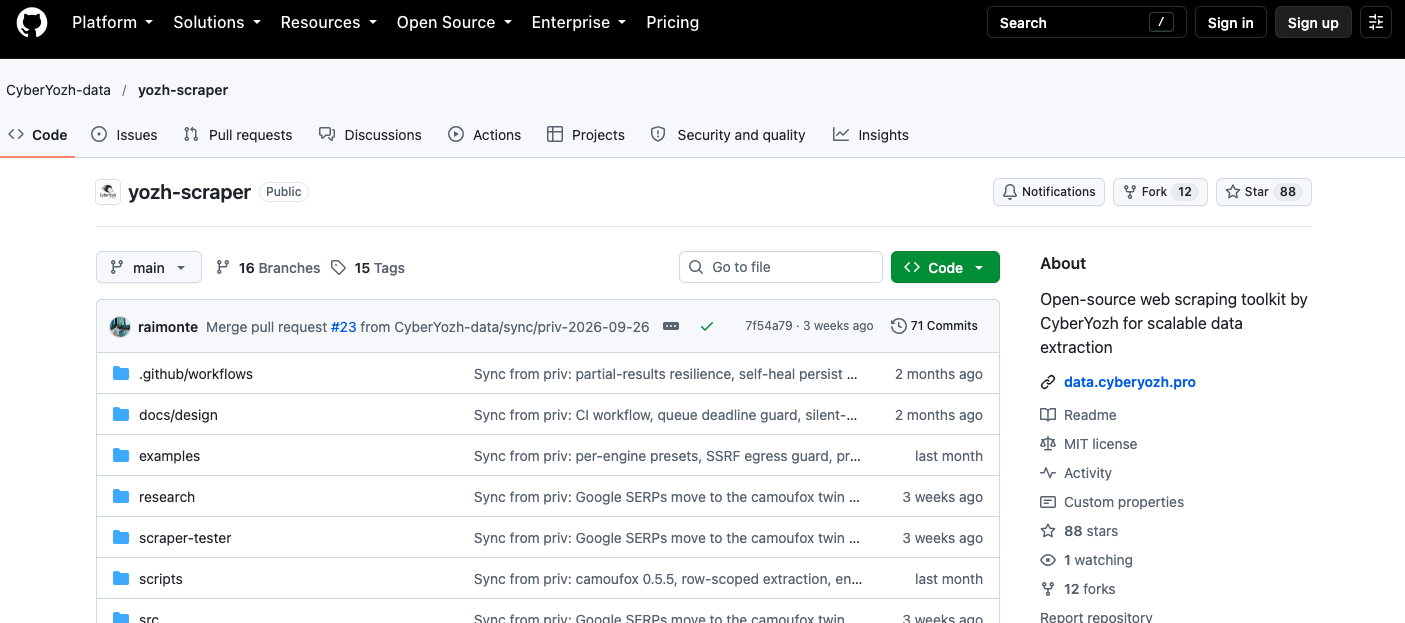
Yozh Scraper is a free, open-source scraping toolkit from CyberYozh. You run it on your own computer or server, and it gives you two ready-made APIs: one for scraping single pages and one for crawling entire websites. Because there’s no per-request fee, your only running cost is proxy traffic.
Free and open source: released under the MIT license, so you can use it commercially at no cost
Real browsers: loads pages in Chromium (the engine behind Chrome) or Camoufox, a privacy-focused Firefox, so websites see normal visitors
Ready-made presets: for Amazon, Google, eBay, Walmart, YouTube and LinkedIn
AI built in: create new presets with AI, and let an AI model fix broken selectors automatically
Works with AI assistants: an MCP endpoint lets compatible AI assistants run scraping jobs for you
Proxies included: connects to CyberYozh’s web scraping proxy network with one API key
Watch out: you’ll need a quick Docker setup, and you’re responsible for keeping it running.
Warning: The MCP endpoint has no password by default. Keep it on a private network, not the open internet.
Run your first scrape today. Follow our Yozh Scraper setup guide and have it running in minutes.
2. Zyte API
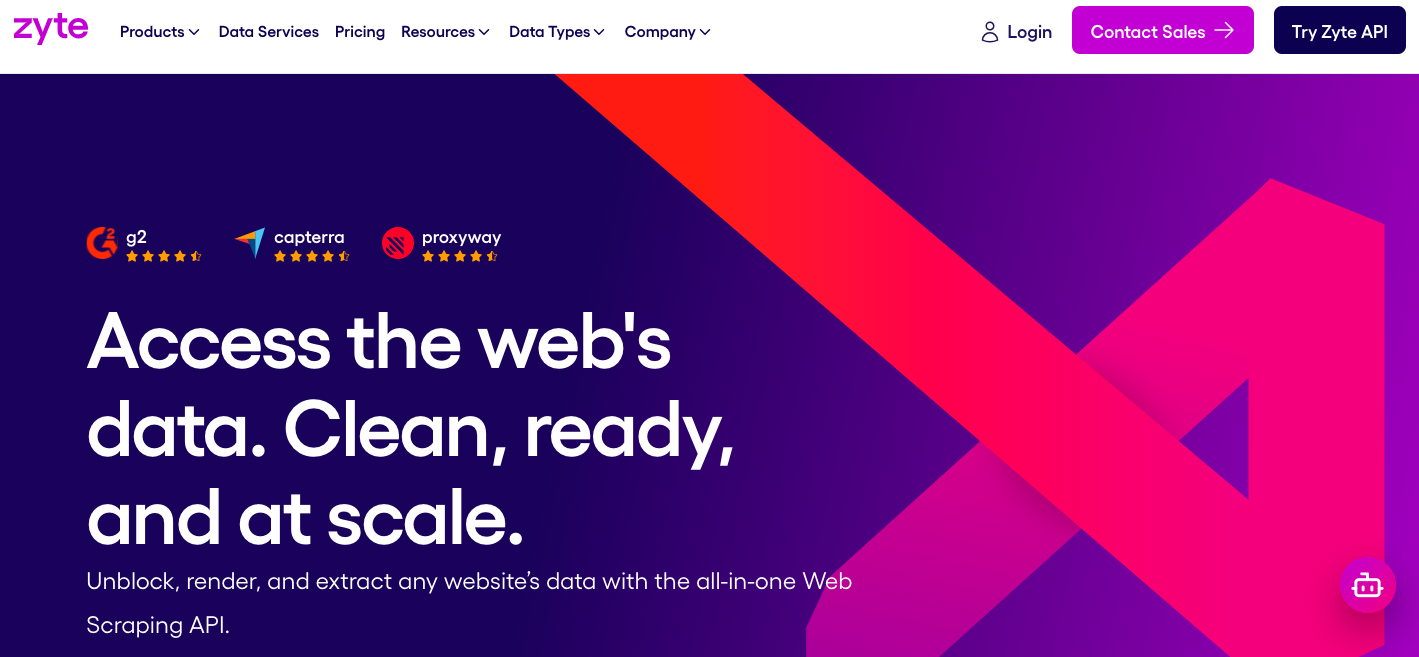
Zyte is the success-rate leader. It scored about 93% on protected sites in Proxyway’s benchmark, the best result.
Pricing: pay-as-you-go, from $0.13 per 1,000 simple requests, rising for pages that need a full browser
Free trial: $5 of credit
AI extraction: pulls out product or article data without you writing rules
MCP add-on: available for AI assistant workflows
Best for: teams that need reliability on tough websites and can pay for it.
3. Decodo
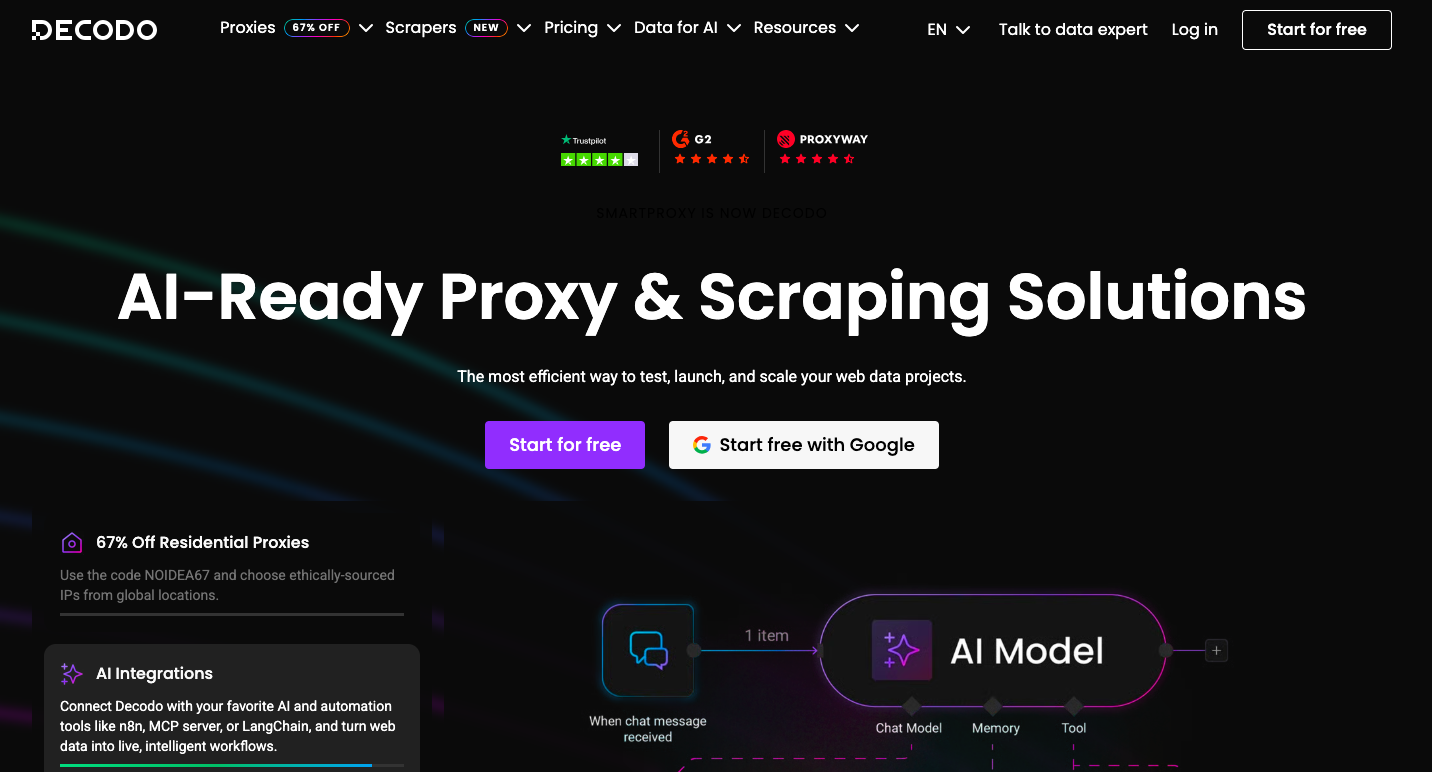
Decodo offers the lowest cost per page among tested APIs, about $0.88 per 1,000 pages in AIMultiple’s benchmark, with roughly 86–87% success in Proxyway’s test.
Pricing: free plan, then paid plans from $19/month
100+ ready-made templates for popular sites
AI-ready output: returns clean text in markdown format, ideal for AI tools
MCP server available
Best for: budget-conscious teams that still want a managed service.
4. Oxylabs web scraper API
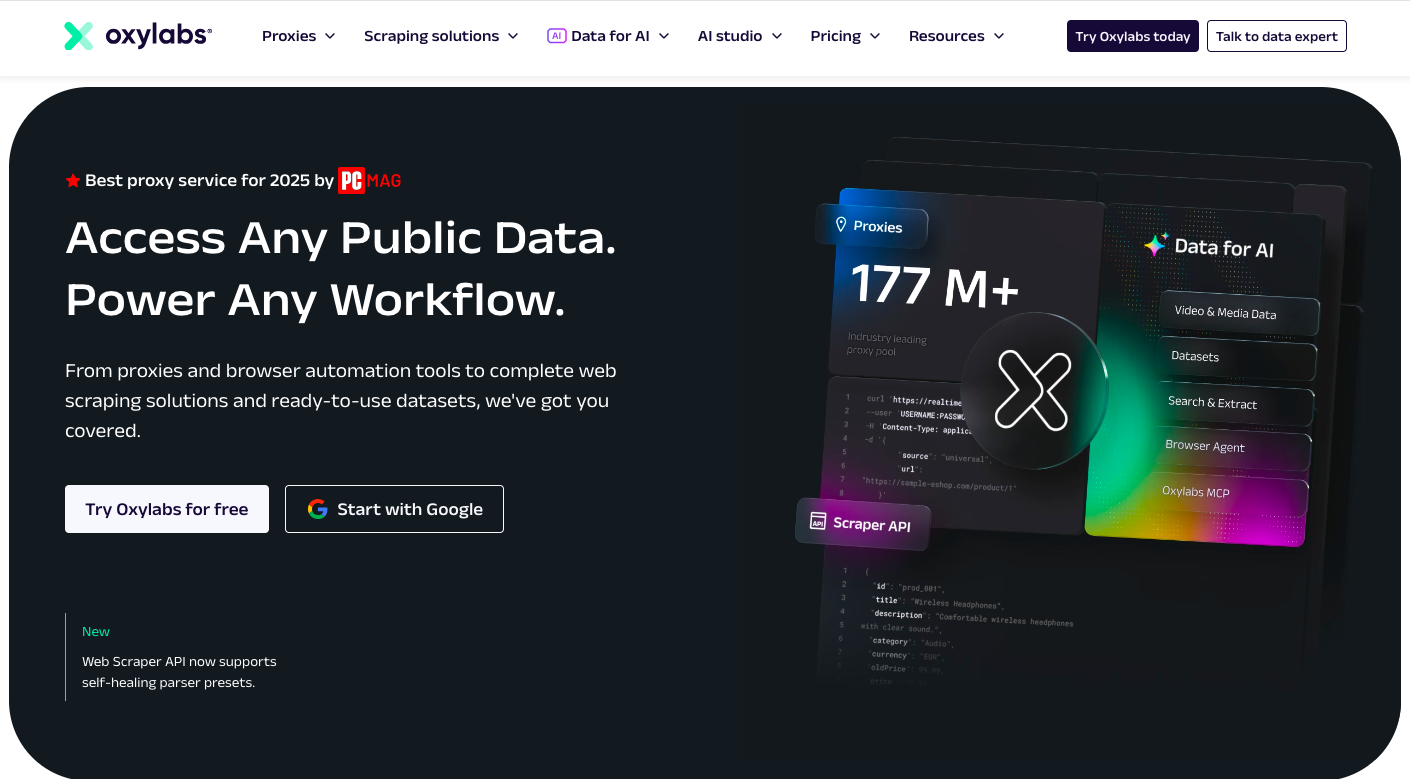
An enterprise favorite with strong results, about 86% success in Proxyway’s test.
Pricing: $5 free credit, then from $30/month; about $0.50 per 1,000 simple results and $1.50 with full browser loading
AI parsing: available at an extra cost
MCP support for AI assistants
Large-scale reliability for big data teams
Best for: companies scraping at serious volume.
5. Bright Data web scraping API
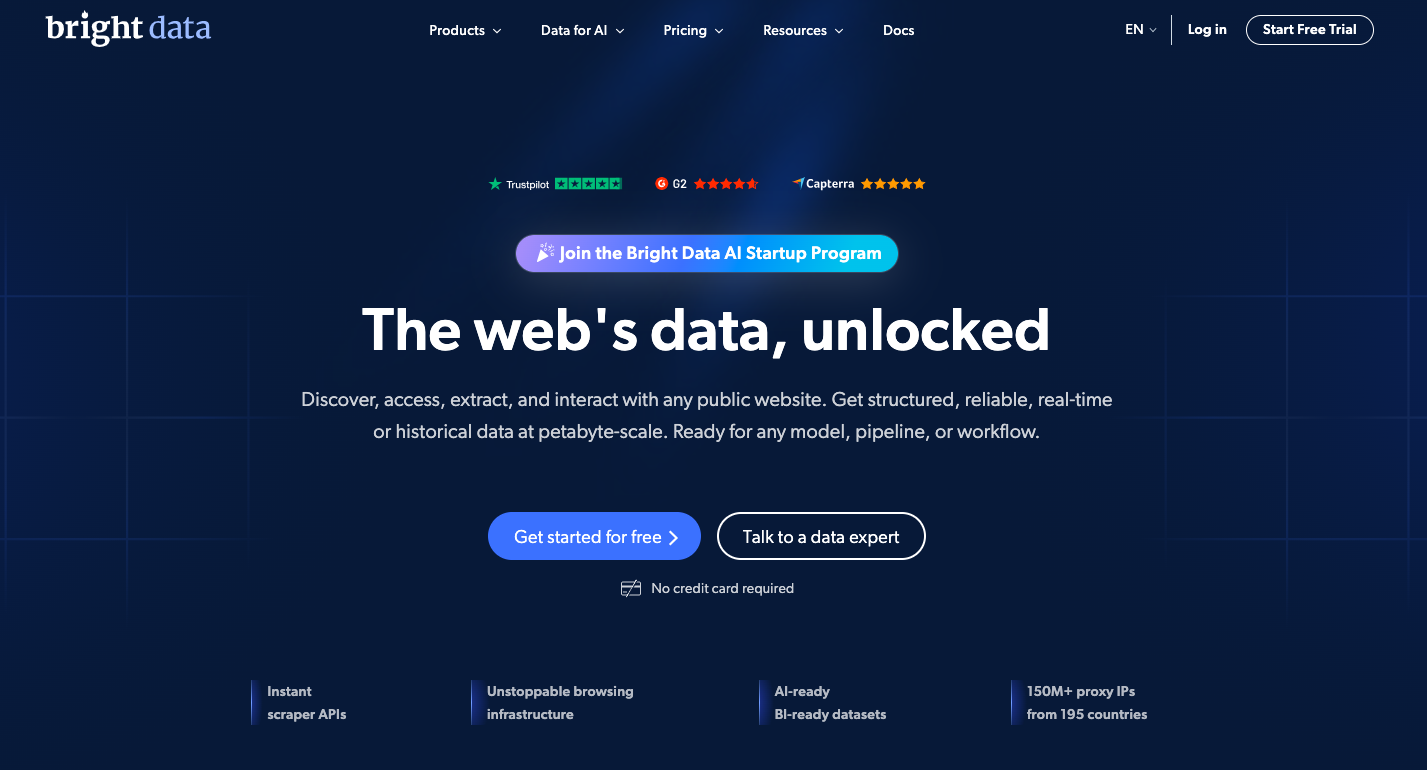
Bright Data offers ready-made scrapers for many popular sites, so you often don’t need to build anything.
Pricing: $1.50 per 1,000 records, pay as you go
Free tier: 5,000 records a month
Search and unblocking APIs from $1 per 1,000 requests
Free MCP server for AI workflows
Best for: teams that want finished datasets from well-known websites.
6. ScrapingBee
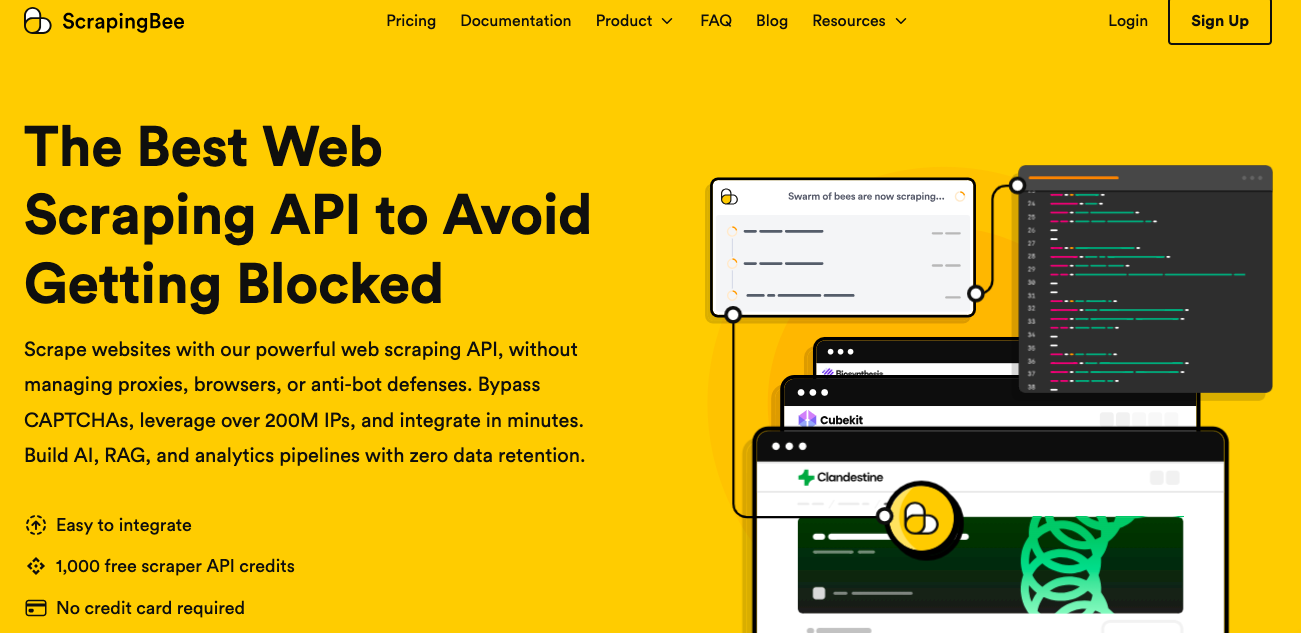
A simple, friendly option, with about 84% success in Proxyway’s test.
Pricing: from $19/month for 75,000 credits
Free: 1,000 credits to try
Easy setup: clear docs for beginners
JavaScript rendering for modern websites
Best for: beginners and small projects.
7. ScraperAPI
Popular for e-commerce scraping, though it scored about 69% in Proxyway’s test.
Pricing: from $49/month for 100,000 credits
Credit costs vary by site: an Amazon page uses 5 credits and a Google page uses 25
Automatic data parsing into a structured format
Location targeting limited to the US and EU on cheaper plans
Best for: online shopping data from major marketplaces.
8. ZenRows
A developer-friendly API with a generous free allowance.
Pricing: free 5,000 credits a month, then from $19/month
Cost on tough sites: protected pages cost far more credits than simple ones
MCP server available
About 70% success in Proxyway’s test
Best for: developers testing ideas before scaling up.
9. Scrape.do
One of the cheapest credit prices around.
Pricing: free 1,000 credits, then $29/month for 250,000 credits
160+ countries for location-specific results
Built-in scrapers for Amazon and Google
JavaScript rendering included
Best for: high-volume, lower-difficulty scraping on a tight budget.
10. Firecrawl
What does Firecrawl do? It turns websites into clean, AI-ready text and structured data, which makes it a favorite for AI and chatbot projects.
Firecrawl API pricing in 2026: free plan with 1,000 credits a month and no card required; Hobby 16/monthbilledyearly((19 monthly) for 5,000 credits; Standard $83/month billed yearly for 100,000 credits
Credits: 1 credit per page, plus 4 more for structured JSON output
Open source: the code is public under the AGPL-3.0 license, and the paid cloud version adds extra features
AI-ready: markdown output and an MCP server
Watch out: it scored about 34% on protected sites in Proxyway’s test, so it works best on simpler websites.
Best for: AI projects that need clean text from easy-to-reach pages.
Free web scraping API vs paid: what does it really cost
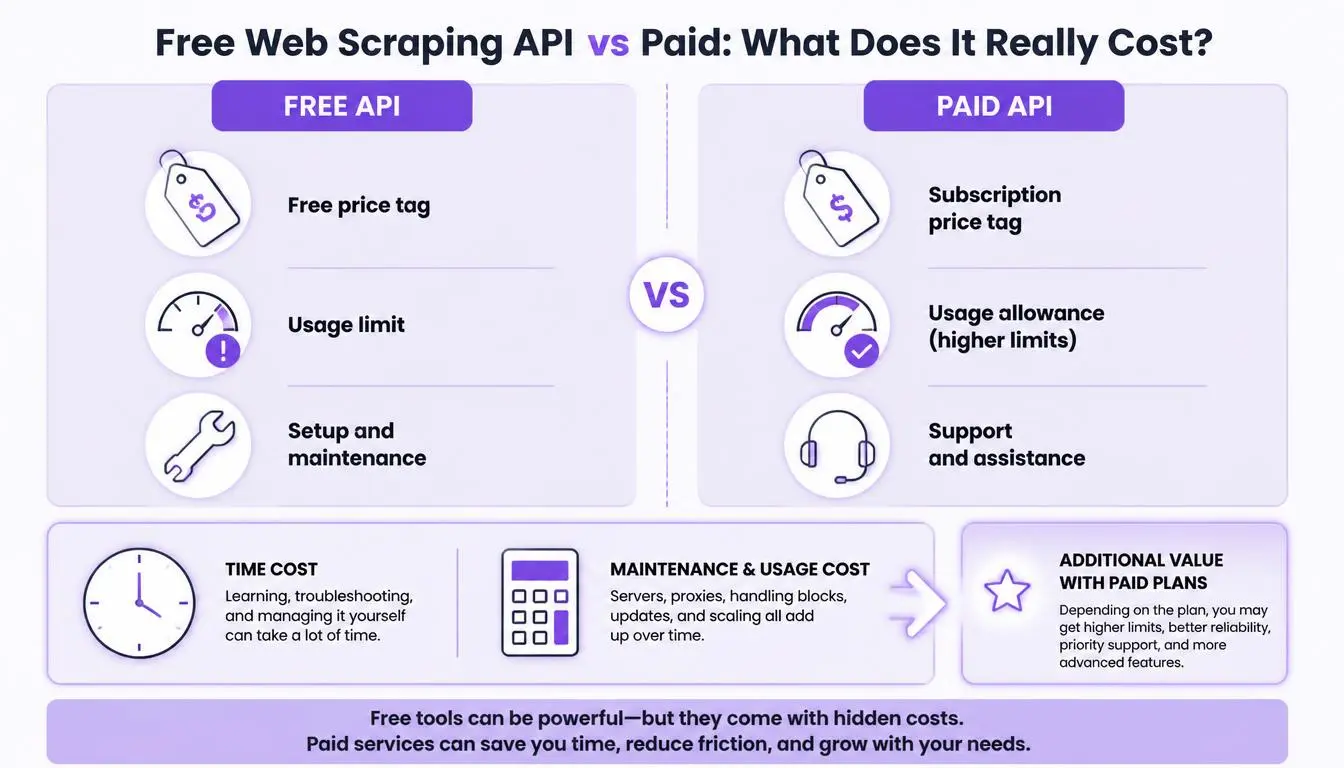
Here’s a simple example: scraping 100,000 product pages.
Option | Estimated cost | What you pay for |
Managed API (AIMultiple cost-per-page figures) | About 88–150 | Per page, all handled for you |
Yozh Scraper + CyberYozh proxies | About $40 | Proxy traffic only (about 20 GB at $2/GB, assuming ~200 KB per page with images blocked) |
The self-hosted route is cheaper at volume, but it still takes effort. You’ll spend time on setup and upkeep. For small or one-off jobs, a managed API’s free plan is often the easiest start.
Pro tip: Block images and videos in your scraper. Pages load faster and use far less proxy traffic, which cuts your bill.
Which web scraping API fits your job
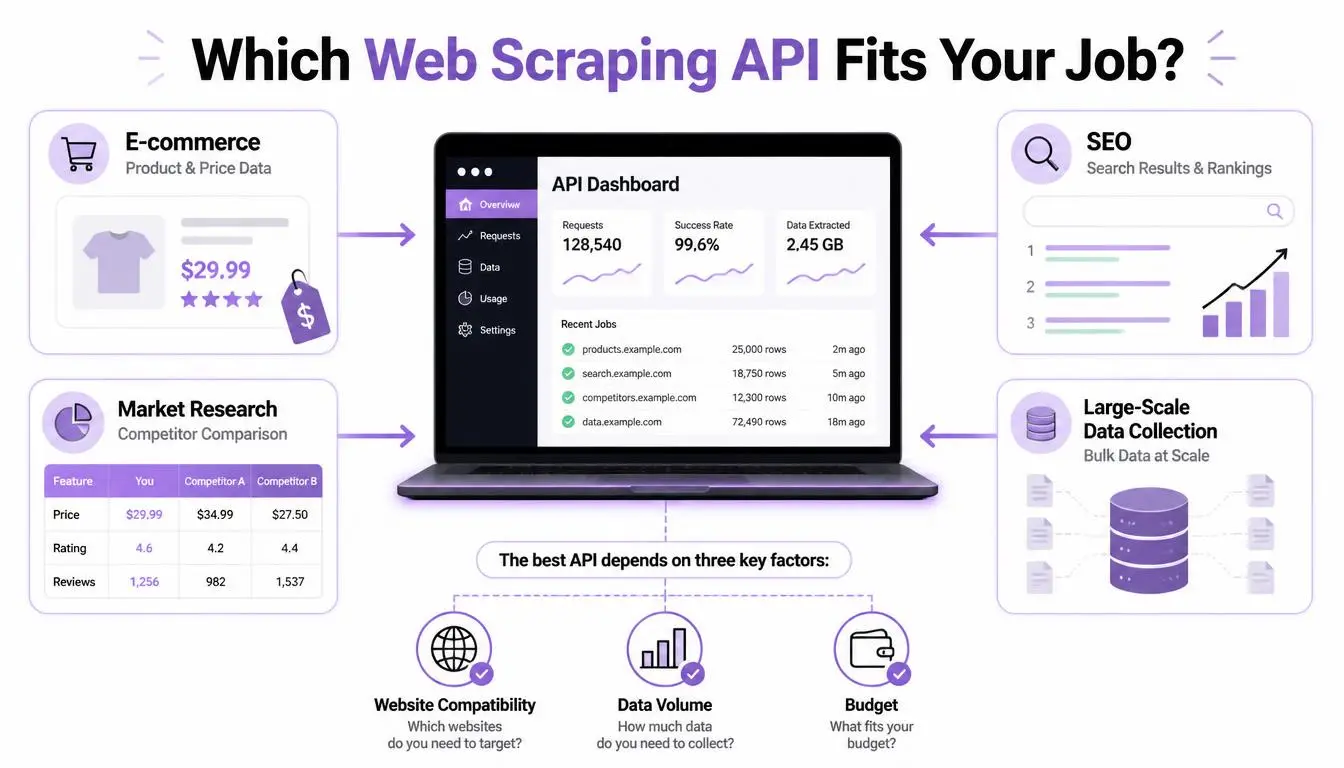
Online shopping and e-commerce
For prices, reviews and stock levels on sites like Amazon, eBay and Walmart, you need an API that handles strong bot protection. Yozh Scraper has ready-made presets for all three, and ScraperAPI and Scrape.do have built-in shopping scrapers. For large price-monitoring projects, pair any tool with dedicated e-commerce proxies.
Google and search results
Google requires JavaScript and blocks bots aggressively, so choose an API that loads pages in a real browser. Expect search pages to cost more credits on managed APIs.
AI and LLM projects
Look for Markdown output and MCP support. Firecrawl, Decodo and Yozh Scraper all fit. To keep AI data collection running without blocks, you can also use CyberYozh proxies with AI scraping APIs.
Data pipelines and dashboards
If you’re feeding a web scraping API into a data pipeline and aggregation dashboard, choose a tool that returns structured data (like JSON) and can run on a schedule. That way, fresh data flows straight into your spreadsheets or reports without manual work.
How to use a scraper API in 3 steps
Get your API key from the provider’s dashboard, or start Yozh Scraper and add your CyberYozh proxy key.
Send a request with the page link you want to scrape.
Collect the data your API returns, then save it or send it to your app.
Common mistake: Sending thousands of requests through a bad IP. Check your proxy’s reputation first with the CyberYozh IP checker.
Final thoughts
The best web scraping API matches your budget and skills. For a managed service, Zyte leads in success rate, Decodo in price, and Firecrawl in AI features. For the lowest cost at scale, a free web scraping API like Yozh Scraper, powered by CyberYozh proxies, gives you full control and no per-request fees.
Start scraping for less. Pair the free Yozh Scraper with CyberYozh rotating residential proxies from $2/GB and pay only for the traffic you use.