
Best Proxies for Web Scraping in 2026: 12 Providers Compared
Your scraper worked yesterday. Today it returns 403s, CAPTCHA pages and empty responses. Nine times out of ten, the code is fine. The problem is the IP addresses your requests come from.
This guide compares 12 proxy providers for web scraping on what matters: how often requests get through, how long sessions last, how precisely you can target locations, and what you really pay per gigabyte. New to the topic? Start with our explainer on what web scraping is.
Quick answer
The best web scraping proxies in 2026 are rotating residential proxies for most websites, mobile proxies for the hardest targets, and datacenter proxies for lightly protected sites. CyberYozh is the best all-round pick, combining residential proxies from $2/GB, mobile proxies with unlimited traffic and a free open-source scraper in one account. DataImpulse is the cheapest per GB at volume, and Oxylabs and Bright Data suit enterprise budgets.
TL;DR
Independent tests put the median residential proxy success rate at about 74% on tough sites like Amazon and Google
Compare web scraping proxies by price per GB at the volume you’ll actually buy, not the headline “from” price
Rotating proxies suit bulk collection, and sticky sessions suit logins and multi-page flows
Unlimited-traffic mobile proxies can cut costs sharply on heavy scraping jobs
How we compared these proxies for web scraping
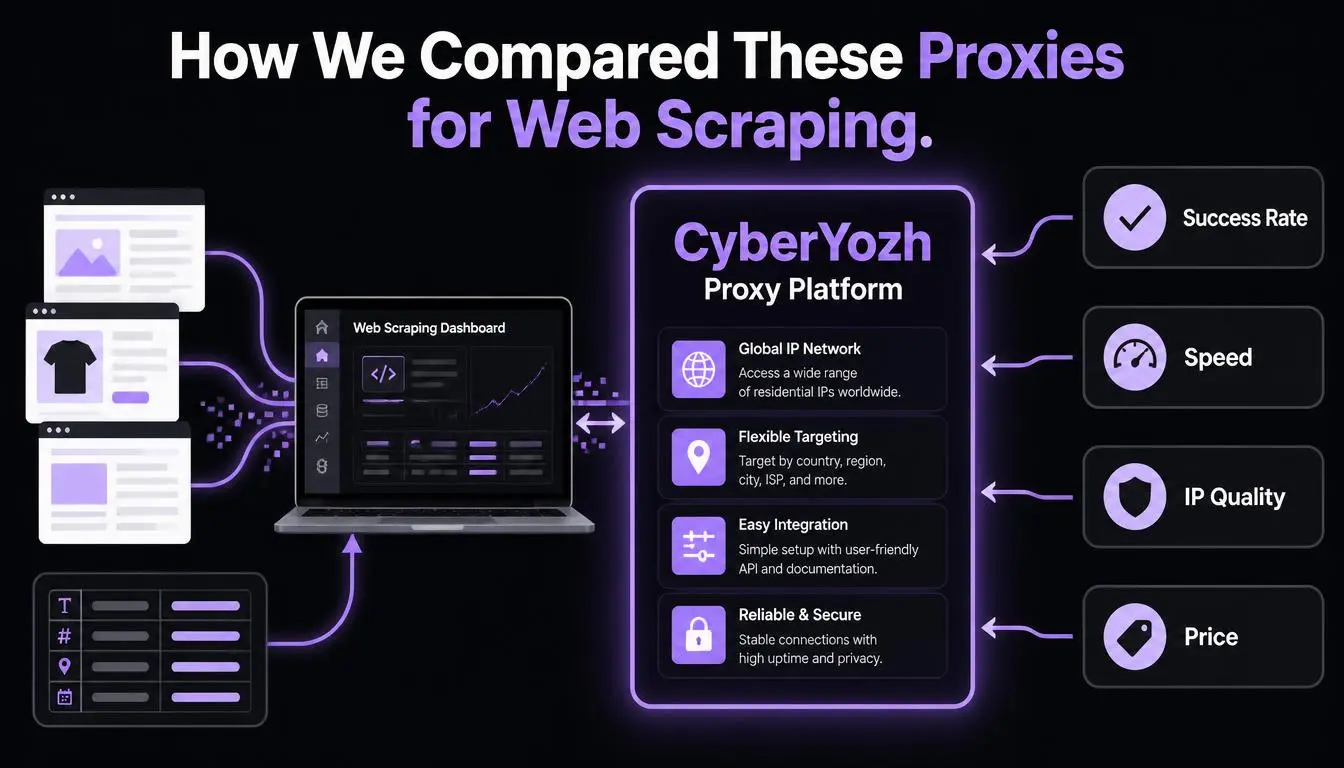
We compared official pricing pages and documentation checked in October 2026, plus independent benchmark data. We didn’t run our own scraping tests, so success rates below are either independent results or clearly marked as vendor claims.
Each provider was judged on five things:
Success on protected sites: how often requests return real data
Session control: per-request rotation and how long sticky sessions last
Targeting: country, city, ZIP and ASN options
Real cost: price per GB at 10 GB and 100 GB
Scaling extras: concurrency, API access and integrations
Expert insight: Proxyway’s 2026 market research tested residential and mobile proxies against Amazon, Google and Instagram. The median success rate was 74.43% for residential and 75.26% for mobile, and testers noted, “our scraper had issues with Google in general.” Even good scraping proxies fail about 1 in 4 requests on the hardest sites. (Proxyway)
Web scraping proxies compared at a glance
Provider | Claimed pool | ~100 GB price | Max sticky session | Best for |
CyberYozh | 100M+ | $2/GB | 24 hours | All-round value + free scraper |
DataImpulse | 90M+ | $1/GB | Not stated | Lowest price per GB |
Oxylabs | 175M+ | $4/GB (125 GB) | 24 hours | Enterprise scale |
Decodo | 115M+ | $2.75/GB | “Minutes to days” | Mid-size teams |
Bright Data | 400M+ | $499/mo for 141 GB | Not stated | Largest pool |
SOAX | 155M+ | 2.20/GB(500/mo plan) | ~60 min (reported) | Flexible plans |
IPRoyal | 64M+ | $5.25/GB (10 GB) | 7 days | Long sessions |
Webshare | 80M+ | $2.25/GB | Not stated | Budget datacenter + residential |
Rayobyte | 50M+ devices/month | $2/GB (50–249 GB) | 120 min | Free trial, owned network |
NodeMaven | 30M+ | From $3.45/GB | 24 hours | IP quality filtering |
Infatica | 40M+ | $3.60/GB | Not stated | Monthly plans |
ProxyEmpire | 30M+ | $4.44/GB (135 GB) | Not stated | Rollover bandwidth |
The 12 best proxies for web scraping
Each provider below offers six scraping-focused features, from targeting and session control to pricing, so you can quickly see which one fits your scraper:
1. App CyberYozh: best all-round value for scraping
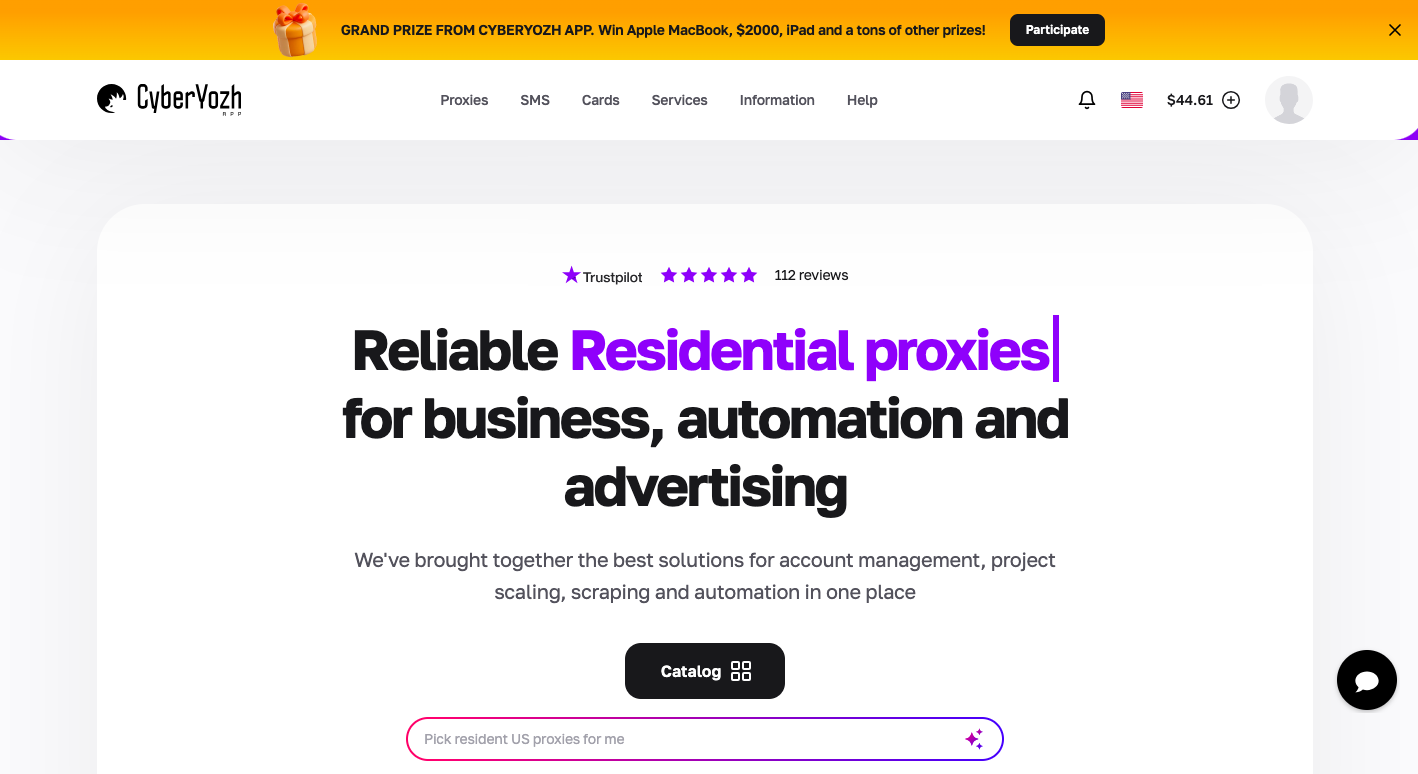
CyberYozh pairs a large residential network with mobile proxies that don’t charge per gigabyte, plus a free, open-source scraper. For teams that want scraping tools, proxies, and IP checks in one account, it cuts setup costs.
Free scraping software: Yozh Scraper is open source with no licensing fees, and our setup guide connects it to your proxies in minutes
Large residential pool: 100M+ IPs in 195+ countries, with country, city, ASN and ISP targeting for local data
Flexible rotation: a new IP per request, fixed rotation every 5–30 minutes, or sticky sessions of up to 24 hours for logins and pagination
Fewer wasted requests: filter IPs by quality score and speed, check any IP’s fraud score with the IP checker, and rely on 99.8% claimed uptime
Works with your stack: HTTP, HTTPS, UDP and SOCKS5, API access, and ready setups for Scrapy, Playwright, Puppeteer and Selenium
Pricing built for scale: rotating residential from $2/GB with monthly traffic rollover, and LTE/5G mobile proxies with unlimited traffic from $1.70/day
Start scraping without blocks. Get rotating residential proxies from $2/GB or try unlimited-traffic mobile proxies for heavy jobs.
2. DataImpulse
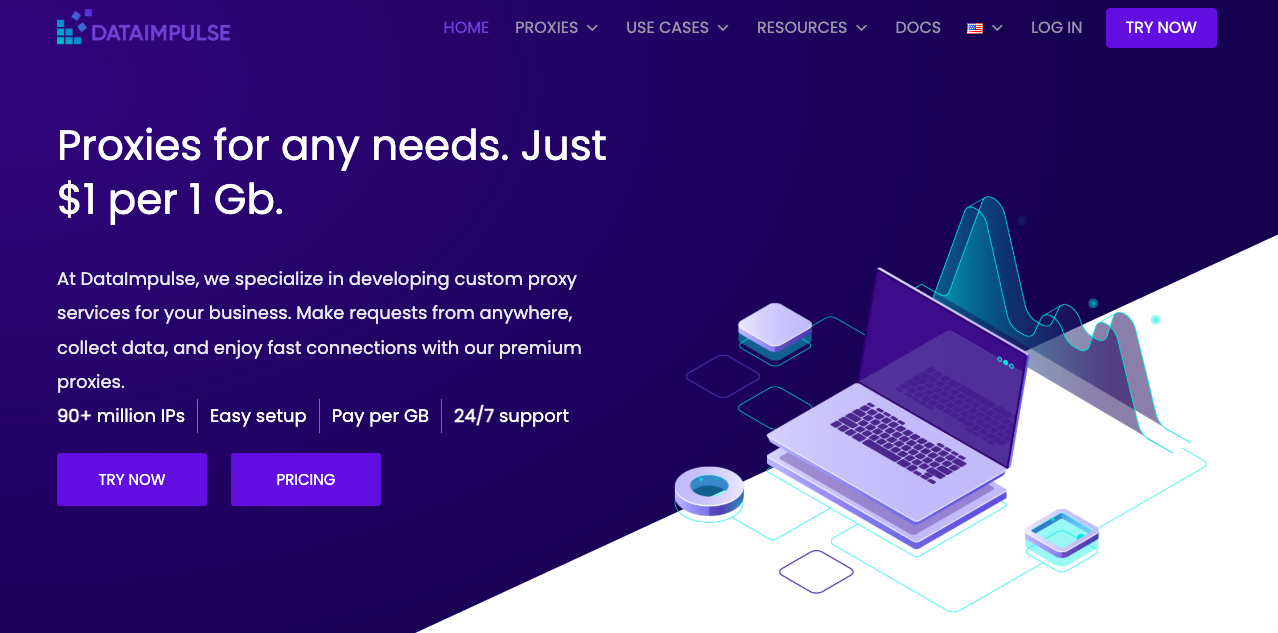
DataImpulse performs fairly in independent testing.
Lowest price per GB: $1/GB pay-as-you-go, falling to $0.80/GB at 1 TB
Traffic never expires: buy once and use it whenever your crawl schedule needs it
Strong independent results: the best mobile success rate (85.31%) and fastest residential response time (2.58s) in Proxyway’s 2026 research
Wide coverage: 90M+ residential IPs in 195+ countries
Targeting: free country targeting; state, city, ZIP and ASN available, with ZIP and ASN at an extra cost
Low-risk start: a $5 intro plan for 5 GB and a 7-day refund policy
vs CyberYozh: cheaper per GB, but no unlimited-traffic mobile option or built-in scraper. Compare →
3. Oxylabs
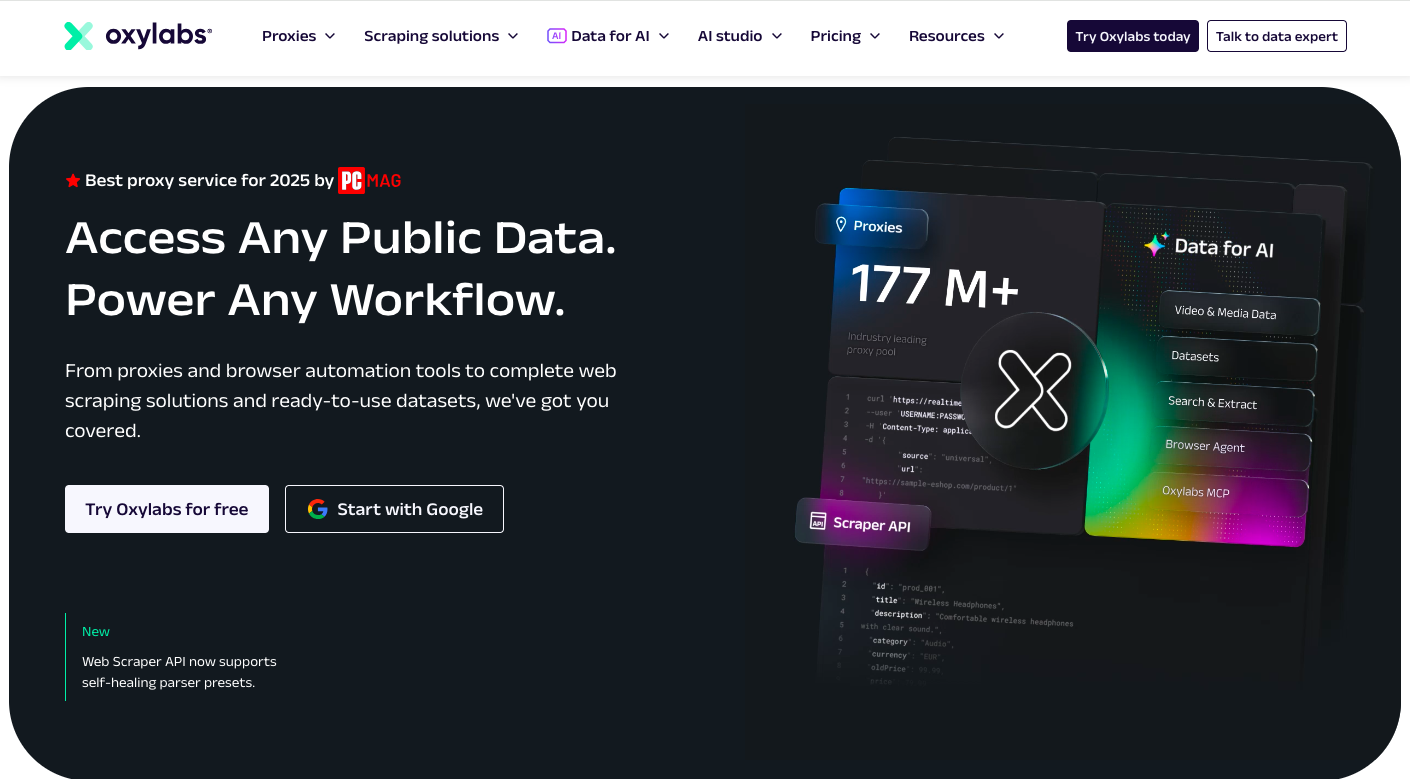
An enterprise favorite with the most precise targeting on this list.
Precise local data: country, state, city, ZIP, ASN and even coordinate-level targeting
Huge pool: 175M+ residential IPs
High throughput: unlimited concurrent sessions for large parallel crawls
Long sessions: sticky sessions of up to 24 hours
Performance claims: 99.95% success rate and 0.6s average response time (vendor figures)
Scraping API option: a Google scraping API from $0.25 per 1,000 results; residential from $6/GB at 5 GB to $4/GB at 125 GB
vs CyberYozh: stronger targeting, but its 125 GB plan costs $500 against $250 for CyberYozh’s 100 GB. Compare →
4. Decodo
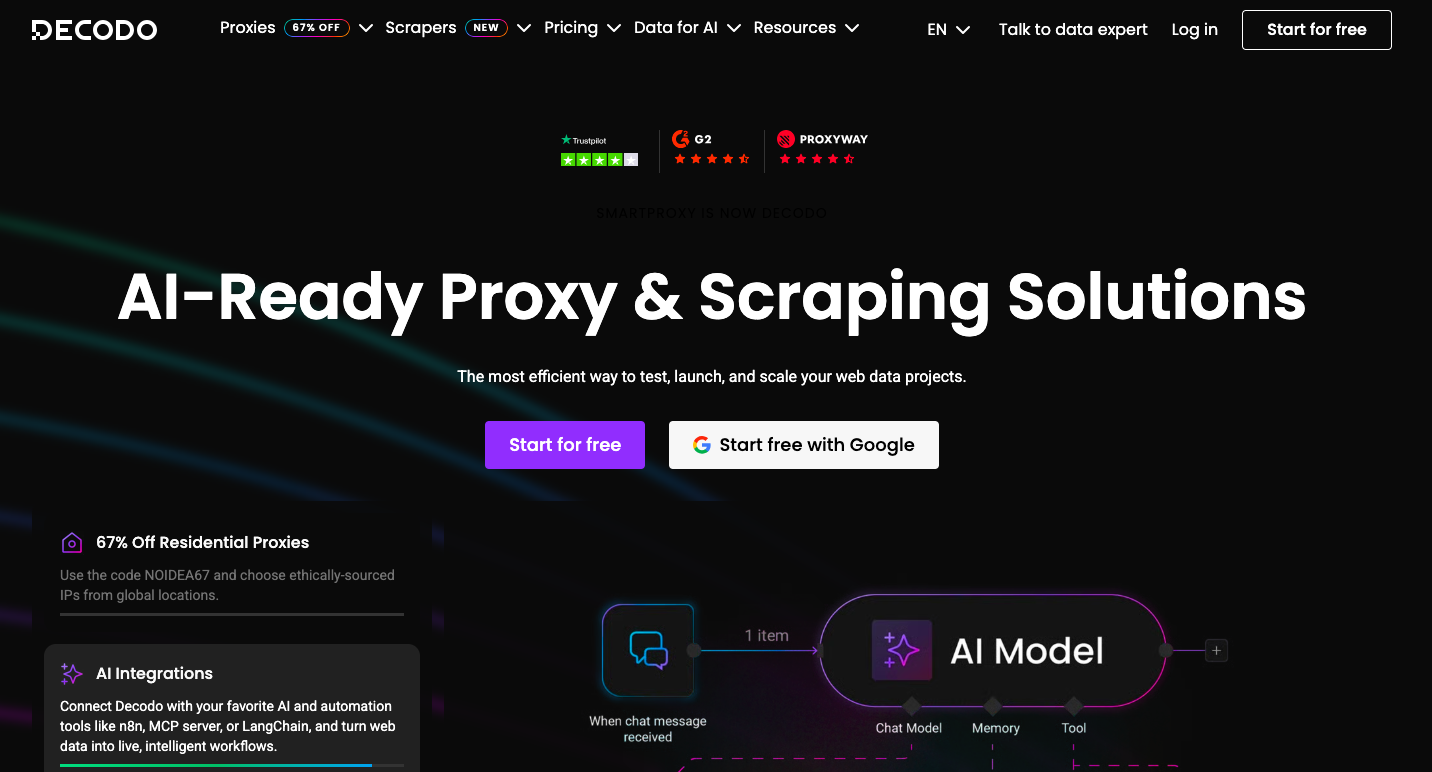
A balanced middle option for growing scraping teams.
Free advanced targeting: country, state, city, ZIP and ASN at no extra cost
Large pool: 115M+ IPs in 195+ locations
Flexible sessions: a new IP per request or on a schedule, or sticky sessions lasting “minutes to days”
Fast responses: 99.92% success rate and under 0.5s response time (vendor figures)
Search data add-on: a Fast Search API from $0.40 per 1,000 requests
Easy testing: a 3-day trial with 100 MB; residential from $4/GB pay-as-you-go to $2.75/GB at 100 GB
vs CyberYozh: similar features, $25 more per 100 GB, and no free scraper. Compare →
5. Bright Data
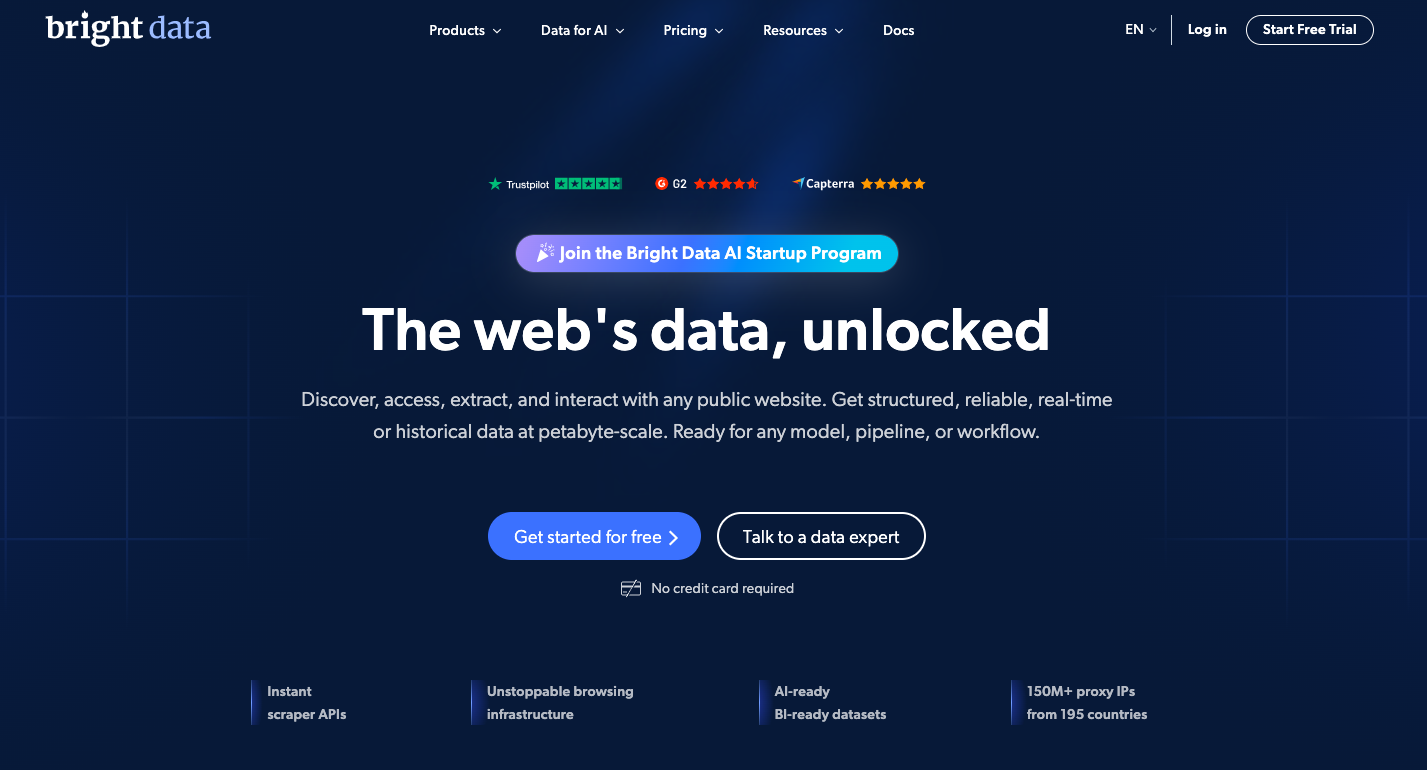
The biggest pool, built for large data teams.
Largest network: 400M+ residential IPs from 195 countries
Detailed targeting: country, state, city, ZIP and ASN
Massive parallelism: unlimited concurrent sessions
Modern protocols: HTTP/S, SOCKS5 and QUIC (HTTP/3) support
Enterprise compliance: ISO 27001 and SOC 2 certifications, with strict KYC checks before residential access
Pricing: $4/GB pay-as-you-go with a 50% coupon; plans from $499/month for 141 GB
vs CyberYozh: huge scale, but a high entry cost for smaller projects. Compare →
6. SOAX
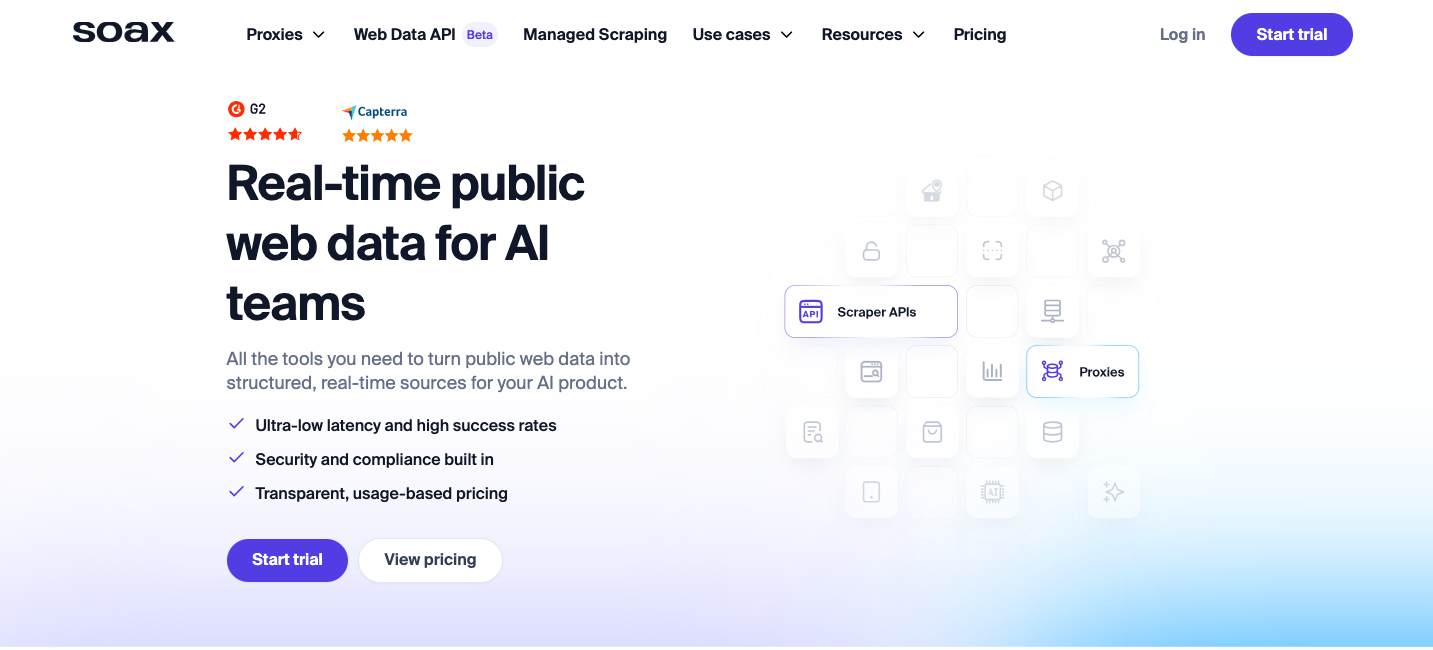
Flexible credit-based plans with good city targeting.
Large pool: 155M+ residential IPs in 195+ locations
Session control: rotate on every request or set custom session lengths, reported at up to 60 minutes
Unlimited concurrency: run as many parallel sessions as your plan allows
Broad protocol support: HTTP(S), SOCKS5 and UDP/QUIC
Targeting tiers: city targeting on paid plans; ZIP and ASN from the $1,500/month Scale plan
Pricing: $5/GB Sandbox, $3/GB on the $200/month plan, $2.20/GB on the $500/month plan; credits expire after 60 days
vs CyberYozh: CyberYozh traffic rolls over monthly, and ASN targeting doesn’t require a $1,500 plan. Compare →
7. IPRoyal
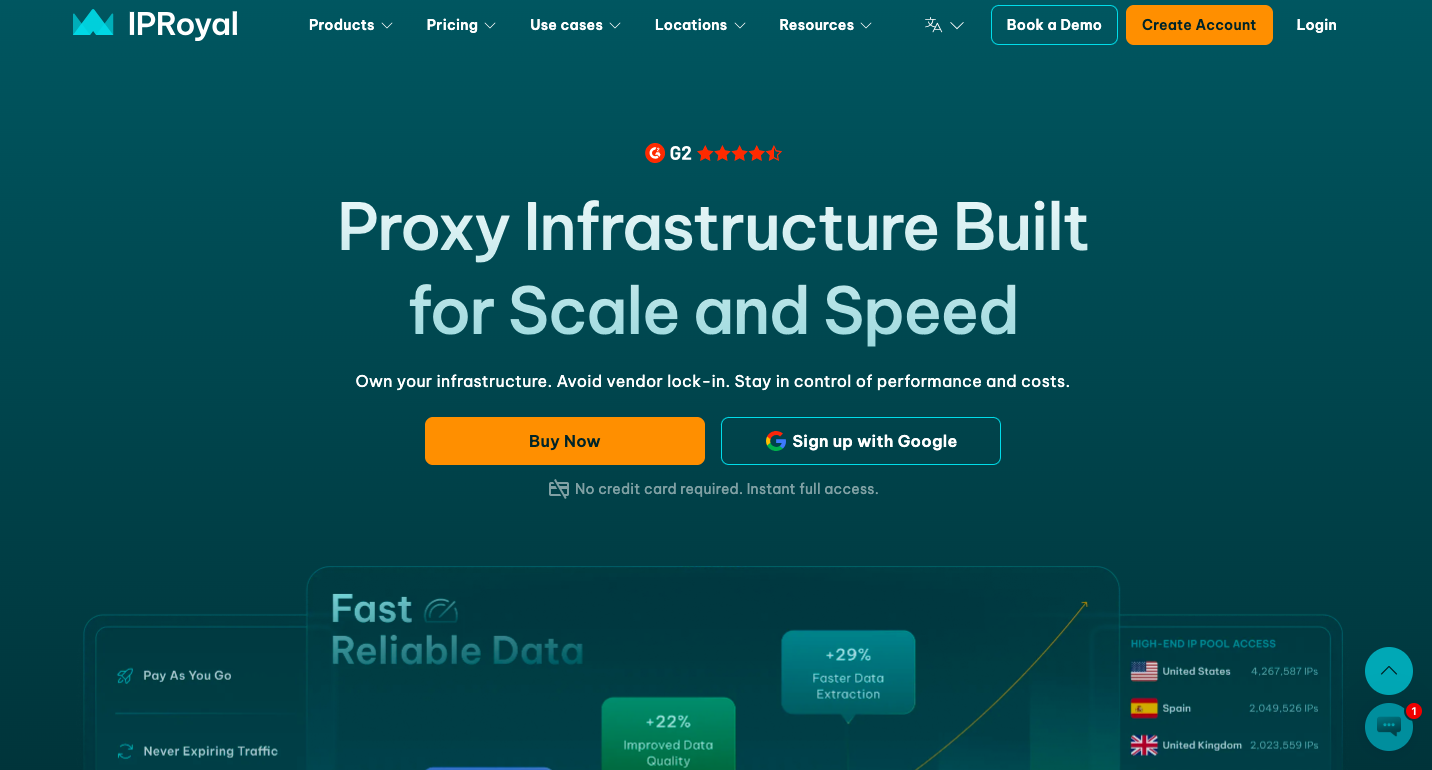
Best for very long sessions.
Longest sticky sessions: keep the same IP for up to 7 days
Traffic never expires: useful for scrapers that run in occasional bursts
Unlimited concurrency: no cap on simultaneous connections
Coverage: 64M+ IPs in 195+ countries, with country, state and city targeting
Performance: 99.4% success rate and about 0.5s response time (vendor figures)
Pricing: $7/GB at 1 GB and $5.25/GB at 10 GB; $1.75/GB only at 10 TB+
vs CyberYozh: longer sessions, but $5.25/GB at 10 GB against CyberYozh’s $3.80, and no ZIP or ISP targeting listed. Compare →
8. Webshare
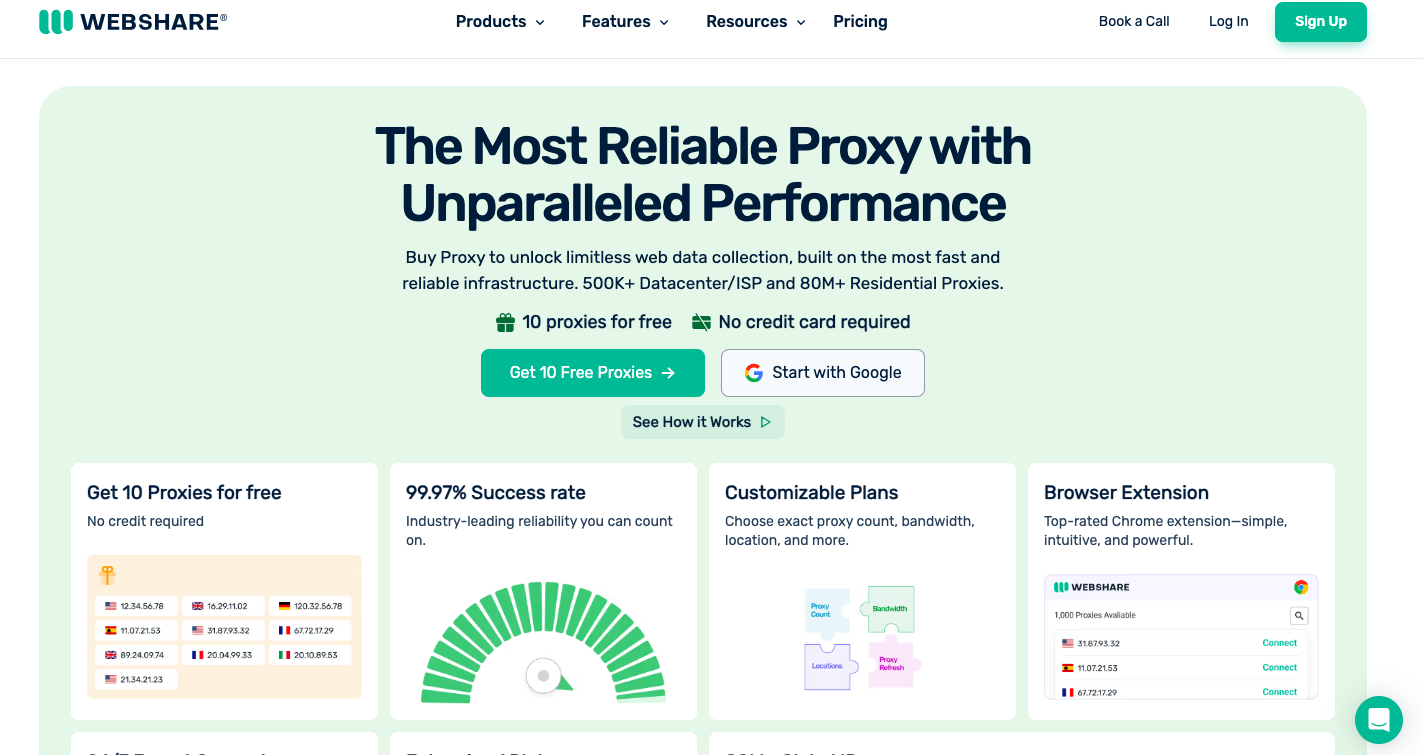
Strong on cheap datacenter proxies for lightly protected sites.
Free starter plan: 10 datacenter proxies at no cost, with no credit card required
Cheap datacenter at scale: good for public datasets and sites with light bot protection
Residential option: 80M+ IPs in 195 countries
Full targeting: country, state, city, ZIP and ASN
Volume pricing: residential from $3.50/GB, $2.25/GB at 100 GB, down to $1.40/GB at 3 TB
Watch out: no mobile proxies, and sticky session limits aren’t published
vs CyberYozh: slightly cheaper at 100 GB, but no mobile option for hard targets. Compare →
9. Rayobyte
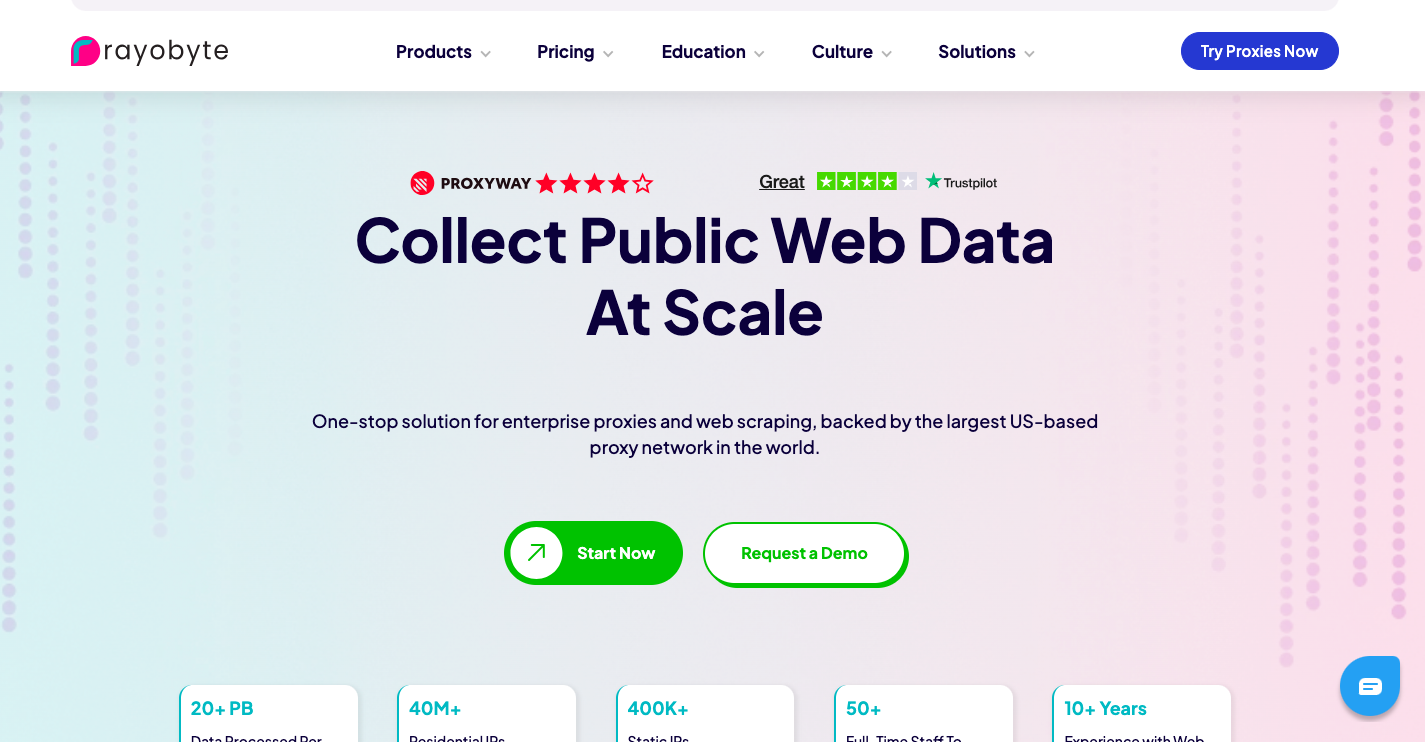
A US provider that says it owns its network.
Owned network: 50M+ opted-in devices each month in 190+ countries
Fine targeting: country, state, city, ZIP, ASN and device OS
Configurable sessions: a new IP per request, or sticky sessions of 1–120 minutes
Unlimited concurrency: no limit on parallel connections
Wide protocol support: HTTP, HTTPS, SOCKS5, SOCKS5 UDP and HTTP/3
Pricing: $3.50/GB up to 49 GB, $2/GB from 50 GB, $0.70/GB at 1 TB+, with a free trial and no card needed
vs CyberYozh: cheaper from 50 GB, but sticky sessions cap at 2 hours against CyberYozh’s 24. Compare →
10. NodeMaven
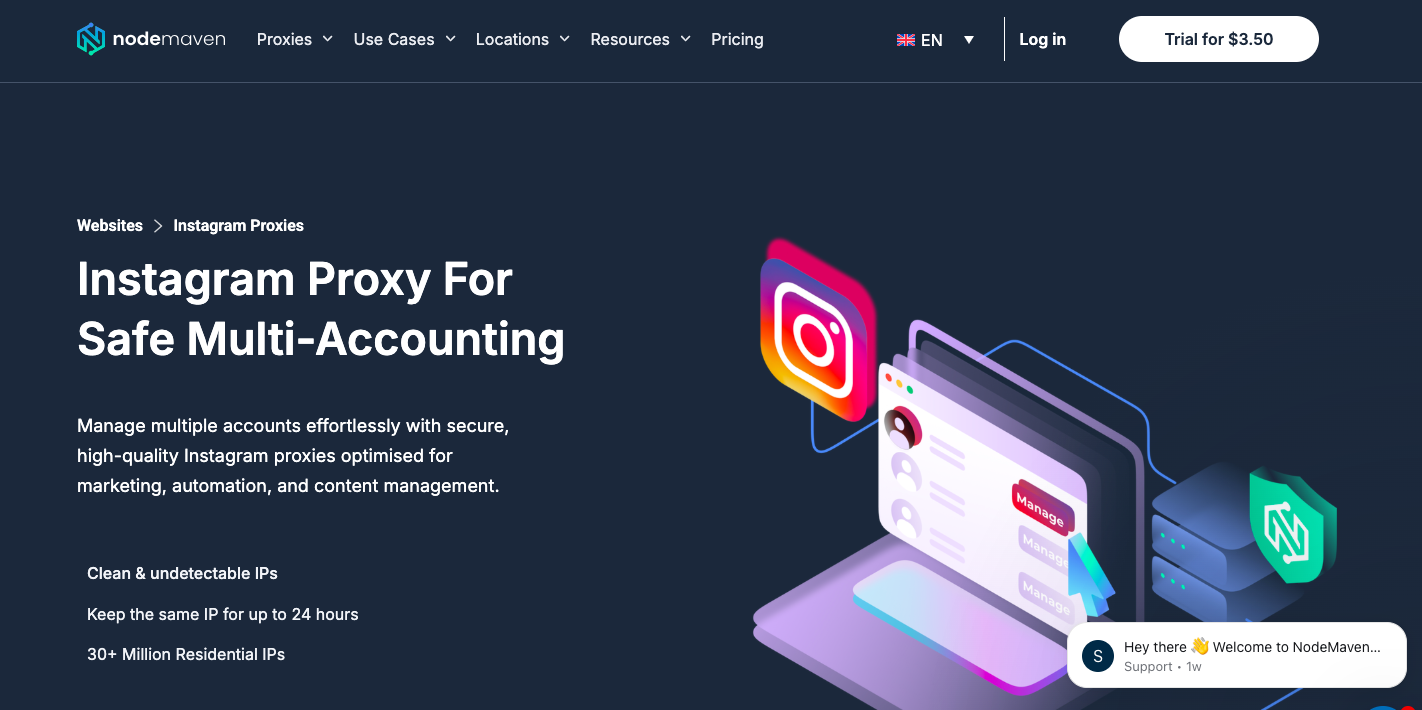
The closest match to CyberYozh’s IP filtering.
Clean IPs: real-time fraud-score filtering, with a claimed 95% IP clean rate
Success rate: 99.54% average (vendor figure), with under 0.6s response time
Long sessions: sticky sessions of up to 24 hours
Local targeting: country, city, ISP and ZIP
Unlimited concurrency: plus HTTP(S) and SOCKS5 support
Pricing: monthly plans from $3.45/GB with traffic rollover; a $3.50 trial for 750 MB
vs CyberYozh: a much smaller pool (30M+ against 100M+) and higher prices. Compare →
11. Infatica
A steady option for monthly subscriptions.
Fast responses: 0.4s average response time and 99.9% uptime (vendor figures)
Targeting: country, region, city and ZIP
Unlimited concurrency: for parallel crawls
Flexible authentication: login and password or IP whitelisting
SERP scraper API: available with a free trial
Pricing: $4/GB pay-as-you-go, $3.60/GB at 100 GB; plans from $96/month; a $4 trial for 7 days
vs CyberYozh: $360 against $250 for 100 GB, from a pool less than half the size. Compare →
12. ProxyEmpire
Rollover bandwidth and broad rotation options.
Three rotation modes: a new IP per request, sticky sessions or timed rotation
Rollover bandwidth: unused traffic carries over on eligible plans
Unlimited concurrency: on all plans
Protocols: HTTP, HTTPS, HTTP/2 and SOCKS5
Coverage: 30M+ residential IPs in 170+ countries, with country, region, city and ISP targeting
Pricing: $7/GB pay-as-you-go and $4.44/GB at 135 GB without a code, about half with the EMPIRE50 code; a $1.97 trial
vs CyberYozh: CyberYozh’s prices don’t depend on a promo code. Compare →
How to work out your real scraping cost
Price per GB is only half the story. Failed requests still use time and bandwidth, so compare cost per successful page:
Cost per 1,000 successful pages = (GB used per 1,000 attempts × price per GB) ÷ success rate
For example, if 1,000 page loads use 1 GB, a $2/GB proxy with a 90% success rate costs about $2.22 per 1,000 good pages. A $1/GB proxy at 40% costs $2.50, plus the extra time spent on retries and CAPTCHAs.
Pro tip: For long, heavy jobs on one target, an unlimited-traffic mobile proxy changes the maths completely. You pay per day, not per GB. See CyberYozh shared mobile proxies →
Residential, Datacenter or Mobile: Choosing Proxies for Scraping
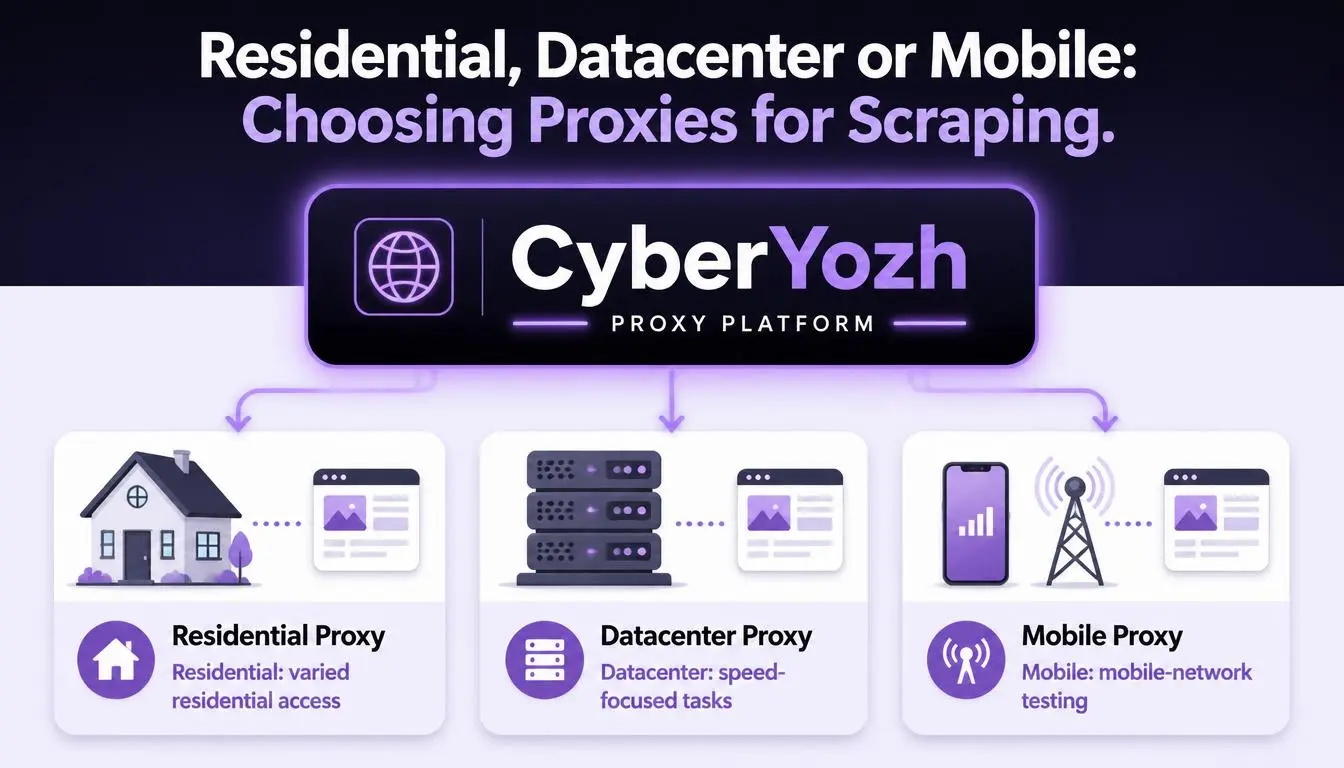
The best proxies for scraping depend less on the brand than on how hard your target fights back. Every proxy type hides your IP address, the basis of web scraping anonymity, but they differ widely in trust, speed, and cost.
Residential proxies
Residential proxies route requests through real home internet connections, so websites see ordinary household visitors. They’re the default choice for scraping e-commerce sites, search engines and other well-protected targets.
Best for: Amazon, Google, travel and retail sites
Trade-off: billed per GB, and slower than datacenter IPs
Mobile proxies
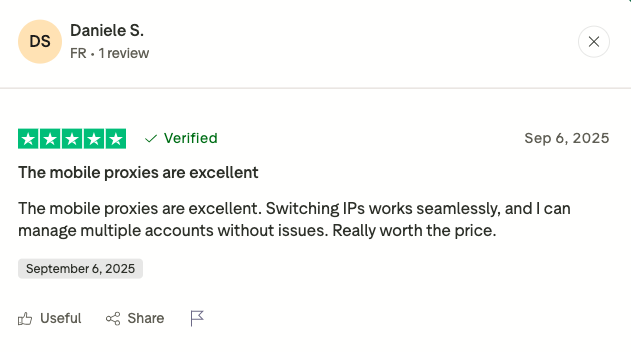
Mobile proxies use 4G and 5G carrier IPs. Carriers share each IP among many real users, so sites are reluctant to block them.
Best for: social platforms and the strictest anti-bot systems
Trade-off: fewer locations, but unlimited-traffic plans can make heavy jobs cheap
Datacenter proxies
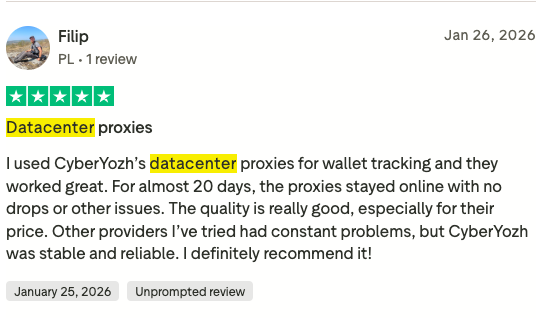
Datacenter proxies come from cloud servers. They’re the fastest and cheapest option, but sites can easily recognize their IP ranges.
Best for: public datasets, APIs and sites with light protection
Trade-off: blocked quickly on well-protected sites
Static residential (ISP) proxies
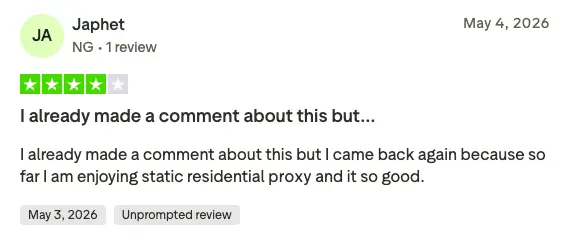
ISP proxies give you a fixed residential-grade IP that doesn’t change.
Best for: logged-in scraping, dashboards and long monitoring sessions
Trade-off: one IP per proxy, so they don’t suit high-volume rotation
Explore static residential proxies for $5.29/month with unlimited traffic
Rotating vs sticky sessions
Rotating proxies give each request a fresh IP, spreading load and avoiding rate limits. Sticky sessions keep one IP for minutes or hours, preserving logins and multi-page flows. Most scraper proxies offer both, so match the mode to the task rather than picking one for everything.
Target | Best proxy type | Why |
Google and search engines | Rotating residential or mobile | Heavy bot protection; plain requests fail |
Amazon and large e-commerce sites | Rotating residential | Needs real household IPs and wide coverage |
Social media | Mobile | Platforms treat carrier IPs as low risk |
Public datasets, light protection | Datacenter | Cheapest and fastest |
Logged-in or multi-page flows | Sticky residential or ISP | Keeps one IP for the whole session |
What changed for scraping in 2026
Google requires JavaScript (since January 2025), so scrapers need a real or headless browser for search results
Cloudflare blocks AI crawlers by default (since July 2025) and lets sites charge per crawl, according to MIT Technology Review
Lawsuits continue: Meta and X both lost scraping cases against Bright Data over public data in 2024, while Reddit sued SerpApi, Oxylabs and others in October 2025
Scraping public data is widespread, but respect robots.txt and site terms, avoid personal data, and get legal advice for large commercial projects. Prefer to skip proxy management entirely? Our web scraping API comparison covers managed options.
Conclusion
The best scraping proxies depend on your target and volume. DataImpulse wins on raw price per GB, Oxylabs and Bright Data on enterprise scale, and CyberYozh on all-round value: large residential coverage, 24-hour sessions, unlimited-traffic mobile proxies and a free scraper in one account.
Ready to scale your scraper? Get a CyberYozh web scraping proxy, or compare plans in the catalogue.