How Do Forward Proxies Work? Forward vs Reverse Proxy

A forward proxy is a server located between a user and the internet, forwarding requests to websites for the user. It hides the user’s real IP so that the target website sees the proxy’s IP address. Forward proxies are used for security, web scraping, automation, and managing network traffic in companies.
On the flip side, reverse proxies are put in front of web servers and handle requests from users, protecting the access to backend infrastructure.
In this guide, we’ll explain exactly how forward proxies work, their most popular use cases, and the difference between the forward vs reverse proxy. We will also suggest a reliable forward proxy solution for businesses and individuals.
How forward proxies work
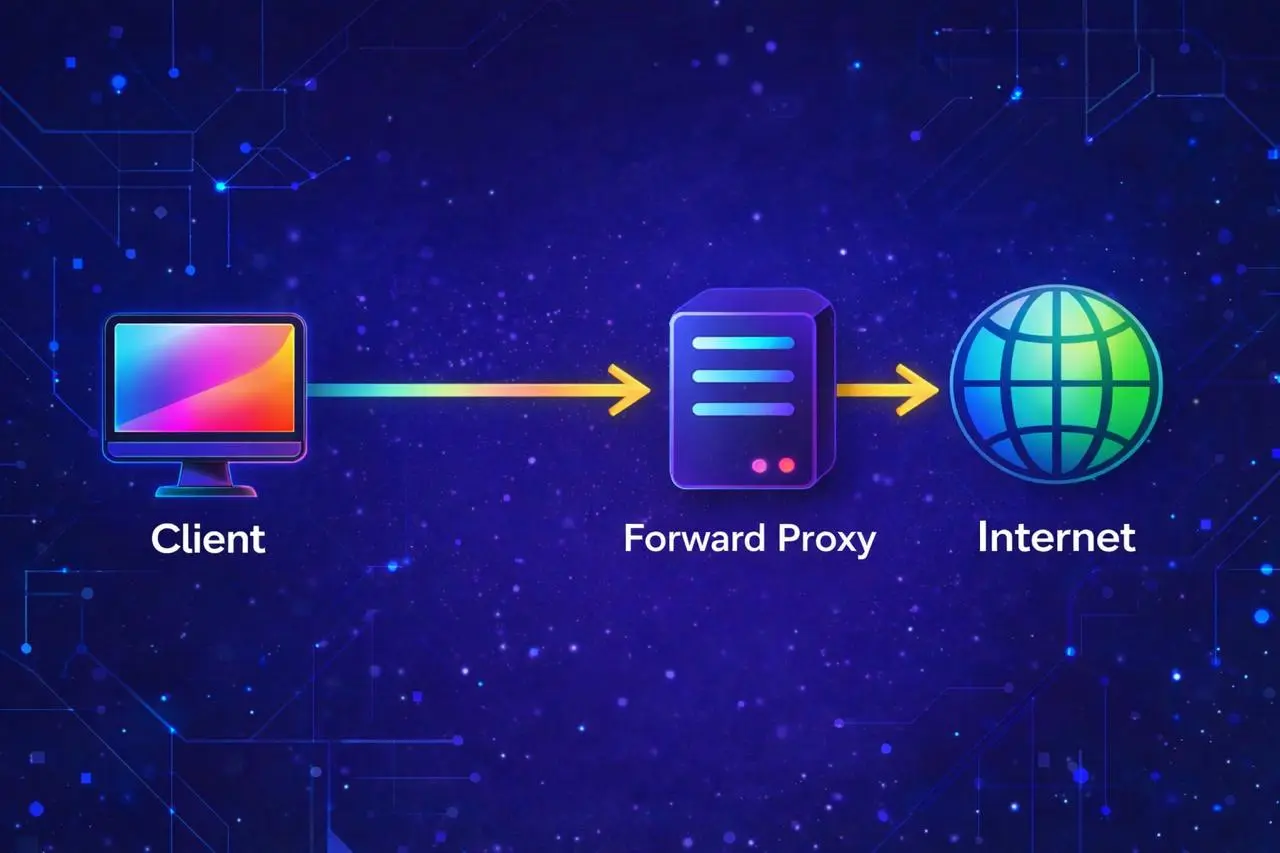
A forward proxy is an intermediary server between the client and the target site. Instead of connecting directly to a site, the user sends the request to the proxy first. The proxy forwards this request to the destination website and sends the response to the user’s device. And since the request is routed through proxy, the website sees the proxy’s IP address, not the user’s.
This setup allows the proxy to control outgoing traffic. It can hide IP addresses, block certain websites, and enforce company security policies. A forward proxy example is restricting the access to unwanted websites and monitoring internet usage in such networks as large companies or libraries.
But forward proxies aren’t just for corporations. Marketers, researchers, and automation teams rely on them for multi-account management, data collection, and web scraping. By distributing requests across multiple IPs, they make large-scale operations more stable and minimize website restrictions.
How users can benefit from forward proxies
Businesses and developers use forward proxies for ad verification, data collection, multi-accounting, or to manage their visibility. To avoid disrupting operations, use high-quality proxies - like those CyberYozh provides. Here’s how you can use forward proxies:
Use a Forward proxy to hide your real IP
A forward proxy can hide your real IP address when you browse the internet. Instead of connecting to a website directly, your request goes through the proxy, so the site only sees the proxy’s IP. This adds an extra layer of privacy and can also help users access geo‑restricted content
Forward proxy for web scraping
When collecting data from websites, sending too many requests from a single IP can quickly trigger blocks or rate limits. Forward proxies solve this by spreading requests across multiple IP addresses, making the traffic look more natural. CyberYozh offers rotating residential and datacenter proxies with a 99.9% uptime and high speed, helping maintain stable and uninterrupted data collection even at scale.
Automate and manage multiple accounts with a forward proxy
With forward proxies, you can run multiple social media or ad accounts. Assigning a different IP address to each Reddit or Facebook account reduces the risk of linking them. CyberYozh provides dedicated mobile proxies and integrations with automation tools, helping keep accounts separated and lowering the chance of bans or verification loops.
Forward proxy for network performance improvement
Forward proxies act as intermediaries between users and the internet. Instead of each device sending requests directly to external websites, traffic goes through the proxy server, which can cache frequently requested content, compress data, and efficiently manage connections. Moreover, proxy can provide this content from its cache instead of downloading again, which reduces bandwidth usage.
Browse geo-specific content with forward proxies
Forward proxies route your online traffic through IP addresses in particular regions or cities (such as Toronto or San Francisco). This makes it possible to see how websites actually appear to users in those locations. CyberYozh provides IPs from 100+ countries, which allows teams to test content, ads, or search visibility from the exact region they care about.
Forward proxies for ad verification
Brands and agencies can use forward proxies to confirm that ads or prices are shown correctly in different regions. This helps detect issues such as ads appearing on the wrong sites, incorrect regional targeting, or suspicious placements that may signal ad fraud.
Control internet access with forward proxies
Many companies deploy forward proxies as a gateway between employees and the internet. All outgoing requests pass through the proxy first, allowing the administrator to apply browsing rules, such as limiting browsing time or denying visiting certain websites, which helps maintain productivity during working hours.
Types of forward proxies
Forward proxies can also be categorized by the type of IP address they use.
Datacenter proxies are housed in data centers, not real internet service providers. They are fast, affordable, and suitable for low-sensitivity tasks like large-scale scraping, automation, and testing. Yet, some websites including social platforms can detect them easily.
Residential proxies use IP addresses assigned by real internet service providers to household devices. Because they appear like your neighbor browsing from his computer at home, they are harder for websites to block. They work well for accessing restricted content, managing accounts, and collecting data.
Mobile proxies route traffic through mobile carrier networks, such as Verizon, AT&T, or Vodafone. They are highly trusted by websites and suitable for tasks that require the highest level of authenticity – such as multiaccounting or ad verification.
How reverse proxies work
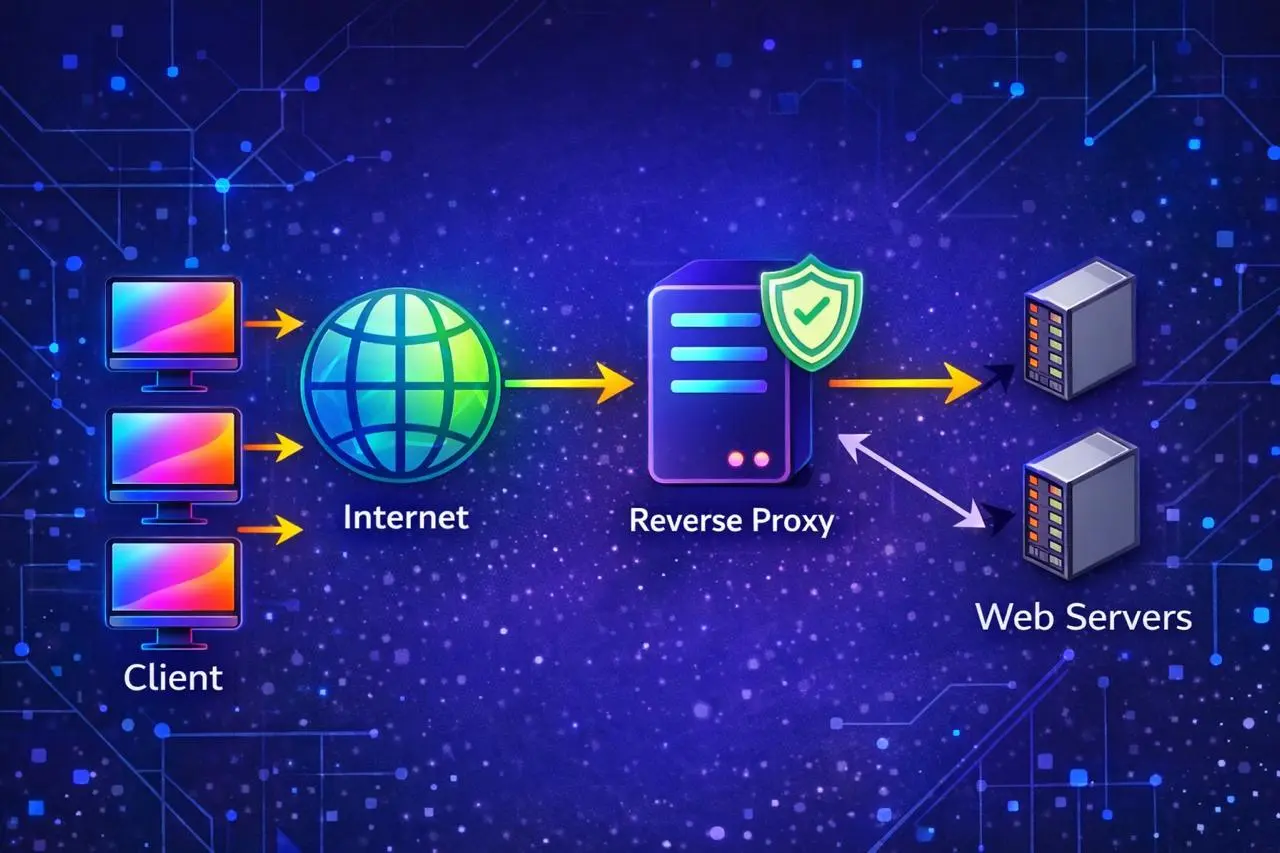
A reverse proxy is located in front of web servers, not your device. It forwards visitors’ requests to the appropriate server instead of connecting directly to the backend server. After receiving the response from the server, proxy sends it back to the user.
This strategy lets reverse proxies manage incoming user traffic. It can distribute requests across multiple servers, improve performance through caching, and add security layers to protect the infrastructure. Because the backend servers are hidden behind the proxy, their IP addresses and internal architecture are protected from direct exposure and attacks.
What are the use cases of reverse proxies
Reverse proxies are widely used by website owners, large platforms, and SaaS companies running high-traffic applications. They help hide real server IPs, apply rate limits, and filter out suspicious requests.
Here are some of the most common ways reverse proxies are used:
Load balancing
A reverse proxy can distribute traffic across several backend servers. Instead of sending every request to a single machine, the proxy spreads the load across several servers. This prevents one server from getting overwhelmed while others sit idle. Traffic is shared evenly, which keeps the application stable even during traffic spikes
Content caching
Reverse proxies can store images, scripts, or static pages in cache. When users request the content again, the proxy serves it directly without contacting the backend server. The result is faster page loads and far fewer repeated queries hitting the infrastructure. It speeds up page loading, especially during traffic spikes or when thousands of users request the same content.
Security and server protection
A reverse proxy acts as a front door to your infrastructure. Users never connect directly to the backend servers - each request passes through the proxy, where it can be inspected, filtered, or blocked. Thus, suspicious traffic can be stopped before it touches the application layer.
TLS/HTTPS termination
Reverse proxies can manage HTTPS encryption for websites and applications. Instead of configuring SSL certificates on each backend server, reverse proxy accepts encrypted connections and forwards requests internally. It simplifies certificate management and improves performance because backend servers can focus on processing requests instead of encryption.
Microservices and container environments
Modern applications rarely run as a single system. They are built from smaller services, such as a web interface, API, or authentication system, which run independently. Instead of users connecting directly to different services, every request first reaches the proxy. From there, it gets routed to the needed component of the application.
Key differences between a forward proxy vs. reverse proxy
To further explain the difference between reverse proxy vs. forward proxy, we’ve gathered their key features in the table below:
Feature | Forward Proxy | Reverse Proxy |
Location | Placed between the user and the internet | Placed in front of web servers or backend infrastructure |
Traffic direction | Handles outgoing requests from clients to external websites | Handles incoming requests from users to web servers |
Visibility | Hides the client’s real IP address from websites | Hides the backend servers’ IP addresses from users |
Primary goal | Hide real IP, control outbound traffic, and enable IP-based operations | Improve performance, security, and reliability of web applications |
Key use cases | Web scraping, automation, multi-account management, geo-targeted browsing | Load balancing, caching, server protection, and traffic routing |
Typical users | Businesses running automation, marketers, researchers, and developers | Website owners, SaaS platforms, and large online services |
Conclusion
A forward proxy sits between the user and the internet, sending requests on the client’s behalf. It helps control outgoing traffic and manage tasks like multi-account management, automation, or large‑scale scraping.
Reverse proxies, on the other hand, work on the server-side of the connection. Incoming traffic first reaches the reverse proxy, which routes these requests to backend servers. This setup protects infrastructure, spreads traffic, and helps websites stay stable during heavy load.
For businesses and individuals looking for reliable, high-performance forward proxies, CyberYozh offers mobile and best residential proxies with clean IPs. They are ideal for automation, multi-accounting, web scraping, and other tasks, giving you stability and control over your operations.
FAQs
What is the difference between forward and reverse proxy?
A forward proxy works on the user’s side, sending requests on your behalf and hiding your identity. A reverse proxy works on the server side, acting like a gatekeeper that receives incoming traffic and routes it to the right backend server.
Is a VPN a forward proxy?
No. A VPN also routes traffic through another server, but it encrypts all internet traffic from your device. A forward proxy works at the application level. You configure it for specific tools, browsers, or scripts rather than your entire system.
Should I choose HTTP forward proxy vs SOCKS proxy?
HTTP proxies are created for web traffic. They work great for browsing, SEO tasks, or scraping tools that send HTTP requests.
SOCKS proxies are more flexible. They work with most traffic types and protocols, and are suitable for automation tools, bots, or applications that need broader protocol support.
Are forward proxies safe to use?
Forward proxies are safe, if they come from trusted providers who monitor their IP pools, like CyberYozh. Using unreliable or free proxies can do more harm than good, resulting in slow connections, flags, or IP bans.
Can a forward proxy hide your IP address?
Yes. A forward proxy masks your real IP and sends requests from its own IP. Your real IP stays hidden behind that intermediary server.
What is a forward proxy for web scraping?
During web scraping, a forward proxy forward proxy acts as a pool of different IP addresses. Instead of sending thousands of requests from one machine, the scraper distributes them across multiple proxy IPs. This spreads the load and reduces the chance of triggering rate limits or blocks.