
12 Best Residential Proxies in 2026: Compare Providers, Features, and Use Cases
Web scraping is harder than ever in 2026. Anti-bot systems are more advanced, rate limits are stricter, and one flagged IP can shut down an entire workflow. Whether you’re monitoring eCommerce pricing data, running LinkedIn outreach, managing multiple accounts on social media, or verifying ads across regions, using the wrong proxy provider means more CAPTCHA interruptions, rate limits, bans, and wasted budget.
That’s where the residential proxies make the difference. By routing traffic through real user IP addresses, they help you bypass geo-restrictions, reduce detection risk, and scale automation without breaking sessions.
Choosing among the dozens of providers with varying IP quality and features can be tricky, but we have you covered. In this guide, you’ll find the best residential proxy providers in 2026 for social media, automation, scraping, and other use cases.
What are residential proxies
Residential proxies are real IP addresses provided by real Internet Service Providers (ISPs) to individual users. When you use them, your traffic appears like a real household to the system, not a data center or server farm. Thus, you can easily pass security checks and avoid blacklists.
Think of residential proxies like borrowing a local passport in every country you visit. You blend in like an everyday user browsing from home, which lets you avoid IP bans, CAPTCHAs, and potential blocks.
Static vs rotating residential proxies: which one do you need
Residential proxies come in two types: static and rotating. The right choice depends on whether your workflow requires a consistent IP identity or flexible access across multiple locations.
Static residential proxies
Static residential proxies provide the same residential IP address for an extended period. They are designed for tasks where you need a stable connection and consistent location.
Use static residential proxies for:
Social media operations and account-based workflows
Accessing services that require a consistent location
Testing funnels, websites, and user experiences across multiple steps.
Rotating residential proxies
Rotating residential proxies change IP addresses at every request or at set time intervals. They are designed for workflows that require broader GEO coverage, frequent requests, or large-scale data collection.
Use rotating residential proxies for:
Web scraping and data collection
Price monitoring and competitor research
SERP tracking across multiple locations
Large-scale automation.
CyberYozh rotating residential proxies support scalable scraping, automation, and GEO-based workflows with 24-hour sticky sessions, flexible rotation, advanced IP filtering, and full API access. Pay-as-you-go pricing and traffic rollover are suitable for smaller businesses with changing data collection needs.
Residential proxies vs datacenter proxies
Residential and datacenter proxies differ by IP source, trust, and use cases. Residential proxies use IP addresses assigned by providers, while datacenter proxies come from server networks.
Feature | Residential proxies | Datacenter proxies |
|---|---|---|
IP source | ISP-assigned residential IPs | Server-based IPs |
Speed | Moderate | High |
Location accuracy | Higher | Lower |
Best for | GEO testing, web scraping, account workflows, market research | Speed-focused tasks, basic automation, lightweight requests |
Tip: Choose residential proxies when IP quality, location accuracy, and realistic user environments matter. Choose datacenter proxies when speed and cost efficiency are the main priorities.
Residential proxy use cases
Individuals and businesses can benefit from high-quality residential proxies in many ways:
Managing multiple client accounts: Today’s anti-automation systems instantly flag any suspicious activity. Residential proxies mimic the real user patterns, allowing you to manage multiple accounts from one device with reduced risk of bans.
Safe web scraping at scale: Cheaper datacenter IPs get flagged fast when scraping protected platforms. Residential proxies for web scraping maintain stable access and reduce detection while rotating across locations.
Social media automation: Social platforms like Instagram, TikTok, or Reddit are sensitive to login patterns and IPs. Best residential proxies for Reddit and other platforms enable consistent multi-account management, automation and regional marketing without bans.
Ticket mastering: Ticketing platforms use aggressive anti-bot systems. Residential proxies help distribute purchase attempts across real IPs, reducing instant bans and increasing checkout success during limited ticket releases.
Sneaker copping: Retailers deploy anti-bot protection for exclusive product drops. Residential proxies improve success rates by mimicking genuine buyer traffic to avoid mass IP blacklisting.
Precise geo-targeted testing and ad check: If you need to see how ads appear in different locations, you need local IP visibility. Residential proxies ease ad verifications by letting you check how your campaigns appear to users.
Market research: Pricing and special offers on eCommerce platforms are dynamic and vary for consumer segments. Residential proxies allow accurate, location-specific data collection without constant blocks.
The residential proxy market is expected to grow by 148 million by 2030, and there are dozens of providers offering varying features. Keep reading for a detailed breakdown of features, pricing, and use cases.
11 Best residential proxies of 2026
In this residential proxy provider comparison, we evaluated the top providers for every workflow, starting with the reliable all-in-one platform suitable for every business size or individual:
1. CyberYozh – Best residential proxy with integrations
We picked CyberYozh as the #1 best residential proxy provider for a reason. It is designed for people, small teams, and large organizations who need not just IPs, but real-world results. Whether you need residential proxies for web scraping, managing multiple Reddit accounts, testing, or scaling multi-channel automation, you can count on session stability and high uptime. Monitored IP pools reduce verification interruptions, CAPTCHAs, and the risk of bans.
CyberYozh also offers integrations with popular anti-detect browsers and SMS verification for seamless multi-account management. This positioning makes the app especially strong for social media automation and large-scale data scraping.
Whether your project is in advertising, SMM, multi-account operations, or AI search agents, CyberYozh has all your needs covered. You can buy residential proxies at a competitive price. Prices are oriented around monthly plans and pay-as-you-go options, built to scale with your growth rather than surprise you with hidden fees.
Key CyberYozh features:
100+ million high-quality residential proxies across 195+ countries
IP reputation checked by 50+ security databases for unmatched stability and performance
Real 4G/5G mobile proxies with unlimited bandwidth – a rare feature among proxy providers
Integrations with SMS and phone verification for seamless multi-accounting
99.8% uptime, which exceeds the industry benchmarks
Accurate geo-targeting by city, state and ZIP code
Flexible rotation and sticky sessions up to 24 hours for stable automation
Seamless integrations with Multilogin, AdsPower, Geelark, Dolphin Anty, Gologin, and automation tools
API integration with Scrapy, Selenium, Postman, Playwright, Puppeteer, and other automation frameworks
OS fingerprint switching to maintain high platform trust scores.
Pricing:
From $2 per GB for residential rotating proxies with dynamic IP rotation
From $5.29 per month for residential ISP proxies with real static IPs
From $1.7/day for mobile proxies with unlimited traffic.
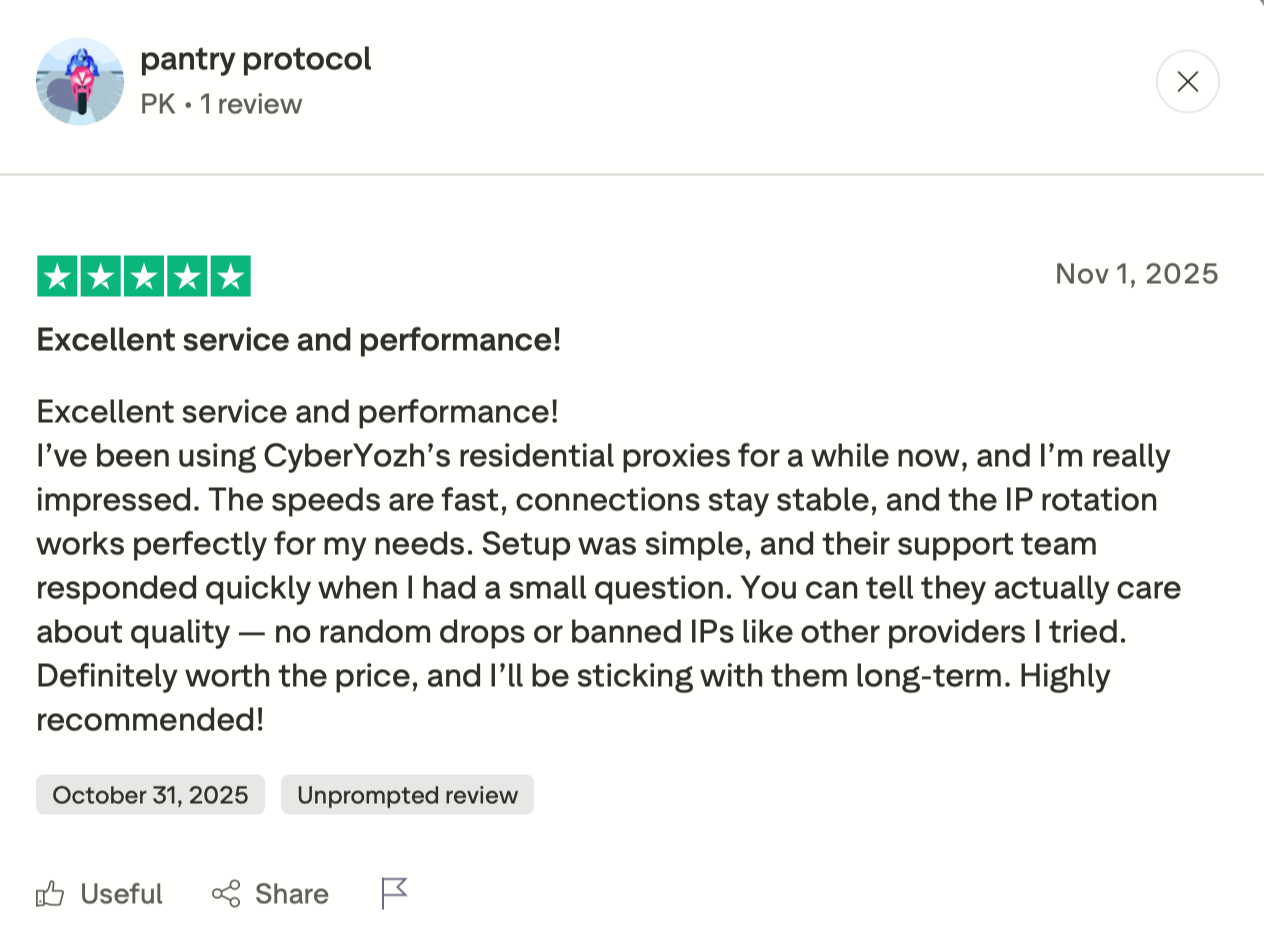
What CyberYozh clients say on Trustpilot
2. Floppydata
Floppydata offers residential, mobile, ISP, and datacenter proxies with a unified control panel and flexible pay-as-you-go pricing. The network covers 195+ countries with a large IP pool and a high trust score, making the service suitable for both scraping and multi-account management.
The platform stands out for its ease of use — proxy setup takes just a few clicks through dropdown menus on the dashboard, with no complicated onboarding even for non-technical users. The "Rotating proxy" plan includes three IP types (residential, mobile, and datacenter), which can be switched between at any time, with billing only for the traffic actually used. Floppydata delivers a stable 99.99% uptime and integrates easily with popular antidetect browsers such as Gologin and 1Browser.
Features:
Pool of 50M+ residential, mobile, ISP, and datacenter IPs
Flexible rotation from per-request to Keep-Alive and sticky sessions
Precise geo-targeting by country, city, and ASN
Full protocol support, including UDP and SOCKS5
Integration with leading antidetect browsers and automation tools
Pricing:
$1 per GB for rotating proxies
from $1.79 per IP for static residential proxies
from $0.79 per IP for datacenter proxies
3. Oxylabs
Oxylabs is one of the top residential proxy providers with a pool of IPs worldwide and granular geo-targeting from country level down to ZIP coordinates. It’s suitable for scraping, data extraction, and enterprise needs in mind, including price monitoring, data collection, and regional SERP harvesting.
Oxylabs is engineered for developers and data teams with advanced rotation options, API integrations, and add-on tools such as web unblockers. Yet, configuration might be confusing for users who are not highly technical.
Features:
Residential IPs in many countries for focused geo-targeting by country and city
Rotating and sticky session options
API-based automation support
Good for structured scraping environments and data operations
Might be less effective for behavioral automation or multi-account social workflows; not optimized for account longevity
Cost can be prohibitive for smaller teams.
Pricing:
$4 per GB for a basic plan (higher than mid-market providers)
Advanced plan for $3.49 per GB.
4. NodeMaven
NodeMaven offers residential and mobile proxies, just like most proxy providers on this list. The platform provides sticky sessions that last, making it suitable for multi-account management. With these residential proxies for social media automation, you can maintain logged-in states across platforms and avoid IP bans.
The platform claims to be useful for account automation, data scraping, and SEO monitoring. Yet, the pricing system makes it less suitable for smaller teams, and the platform might be less effective for those seeking rotating residential proxies vs static.
Features:
Good for account automation, ads verification, and social scripts
IP quality filtering to minimize bans and errors
Dashboard-based session management
Precise country, city, ASN targeting - you can choose a US proxy or California proxy
Pricing is not ideal for small agencies and budget scraping projects.
Pricing:
$4.42 per GB on pay-as-you go basis (the cost per GB is cheaper for large traffic bundles)
From $35 on a monthly basis.
5. SOAX
SOAX offers residential proxies for social media automation and other purposes. It has a broad network of IPs – but when choosing a provider for managing multiple accounts and web scraping, you should consider proxy IP quality vs pool size. This proxy provider is a good choice for scraping, geo-testing, and global coverage.
Various rotation strategies and API tools help tailor proxies to specific workflows. On the flip side, some users note they have less supportive ecosystem for account stability, which might potentially undermine automation projects.
Features:
A pool of residential IPs with focused geo-targeting
API integration support
Clean dashboard interface
Good for structured data extraction
Advanced integrations and documentation leave room for improvement.
Pricing:
Monthly plans starting at $90 per month ($3.60/GB)
Positioned in the mid-to-premium range per GB.
6. BrightData
BrightData is a proxy ecosystem with extensive location controls. In addition to residential proxies, it provides scraping APIs, data sets, and web-unblocking tools, which is suitable for data teams, plus advanced features and controls for scalability. You can use these residential proxies for AI training as well.
However, the platform’s complexity may be overwhelming for smaller agencies and non-technical teams. If budget is a concern, you also might want to explore other options.
Features:
A network of residential IPs for many purposes
Additional scraping and unblocking APIs
Good for structured data collection across regions
Enterprise compliance and documentation
Complex interface for beginners and non-technical users
Pricing:
$4.00 per GB on pay-as-you-go basis plus optional features
$1999 monthly for 798 GB.
7. NetNut
NetNut’s residential proxy network was taken offline by the FBI and Google after investigations linked parts of the network to a botnet that allegedly hijacked over 2 million smart TVs and streaming devices to route traffic through users’ home IPs.
NetNut is a residential proxy provider. Its website emphasizes direct ISP relationships and connection speed. It supports HTTP/HTTPS/SOCKS5 protocols, integrates with AI tools, and can be used for scraping operations where uptime and geo-specific data collection are important. Yet, it may not perform just as good in anti-detect environments or behavioral automation ecosystems. Moreover, monthly plans might not be convenient for all types of users.
Features:
Good for fast data operations, responsive scraping, and tasks requiring consistent output
Country and city targeting
Stable routing infrastructure with sticky session options
Lacks flexibility for low-volume users.
Pricing:
$210 for 72 GB per month
Rotating residential proxies pricing starts at $99 per month ($2.85/GB).
8. DataImpulse
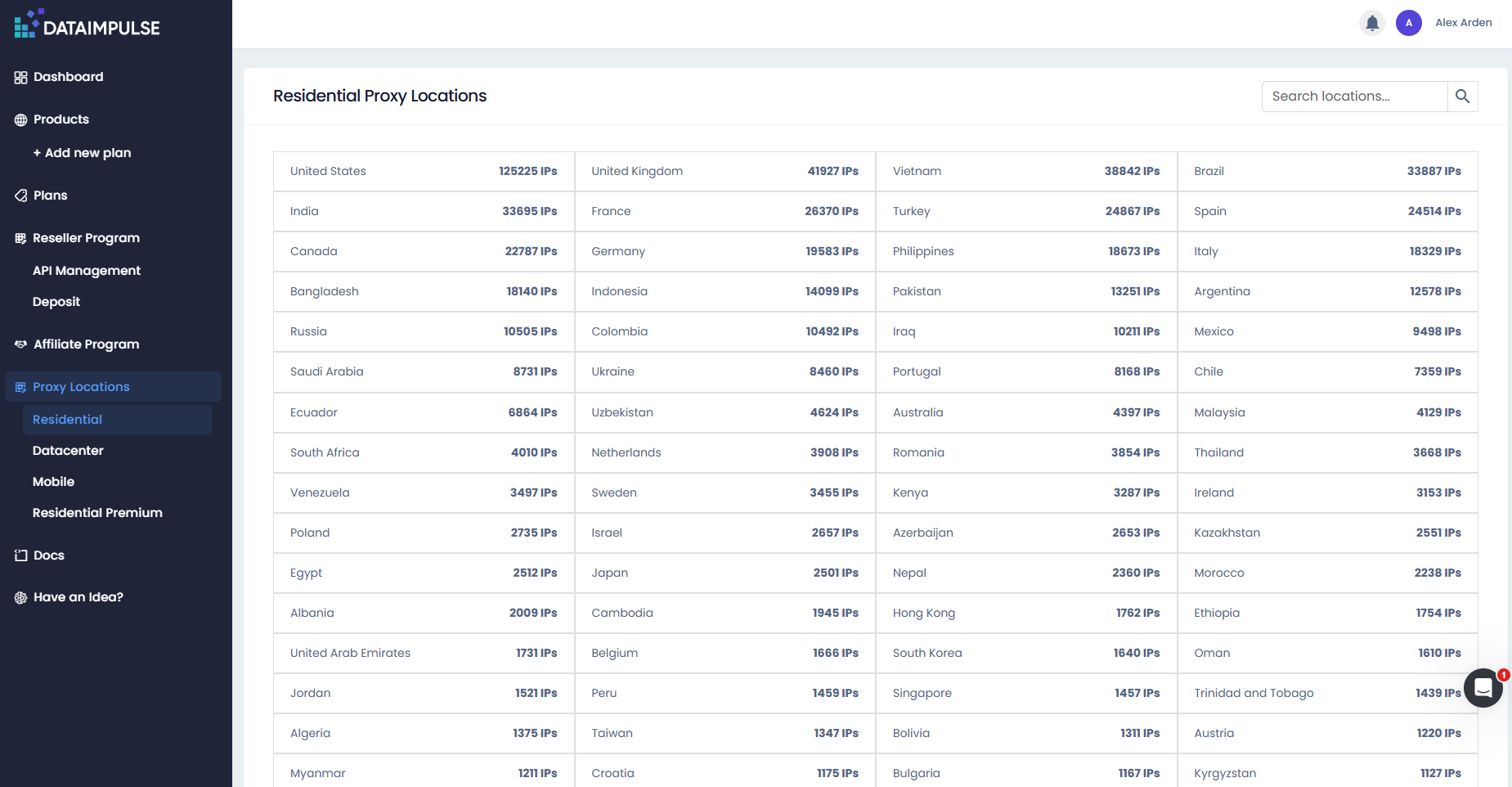
DataImpulse offers residential proxies with a simple pay-as-you-go model, and the purchased traffic does not expire, making it a good fit for unpredictable usage. The network includes 195 locations with flexible rotation and sticky session options suitable for scraping and automation workflows.
The platform is good for startups, independent developers, and budget-conscious teams. Support is available around the clock, and these are quite cheap residential proxies, yet the app lacks advanced analytics and integrations found with other proxy providers.
Features:
A pool of residential proxies with extensive geography
Great for budget scraping and automation with intermittent use
Sticky sessions and rotating IPs
Simple dashboard and API access
Might be less suitable for high-risk automation environments.
Pricing:
$50 for a basic plan (50 GB)
$4000 for 5 TB.
9. Nimble
Nimble combines residential IP infrastructure with AI-driven scraping optimization. It claims to manage structured data collection, market intelligence, and automated handling of anti-bot challenges without manually tuning rotation. The platform can suit data teams and growth departments.
Nimble focuses on dynamically adapting routing and reducing block rates, which might be valuable for eCommerce, travel, and SERP domains. However, it is less suitable for account-based automation.
Features:
AI-optimized proxy routing
Residential IP pool with global targeting
Less focused on social automation and account management
Built-in scraping infrastructure for data-driven projects
API-focused integration.
Pricing:
$8 per GB on pay-as-you-go basis.
10. Rayobyte
Rayobyte provides residential, ISP, and datacenter proxies, making it flexible for users who want multiple proxy types under one platform. This is useful for hybrid scraping setups or projects that require switching between infrastructure types.
The platform supports automation and scraping tools and offers precise geo-targeting. Rayobyte is typically used for web scraping, SEO monitoring, brand protection, and ad verification including Google Ads. Yet, the platform is not exactly optimized for high-risk multi-account automation.
Features:
A pool of residential, ISP, and datacenter proxies
Country and city-level targeting
Rotating and static IP options
Focus on compliance and IP sourcing transparency
Limited features for social media and behavioral optimization.
Pricing:
$3.50 per GB up to 49 GB (industry mid-range)
$2 per GB for up to 249 GB.
11. IPRoyal
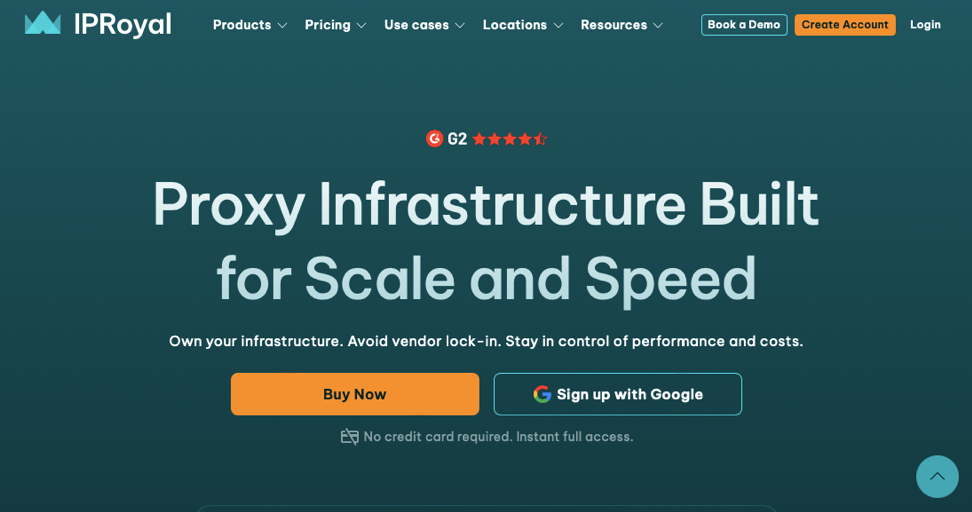
IPRoyal has flexible residential proxy plans, which makes the app good for small teams, startups, and individual developers. It offers rotating residential proxies with broad geo coverage and API access. The dashboard interface is available. On the other hand, this solution might not suit those seeking advanced session automation. features.
Features:
Good for general scraping, sneaker bots, and location-based testing
Pay-as-you-go pricing options
ISP and mobile proxy alternatives available
Lower-to-mid range per-GB pricing – accessible to small users.
Pricing:
$7 for GB
$1.75/GB from 10 TB
12. Decodo
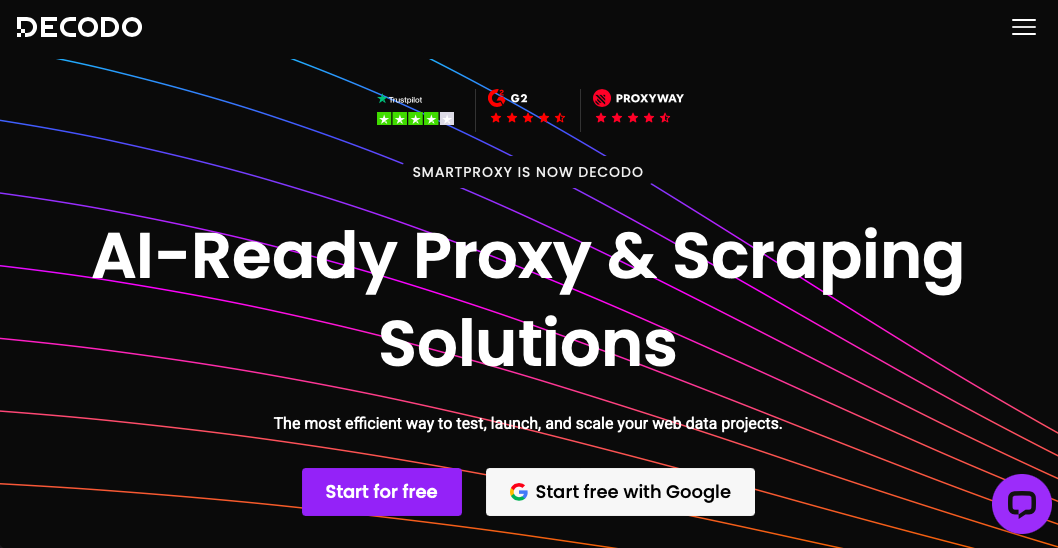
Decodo is a modern residential proxy provider targeting data extraction and performance-driven scraping workflows. It offers flexible rotation options and geo-targeting, making it suitable for eCommerce monitoring, SEO, and competitive intelligence.
The platform claims to have easy setup and streamlined proxy deployment, which might attract technical teams that want quick integration. However, it is more scraping-oriented and is less suitable to operate well for high-risk account automation.
Features:
A pool of residential proxies with targeting around the globe
Rotating and sticky sessions available
Designed for scraping workflows
API access and dashboard control.
Pricing:
$2 for GB, the price goes down the more GB you order
$3.5 GB on pay-as-you-go basis.
Conclusion
Choosing the best residential proxies in 2026 isn’t just about IP pool size or the lowest price per GB. You need to consider stability, detection resistance, and how well the infrastructure supports your workflow. Many platforms focus primarily on bandwidth and rotation, yet in multi-account or high-risk environments, raw IP access alone is no longer enough.
Among the top residential proxy providers reviewed above, CyberYozh stands out by providing residential proxies as part of the ecosystem. It prioritizes session longevity, behavioral consistency, and reduced verification friction, which is critical for social automation, affiliate marketing, ad operations, and account management at scale.