Top Web Scraping Proxies: A 2026 Guide
Web scraping is the process of extracting a lot of raw data from a specific website. It’s useful for many cases, from conducting scientific research to analyzing user behaviors. Modern web scraping API allows users to send requests and retrieve web data even without strong technical skills. That’s where one needs a proxy service to ensure that all these requests won’t lead to an instant ban and access limitation. Here, we’re going to overview web scraping and offer the best proxy options for it. Let’s start!
What is web scraping, and who needs it?
Web scraping is the automated process of collecting large amounts of specific data from websites using software ("bots" or "scrapers") rather than manually copying and pasting. It allows users to extract unstructured information from the web, such as product prices, news articles, customer reviews, or discussions, parse it, and save it in a structured format for analysis.
Read about parser tools and learn why proxies are required to use them efficiently.
Therefore, it’s essential for many professions where data-driven decision-making can gain a competitive advantage. Let’s dive deeper into the services offering that.
Best web scraping proxy services
We’ll focus on six proxy provider services here:
CyberYozh
SOAX
Decodo
IPRoyal
Oxylabs
Bright Data
Each of them has its own distinctive features and use cases, but before diving into them, let’s clarify what web scraping actually means.
1. CyberYozh
CyberYozh is a professional proxy provider that offers specialized mobile and residential proxies for different tasks. It can be quickly and easily installed and has an anti-detect infrastructure designed for automated web scraping workflows. It serves small-scale, large-scale, and individual users requiring personalized proxy channels and API-driven integrations. The platform's standout feature is its full native support for Selenium, Puppeteer, Playwright, and Postman, with ready-to-use configuration templates and automation scripts included.
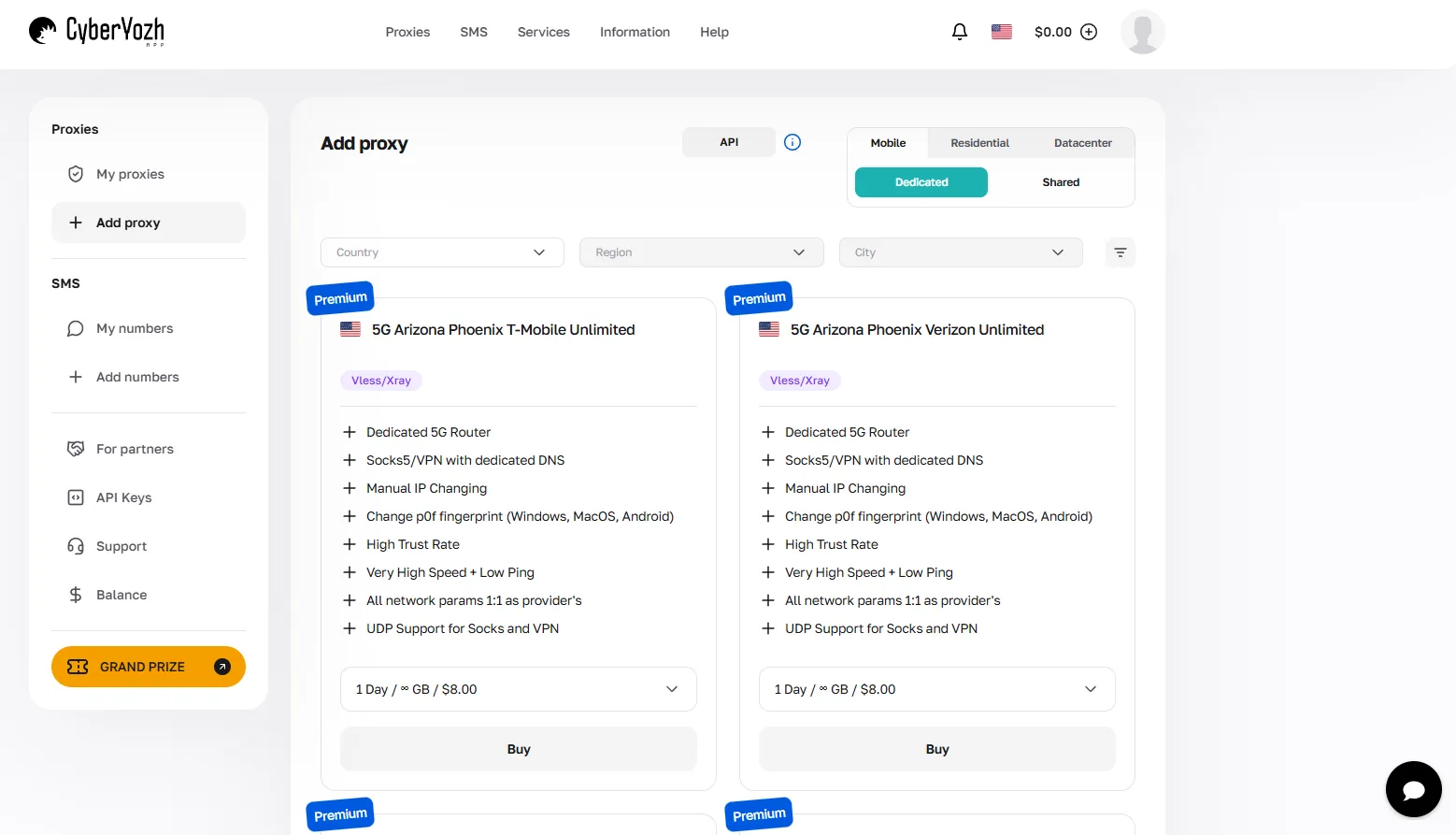
Business and individual users can leverage CyberYozh's infrastructure through direct API calls or pre-configured VPN/VLESS setups for immediate deployment in scraping projects. The infrastructure operates with 99.99% uptime and a stable, high-speed connection, allowing technical and non-technical users to scrape Amazon, LinkedIn, eBay, X, Reddit, and other platforms without risks.
Premium 5G mobile proxies with unlimited traffic starting at $1.70/day
Dedicated channels with manual and API-based IP rotation
Built-in OS fingerprint customization for anti-detect browsing
Pay-as-you-go residential ISP proxies from $5.29/month.
Full UDP protocol support for streaming and gaming applications
Integration with various services, such as Crawl4AI, for web scraping
Responsible 24/7 support available in 7 different languages
With 50M+ residential IPs, CyberYozh excels in providing personalized, developer-ready proxy solutions with exceptional integration documentation, making it ideal for teams building custom scraping tools. When using its proxies, web scrapers won’t face CAPTCHA issues due to efficient proxy rotation. For business users prioritizing automation framework compatibility and dedicated support over massive IP volume, CyberYozh delivers superior value through its specialized tooling and competitive pricing.
2. IPRoyal
IPRoyal is a low-budget proxy provider with options starting at 1GB residential bandwidth or single-day ISP proxy rentals. The platform serves cost-conscious scrapers and small businesses with pay-as-you-go residential proxies at $3.68/GB and ISP proxies from $2 per IP per day. IPRoyal's Pawns network generates residential IPs by compensating users who share their unused bandwidth, creating an affordable proxy pool.
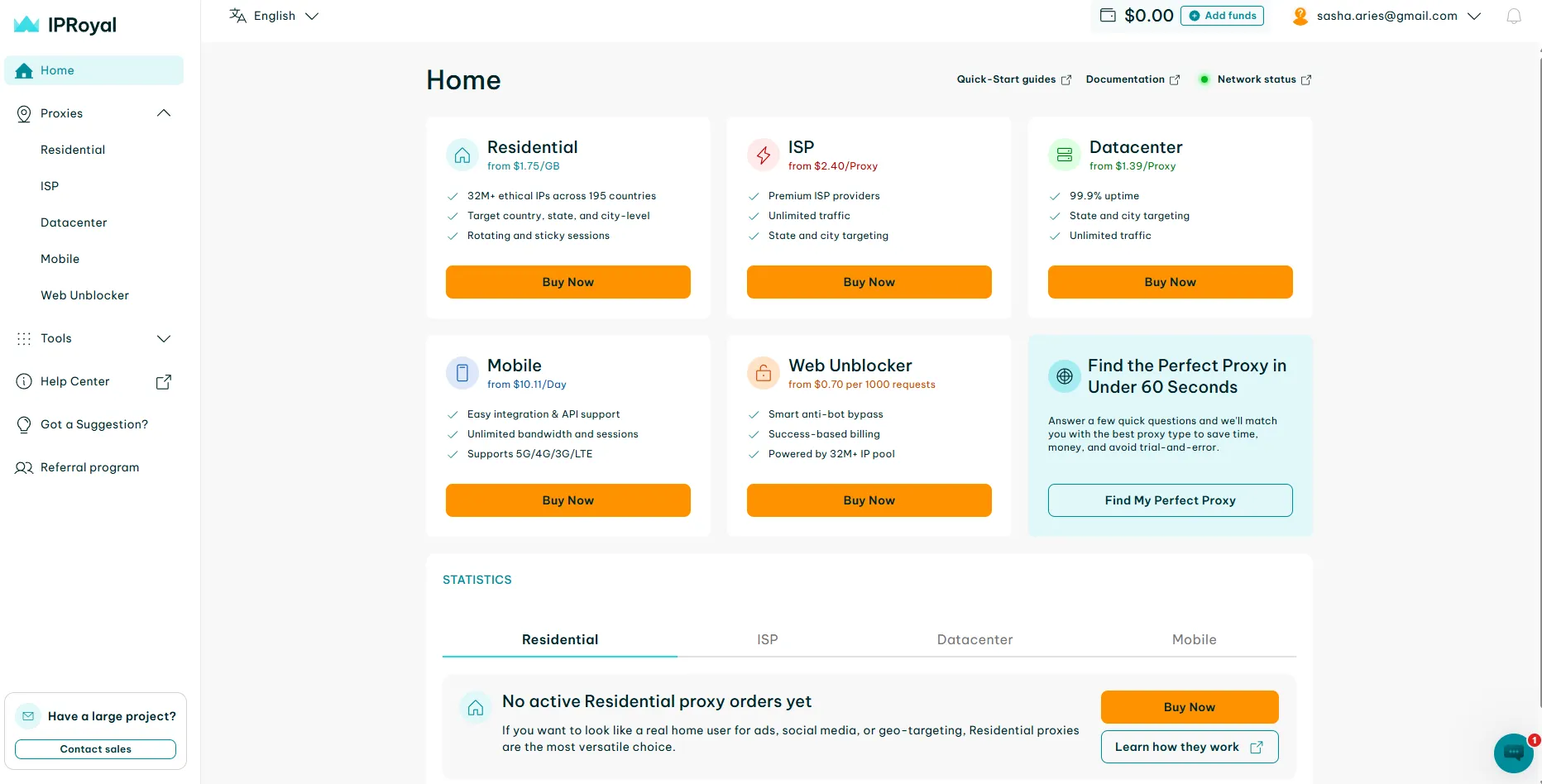
Developers can purchase minimal quantities for testing or short-term scraping tasks without committing to large monthly bandwidth packages.
Non-expiring bandwidth credits on pay-as-you-go plans
ISP proxies with city and state-level targeting
HTTP/HTTPS and SOCKS5 protocol support
IP whitelisting authentication for secure access
IPRoyal delivers pricing flexibility, making it good for freelancers and small-scale projects. However, the Pawns-based residential network may have lower IP quality and higher block rates compared to premium providers, while its proxies may be harder to set up. For small-budget users, IPRoyal provides accessible entry-level pricing.
3. SOAX
SOAX is a compliance-focused proxy network provider operating residential and mobile IPs. The platform emphasizes GDPR and CCPA compliance, positioning itself as a privacy-first solution for enterprise data collection. Its residential proxies are voluntarily shared by real users, providing high trust scores that reduce CAPTCHA encounters.

Compare CyberYozh with SOAX in our comparison article.
Organizations can access SOAX's infrastructure through a unified dashboard with real-time diagnostics, failure rate monitoring, and customizable IP refresh controls.
Mobile proxies with 5G/4G/3G/LTE carrier support
HTTP, SOCKS5, UDP, and QUIC protocol compatibility
City-level geo-targeting with ISP and device filtering
Self-service API for programmatic proxy configuration
SOAX offers exceptional uptime reliability and ethical sourcing practices, making it suitable for compliance-conscious enterprises. However, pricing starts at $3.60/GB with higher costs compared to budget providers, and the learning curve for advanced targeting features may challenge smaller teams.
4. Decodo
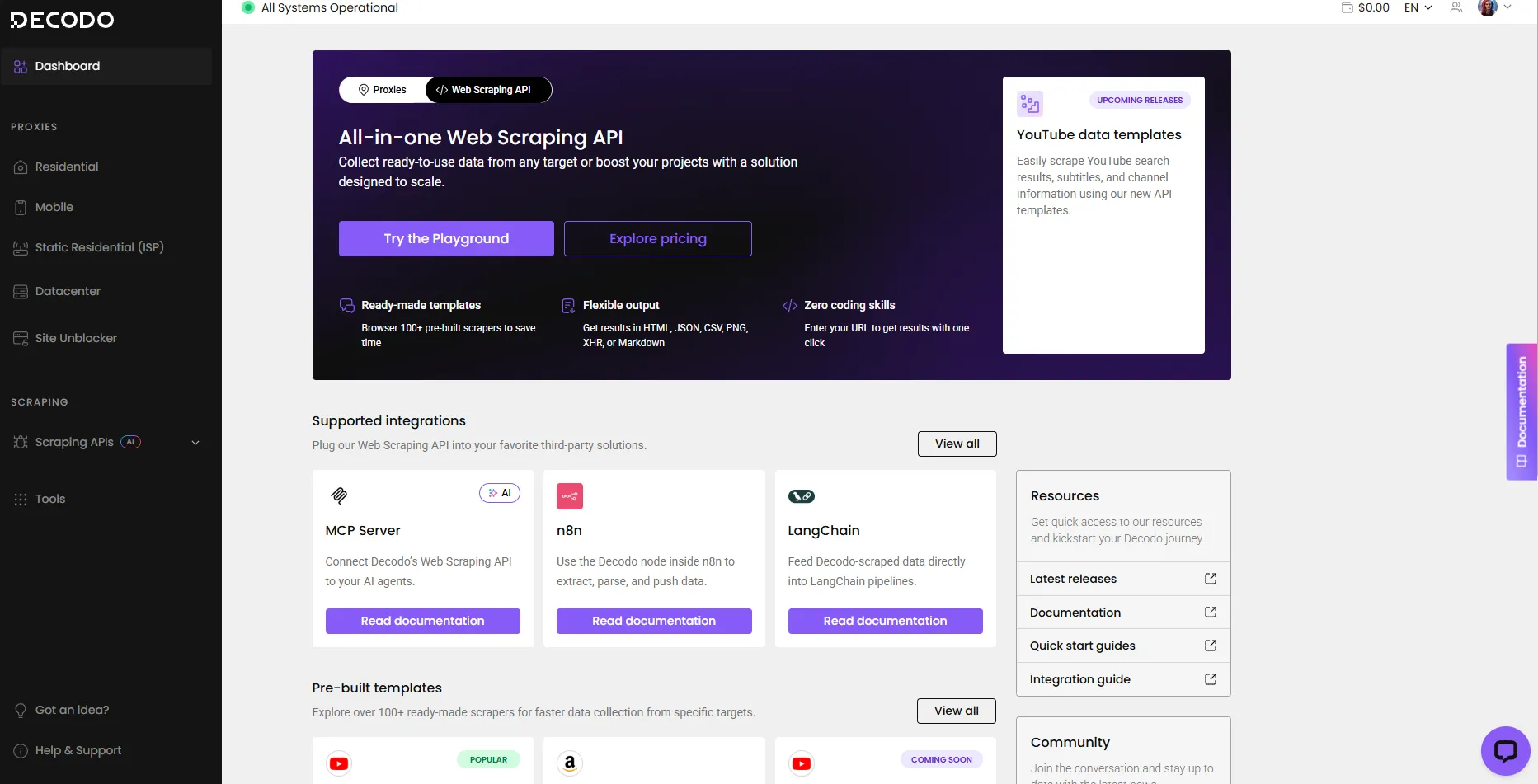
Decodo is a bandwidth-based proxy platform offering many residential IPs following its 2024 rebrand. The service provides multiple proxy types, including residential, datacenter, ISP, and mobile proxies, all accessible through a single unified account dashboard. Decodo positions itself as a flexible solution for businesses of all sizes, but works best for large-scale enterprises.
Compare CyberYozh with Decodo in our comparison article.
Users can deploy Decodo proxies through pay-as-you-go models or monthly subscriptions with built-in bandwidth pooling and unlimited concurrent connections.
Pay-as-you-go pricing at $3.50/GB with no commitment
Auto-renewing monthly plans with 50% discount codes available
Hundreds of subnet diversity to prevent easy bans
Free trial available on request for testing
Decodo offers commitment-free options suitable for growing businesses and seasonal scraping projects. However, residential proxy pricing ($10-12/GB after discounts) remains higher than competitors. For mid-sized operations seeking established infrastructure, Decodo is a plausible web scraping option.
5. Oxylabs
Oxylabs is a proxy provider serving large companies with premium residential, datacenter, ISP, and mobile proxy networks. The platform emphasizes compliance, reliability, and advanced targeting capabilities for large-scale data extraction operations. Oxylabs operates one of the industry's largest proxy pools with dedicated account management and custom SLA agreements for enterprise clients.

Read about CyberYozh's comparison with this proxy giant in our specialized article.
Organizations can integrate Oxylabs proxies through REST APIs, browser extensions, or direct endpoint connections with comprehensive developer documentation.
Advanced geo-targeting down to the ZIP code level
Proprietary AI-powered proxy rotation to avoid detection
Custom integration assistance for scraping architectures
Compliance with GDPR, CCPA, and industry data regulations
Oxylabs provides exceptional reliability and sophisticated targeting features backed by enterprise support infrastructure. However, premium pricing structures make it prohibitively expensive for small businesses and startups, and the platform's feature complexity requires technical expertise to utilize effectively. For large enterprises, Oxylabs justifies its premium positioning, but for specialized teams requiring web scraping, other solutions may be better.
6. Bright Data
Bright Data operates one of the world's largest proxy network. The platform serves as a comprehensive web data collection infrastructure providing residential, datacenter, ISP, and mobile proxies alongside pre-built scraping APIs and datasets. Bright Data is certainly the larger player on the enterprise proxy market—although, as we’ll see, it has its own drawbacks.
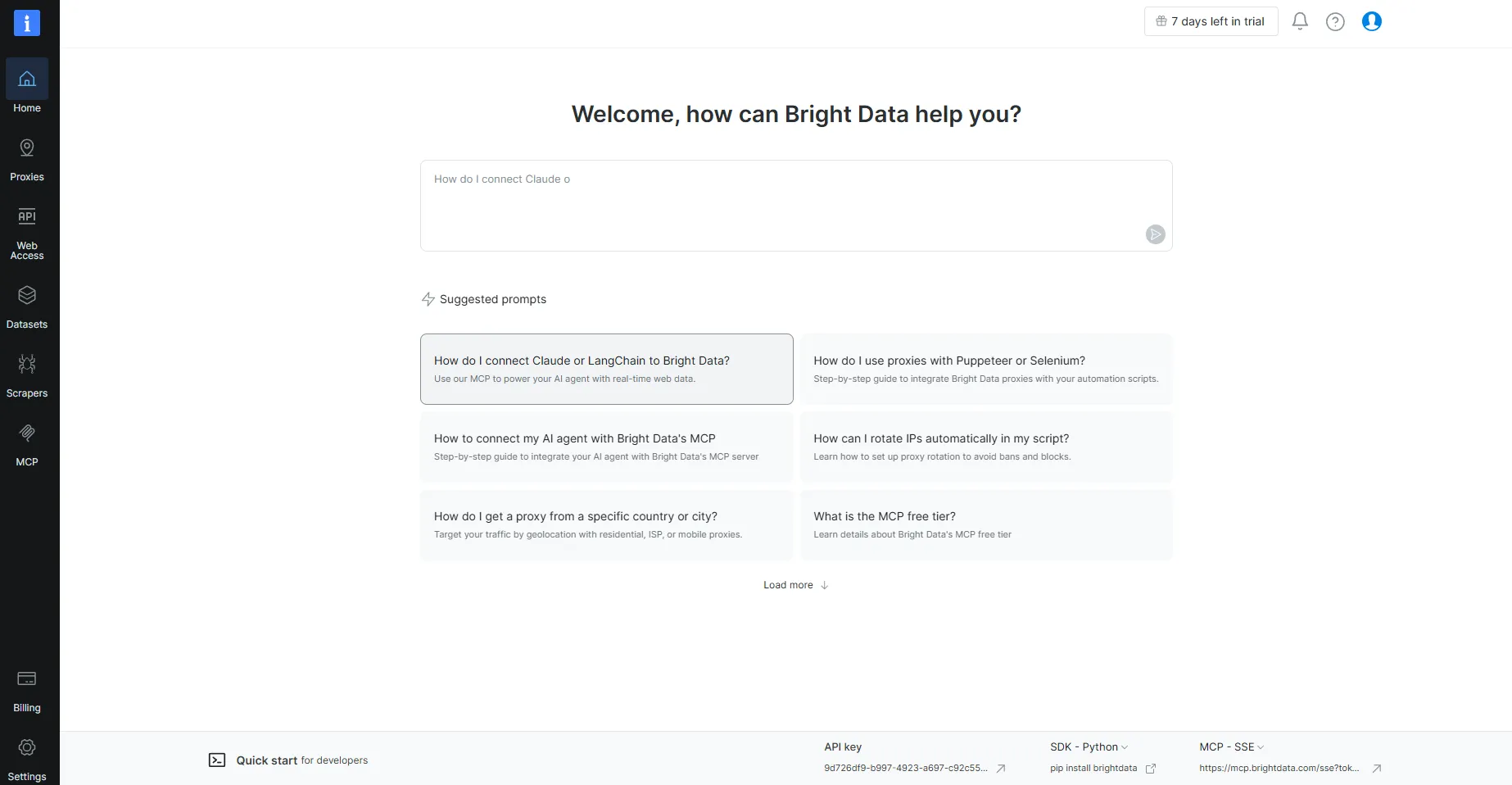
Developers can access Bright Data's infrastructure through the Control Panel dashboard, REST APIs, or third-party software integrations with extensive documentation.
Datacenter IPs for high-speed scraping
High success rate with enterprise-grade scaling
Sub-user management for team collaboration
Daily feature releases and continuous platform innovation
Bright Data offers an unmatched IP pool size and the most comprehensive geo-targeting capabilities in the industry. However, its pricing is significantly higher than competitors (often 2-3x), and the platform's extensive feature set creates a steep learning curve and potential quality drawbacks. It’s a good solution for large enterprises, but for smaller teams or those requiring specialized solutions, other tools are better.
Why proxies are essential for web scraping
As you see, proxies are customized services that allow you to use any IP from the available range of IP addresses for every single action on the web. Unlike VPNs, which are good for general traffic protection, proxies are much more personalized. They help users to protect data and perform efficient account management without risking bans. As such, they’re crucial for efficient work with data.
Avoiding bans and Cloudflare detection with proxies
Websites, especially social networks, vigorously protect their data from bot activities and excessive automated requests, which are inevitable during scraping. It’s understandable: bots are often used for DDoS attacks and other malicious activities, while social networks suffer from bots pretending to be real users.
Read more about ban risks and how to avoid them here.
So, to prevent bans and still scrape the data you need, you should use proxies that ensure you aren’t flagged as a bot or spammer and aren’t banned. There are different types of them, and various services offer different instruments to manage your accounts, scraping APIs, and dataflows. Let’s explore that, step by step.
Proxy types for web scraping
There are various technical peculiarities of various proxy types, but here we’ll focus on their use cases. For technical details, refer to our dedicated article comparing HTTPS and SOCKS5 proxies. Here, we’ve already mentioned residential and mobile proxies: let’s explore them further, along with datacenter proxies, which are less secure but more affordable and faster.
Datacenter proxies are the cheapest option, originating from cloud servers. Pricing starts as low as $0.50-2/GB. However, they have low trust scores and are easily flagged by websites as non-human traffic. Best suited for scraping public databases, price monitoring sites, or platforms without strict anti-bot protection where speed matters more than stealth.
Residential proxies have mid-range pricing at $3-8/GB with IPs assigned by ISPs to real household devices. They offer medium-to-high trust scores and appear as legitimate users, reducing ban risks significantly. Ideal for e-commerce scraping, competitor analysis, ad verification, and geo-targeted data collection where authenticity matters.
Mobile proxies are most expensive, with up to $10-30/GB, but they provide the highest trust scores using IPs from real 4G/5G mobile devices via telecom carriers. Nearly undetectable by anti-bot systems because mobile IPs are shared among many real users. Used for scraping social media platforms that aggressively block even residential IPs.
To summarize, residential proxies are the most universal and accessible option that can be used for virtually all cases. However, datacenter proxies can still work well with public databases, while mobile proxies may be required for high-volume social media scraping.
Best proxy providers: Comparison & alternatives
Look at the table below to summarize the comparison of the proxy providers.
Proxy service | Pricing category | Web scraping features | Best for |
CyberYozh | Low–Medium | Full native support for Selenium, Puppeteer, Postman; CAPTCHA solving; anti-detect configurations | Individuals and all types of businesses that want to collect data |
IPRoyal | Medium | Pay-as-you-go non-expiring credits; ISP proxy rentals; IP whitelisting | Budget-conscious freelancers and small projects |
SOAX | Medium–Expensive | Sticky sessions (60m); | Compliance-focused enterprises needing clean, ethical data |
Decodo | Medium | Unified dashboard for all types; unlimited concurrent threads; scraping APIs | Growing businesses seeking flexible, bandwidth |
Oxylabs | Expensive | AI-powered rotation; custom scraping scripts; CAPTCHA solving | Large enterprises requiring guaranteed uptime and SLAs |
Bright Data | Expensive | Pre-built datasets; Web Unlocker; No-code scraping browser | Massive-scale operations needing maximum reliability |
Selecting the best proxy service
So, let’s now explore how to select the best proxy API for web scraping. It depends on many factors, but primarily on your goals and your team size.
Here is a quick algorithm:
Evaluate your budget based on your team size and the amount of data to be scraped. Explore how helpful this data will be for your business processes to ensure you’ll benefit from scraping.
Determine which services you need to scrape. Open databases are the easiest ones as they’re made specifically for that purpose and don’t ban scrapers, while social media protects their websites from bots eagerly.
Explore the services. For example, CyberYozh excels in its seamless integration with scraping services and high personalization, while IPRoyal offers low-cost service, and SOAX has high compliance
Refer to the table to ensure that you select the most helpful instrument.
Web scraping use cases
This technical task is actively used by many non-tech specialists who need this data to do their work efficiently. They include:
Market analysts scrape e-commerce sites (like Amazon or eBay) to track competitor pricing, monitor product trends, and analyze customer sentiment from reviews.
Investors extract real-time stock prices and financial reports to feed into predictive models and determine which stocks and projects are best for investments.
Sales specialists scrape directories and social platforms (like LinkedIn) to find contact details for potential clients and determine the target audience sentiments.
Journalists use scrapers to aggregate news stories or gather public records for investigative reporting.
The more data is produced on the web, the more is demand for web scraping services. CyberYozh monitors the market closely to deliver the best
Is web scraping of public data legal in 2026?
Web scraping is generally legal in 2026, but there are specific nuances and cases when it may fall into a “grey zone” or be outright illegal. Exploring all these nuances is beyond the scope of this article, but here we’ll overview several key points.
Read more about ethics and the law of data parsing in our specialized article.
While public data scraping is legal, how you do it or what you do with the data can still break the law. Make sure that you don’t violate copyright, don’t breach personal data, and follow websites’ Terms of Service (ToS), as they can sue you otherwise.
Wrapping up: Future & trends
Every day, people upload hundreds of millions of terabytes of data to the Internet. This number is so huge that it’s impossible to imagine how one can process it without specialized data analytics tools. To make data-driven decisions, which are always more efficient, web scraping is essential—and so are proxies for scraping APIs.
CyberYozh works to ensure that every data analyst, investor, marketer, and journalist can have access to all this data without risking bans or legal issues. Our services are specifically optimized for various use cases, and our proxies can be highly personalized for specific use cases. Sign up now and select the configuration you need for your business.
F.A.Q. about web scraping proxies
Do I really need a proxy for web scraping if I scrape slowly?
Yes, because even slow scrapers often exhibit patterns that websites can detect, such as repetitive requests from a single IP address. Without a proxy, your local IP is exposed, and a single ban could completely block your access to the target site. Proxies distribute your traffic, making your activity look like it comes from multiple users rather than one bot.
Is web scraping public data legal in 2026?
Generally, yes, scraping publicly available data (data viewable without a login) is legal in most jurisdictions. However, you must avoid scraping copyright-protected creative content (like full articles or images) and respect personal data privacy laws (GDPR/CCPA). Violating a website's Terms of Service can also lead to civil lawsuits if your scraping harms their servers.
What is the best budget alternative to Bright Data for small teams?
CyberYozh is an excellent alternative because it offers developer-friendly features like native integration with Selenium and Puppeteer without the enterprise-level price tag. While Bright Data focuses on massive scale, CyberYozh provides highly personalized dedicated channels and anti-detect configurations that are perfect for smaller, custom projects. Its pay-as-you-go model also avoids the heavy financial commitments of larger providers.
How do I scrape data compliant with GDPR and CCPA?
To be compliant, you must have a "lawful basis" for collecting any personal data (like names or contact info), even if it's public. This usually means either obtaining direct consent from the individuals or proving a "legitimate interest" that outweighs their privacy rights. Using ethically sourced proxies like SOAX, which ensure their peer network participants have consented, is also a critical step in compliance.
Are mobile proxies the only way to bypass Instagram/TikTok blocks?
While high-quality residential proxies can sometimes work, mobile proxies are the only reliable solution for strict social platforms like Instagram and TikTok. These sites trust mobile IPs implicitly because they are shared by thousands of real users on cellular networks (NAT), making it nearly impossible for them to ban an IP without blocking legitimate users. For consistent long-term scraping of social media, mobile proxies are effectively mandatory.
What are the hidden costs of cheap proxy providers?
Cheap providers often use low-quality datacenter IPs that are already flagged or blacklisted by major websites, leading to immediate blocks and wasted time. You may end up paying more in the long run by constantly buying new IPs to replace banned ones or spending on additional CAPTCHA-solving services. Furthermore, their lack of customer support can stall your project for days when issues arise.
Helpful?
Share article