
10 Proven Ways to Unblock YouTube in 2026
TL;DR
If you searched "how to unblock YouTube" or "unblocked for YouTube," this covers both angles: getting past today's block, and picking a method that keeps working.
YouTube gets blocked for different reasons: school/work filters, ISP or government restrictions, DNS filtering, or video-level geo-licensing, and each needs its own fix.
Residential and mobile YouTube proxies hold up best long-term; free proxy sites for YouTube unblock, and mirror pages get blocklisted fast.
A mobile hotspot solves network-level blocks in seconds; it can't touch device-level (school-managed) restrictions.
Free tools can log your data or inject ads; a paid, reputable provider is safer for regular use.
Quick Answer: The fastest way to unblock YouTube is a residential or mobile proxy, since it changes your visible IP so filters and geo-blocks no longer apply. On school or work Wi-Fi, a browser proxy extension usually works fastest. For a video blocked in your country, switch to a server located where it's licensed.
How to diagnose your block in under 60 seconds
Before trying anything, figure out which layer is blocking you; it saves time.
Ask two quick questions: Does another video site fail too (Vimeo, Twitch)? Yes → it's a network-level block. No, only YouTube fails → check the next question.
Is it one specific video, or all of YouTube? One video → it's a geo-restriction on that title. All of YouTube → it's a filter, firewall, or censorship block.
Then match your situation:
Your situation | Best method | Jump to |
School or work Wi-Fi | Residential proxy or browser extension | Method 1 or 4 |
Video says "not available in your country" | Residential/LTE/5G mobile proxy or VPN | Method 1, 2, or 3 |
Public Wi-Fi, need quick access | Mobile hotspot | Method 7 |
Smart TV or game console | Smart DNS | Method 5 |
Privacy is the priority | VPN or Tor Browser | Method 3 or 8 |
School-managed Chromebook, blocked at device level | Talk to IT, or use a personal device | See note below |
What really blocks YouTube
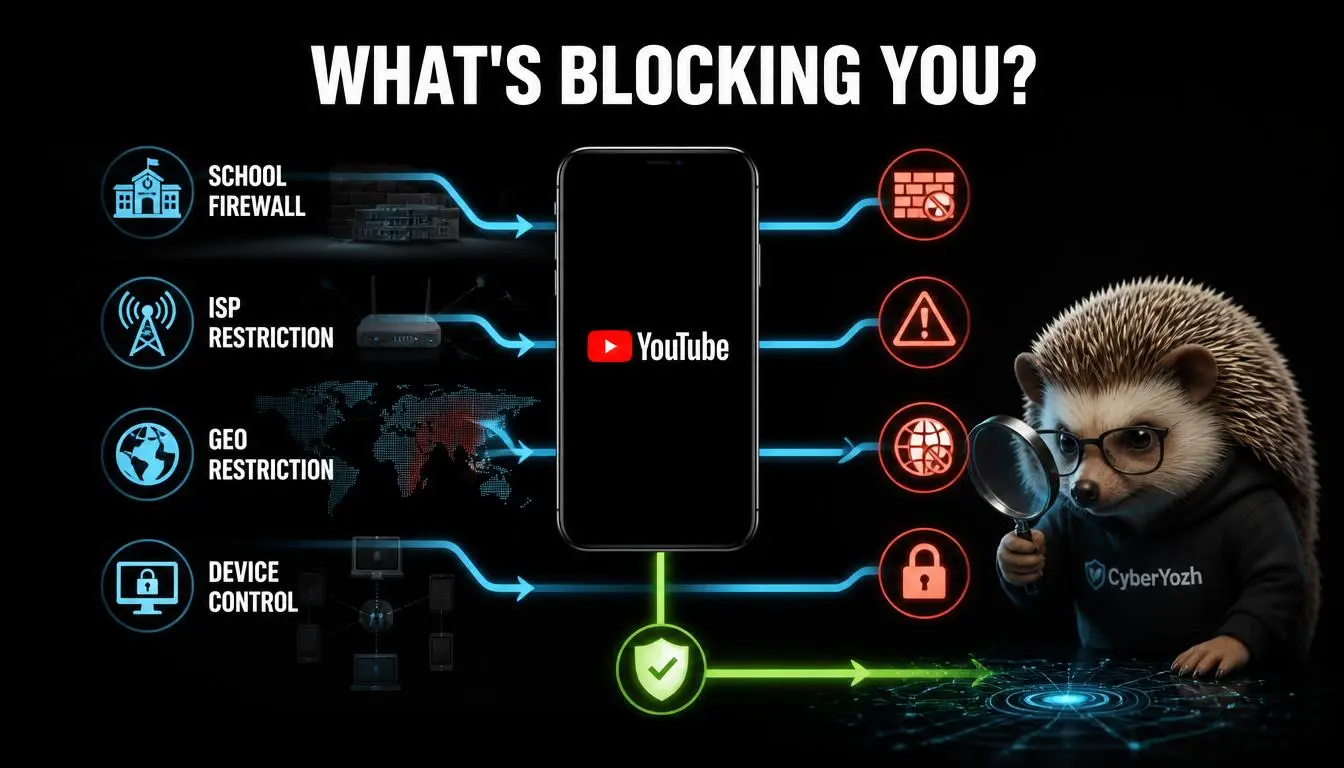
Block type | Who controls it | What you'll see |
School/work filters | IT admins, Google Workspace for Education | "Site blocked" or an admin-locked Restricted Mode |
ISP or government restrictions | Internet providers, regulators | Timeouts, blank pages, no clear error |
DNS-based filtering | Router or network DNS | The YouTube domain simply won't resolve |
Geo-restricted videos | Content owners, licensing deals | "This video is not available in your country" |
Device controls | Parents, screen time, MDM | Blocked at the operating system level |
Can you unblock videos on YouTube with crosh for science
This is a common question from students on school Chromebooks:
Crosh (Chrome Shell) is a limited diagnostic tool built into ChromeOS; it was never designed to remove content filters, and on school-managed devices, most of its functionality is turned off by the same admin policy that blocks YouTube in the first place.
If your school manages your Chromebook, the block sits above the device, in Google Workspace for Education, so no crosh command reaches it.
If you genuinely need YouTube for a science assignment, the fastest real fix is asking your teacher or IT admin to approve the specific video or channel; most schools can do this in minutes through their admin console.
10 proven ways to unblock YouTube in 2026
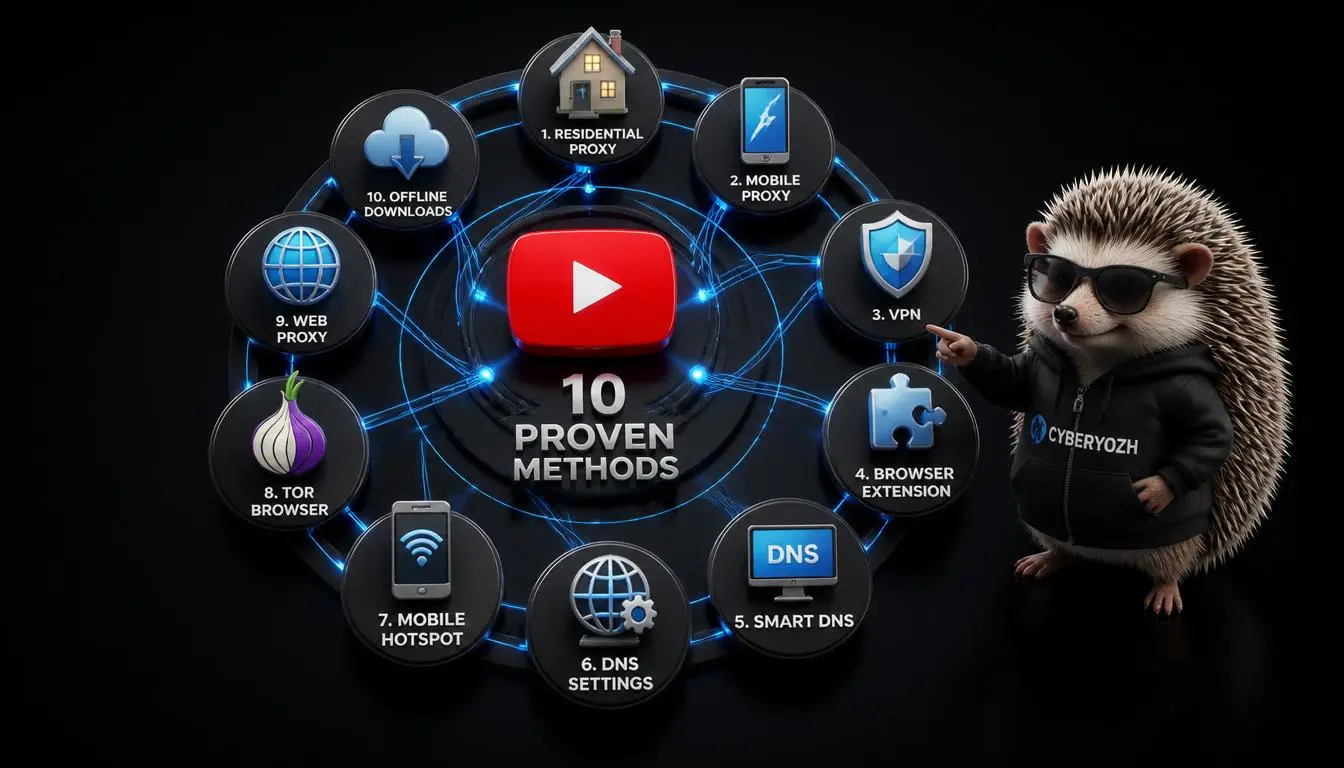
The list below mixes free and paid options, ranked from most reliable to least reliable (not by cost), so you can pick what works for your situation.
1. Residential proxy: Recommended
How it works: Routes your connection through a real home IP address, so filters and geo-checks see ordinary residential traffic.
Pros: Reliable, rarely blocked, works for streaming and account logins.
Cons: Costs more than free tools; setup takes a few minutes.
Best for: Daily use at school, work, or while traveling.
Difficulty: Easy | 2026 verdict: Recommended.
CyberYozh's rotating residential proxies start at $2/GB with pay-as-you-go pricing, which suits occasional YouTube access without a monthly plan.
2. Mobile proxy: Recommended
How it works: Uses a real 4G/5G carrier IP shared by thousands of ordinary phone users, which platforms trust more than most IP types.
Pros: Very hard to flag or block; best success rate on strict filters.
Cons: Pricier than residential; some plans are billed daily.
Best for: Networks that already flagged your other proxies or VPN.
Difficulty: Easy | 2026 verdict: Recommended.
CyberYozh's LTE/5G mobile proxies start from $1.70/day with manual or API-based IP rotation. Check out the full proxy catalog below.
3. VPN
How it works: A VPN encrypts your whole connection and routes it through a server elsewhere, helping bypass network blocks and geo-restrictions.
Pros: Full-device encryption, strong privacy.
Cons: Slower than a proxy; some networks block known VPN IP ranges.
Best for: Privacy-first users who want one tool for everything.
Difficulty: Easy | 2026 verdict: Solid, if speed isn't your top priority.
4. Browser proxy extension
How it works: Adds proxy credentials straight into Chrome or Firefox, no system-wide install.
Pros: Fast to set up, easy to toggle on and off.
Cons: Only protects browser traffic; needs Chrome Web Store access, which some managed devices block.
Best for: Locked-down work laptops with extension access still enabled.
Difficulty: Easy | 2026 verdict: Great where extensions are allowed.
5. Smart DNS
How it works: Reroutes only the location-identifying part of your traffic, without encrypting the rest.
Pros: Faster than a VPN; works on smart TVs and consoles that don't support VPN apps.
Cons: No encryption, no real privacy benefit, useless against content-filtering firewalls.
Best for: Geo-restricted videos on TVs and consoles.
Difficulty: Moderate | 2026 verdict: Good for its one specific job.
6. Change your DNS server
How it works: Some networks block YouTube by refusing to resolve its domain; switching to a public DNS provider (Google 8.8.8.8 or Cloudflare 1.1.1.1) can restore access.
Pros: Free, takes ten seconds, no software.
Cons: In 2026, this works less reliably than it used to. Most browsers now support encrypted DNS over HTTPS by default, so many networks filter beyond plain DNS, and a simple server switch won't clear those.
Best for: Basic, older DNS-only filters.
Difficulty: Easy | 2026 verdict: Worth trying first; don't count on it alone.
7. Mobile hotspot
How it works: Swap the restricted network for your phone's data connection.
Pros: No software, instant, works almost anywhere.
Cons: Uses your data plan; won't help with device-level restrictions.
Best for: A quick fix on public or restricted Wi-Fi.
Difficulty: Easy | 2026 verdict: The fastest option when it applies.
8. Tor browser
How it works: Routes traffic through multiple volunteer-run relays, making your traffic very hard to trace.
Pros: Strong privacy, effective against most filters.
Cons: Noticeably slower, a rough fit for video streaming.
Best for: Privacy-critical situations, not everyday viewing.
Difficulty: Moderate | 2026 verdict: Good tool, wrong choice for regular streaming.
9. Free web proxy or "Unblocked YouTube" site
How it works: Paste a YouTube link into a free web proxy, and it loads through their server, no install required.
Pros: Instant, free, nothing to set up.
Cons: Ad-heavy, slow, and most YouTube unblocking proxy sites get blocklisted within days.
Best for: A single, one-off video, not regular use.
Difficulty: Very easy | 2026 verdict: Fine occasionally; never enter a password on one.
10. Download videos legally for offline viewing
How it works: YouTube Premium's offline download feature (where available) saves videos ahead of time, sidestepping live access entirely.
Pros: Zero unblocking risk; works anywhere afterward.
Cons: Not real-time; Premium availability varies by region.
Best for: Planned viewing, travel, commutes, deployments.
Difficulty: Easy | 2026 verdict: A smart supplement, not a standalone fix.
Best proxy types for YouTube
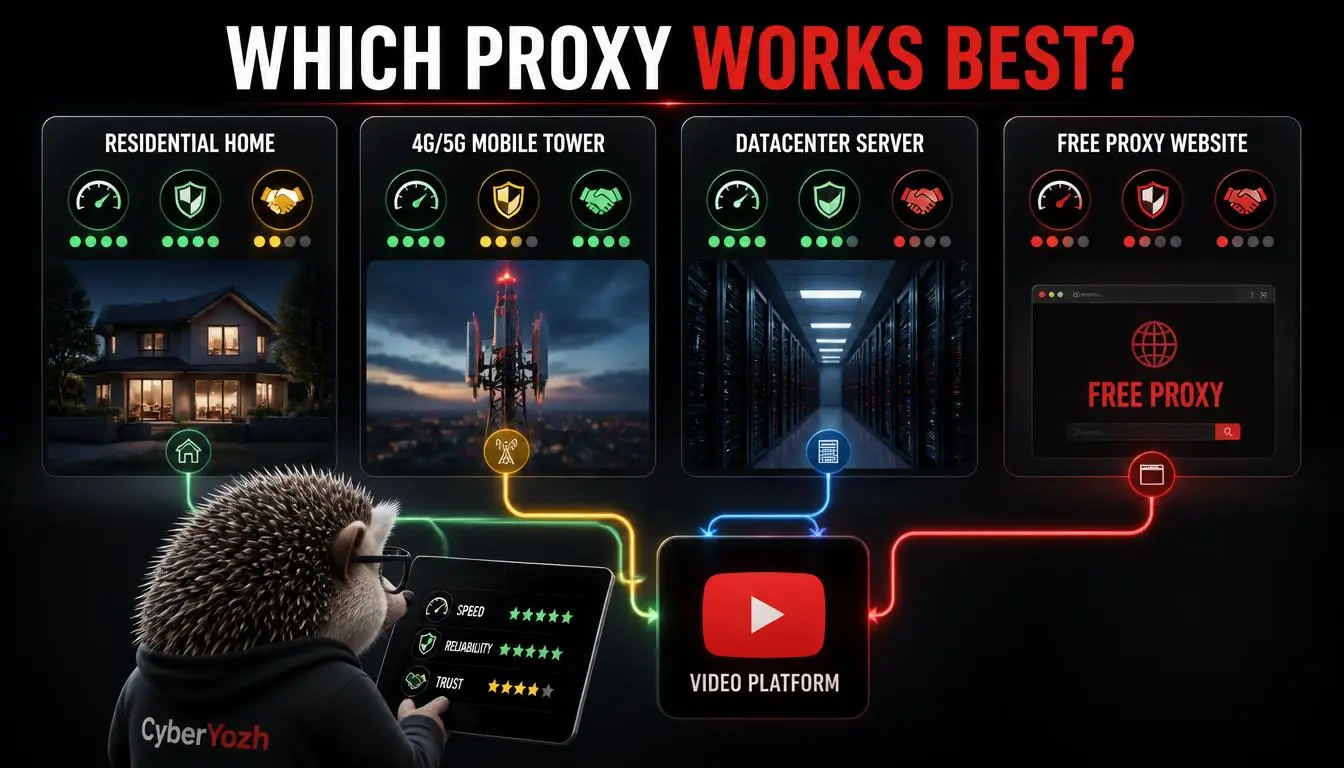
Proxy Type | Speed | Streaming Quality | Privacy | Best Use Case |
Residential | Fast | Excellent | High | School, work, everyday unblocking |
Mobile | Fast | Excellent | Highest | Strict filters, sensitive accounts |
Datacenter | Fastest | Good, more blocks | Medium | Bulk, non-sensitive tasks |
Free proxies | Slow, unstable | Poor | Low | Occasional, low-stakes viewing only |
Compare options by task in the full proxy catalog rather than guessing.
Common problems people face
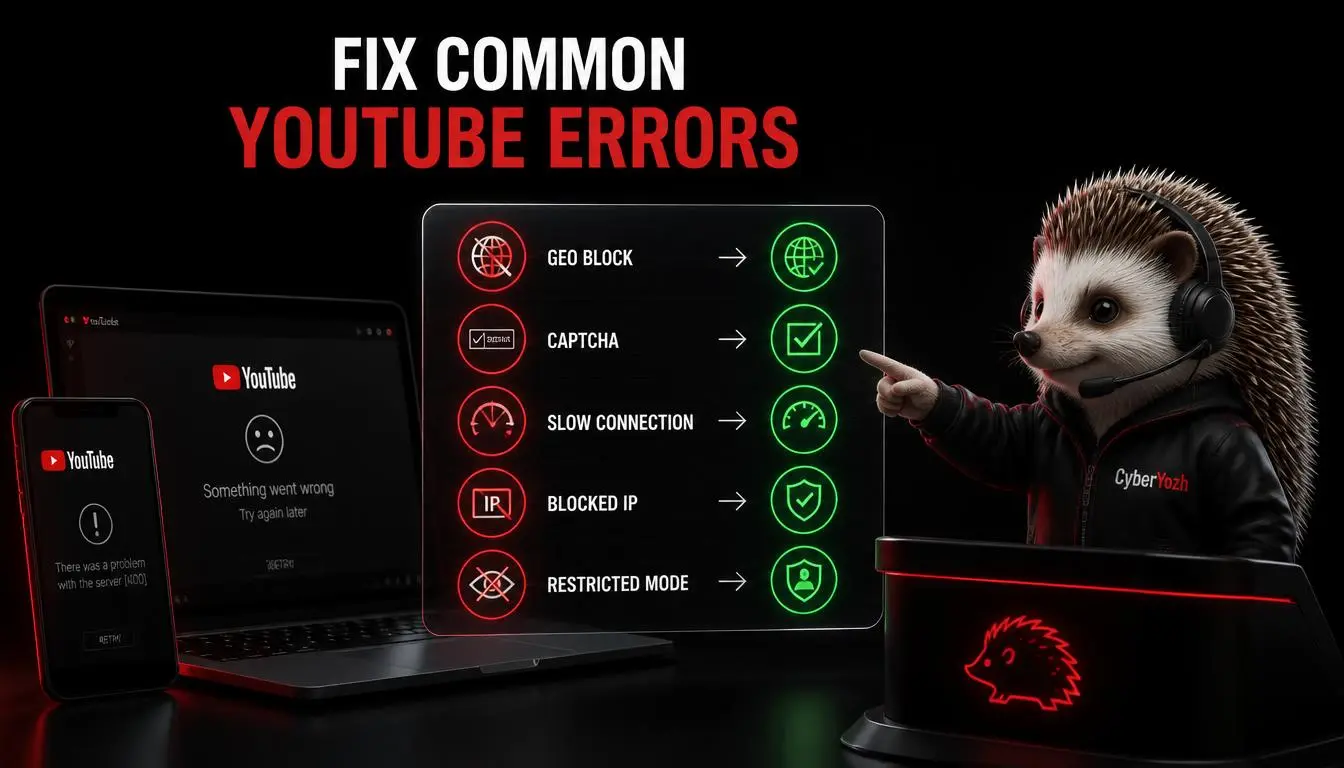
Video unavailable in your country: switch your proxy or VPN to a country where it's licensed.
CAPTCHA loops: your IP is flagged; a residential or mobile IP resolves this more often than a datacenter IP.
Slow connections: usually an overloaded free or shared server; a dedicated paid connection fixes it.
School block persists after a VPN: almost always device-level (MDM or Workspace for Education), not network-level. Talk to IT, or use a personal, unmanaged device.
IP reputation issues: a previously flagged IP gets you blocked before the page even loads. Run any new IP through an IP reputation and fraud-score checker before relying on it.
Why CyberYozh is a practical choice for accessing YouTube securely
Getting YouTube videos unblocked reliably comes down to IP quality; clean, trusted IPs get through filters that flagged or overused ones don't. CyberYozh runs an infrastructure platform built around that problem:
Residential, mobile, and datacenter proxies in one account, so you switch method by task instead of blocklist-hopping.
Rotating IPs and sticky sessions for stable, uninterrupted viewing.
API access for automating access checks across regions.
SMS verification and virtual cards for setting up or paying for YouTube Premium where it isn't locally available.
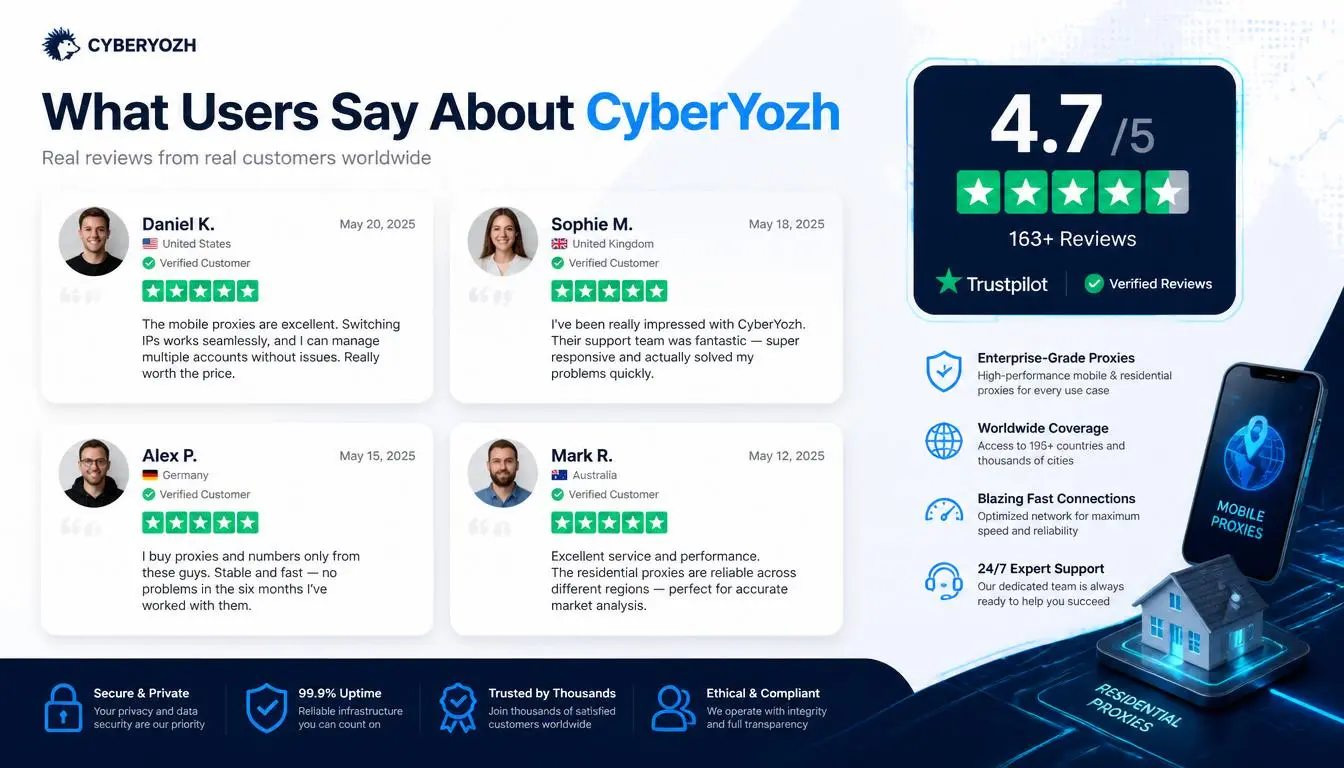
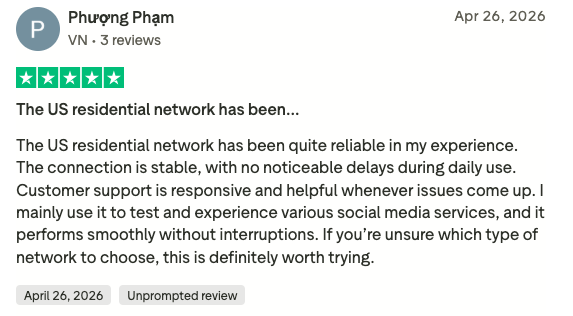
A 4.7+ "Excellent" Trustpilot rating from verified users, and published network specs (100M+ IPs, 195+ countries) instead of vague claims.
Legal and safety notes
Using a proxy or VPN to unblock YouTube is legal in most countries and doesn't violate YouTube's terms on its own.
Three things carry real risk: watching YouTube in countries with strict national censorship (China, Russia, Iran, and similar), bypassing an employer's or school's acceptable-use policy (which can bring real consequences even where the tool itself is legal), and using low-trust free tools on networks you don't control.
On public Wi-Fi, CISA's guidance on public networks is worth two minutes before you enter any login details.
And if Restricted Mode specifically is the issue rather than a network block, YouTube's own Restricted Mode help page explains exactly who can turn it off and when an administrator locks it.
Conclusion
Most YouTube blocks come down to one of three things: your network, your device, or the video's licensing, and once you know which one, the fix is usually quick. For occasional use, a mobile hotspot or Smart DNS gets you there. For anything regular, school, work, or travel, a residential or mobile proxy keeps YouTube videos unblocked consistently, without gambling on free tools that disappear as fast as they show up.