

Real mobile LTE / 5G networks
Run AI agents through real carrier networks with unlimited mobile traffic and dedicated channels.
- Real LTE / 5G carrier networks
- Manual and API IP rotation
- High-trust environments
- Stable AI sessions

Collect competitor prices, product availability, and regional offers with proxy infrastructure built for AI agents and custom scrapers. Access 100M+ residential IPs across 195+ countries, target specific cities and ZIP codes for regional price checks, and choose from residential, ISP, mobile LTE/5G, and datacenter proxies.

Integrate proxies for your price monitoring stack through API with Playwright, Puppeteer, Selenium, Scrapy, Postman, and custom workflows. Run competitor pricing, product availability, and marketplace data collection.
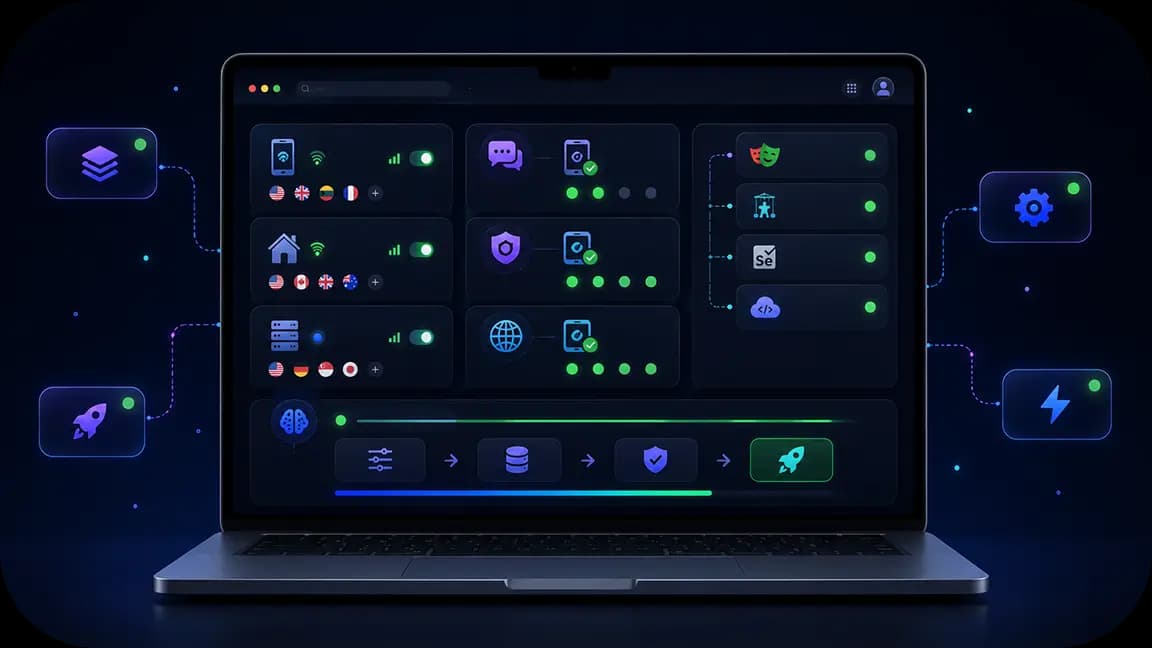
Give AI agents access to proxies without building complicated proxy infrastructure. Choose the proxy type, location, and rotation settings, and start collecting pricing data immediately.
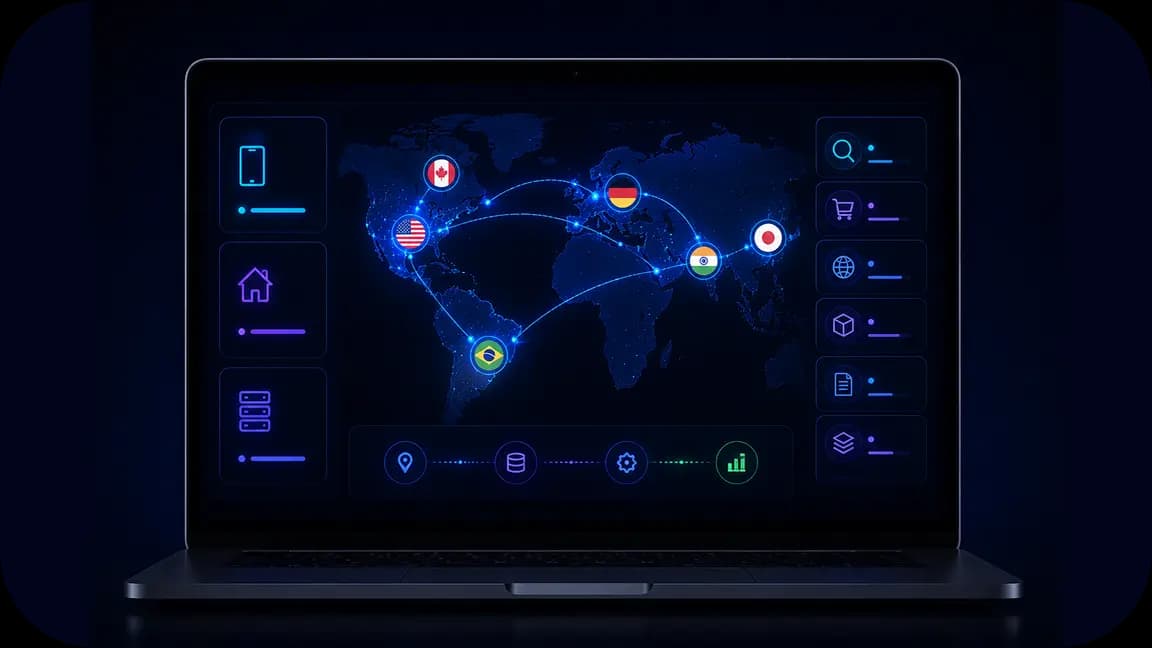
Use AI price monitoring proxy to collect localized prices, discounts, and product availability from 195+ countries. Use city and ZIP-level geo-targeting to see accurate pricing and marketplace content that local users see.

CyberYozh’s OS fingerprint switching and IP fraud score checks help you improve data quality and reduce failed requests. Filter out low-quality or high-risk IPs before collecting price data.
Run AI agents through real carrier networks with unlimited mobile traffic and dedicated channels.

Reduce workflow interruptions with CAPTCHA solving support and validation tools built for automation.

Manage proxies, SMS activation, fingerprinting, fraud checks, and integrations from one environment.
CyberYozh App provides the proxy infrastructure for AI price monitoring across ecommerce sites and markets. Give your AI agents and scrapers reliable proxies for competitor price tracking and ecommerce data monitoring. Precise geo-targeting helps you check regional prices, while flexible rotation, and OS fingerprint switching let you configure data collection for different platforms. Check IP fraud score before execution, then collect product prices, availability, and marketplace data at scale.
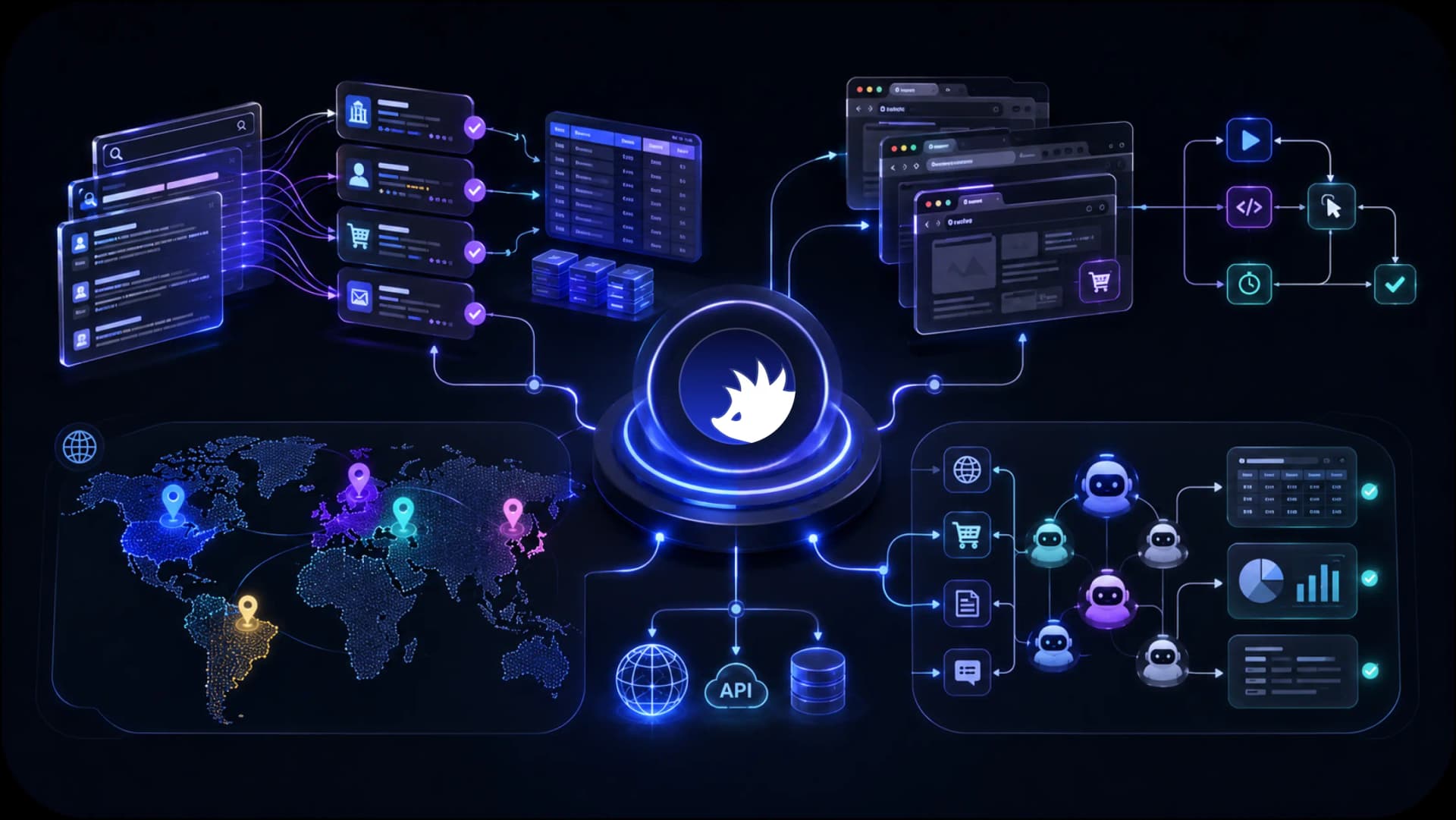
Access localized search results, marketplaces, public web data, and regional content across 195+ countries for AI agents, scraping systems, and autonomous workflows.
CyberYozh combines the infrastructure AI teams need to collect data, automate workflows, access regional content, and scale execution environments. From mobile LTE / 5G and residential proxies to browser automation support, fingerprinting, fraud checks, and Android cloud phones, everything is designed to support AI workflows from a single platform.
AI web scraping
AI browser automation
AI data collection
AI agent execution
Mobile AI workflows
Regional AI access
See how CyberYozh works in practice through real workflows, platform features, and infrastructure examples. Explore the dashboard, integrations, execution environments, and tools available for AI teams and automation projects.
Without the right proxy configuration, AI price monitoring agents can lose access to product pages or collect prices that don't reflect the market they're tracking.
IP bans: Too many requests from one IP trigger throttling or blocks, often with changing limits.
CAPTCHAs: Automated traffic gets challenge pages instead of product data, which can silently corrupt your dataset.
The same product doesn't have one price: Geo, device, cart state, seller, and buy box can change the number — so a single IP captures one variant and mistakes it for the price.
Rate limits: Requests slow down or fail, making price data stale during sales, restocks, or competitor price changes.
TLS/WAF fingerprinting: Platforms can identify automated clients through their connection and browser fingerprints, so even clean residential IPs may get blocked.
The fix: reliable market and price monitoring needs more than IP rotation. Combine residential and mobile proxies with sticky sessions, fingerprint switching, and IP fraud checks to handle both IP- and fingerprint-level detection.
An AI price monitoring proxy helps agents collect real-time pricing, stock, and competitor data without relying on a single IP or location.
A single IP hammering a competitor's catalog gets banned fast, wiping out days of price history and leaving gaps in your data. Rotating residential proxies for ecommerce price monitoring spread requests across real IPs so the crawl looks like normal browsing, not a scraper.
Result: continuous, gap-free price history you can actually trend and forecast from.
Buy rotating residential proxies from $1.8/GB - with traffic rollover and a 99.9% uptime.
Stale competitor prices can make your repricing engine react too late to flash sales or price drops. Price scraping proxies with sticky sessions (proxies that hold the connection to load a full price page, then rotates) keep feeds live without one IP ban stalling the whole engine.
Result: your prices update against real competitor moves, not yesterday's snapshot.
Amazon, Shopify, and Walmart-style stores each run their own bot detection, and a block often swaps the real price for a CAPTCHA page. Mobile LTE/5G and residential proxies hold a consistent identity through each product check, so the request looks like a real shopper.
Result: accurate price and stock data, with no silent CAPTCHA-as-data errors polluting your dataset.
Buy high-trust mobile proxies for AI price monitoring – unlimited bandwidth from $1.7/day
Unauthorized resellers often set different prices by region. Geo-targeted proxies for price monitoring let you check prices from the same city or country your customers are buying from.
Result: you see the price a local shopper actually sees, not the one visible from your IP.
Buy geo-targeted residential proxies for AI – from $5.29/month
Need a proxy for a specific AI platform? Check out our dedicated proxy infrastructure for Claude, Perplexity, and ChatGPT.
Different retailers expose prices differently. Start with the proxy type and session mode below, then test on your own target.
Target | Start with | Session mode | Why |
Amazon | Rotating residential; ISP for persistent offer checks | Rotating for catalog sweeps; ISP or sticky session for product page and offer checks | Prices and offers depend on location and session state. |
Walmart | Rotating residential | Sticky when price or availability depends on store or ZIP location | One location per session keeps results comparable. |
Shopify stores | Datacenter; rotating residential if blocked | Rotating | Many stores are lightly protected; cost-efficient speed often comes first |
Google Shopping | Rotating residential; mobile proxies | Rotating | Geo-targeting matters for localized results; mobile IPs are harder to flag |
Mobile-only prices (booking, retailer apps) | Mobile LTE/5G | Dedicated IP with manual or API IP change | Some prices depend on the device. Pair the mobile IP with a cloud phone or browser profile |
Rotating residential: broad coverage, geo-targeting and large volumes.
ISP residential (static): long sessions that need one stable identity.
Datacenter: speed and low cost on sites with light protection.
Mobile: trust-sensitive targets, mobile-specific views and traffic-heavy runs.
Tip: Use proxy rotation for independent product checks. Keep a sticky session when the price depends on location, cart state, seller, or another persistent context.
A proxy changes where a request comes from. It won’t solve these:
Rendering: prices loaded by JavaScript need a headless browser such as Playwright, not a plain HTTP request.
Extraction: changed selectors, prices inside JSON or XHR responses, variants and currencies need parser fixes.
Detection beyond the IP: browser fingerprint and request behavior can still trigger blocks.
Personalization: logged-in, cart or A/B-test differences need consistent sessions and controlled test setups.
Yozh Scraper is our free, open-source tool built on Playwright for rendering and parsing dynamic marketplace pages, with native MCP support if your monitoring runs through an AI agent.
Use rotating sessions for broad catalog sweeps. Thousands of SKUs means thousands of requests, and all you need are prices and what changed since last run — so no reason to hold an IP. Rotation spreads the load and keeps the collection going.
Use sticky sessions when prices depend on cart state, seller, or location. Cart prices, seller-specific offers, region-gated deals need you to land on the page, pick a region, maybe add to cart, and read the number after all that. Same IP the whole way through, or you're reading a default price and calling it data.
CyberYozh App proxies sit between your AI price monitoring agent and the retailers it's checking. You get access to residential, real 5G/LTE mobile and datacenter pools, all from one dashboard.
Rotate per request on broad sweeps, hold a session when the price needs cart state or a specific region, and geo-target down to city level when local pricing matters. Whether you need price intelligence proxies or ecommerce price scraping proxy, here’s what the platform offers:
100M+ residential IPs across 195+ countries with city- and ZIP-level targeting
Flexible IP rotation – distribute requests across a large managed IP pool
Sticky sessions when a product check requires session continuity
99.99% operational success rate
API control – automate IP changes, proxy selection, and workflow logic
Connect with Playwright, Puppeteer, Selenium, Scrapy, Postman, and custom workflows
OS fingerprints to align sessions with different browsing environments
Virtual numbers for SMS verification and virtual cards on the same platform.
Reliable price monitoring requires the right exit location, session behavior, and data validation—not just a scraper and product URLs.
Playwright supports authenticated HTTP and SOCKS5 proxies:
const browser = await chromium.launch({
  proxy: {
    server: process.env.PROXY_SERVER,
    username: process.env.PROXY_USERNAME,
    password: process.env.PROXY_PASSWORD
  }
});
Use your CyberYozh App connection details and store credentials in environment variables.
Use rotating residential proxies for broad catalog scans and sticky sessions for related requests that require the same IP. Set the target country or city before collection.
Check the exit IP and confirm it matches the target market, then test a small batch of URLs. Validate product IDs, prices, currencies, and availability. Reject CAPTCHA pages, missing prices, and unexpected responses rather than storing them as valid data.