10 Best Mobile Proxy Providers in 2026: The Ultimate Guide for Safe Automation
If you are reading this, chances are you have encountered the dreaded "account suspended" message or had your web scraping bot blocked in seconds. You are not alone. As websites get smarter at detecting automated traffic, the tools we use have to evolve.
Mobile proxies, unlike regular proxies that use IPs from data centers or home Wi-Fi networks, route your traffic through real 4G and 5G devices. To a website like Instagram or TikTok, you look like a normal person scrolling on their phone. That makes all the difference.
Hence, it's important to understand the differences, types, and use cases to navigate and find the best fit for your workflow. Among the dozens of providers, businesses and individuals must find the best, safest proxy provider in 2026. This guide will help you navigate through it all.
What is a Mobile proxy and who needs them
A mobile proxy gives you an IP address from a real mobile carrier, such as Verizon, T-Mobile, or Vodafone. Thousands of actual smartphone users share these IPs, so when you use one, websites cannot easily tell you apart from a real person.
As many countries have widespread mobile-only users, many businesses and marketers can leverage this to their advantage and manage workflows without being noticed. Mobile proxies are used for:
Managing multiple social media accounts without bans
Scraping tough websites like Amazon and Google
Verifying ads across different regions
Sneaker copping and limited releases
Purchasing high-demand tickets
E-commerce sellers are monitoring competitors and pricing
SEO professionals are tracking search ranking

The 10 best Mobile proxy providers in 2026
Here are some of the best providers for mobile proxies, their benefits, and pricing, starting with CyberYozh:
1. CyberYozh
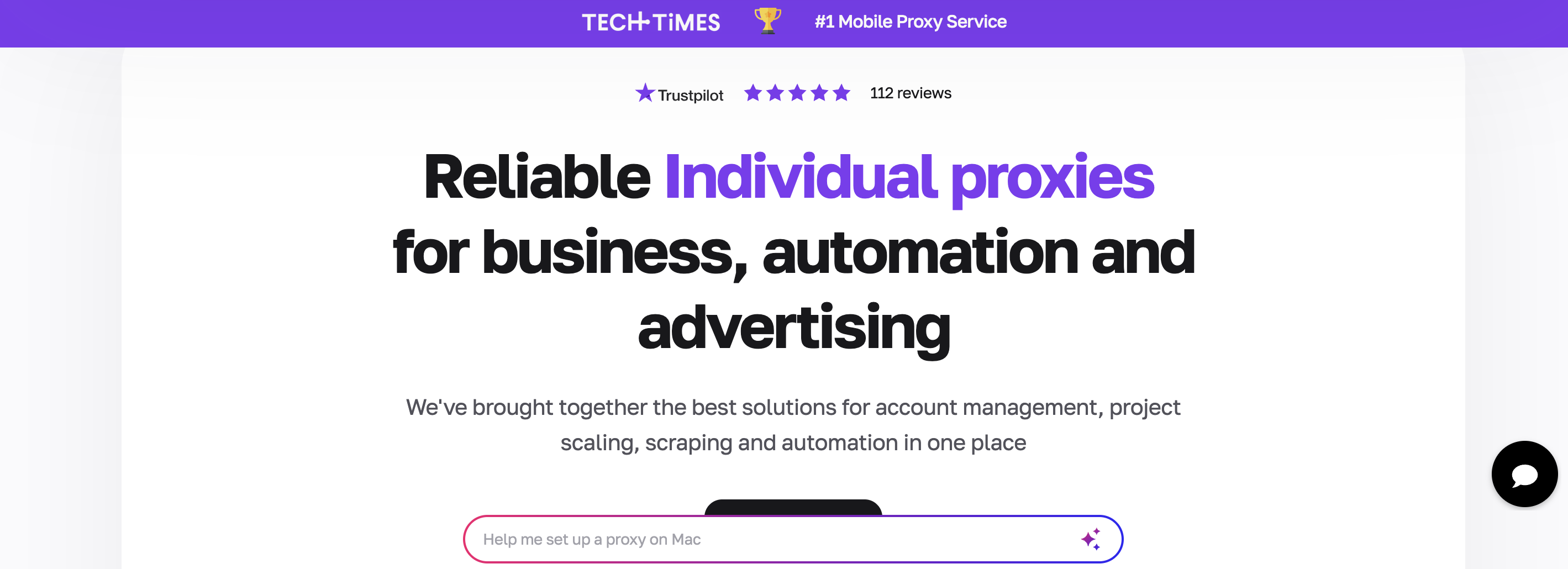
If you are looking for a provider that does it all under one roof, CyberYozh is your top pick for 2026. Cyberyozh offers mobile 4G and 5G proxies at an affordable price, alongside all other proxy types (residential and data center), for all kinds of workflows, from small businesses to larger enterprises.
What makes CyberYozh different is that CyberYozh is not just a proxy seller. Cyberyozh is a complete toolkit for anyone managing multiple online accounts, automations, and web scraping. They provide IP reputation, virtual numbers from 140+ countries, and SMS verification tools, without having to juggle with many other proxy providers, which leaves gaps that will most definitely get your account blocked.
CyberYozh mobile proxies come from real carrier networks and deliver a 99.8% task completion rate, with a 50 M high-quality IP pool. That means no blocks, no CAPTCHA, and no frustration.
Features:
Huge value for money – some of the lowest prices in the market
Accepts crypto payments with no KYC required
Works seamlessly with Selenium, Puppeteer, and Playwright
Multi-language support.
50M+ clean IPs from 100+ countries
HTTP, HTTPS, SOCKS5, and UDP protocol support for compatibility with different tools
Speed up to 10 Mbps for stable campaign operations
Sticky sessions and controlled IP rotation so accounts are not forced to change identity unexpectedly
SMS activation and mobile number verification.
IP, phone number, and card risk checks to avoid fraudulent activity before execution.
Full API access for automation-ready setups
Integration with Postman, Selenium, Puppeteer, Playwright, and custom scripts
Manual dashboard control for social media managers and API-level control for technical teams
Pricing:
Mobile LTE and 5G Proxies – from $1.7 per day with unlimited traffic
Static Residential ISP Proxies – from $5.29 per month per dedicated IP
Residential Rotating Proxies – from $0.9 per GB
Datacenter Proxies – from $1.9 per month with unlimited traffic
2. NetNut
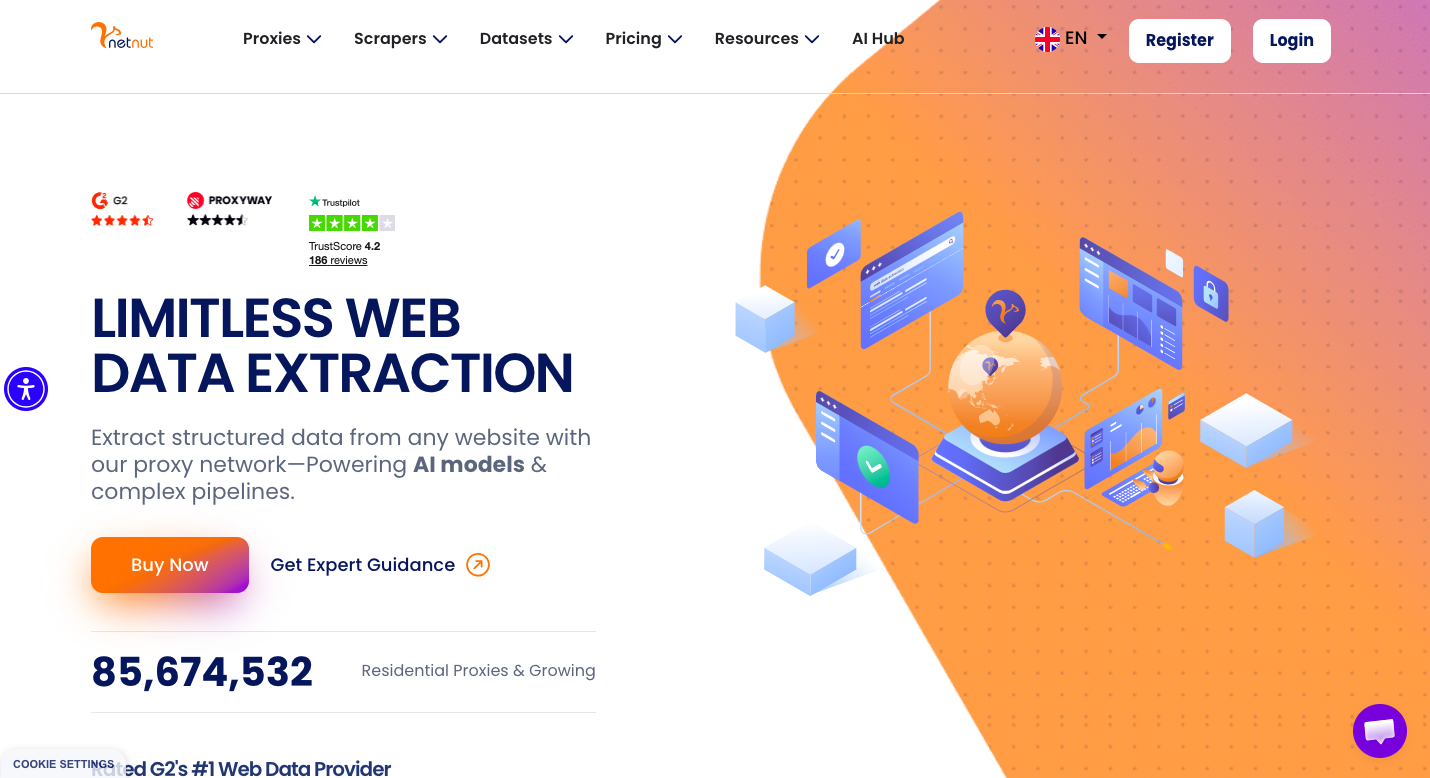
NetNut was built for huge businesses that need to collect web data. Their entire setup is designed for high-volume traffic, API calls, and automated scraping. If you run any social media platforms or multiple business accounts, where your main goal is keeping accounts safe and logged in for months at a time, you will likely find that NetNut requires a lot of fine-tuning to get right. You have to constantly adjust rotation settings, watch your bandwidth, and hope your sessions stay consistent.
Features:
85 million rotating residential IPs across 195 countries.
1 million static residential IPs for longer sessions at premium pricing.
5 million mobile IPs across 100 countries.
Geo-location targeting is available for ISP-sourced residential IPs
Low latency and high speeds
Static and rotating IP options
Strong infrastructure reliability
High Success Rate 99.99% connection reliability.
Pricing:
72 GB for $210
350 GB for $850
800 GB for $1,696
2000 GB for $3,180
3. Rayobyte
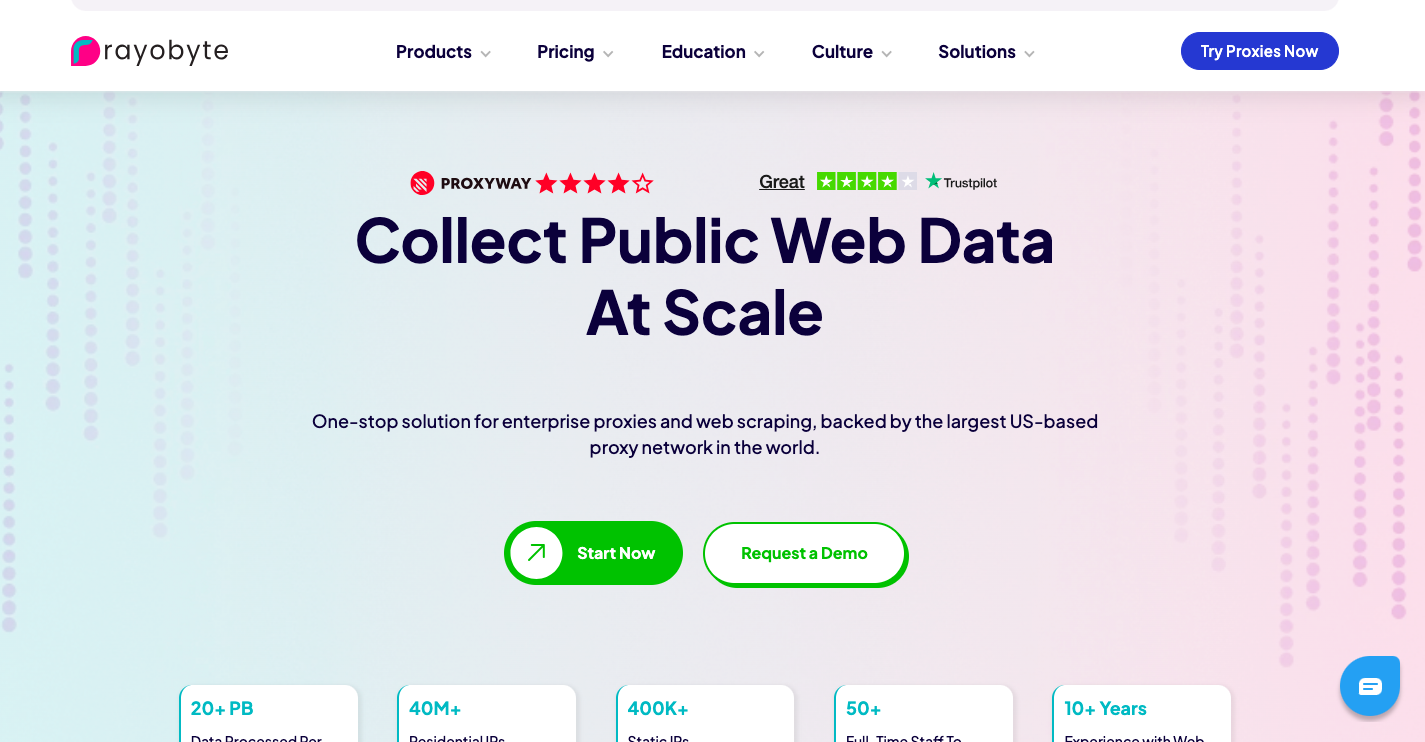
They offer residential, datacenter, ISP, and mobile proxies, each built with clear sourcing practices and adjustable settings. Rayobyte is a solid provider if you need a data center or residential proxies for scraping. Their free tools and educational resources are genuinely helpful for beginners. But their mobile proxies hit the mark entirely.
The pricing is hard to justify. At $50 for just 2GB of mobile data, you are paying a premium for very little traffic. The slow speeds and limited targeting options make them a poor fit for multi-account management or any task requiring stable, long-term sessions. Their mobile proxies are designed for specific scraping use cases, not for multi-account business or account scaling.
Features:
Residential and datacenter proxies with flexible usage patterns
Non-expiring traffic credits on residential plans
Sticky and rotating sessions for session control
Authentic IPs
Geo-targeting IPs
Multi-protocol support: HTTP, HTTPS, and SOCKS5 on static proxies only
Rayobyte University with educational resources for beginners
Pricing:
$50/month for 1 IP (2GB)
$125/month for 3 IPs (5GB)
$200/month for 5 IPs (10GB)
$350/month for 10 IPs (25GB)
$600/month for 20 IPs (60GB)
4. Bright Data
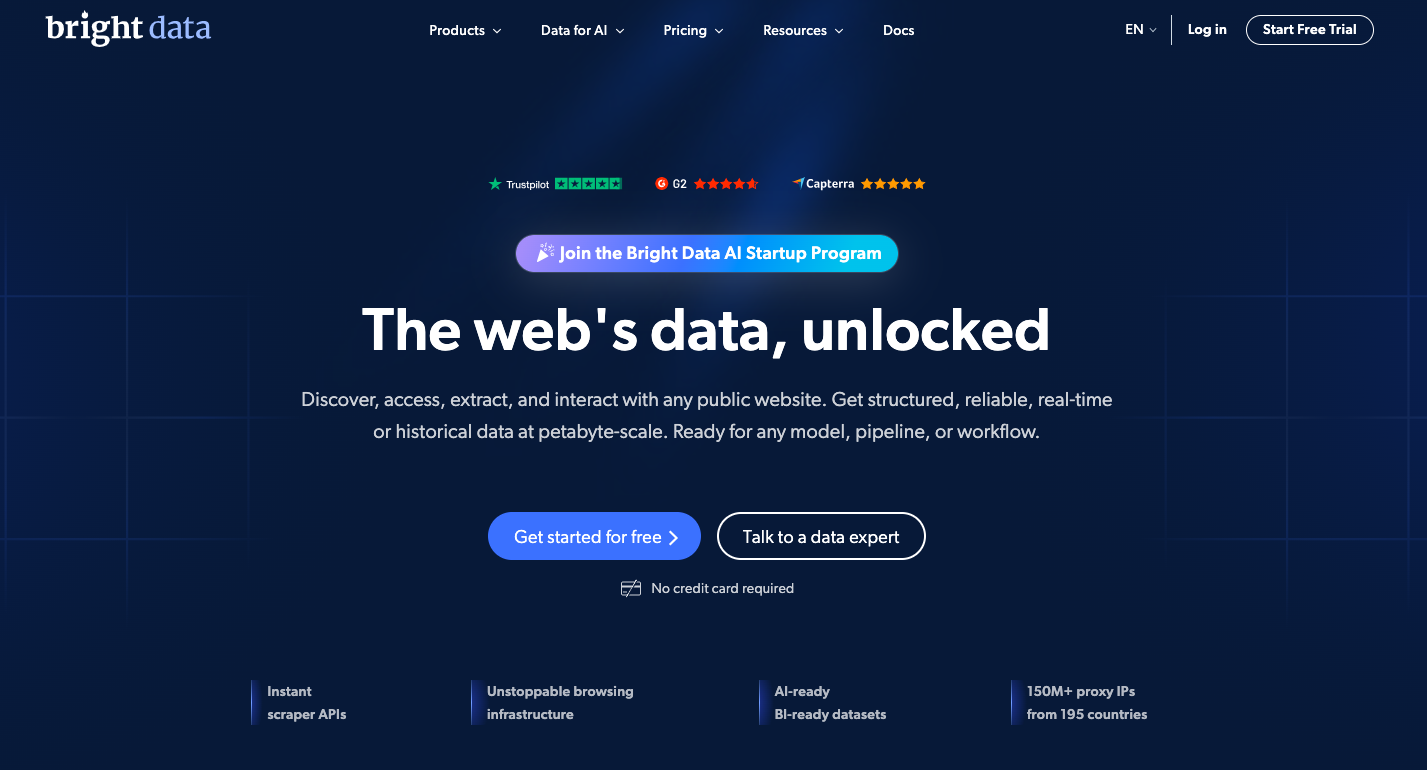
Bright Data is built for big companies with big budgets. Their mobile proxy network is massive, with over 7 million real 3G, 4G, and 5G IPs across 195 countries. You can target by city, ZIP code, carrier, or ASN. Bright Data is designed for enterprise-scale operations, not for individuals or small teams managing multiple accounts. The complexity can be overwhelming to most startups.
The high price of mobile proxies leaves smaller users behind. Their mobile proxies are among the most expensive in the industry. On top of that, you have to go through a strict KYC (Know Your Customer) process just to access their mobile network. They want to verify your business or personal identity before you can start.
Features:
70 million residential networks
Selecting locations down to the country and city.
To start, API-first access suits high-usage patterns.
Infrastructure is designed to scale, not stay small. Built for expansion instead of ease.
Designed around complexity rather than convenience.
Pricings:
Pay-As-You-Go $8.00 - $8.40/GB No monthly commitment
Starter Plan $7.14/GB - $499/month (includes 69 GB)
Business Plan $6.30/GB - $999/month (includes 158 GB)
Enterprise Plan $5.88/GB - $1,999/month (includes 339 GB)
5. Proxy Empire
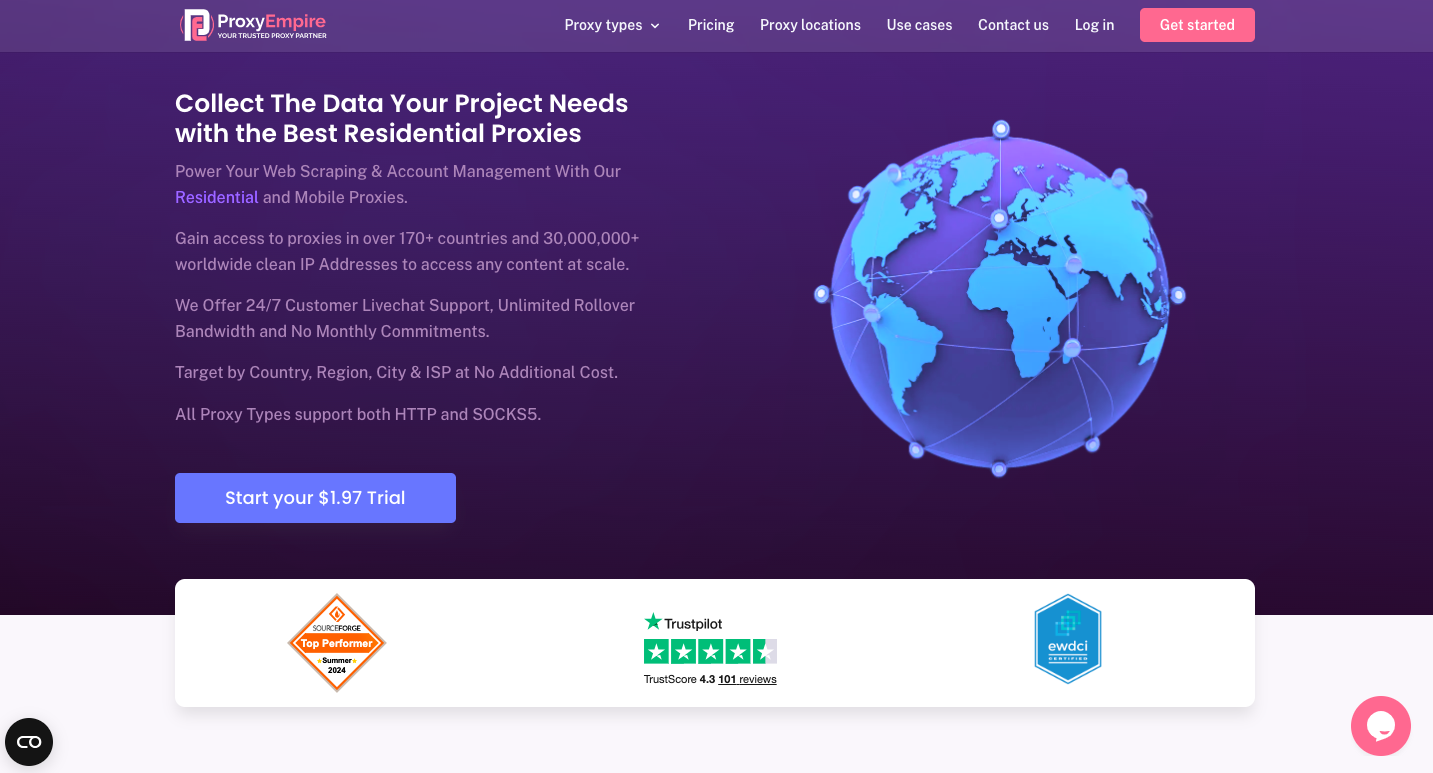
Proxy Empire focuses on providing stable residential and mobile proxies with good geographic coverage. They are not the flashiest provider, but they get the job done. They offer rotating residential proxies, static residential setups, mobile networks, and even datacenter links. With over 30 million IPs across 170+ countries and response times as low as 0.6 seconds, the infrastructure is solid.
But here is where mobile proxies fall short for most users. The way ProxyEmpire operates is designed to cover a lot of ground quickly, not to keep long-lived sessions stable. If you need multiple accounts logged in for weeks, the constant movement works against you. Their mobile proxies are better suited for scraping and automation, where you often need fresh IPs, not for account management, where consistency matters most.
Features:
API access for automation
Rotating and sticky session options
Mobile and datacenter proxies available
City and ISP-level targeting
99.86% uptime with minimal delays
HTTP and SOCKS5 protocol support
Pricing:
Pay-As-You-Go (Mobile) $20/GB (1GB) down to $8/GB (500GB)
Dedicated Mobile (1 IP) $125/month
Dedicated Mobile (5 IPs) $200/month
Dedicated Mobile (10 IPs) $350/month
Dedicated Mobile (20 IPs) $600/month
Trial Plan $1.97 (100MB residential + 50MB mobile)
6. Decodo
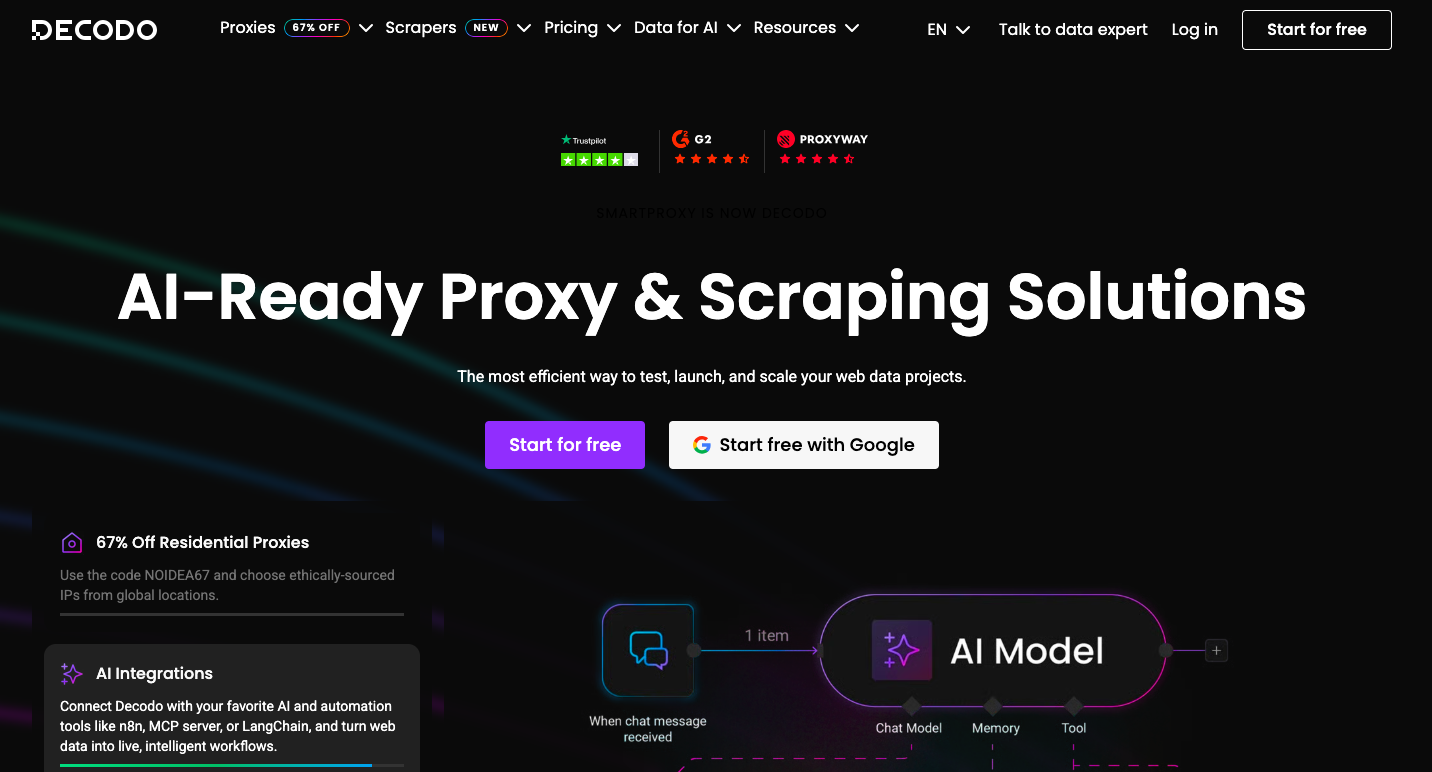
Decodo gives you plenty of options that shift regularly or stay fixed, depending on your needs. With over 125 million residential IPs across 195+ locations and average response times under 0.6 seconds, the infrastructure is solid. Their system is built for broad automation needs, which works well when you are scaling up bots and changing IPs often to avoid issues.
But here is where mobile proxies fall short for everyday users. Because Decodo focuses on broad automation, they pay less attention to sustained sessions and clean IP handling. The prices are mid-range, and the focus on rotation over consistency makes them a better fit for data collection than account management.
Features:
Rotating and static residential proxies available
99.76% success rate with 99.99% uptime
City and ISP-level targeting options
HTTP/S and SOCKS5 protocol support
Chrome and Firefox extensions for easy browser switching
14-day money-back guarantee
Pricing:
Pay As You Go $8.00/GB
2 GB $7.50/GB
8 GB $7.00/GB
25 GB $6.50/GB
50 GB $6.00/GB
7. Oxylabs
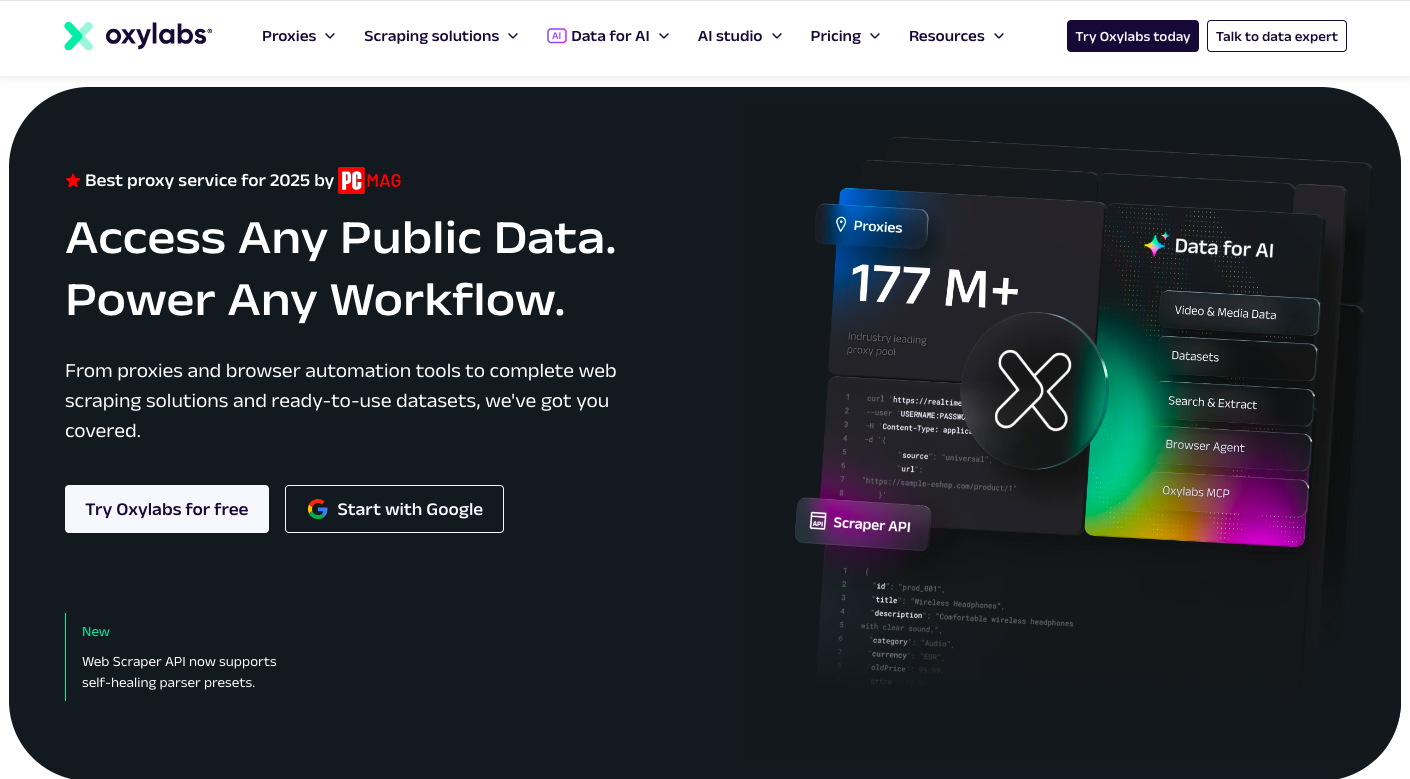
Oxylabs is another giant in the proxy space, offering 100M+ IPs with a strong focus on enterprise clients. Their mobile proxies support controlled rotation, geo-targeting, and long sessions. OxyLabs are built for large companies that run on a robust technical foundation but are expensive to operate. Despite strong performance, it lacks built-in tools to confirm data accuracy. Without native validation features, users must rely on third-party solutions. Yet their strong uptime often comes at a steep price.
Features:
100 million IPs linked up, covering nearly every corner of 195 regions worldwide.
The choice of proxies depends on the work they need to be done. Different tasks call for different setups: countries first, then states, down to individual cities.
Supports SOCKS5 connections
When a system reboots, sticky sessions still keep a user on their original server.
Adjustable IP rotation options
Expensive
Pricings:
Pay-as-you-go: $8.00 - $8.40/GB
Starter Plan: $7.14/GB ($499/month for 69 GB)
Business Plan: $6.30/GB ($999/month for 158 GB)
Enterprise Plan: $5.88/GB ($1,999/month for 339 GB)
Custom enterprise plans available upon request
8. IPRoyal
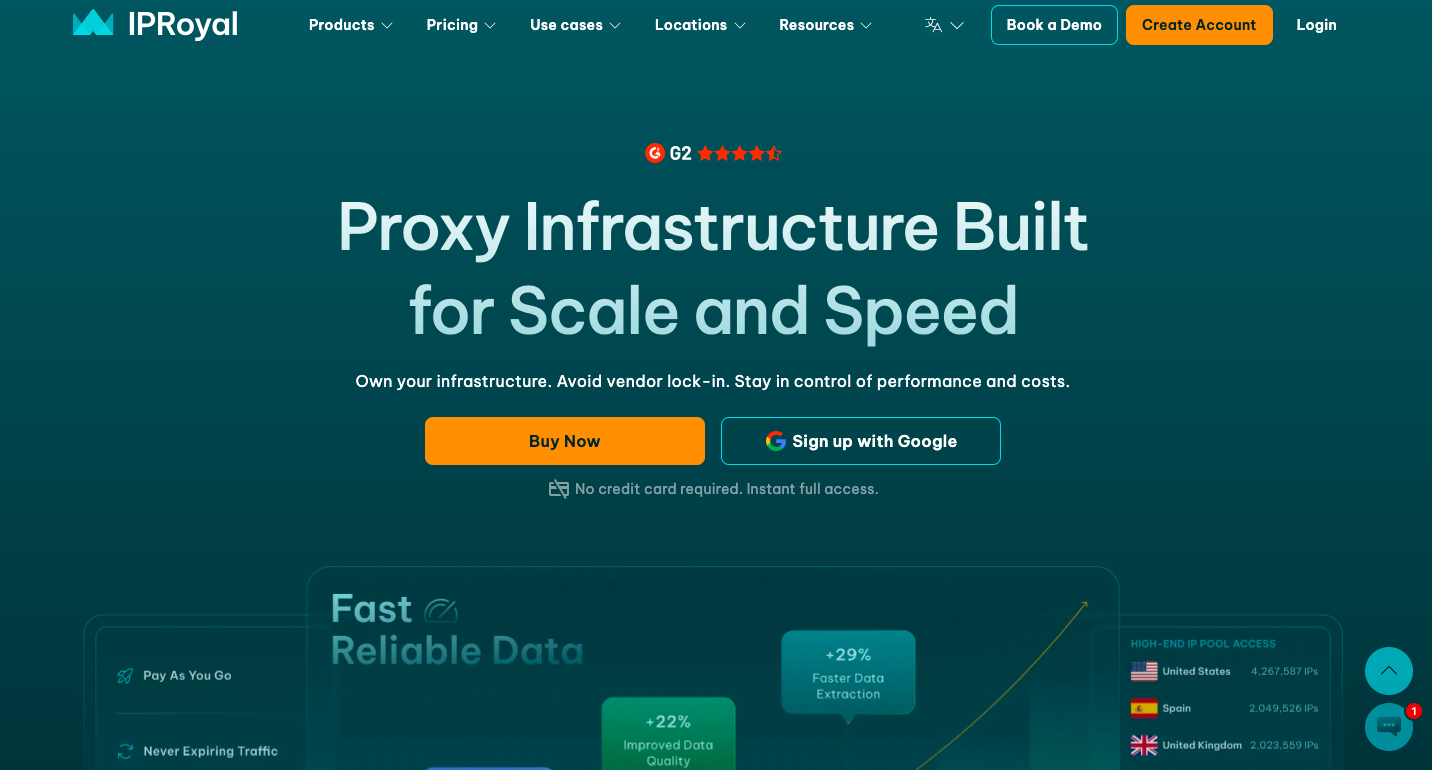
IPRoyal has carved out a niche as the budget-friendly option with ethically sourced IPs through their Pawns.app network. They offer residential, datacenter, ISP, and mobile proxies with both rotating and sticky session options. Their biggest selling point? Non-expiring traffic credits. You buy that, and it sits there until you use it, no rush.
IPRoyal's mobile proxies cost $10.11 per day for unlimited traffic, which sounds great until you realize you are renting by the day, not by usage. If you only need a few hours, you still pay for a full day. The success rate on tough sites is around 97%, which is lower than competitors' rates, and their pool is smaller. Plus, the 24-hour refund window is stingy compared to others.
Features:
Residential pool of 32M+ IPs across 195+ countries
Ethically sourced through Pawns.app with user consent
Sticky sessions and rotating options available
City-level geo-targeting for most proxy types
Unlimited concurrent sessions
Non-expiring traffic credits on residential plans
Browser extensions for Chrome and Firefox
Pricings:
Daily Unlimited: $10.11/day for unlimited traffic
Residential pay-as-you-go: $1.75 - $7/GB (non-expiring)
9. IP Burger
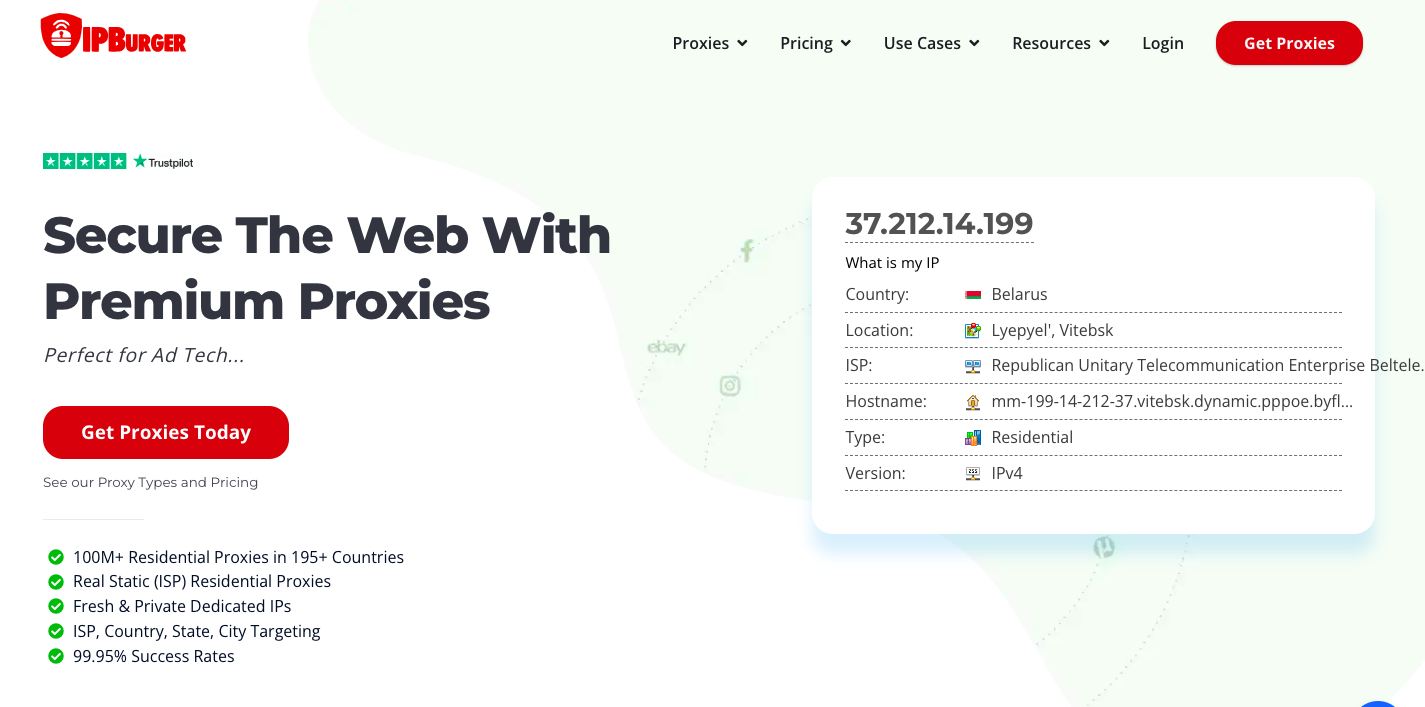
IPBurger offers premium mobile proxies with a massive network of over 9.3 million real 4G and 5G IPs from 100+ countries. They focus on providing clean, undetected connections with minimal CAPTCHA interruptions. Their mobile proxies come from real devices on carriers such as AT&T, T-Mobile, and Verizon. You get unlimited concurrent connections and sticky sessions up to 30 minutes.
IPBurger's pricing is premium. Plans start at $99/month for just 5GB, which works out to nearly $20/GB. That is among the most expensive in the industry. For heavy users, costs spiral fast. While they offer high-quality IPs, their value proposition falls apart when you compare prices per GB to competitors. You pay luxury prices for what other providers offer at a fraction of the cost.
Features:
9.3M+ real mobile IPs from 100+ countries
Carrier-level targeting (AT&T, T-Mobile, Verizon, etc.)
Sticky sessions up to 30 minutes
Unlimited concurrent connections
Supports HTTP and SOCKS5 protocols
Click-and-point dashboard for easy setup
24/7 customer support
Pricings:
Starter Plan: $99/month (5 GB: $19.80/GB
Plus Plan: $269/month (15 GB) $17.93/GB
Pro Plan: $419/month (25 GB): $16.76/GB
Enterprise Plan: $1,000+/month (custom GB)
10. NodeMaven
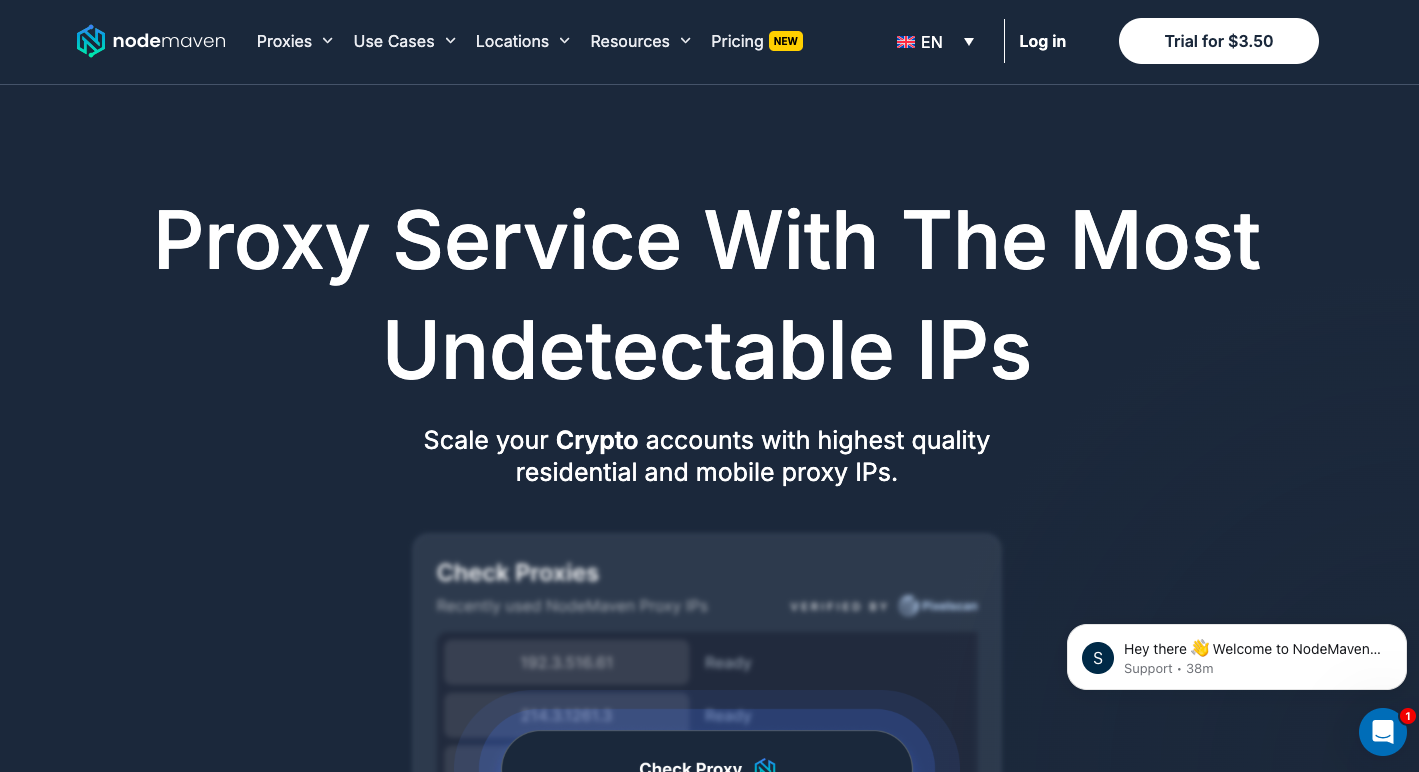
NodeMaven offers residential and mobile proxies with a focus on filtered IP allocation and longer sticky sessions. Their structure is built around traffic-based residential plans and session persistence. For business, marketing, and account management workflows, session duration and IP filtering are positioned as core elements.
However, their pricing model is traffic-based, meaning the more you automate or scrape, the more you pay each month. Costs add up fast. For high-traffic campaigns, the per-GB pricing becomes expensive. No built-in SMS activation for account verification. No integrated tools to check whether an IP address, phone number, or credit card has been flagged before use.
Features:
30M+ residential IP pool with traffic-based billing, where higher automation or scraping volume increases total monthly cost
Country, city, and ISP targeting are available
Unlimited concurrent sessions, which can accelerate bandwidth consumption
Residential pricing per GB, which may become costly for high-traffic campaigns
Trial available for 1GB at $3.99
No built-in SMS activation for Instagram account verification
No integrated IP, phone, or card risk evaluation tools
Pricings:
5 GB Plan: $30 per month
10 GB Plan: $56 per month
25 GB Plan: $135 per month
50 GB Plan: $240 per month
100 GB Plan: $445 per month
250 GB Plan: $1,000 per month
500 GB Plan: $1,700 per month
Quick Comparison Table: Mobile Proxy Prices
Provider | Mobile Proxy Price | Other Proxy Types | IP Pool | Best For |
|---|---|---|---|---|
CyberYozh | $1.7 per day with unlimited traffic | Residential, ISP, Static, datacenter. | 50M+ | Best overall value, all-in-one tools. |
NetNut | Custom (enterprise) | Residential, ISP | 85M+ | Enterprise speed tasks |
Rayobyte | $6-7.50/GB | Residential, ISP | 40M+ | Beginners, free tools |
Bright Data | $4-15/GB | Residential, ISP, Datacenter | 175M+ | Large enterprises |
Proxy Empire | $20/GB | Residential | 30M+ | Reliable mid-tier option |
Decodo | $7.50-8/GB | Residential, ISP, Datacenter | 55M+ | Speed, developers |
IP Burger | Premium | Residential | 9.3M+ | IP quality filtering |
Oxylabs | $4+/GB | Residential, ISP, Datacenter | 100M+ | Large-scale scraping |
IPRoyal | $10.11/day | Residential, Datacenter | 32M+ | Budget, non-expiring traffic |
Nodemaven | 5 GB/ $30 per month | Residential | 30M+ | Trying newer providers |
How to Choose the Right Mobile Proxy Provider
With so many options, it's very difficult to find the right provider. Look into the options mentioned below to choose the best mobile proxy provider:
1. Choose the Proxy type for your workflow
For Social media management (Instagram, TikTok, Facebook): Mobile proxies are the best. One account, one IP, forever.
For Web scraping (Amazon, Google): Rotating residential or Mobile proxies work best.
Sneaker bots or Limited ticketing: Residential and Mobile proxies are the best.
For Ad verification, Mobile is non-negotiable since 80% of ads are viewed by mobile-only users.
2. Budget-friendly
When running a small business or a larger enterprise, one should choose a provider that offers all the necessary equipment at an affordable price. If you are just starting, try CyberYozh. They offer the best value without locking you into expensive contracts, and provide all-in-one infrastructure under one roof, so you don't have to juggle many providers.
3. Integration friendly
Most providers don't offer safe,e easy integration. It's important to have anti-detector systems so you can set up your proxy seamlessly with them for fingerprinting and other purposes. Such as :
AdsPower, Geelark, Dolphin Anty, Kameleo, Octobrowser, Gologin, Multilogin, and more.
Final verdict
After comparing all 10 best mobile proxy providers, Cyberyozh stands out for providing value at an affordable price, whether for small or large enterprises. Having a mobile proxy at an affordable price, with IP checks, SMS verification, and interaction-friendly, all under one roof, without having to pay extra for other sources. Remember, the "best" provider is the one that works for your specific workflow. Start with a small plan, test thoroughly, and scale up once you find a winner.
Frequently Asked Questions
1. What is a mobile proxy, and how is it different from a regular proxy?
A mobile proxy uses IP addresses from real mobile carriers such as Verizon or T-Mobile. Regular proxies use IPs from datacenters (datacenter proxies) or home Wi-Fi networks (residential proxies). Mobile proxies are harder to detect because they appear to be real people using a smartphone.
2. Are mobile proxies faster than residential proxies?
Generally, no. Mobile networks are slower than fiber optic home internet connections. However, mobile proxies make up for slower speeds with higher trust scores. For most automation tasks, the speed difference is barely noticeable.
3. Can I use mobile proxies for Instagram and TikTok?
Yes! In fact, mobile proxies are the best choice for social media platforms. Since most users access these apps on phones, traffic from mobile IPs looks completely normal. Pair your mobile proxy with an anti-detect browser for maximum safety.
4. Why are mobile proxies so expensive?
Mobile proxies cost more because they require real infrastructure. Providers need physical SIM cards, mobile devices or modems, and data plans. This is much more expensive than spinning up virtual servers in a data center.
5. Which provider has the best success rate on Amazon?
Based on testing, NodeMaven achieved a 99.67% success rate on Amazon. Decodo and Bright Data also perform well on e-commerce sites.
6. Do I need an anti-detect browser with mobile proxies?
Yes. Proxies hide your IP address, but websites can still track you through browser fingerprinting (screen resolution, fonts, timezone, etc.). Anti-detect browsers like Multilogin or AdsPower create unique fingerprints for each account, making you truly invisible.
Helpful?
Share article