
How to Make Money with AI with No Experience: 7 Ideas That Use Web Data

You’ve seen the posts: “I made $10,000 with ChatGPT in a week.” Most of them skip the part that matters. AI alone doesn’t earn you anything. Businesses pay for answers: what competitors charge, where they rank on Google, what customers complain about.
That’s good news if you’re starting from zero. You don’t need to code, design or build an app. You need free AI tools, public web data and a small, repeatable service that saves a business owner time. This guide shows you how to make money with AI with no experience, step by step, using seven ideas that real small businesses already pay for.
Quick answer
The easiest way to make money with AI with no experience is to sell simple data services to small businesses: competitor price reports, local Google ranking checks, review summaries and similar tasks. Free AI tools do the writing and analysis, a free web scraper collects public data, and you package the results into a weekly report clients pay for.
Start free today. CyberYozh’s Yozh Scraper is free and open source. It collects public data from sites like Amazon, Google, and eBay. When you land your first client, add rotating residential proxies from $2/GB to keep collection running smoothly.
TL;DR
AI doesn’t make money by itself. Selling a useful result does
Small businesses pay for regular, simple reports they don’t have time to make
You can start with free AI tools and free data collection
Start with one service, one niche and one client
Never promise results you can’t control, and only collect public data
Why web data is the easiest way to start
Most “make money with AI” ideas compete in crowded markets. Thousands of people now sell AI-written blog posts and AI art. Prices drop fast.
Data services are different, for three reasons:
The need repeats: Prices and rankings change every week, so clients keep paying.
The value is easy to see: “Your competitor dropped their price by 12%” is worth more than a generic blog post.
Few beginners offer it: Most people don’t realise how simple it has become.
And the demand is growing. The World Economic Forum’s Future of Jobs Report 2025 names AI and big data as this decade's fastest-growing skills, with about 170 million new jobs expected by 2030.
Think like a business owner: they don’t want “AI.” They want to know if they’re losing customers, and why. Sell the answer, not the technology.
7 AI job opportunities you can start without experience
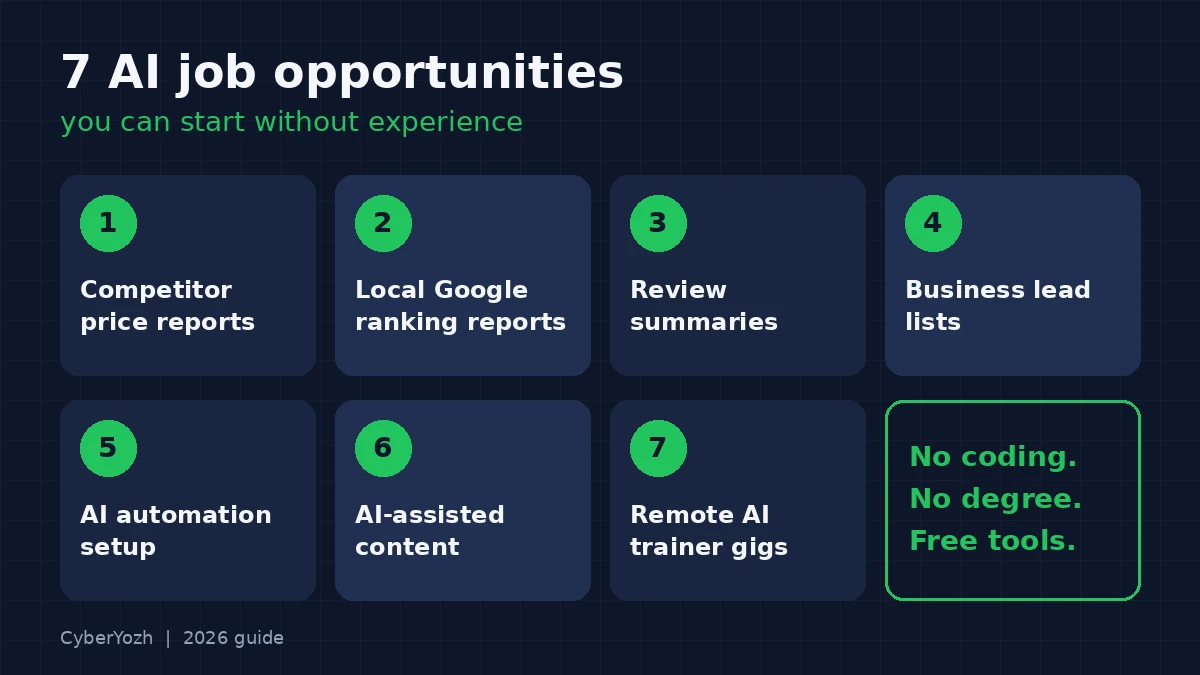
These AI job opportunities need no degree and no coding. Each one uses free AI tools to do most of the work.
1. Competitor price reports for online shops
Small online stores rarely track their competitors. You can do it for them.
What you do: collect competitor prices each week, then ask an AI tool to summarise the changes
Who pays: small e-commerce brands and Amazon or eBay sellers
Your first step: pick one niche, such as pet supplies, and track five competitors for a sample shop
This is the idea where CyberYozh helps most. Yozh Scraper has ready-made settings for Amazon, eBay, and Walmart, and CyberYozh’s price-monitoring proxies keep large shopping sites from blocking your checks.
2. Local Google ranking reports
Dentists, plumbers and restaurants all want to know: “Do we show up when people nearby search for us?”
What you do: check where a business ranks for the main searches in its city, every week
Who pays: local businesses and small marketing agencies
Your first step: check one local business for free and show them the results
Google shows different results in different cities, so you need to check from the right location. CyberYozh’s SERP proxies let you see results the way local customers do.
3. Review summaries and customer insights
Businesses have hundreds of reviews but no time to read them.
What you do: collect public reviews and ask AI to find the top complaints and compliments
Who pays: cafés, hotels, app makers and online stores
Your first step: summarise a local café’s reviews and send them the top three fixes
4. Business lead lists from public directories
Sales teams always need fresh contacts.
What you do: collect public business details (company name, category, website) from online directories, then let AI sort and clean them
Who pays: sales agencies, freelancers and B2B companies
Your first step: build a sample list of 50 businesses in one niche
Stay on the right side of the rules: collect only public business information, never personal data such as private emails or phone numbers of individuals. Check each website’s terms, and follow privacy laws like GDPR if you work with European data.
5. AI automation setup for small businesses
Many owners know AI could save them hours but don’t know where to start.
What you do: set up simple automations, such as an AI assistant that drafts email replies or sorts new orders
Who pays: busy solo business owners and small teams
Your first step: automate one task in your own life first, then offer it to others
6. AI-assisted content for local businesses
This is more crowded, but it works well when combined with data.
What you do: write social posts and short blogs, using real facts from your price or review reports
Who pays: local shops and service businesses
Your first step: offer one month of posts based on a review summary you’ve already done
7. Remote AI jobs, such as AI trainer gigs
If you’d rather work for a company than find clients, remote AI jobs like rating and correcting AI answers are a common starting point. Platforms such as Mindrift hire people to help train AI models. Our Mindrift guide explains how it works and whether it’s worth it.
The best AI tools for productivity in 2026
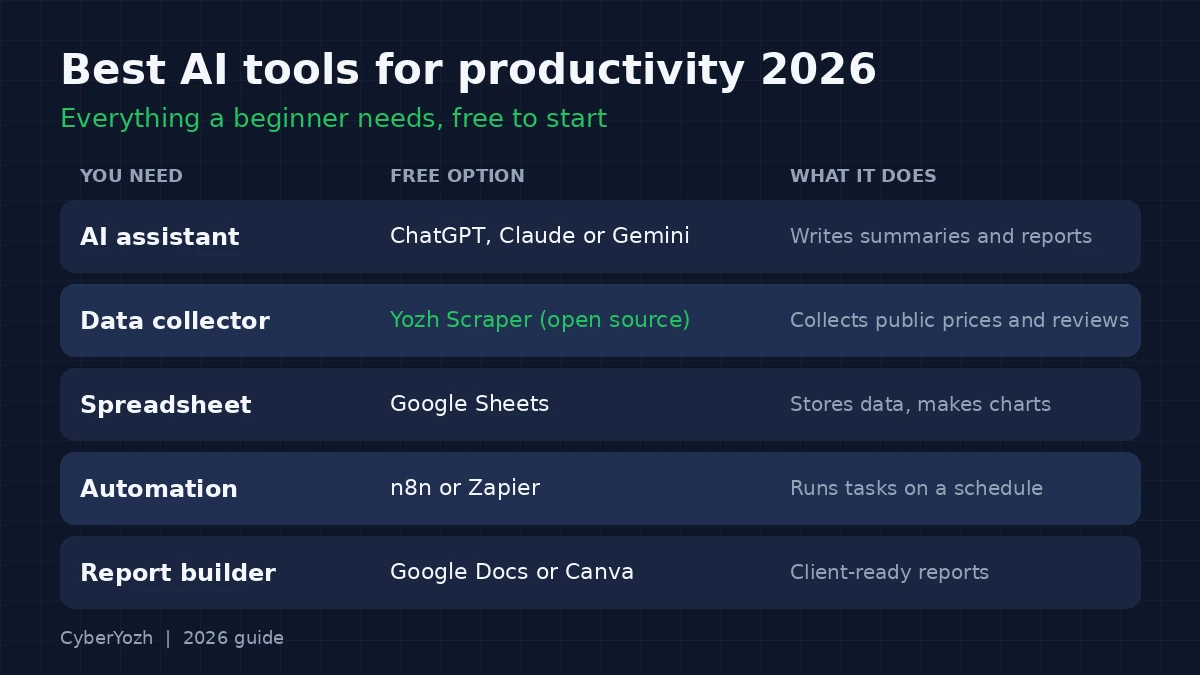
You don’t need expensive software. These AI tools for work productivity cover everything above:
What you need | Free option | What it does for you |
An AI assistant | ChatGPT, Claude or Gemini (free plans) | Writes summaries, emails and reports |
A data collector | Yozh Scraper (free, open source) | Collects public prices, rankings and reviews |
A spreadsheet | Google Sheets | Stores data and creates simple charts |
An automation tool | n8n (free self-hosted) or Zapier (free plan) | Runs tasks on a schedule |
A report builder | Google Docs or Canva (free plans) | Turns results into a client-ready report |
The best AI-powered productivity tool is the one you’ll actually use every week. Start with an AI assistant and a spreadsheet, and add the rest as clients arrive.
Pro tip: Don’t collect AI productivity tools like trophies. Master two tools well before you add a third, so you can deliver reports faster than anyone else.
Why beginners choose CyberYozh for data collection
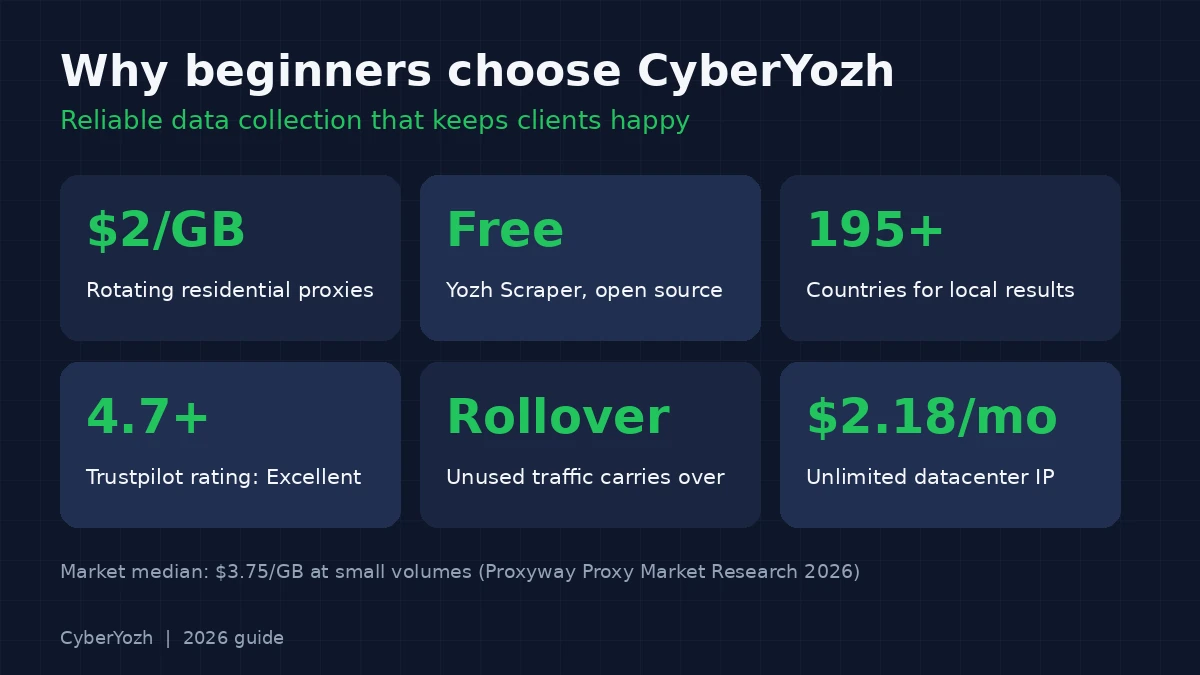
When you start getting paid for data, two things matter: your collection must keep working, and your costs must stay low. That’s where most beginners slip up. They use free proxy lists, get blocked halfway through a client report and lose the client.
Here’s why CyberYozh is built for exactly this stage:
Free scraper, no catch: Yozh Scraper is open source, so you never pay per request. You only pay for proxy traffic when you need it
Fair pricing: rotating residential proxies start at $2/GB. For comparison, Proxyway’s 2026 research found the market median was $3.75/GB at small volumes
Unused traffic rolls over: a slow month doesn’t waste your money
Every country you need: 100M+ residential IPs in 195+ countries, so your local ranking reports match what real customers see
Unlimited datacenter IPs from $2.18 a month for easy, high-volume sites
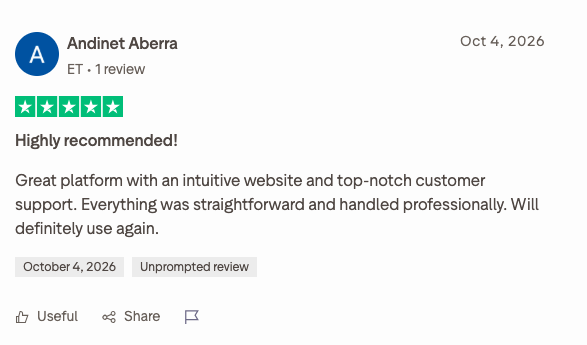
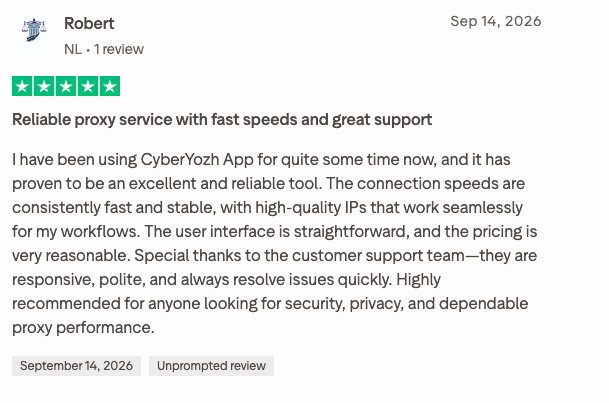
Real people to help: live support from 08:00 to 22:00 GMT, rated 4.7+ “Excellent” on Trustpilot
Try it with zero risk. Start with the free Yozh Scraper, and only buy proxy traffic once a client is paying you. First, check your connection with the free CyberYozh IP checker.
How to make money with AI with no experience in 30 days
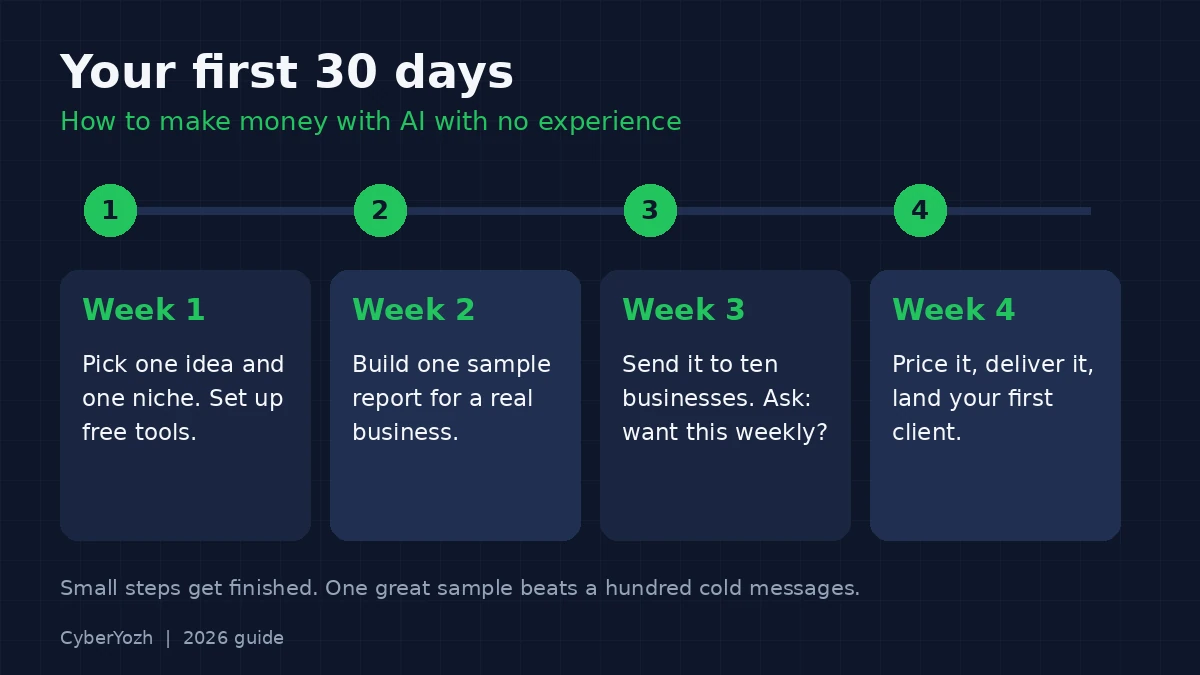
Big goals stall. Small steps get finished. Here’s a plan that fits around a full-time job:
Week 1: pick one idea and one niche. For example, price reports for pet shops. Set up your free tools.
Week 2: build one sample report for a real business, without being asked. This becomes your portfolio.
Week 3: send it to ten businesses with a short message: “I made this for you. Want it every week?”
Week 4: price it and deliver. Charge a small monthly fee for your first client, then raise it as you add more.
How much should you charge? Look at what freelancers already charge. Freelancer profiles on Upwork, for example, show web data specialists charging roughly $15 to $50 an hour. As a beginner, a simple flat monthly fee is easier to sell than an hourly rate.
The most powerful sales trick is a free sample. People feel more comfortable saying yes once they’ve already seen your work. One great sample report beats a hundred cold messages.
Mistakes to avoid
Chasing every idea at once. Pick one service and get one paying client first
Promising rankings or sales. Sell reports and insights, not results you can’t control
Using free proxy lists. They’re slow, often blocked and sometimes unsafe. A failed report costs you a client
Ignoring website rules. Only collect public data, respect each site’s terms and avoid personal information
Copying AI output without checking it. AI makes mistakes. Always review numbers before sending a report
Conclusion
Learning how to make money with AI with no experience isn’t about finding a secret tool. It’s about solving one boring, repeating problem for a business owner who doesn’t have time to solve it. Price reports, local rankings and review summaries are the easiest places to start, because the need never stops.
Start small. Build one sample. Send it to ten businesses. And when your first client says yes, make sure your data collection never lets you down.
Your first report starts here. Set up the free Yozh Scraper today, and add CyberYozh dedicated datacenter proxies from $2.18/month or residential proxies from $2/GB when your first client signs.