
How Do the Best Cloud-Based Phone Systems Maintain Stable Access?

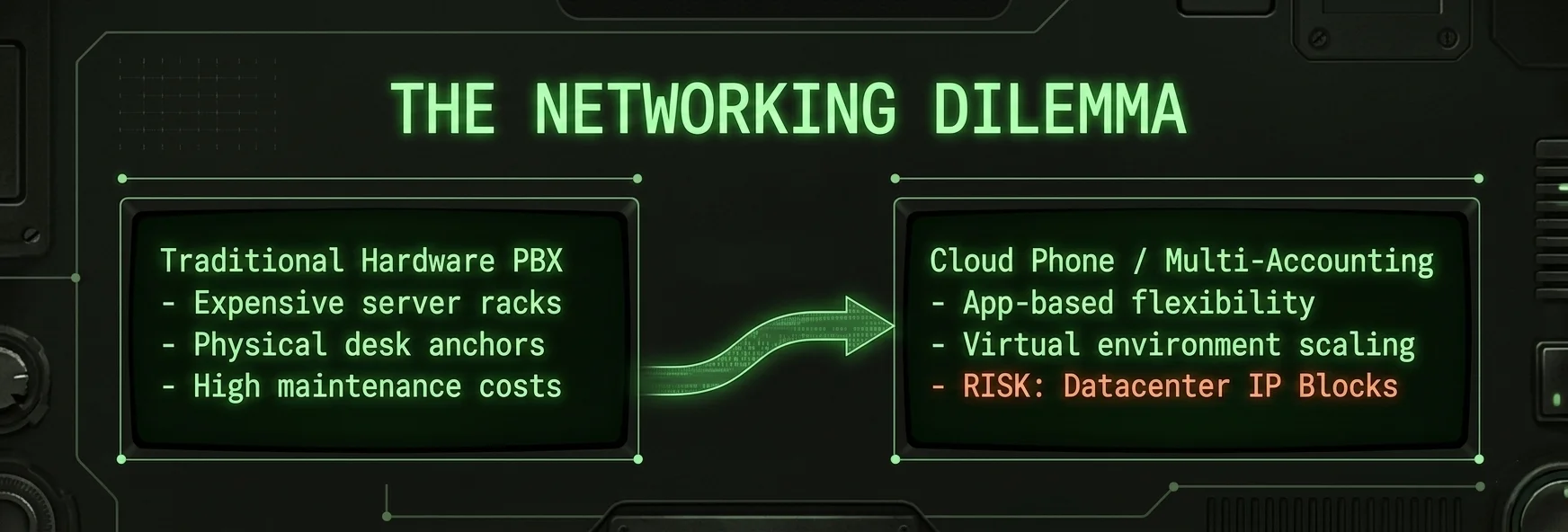
Hardware ties your business to a physical desk. Traditional copper wires, cumbersome desk phones, and expensive on-premise server racks slow down modern operations. They create rigid boundaries that stall growth.
Moving your communications to the online space completely solves this hardware bottleneck.
But a shift to the internet introduces an entirely new layer of network friction. Managing virtual communication lines entails navigating strict anti-fraud filters, regional login limits, and aggressive platform algorithms.
This guide breaks down the core technology behind modern voice applications. We will explore the leading solutions on the market.
More importantly, you will learn exactly how to structure your network infrastructure to prevent sudden connection drops, registration failures, and catastrophic account flags.
TL;DR: Infrastructure for the best cloud-based phone systems
If you need to upgrade your communication stack, you must clearly understand what a cloud based phone system is before you deploy one. Here is the exact breakdown of why virtual setups fail and how you fix them:
The trap: Standard business VoIP solutions and standalone multi-accounting apps fail during international routing. Target platforms scan the rigid data center IPs these apps force you to use. They flag your operational profiles immediately.
The mechanics: Understanding the tech is mandatory. How does a cloud based phone system work? It either digitizes audio streams for standard corporate teams or hosts a completely virtualized Android environment for digital marketers. Both models collapse if your underlying internet connection looks synthetic.
The pro solution: Stop using public VPNs. To actively protect your network footprint, you must switch your data layer to high-trust mobile proxies. These real LTE/4G/5G cellular IPs blend perfectly with local smartphone traffic. Security algorithms cannot filter them.
Operational workflow: Stitching unconnected tools together destroys your velocity. You maintain stable remote communications only by consolidating your cloud phone infrastructure into one native workspace. Run your device profiles, proxy connections, and payments inside a single closed-loop ecosystem.
What is a cloud-based phone system?
A cloud-based phone system is a voice communication platform hosted entirely off-site on secure, remote servers. It changes old copper wiring. The technology routes your voice data over the internet rather than through local telephone exchanges.
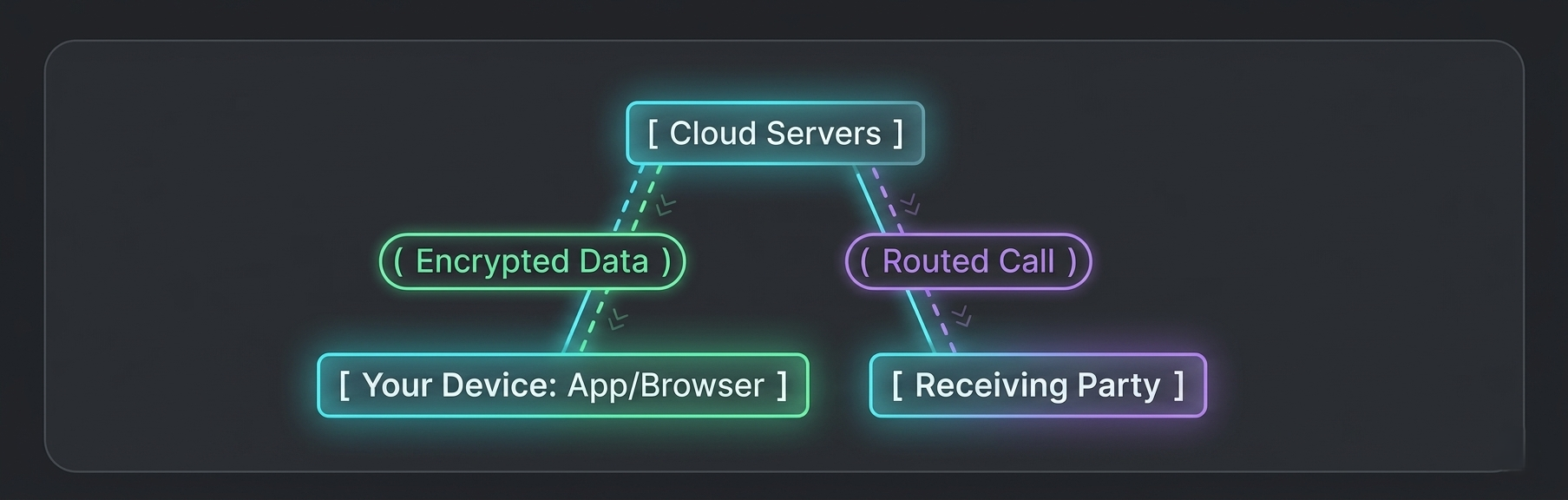
Old office setups required closets packed with complex wiring and dedicated IT staff just to manage extensions. Cloud architecture completely rewrites this dynamic. Your team requires only an internet connection and a software app to access their workspace.
This shift serves two separate targets.
Remote corporate teams combine calls and messaging.
Multi-accounting professionals run hundreds of isolated digital personas.
Making the switch eliminates upfront capital expenses for hardware. Your team communicates seamlessly from any global location. You scale your total line capacity up or down with a few administrative clicks.
👉 Sign up with CyberYozh App for free to build a secure communication infrastructure today.
How does a cloud-based phone system work
The underlying technology splits into two completely different architectural models. The mechanics depend on your goals. Standard corporate apps handle basic voice traffic. But advanced setups emulate full mobile operating systems. Mixing them up causes immediate configuration errors.
Architectural Feature | Traditional VoIP Routing | Virtualized Mobile Cloud Phones |
Primary Focus | Real-time audio stream digitization | Full OS and hardware simulation |
Core Target | Standard offices and customer support desks | Multi-accounting, ad verification, farming |
Data Handled | Voice packets (SIP/RTP protocols) | Device cookies, IMEI, canvas fingerprints, SMS |
Vulnerability | High data center IP footprint visibility | Rigid connection pathways within third-party apps |
1. Traditional voice over IP (VoIP) routing
Standard business setups rely on digitizing real-time voice inputs. You speak into your microphone. The cloud software instantly slices your analog voice into thousands of compressed digital data packets.
These packets travel instantly through your local internet connection to your service provider's remote servers. The provider instantly decodes the data stream. It translates the digital packets back into clear audio on the receiving end.
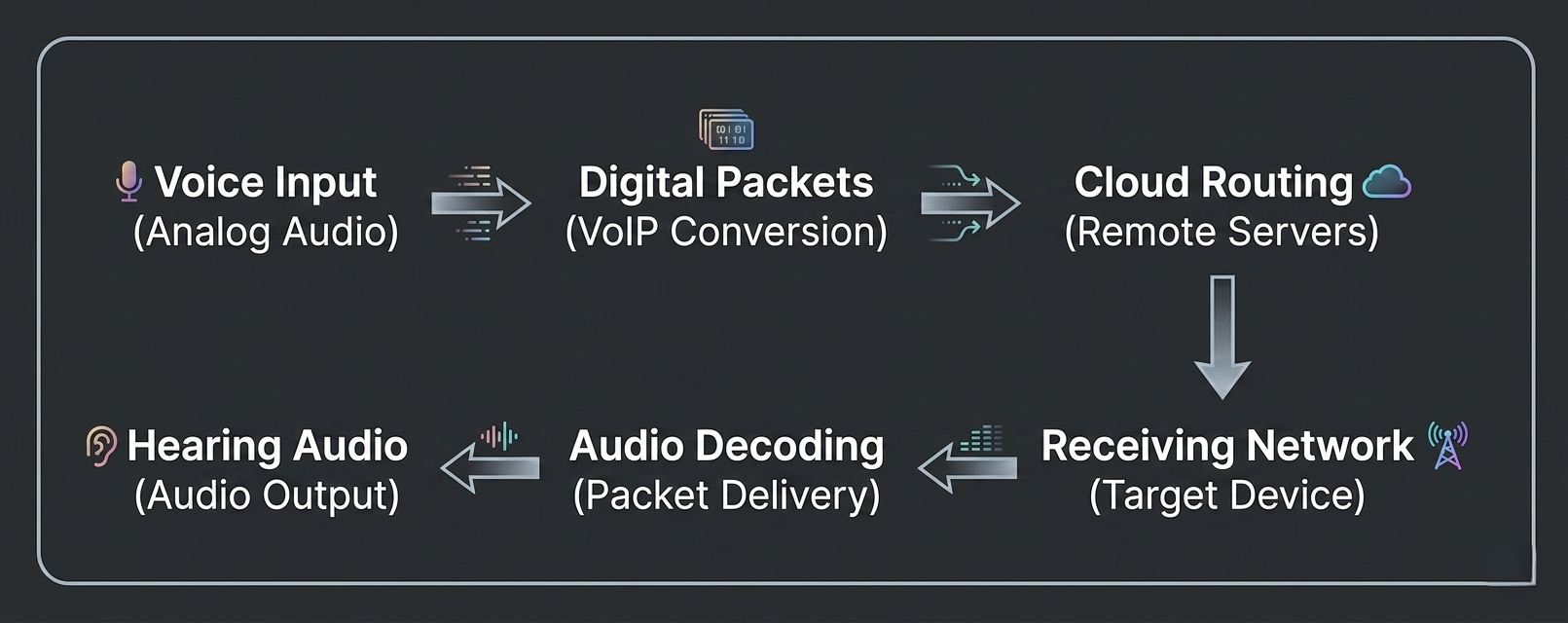
This is basic VoIP technology. The software turns your voice into standard web data. It travels just like an email. And that means it faces the exact same network vulnerabilities.
2. Virtualized mobile cloud phones (multi-accounting)
Operations involving automated scaling, social media farming, and ad verification require a completely different framework. Here, the service provider does not just route a phone line. They host an entire, virtualized Android operating system on enterprise servers.
You drop physical hardware entirely. Your team controls a virtual device array inside a desktop browser. Every profile acts as an independent smartphone.
Generate separate IMEI codes, MAC addresses, and hardware specs.
Isolate data storage partitions to keep cookies separate.
Simulate realistic battery levels, time zones, and cell tower coordinates.
This architecture convinces major social platforms and e-commerce nodes that your connection originates from a real, physical smartphone.
Why do network footprints cause cloud phones to fail
Both models share an identical point of failure. The entire system relies heavily on your network footprint. If you launch a perfectly isolated virtual device but route your data through a flagged data center IP range, automated security systems will trigger instant restrictions.
You cannot use low-grade connections. The platform's defensive filters immediately spot datacenter anomalies. A bad connection stops you early. Filters block your registration and freeze your setup before you even type a password.
What are the best cloud-based phone systems available
The software industry divides these tools into two camps. You have traditional voice routing for standard corporate teams. And you have specialized virtual environments that emulate actual mobile hardware.
Enterprise voice systems (VoIP)
RingCentral: Merges voice calls, text messaging, and video meetings. It connects call histories directly to standard CRM platforms.
Aircall: Built specifically for customer support desks. Teams use shared inboxes and warm transfer features to handle high inbound call volumes.
Virtual mobile environments
Multilogin: Creates isolated Android instances on remote hardware. The software separates storage partitions and generates distinct hardware fingerprints to stop target platforms from linking your accounts.
DuoPlus: Runs mobile profiles using authentic ARM processors. It matches local network coordinates and hardware details across multiple simultaneous instances.
Why do fragmented tools break cloud phone setups
These features read beautifully on a sales page. But these individual platforms present a critical structural flaw. They operate as completely fragmented tools. They lack a unified security ecosystem.
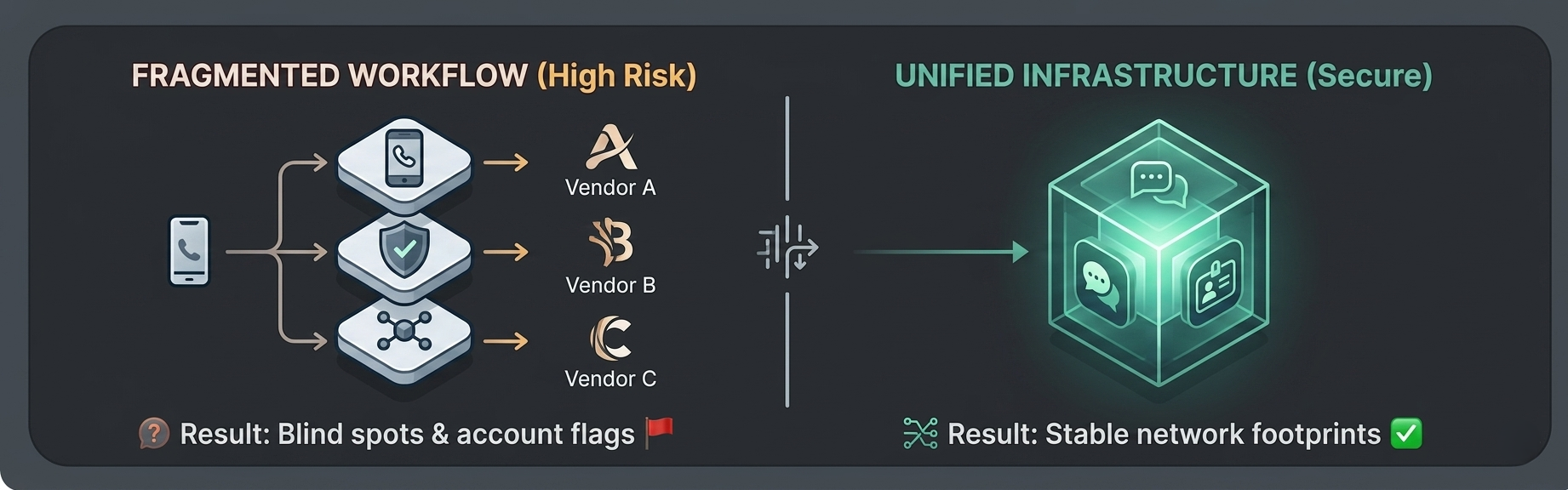
When you use isolated applications, you must manually stitch your infrastructure together. You end up managing your account environments, your verification systems, and your data connections through entirely separate, unconnected vendors. This lack of cohesion creates massive blind spots in your digital footprint.
An advanced mobile app interface means nothing if the underlying network connection triggers automated security filters during registration. If a platform's automated algorithms reject your connection signature, the entire software profile locks up immediately. True stability requires a complete, hardened infrastructure that secures the data layer before the application even launches.
The hidden trap: Why cloud phone accounts fail
Remote teams operate globally. But target platforms enforce incredibly strict verification protocols during international login attempts. Many operators opt for a standalone cloud phone application to address this. They assume the software handles security automatically. It does not.
Most commercial cloud phones act as rigid data intermediaries. They route your traffic through their own pre-determined infrastructure. You cannot modify the underlying network path. You cannot change your connection routing or align your network location manually.
For multi-accounting professionals, this structural rigidity creates a massive roadblock. The cloud phone’s fixed data pathway often registers as a corporate data center node. Major social media and e-commerce platforms spot this technical signature instantly. Because you cannot change the proxy parameters inside these rigid apps, your active sessions drop. The platform flags your entire profile network simultaneously.
The cost of fragmented tools
Stitching a setup together using separate, unlinked utilities compounds your operational risk. You buy an untrusted virtual number from one source. You attempt to use it on a rigid connection. Then, you link an unverified payment card from an entirely different vendor.
This fragmented approach destroys your operational velocity. You waste hours troubleshooting verification loops. When your tools do not communicate, you leave glaring logical gaps in your digital footprint. Your conversion rates plummet because your team spends more time fighting account lockouts than scaling actual campaigns.
All your tools in one place
A fragmented setup breaks constantly. You achieve real stability when your browser profiles, data paths, and payment methods interact natively. Managing your entire operational identity inside a single secure environment eliminates these technical blind spots. The CyberYozh App ecosystem provides this exact cohesion. The CyberYozh App groups network paths, phone lines, anti-fraud scoring, and payment tools into a single control panel. This protects your revenue.
Audit your current connection with real-time anti-fraud checkers.
Rent fresh virtual or residential ISP numbers.
Generate tokenized virtual bank cards instantly.
Protect your network footprint via a strict no-logs policy supported by 24/7 technical assistance.
Consolidating these assets removes the friction from multi-accounting. Your setup speed multiplies. Your accounts maintain a high Trust Rate over long periods. As a direct result, your team stops losing money on burned profiles and redirects all energy into revenue-generating tasks.
But if you are forced to use rigid third-party cloud tools that lock your connection settings, you must secure the data layer before it ever reaches their servers.
The fix: Securing access with mobile proxies
Public VPNs destroy your business infrastructure. They broadcast your exact server footprint to automated security bots. Your traffic looks synthetic. You need a data layer that platforms inherently trust. You need high-trust mobile proxies.
CyberYozh App mobile proxies route your traffic directly through real 5G and LTE cellular devices. We provide pristine IP addresses assigned by legitimate cellular carriers like AT&T, Verizon, T-Mobile and others. You do not connect through a sterile, easily identifiable server farm. You route your connection through an actual mobile device linked to a local cell tower.
This infrastructure succeeds because of how cellular networks manage their traffic. Mobile carriers use a technology called CGNAT (Carrier-Grade NAT). This system shares a single IP address across thousands of real, everyday smartphone users simultaneously.
Platforms simply cannot block these IPs. If a target network blacklists a CGNAT address, they instantly disconnect massive blocks of legitimate local traffic. They refuse to risk that level of collateral damage. Because of this structural reality, mobile IP addresses receive the absolute highest Trust Rate possible from automated anti-fraud sensors.
Upgrading your infrastructure to mobile proxies provides immediate operational results:
Keep your connection details entirely secure and isolated from automated platform scans.
Align your network coordinates to reach regional apps safely.
Eliminate verification loops to keep your software active.
Switch IP addresses instantly using automated API commands.
Securing the connection layer stops automated rejections instantly. But fixing the network path is only the first step toward building a completely bulletproof remote workspace.
👉 You can read more about mobile proxies here
The future of your communications
Third-party applications force you into a corner. You rent a virtual environment from one vendor. You route your data through another. You buy verification numbers from a third. This fragmented approach destroys your workflow. Every external integration introduces a new point of failure. It stalls growth. You spend your day debugging mismatched connection protocols instead of scaling your actual campaigns.
The industry demands a completely different structural approach. Data extraction, site debugging, and multi-accounting fail without a tight setup. You need parts that fit. A secure operational identity needs the hardware profile, the network layer, and the payment gateway to operate seamlessly inside one strict boundary. You need a closed-loop ecosystem.
We recognize this massive operational gap. Your infrastructure must work together natively. And because of this, CyberYozh App is engineering a proprietary CloudPhone solution. It integrates directly into our existing proxy and anti-fraud ecosystem.
This upcoming release aligns every tool you need into a single command center:
Run isolated LTE/4G/5G mobile proxies natively on top of trusted CGNAT cellular connections.
Run your profiles, phone verifications, and credit card payments from one window.
Maintain pristine network footprints without configuring complex external routing software.
You deserve a platform that handles the technical friction silently. Keep an eye on our latest updates. The next generation of remote infrastructure is almost here.
Secure Your Infrastructure Today
👉 Audit your network footprint - Run a deep Fraud Score check to see exactly how platforms view your connection before you log into your accounts.
👉 Start with $1.70 today - Deploy high-trust mobile proxies to secure your infrastructure and maintain stable remote communications.