
8 Best CroxyProxy Alternatives in 2026
TL;DR
Best overall CroxyProxy alternative: CyberYozh, broad proxy infrastructure (residential, mobile, datacenter) with US/UK targeting and API access
Best for automation and clean IPs: NodeMaven
Best mid-market all-rounder: Decodo (formerly Smartproxy)
Best for enterprise scale: Bright Data
Best budget pay-as-you-go option: IPRoyal
Best free-tier starting point: Webshare
Best free, casual browsing swap: ProxySite.com
Best for bypassing strict school/office filters: KProxy
Quick answer
What is the best CroxyProxy alternative in 2026? For most people who've outgrown simple browser-based access, CyberYozh is the strongest overall pick among CroxyProxy alternatives. It covers residential, mobile, and datacenter proxies across 195+ countries, with dedicated US and UK targeting and API access- a combination CroxyProxy's single-tab browser proxy was never built to offer.
What is CroxyProxy

CroxyProxy is a free, browser-based web proxy. You open a tab, paste a URL, and your traffic routes through CroxyProxy's servers instead of going directly from your device- no software, no configuration, no account. It's built for one job: loading a blocked or geo-restricted page in your browser, encrypted, without installing anything.
That simplicity is exactly why it's popular, and exactly why it has limits. CroxyProxy assigns you a proxy from a shared pool it controls; you don't choose the IP type, exact location, or session length. For quick access to a blocked video site or a page your school or office network won't load, that's fine. But if you need a stable identity over time, it isn't.
Why are people looking for CroxyProxy alternatives
Not everyone searching for CroxyProxy alternatives wants the same thing. Based on the complaints and questions that show up repeatedly across proxy communities and comparison sites, the reasons split into a few clear buckets:
Reliability and speed: shared free proxies slow down or drop connections under load
Ads and interruptions: the free tier is ad-supported, which some users find intrusive
No dedicated or static IP: you can't keep the same IP across sessions
No real geographic targeting: you get "a US server," not a specific city, ISP, or mobile carrier network
No automation or API support: CroxyProxy is a browser tool, not something you can call from a script
Scale: running dozens or thousands of requests through a browser tab doesn't work
If your problem is "I want to watch a video my school blocked," you don't need to become a proxy-infrastructure customer. If your problem is "I need a stable US IP for a week of price-tracking" or "I need mobile IPs for social account management," a browser proxy was never going to solve it, and that's the real reason most people end up comparing proxy alternative options in the first place.
CroxyProxy vs. Full proxy infrastructure
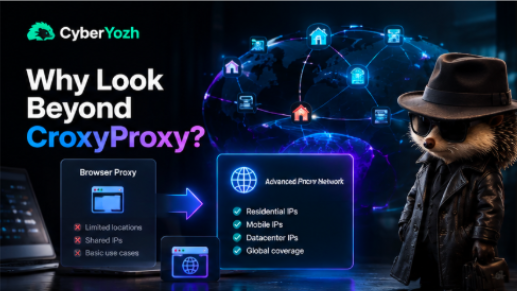
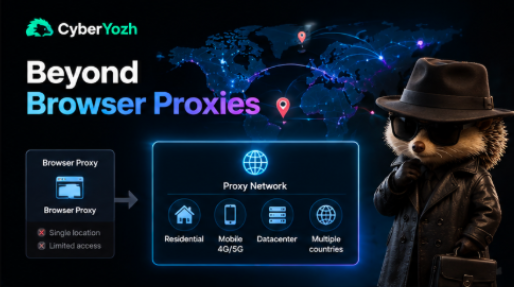
A browser proxy and a full proxy network solve different problems.
A browser proxy like CroxyProxy routes a single tab's traffic through one server, on demand, with no persistence between sessions. It's convenient exactly because it asks nothing of you.
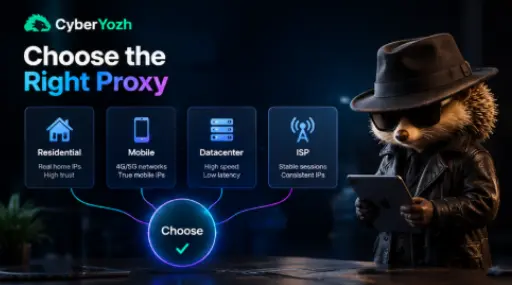
A proxy infrastructure provider gives you a pool of IPs you can choose from, by type (residential, mobile, ISP, datacenter), by country or city, and by session behaviour (rotating per request or sticky for hours). Most also offer an API, so a script or app can request and use proxies without a human clicking through a browser.
The shift from one to the other usually happens for a specific reason: you need the same IP for longer than one page load, you need it to look like it's in a specific place, or you need more requests than a person can click through. None of that is a criticism of CroxyProxy; it's simply outside what a browser-tab proxy is designed to do.
If your workflow depends on location, session stability, or automation, convenience alone isn't enough. Explore IP reputation checkers before assigning an IP address.
Best CroxyProxy alternatives at a glance
Provider | Best for | Residential | Mobile | US/UK targeting | API | Pricing/value |
CyberYozh | Overall alternative | Yes | Yes | Yes | Yes | From $1.7/mo (datacenter) to $2/GB (rotating residential) |
NodeMaven | Automation, clean IPs | Yes | Yes | Yes | Yes | Premium tier, ~$7/GB range |
Decodo | Mid-market scraping | Yes | Yes | Yes | Yes | ~$2.20/GB residential |
Bright Data | Enterprise scale | Yes | Yes | Yes | Yes | ~$8.40/GB residential (PAYG) |
IPRoyal | Budget, pay-as-you-go | Yes | Add-on | Yes | Limited | From $1.75/GB |
Webshare | Free-tier starter | Yes | No | Limited | Yes | Free tier + paid from ~$3/GB |
ProxySite | Free casual browsing | No | No | US/EU only | No | Free |
KProxy | Strict filter bypass | No | No | Limited | No | Free + premium tier |
Pricing changes often in this market, so treat the table as a starting point for comparison, not a locked-in quote; always confirm current numbers on each provider's own pricing page before buying.
CyberYozh
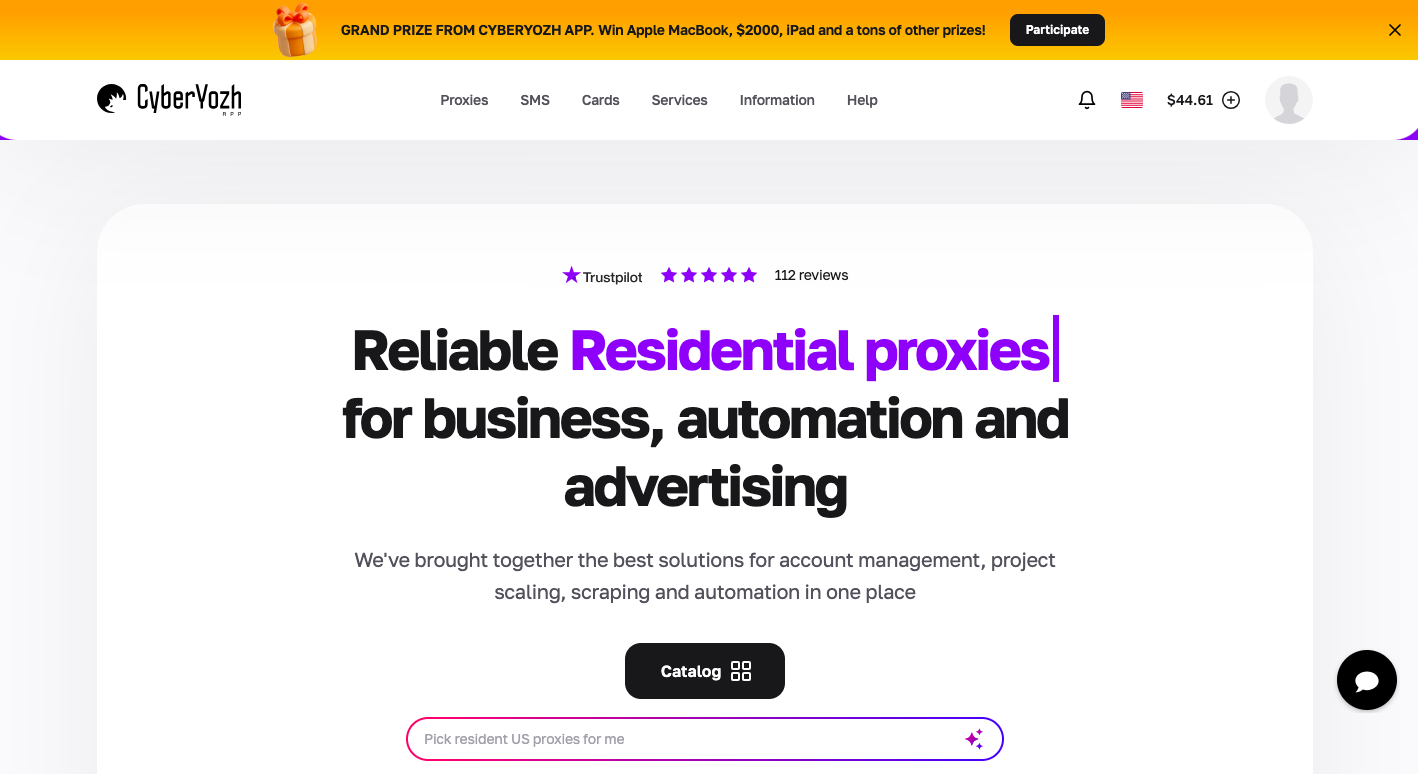
CyberYozh moves you from "a proxy for this one tab" to a full proxy infrastructure: residential, mobile, and datacenter IPs across 195+ countries, with dedicated US and UK targeting and API access. For anyone who has hit CroxyProxy's ceiling- no stable IP, no automation, no geo-precision- it's the most complete practical step up.
What CyberYozh Offers
CyberYozh is a proxy and multi-accounting infrastructure platform, not a single tool. Its catalogue covers rotating and static residential proxies, dedicated and shared LTE/5G mobile proxies, and dedicated and shared datacenter proxies, plus country-specific landing pages (including dedicated USA and UK proxy targeting) and an API for programmatic access and IP management.
100M+ residential IPs across 195+ countries, with free geo-targeting
Rotating residential proxies with 24-hour sticky or rotating sessions
Real LTE/5G mobile proxies with manual and API-based IP changes
Static ISP residential proxies with one dedicated IP per plan
API access for automation and proxy management
Country-specific targeting, including dedicated US and UK proxy options
Looking for a more flexible CroxyProxy alternative? Check the current CyberYozh proxy catalogue to see which proxy type actually fits your workflow before you buy.
Limitation
Best value requires matching proxy type (residential vs. mobile vs. datacenter) to the task, which takes a short learning curve for first-time buyers
Reality
Users who've outgrown browser-only proxy access and need real IP variety, geographic targeting, or automation, without enterprise-level pricing.
NodeMaven
NodeMaven leans hard into IP quality: instead of just selling volume, it filters its pool to reduce flagged or low-trust IPs, which matters most for automation-heavy work like ticket buying, account management, or scraping.
What NodeMaven offers
A residential and mobile proxy service built around IP filtering and session stability, positioned explicitly as an option for people moving off browser-based proxies into repeatable, automated workflows.
IP quality filtering to reduce flagged or blacklisted addresses
Sticky session support for longer workflows
Automation-friendly setup with API access
Multi-country coverage
Dashboard-based proxy management
Positioned for scaling beyond single-page browser access
Limitations
Sits at a premium price point compared to budget providers, No free tier for casual testing, Overkill if your only need is occasional page unblocking
Reality
Teams running automated, repeatable workflows that need clean, low-flag IPs more than they need the cheapest possible rate.
Decodo
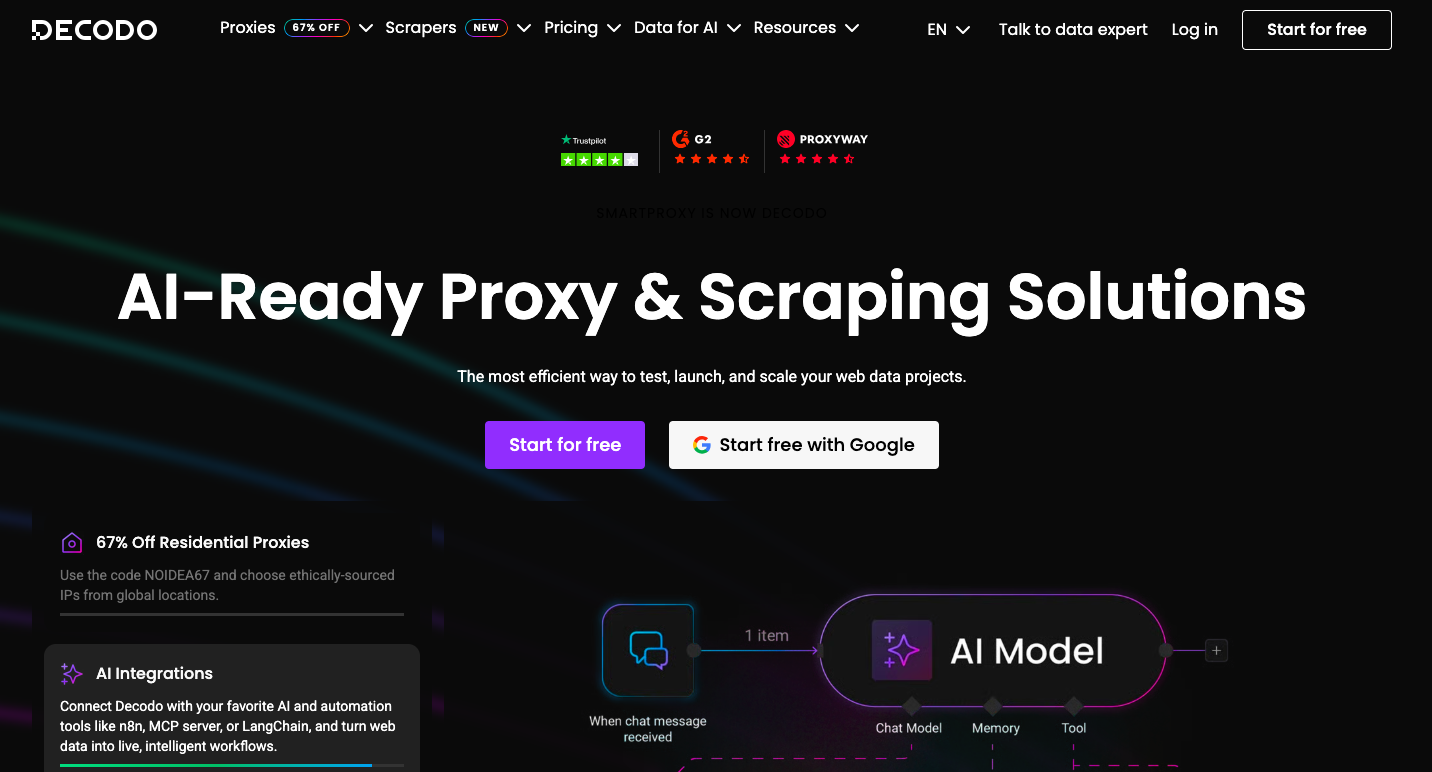
Decodo rebranded from Smartproxy and sits comfortably in the mid-market tier: noticeably cheaper than enterprise names like Bright Data, with fast response times and a broad product suite.
What Decodo offers
A general-purpose proxy platform covering residential, datacenter, mobile, and ISP proxies, aimed at teams that want solid performance without enterprise-scale pricing or sales calls.
Residential proxies with competitive per-GB pricing
Fast reported response times
Multiple proxy types in one account (residential, datacenter, mobile, ISP)
Self-service signup, no mandatory sales call
Broad country coverage
Documentation aimed at developers integrating proxies into scripts
Limitations
Pricing sits above ultra-budget providers, even if below enterprise tiers
Feature set is built around scraping and automation, not simple one-off browsing
Some advanced targeting options are gated to higher-volume plans
Reality
Small-to-mid-size teams that want a balance of speed, price, and proxy-type variety without enterprise sales overhead.
Bright Data
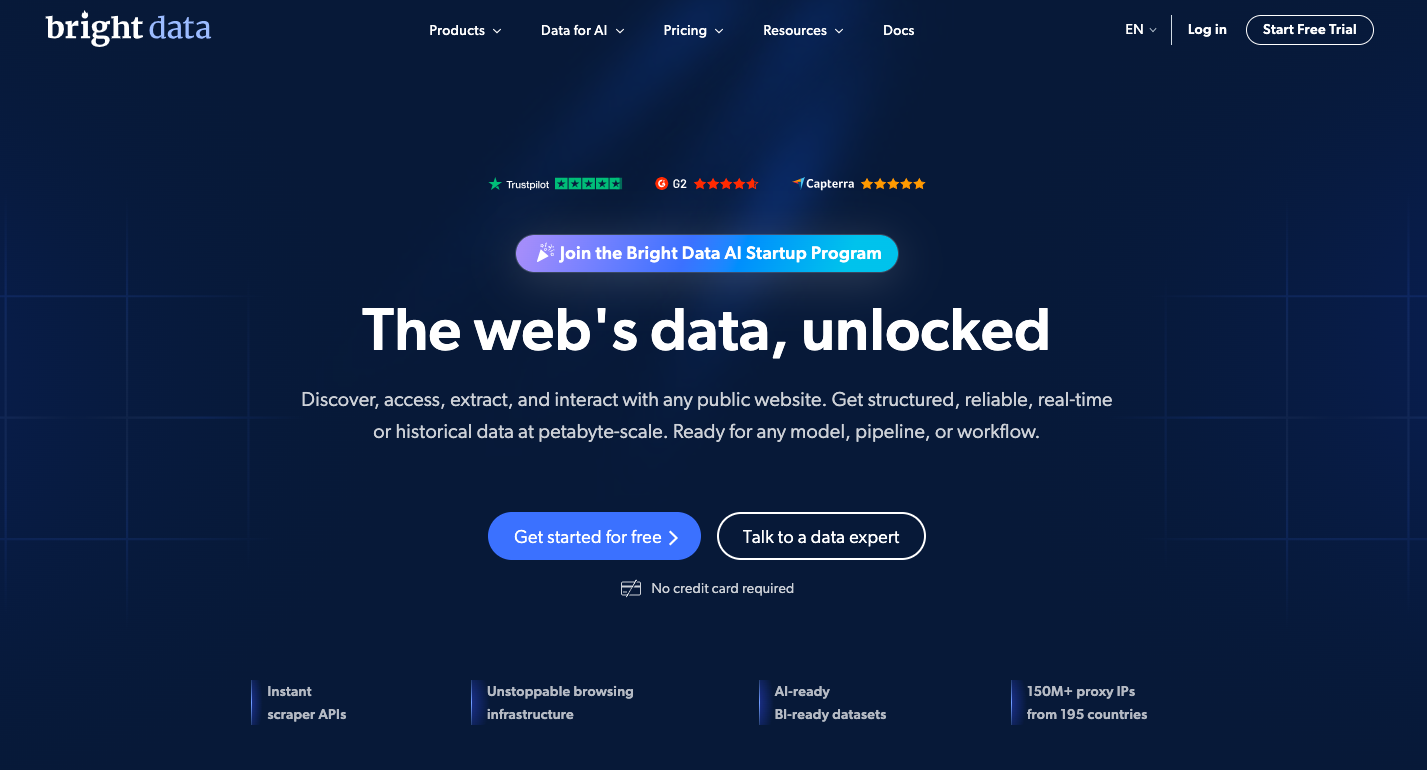
Bright Data is the largest, most established name in the proxy industry, used by a very large customer base including Fortune 500 companies. It's the option to reach for when scale and compliance tooling matter more than price.
What BrightData offers
An enterprise proxy and web-data platform with residential, datacenter, ISP, and mobile proxies, plus higher-level products like a Web Unlocker and SERP API for teams that don't want to manage raw proxy infrastructure themselves.
Very large residential IP pool
Web Unlocker and SERP API products layered on top of raw proxies
Compliance-oriented tooling (audit posture, KYC-style processes)
Broad global coverage
Integrations across common scraping stacks
Usage-based billing across proxy types
Limitations
Highest price tier in the market for residential proxies
Usage-based pricing can be unpredictable for unplanned spikes
Steeper setup and learning curve than budget-tier providers
Reality
Large organisations that need scale, compliance features, and managed data-extraction products, and have the budget to match.
IPRoyal
IPRoyal is one of the most accessible entry points into real proxy infrastructure, with pay-as-you-go residential pricing and bandwidth that doesn't expire.
What IPRoyal offers
Residential and datacenter proxies with flexible subscription or pay-as-you-go billing, aimed at price-sensitive users and smaller projects rather than enterprise accounts.
Residential proxies starting around $1.75/GB on subscription tiers
Datacenter proxies with flat per-IP pricing and unlimited bandwidth on some plans
Unused bandwidth rolls forward rather than resetting monthly
City-level targeting without enterprise sales requirements
Straightforward self-service dashboard
Coverage across a wide range of countries
Limitations
Smaller IP pool than the largest enterprise providers
Lower success rate on the hardest-to-access targets compared to premium providers
Less suited to heavy automation at very large scale
Reality
Price-sensitive users and smaller projects that need real residential IPs without committing to enterprise contracts.
Webshare
Webshare's free tier makes it a reasonable first stop if you want to try proxy infrastructure before spending anything, then scale into paid datacenter or residential plans.
What Webshare offers
Datacenter and residential proxies with a genuine free tier alongside paid, usage-based plans, aimed at developers testing proxy workflows for the first time.
Free proxy tier for initial testing
Paid datacenter and residential options
Simple, developer-friendly dashboard
API access for basic automation
Pay-as-you-go plans without long contracts
Low barrier to entry for first-time proxy buyers
Explore Cyberyozh LTE/5G mobile proxies for $1.7/day with unlimited traffic
Limitations
Smaller overall network than enterprise-tier providers
Free tier is rate-limited and not suitable for production workloads
Fewer advanced geo-targeting options than premium providers
Reality
Developers who want to test a proxy-based workflow for free before deciding whether to pay for a larger plan.
ProxySite
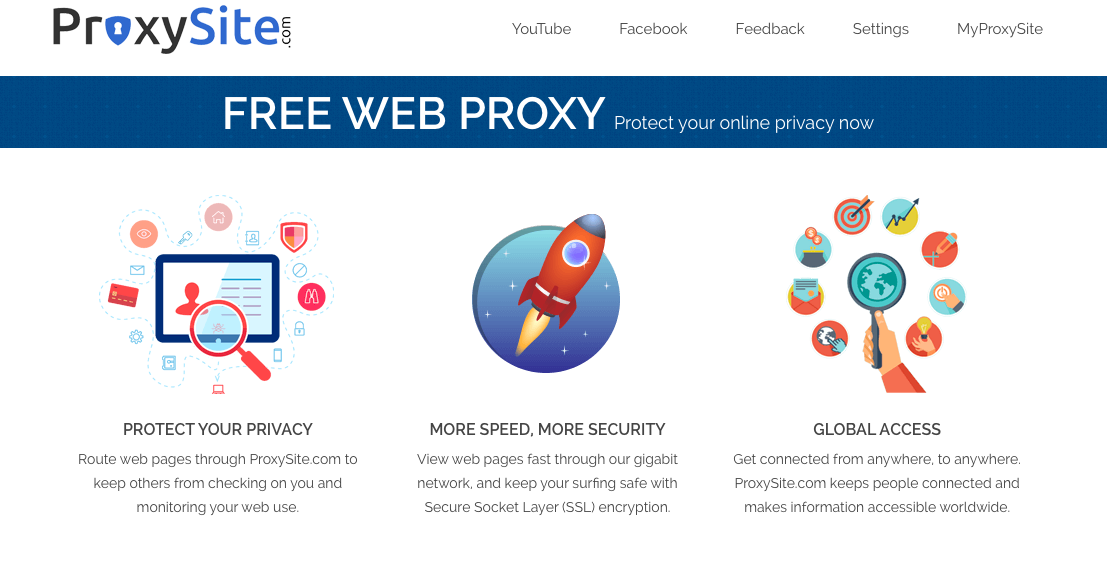
Of every option here, ProxySite is the closest like-for-like swap for CroxyProxy: free, browser-based, no installation, built for the same "just load this page" use case.
What ProxySite offers
A free web proxy that runs entirely in the browser, letting users paste a URL and choose from US or EU servers to access a page, with caching for popular sites and basic content filtering.
No download or installation required
Choice of US or EU proxy servers
Page caching to improve load speed on popular sites
Support for HD video streaming
Shareable permalinks for browsing sessions
Basic content filtering for harmful material
Limitation
Ad-supported, similar to CroxyProxy's own free tier
No dedicated or static IP options
No automation, scripting, or API support
Limited to the server regions it offers, not precise city or ISP targeting
Reality
Users who want essentially the same experience as CroxyProxy: quick, free, browser-based access, with a different set of servers.
KProxy
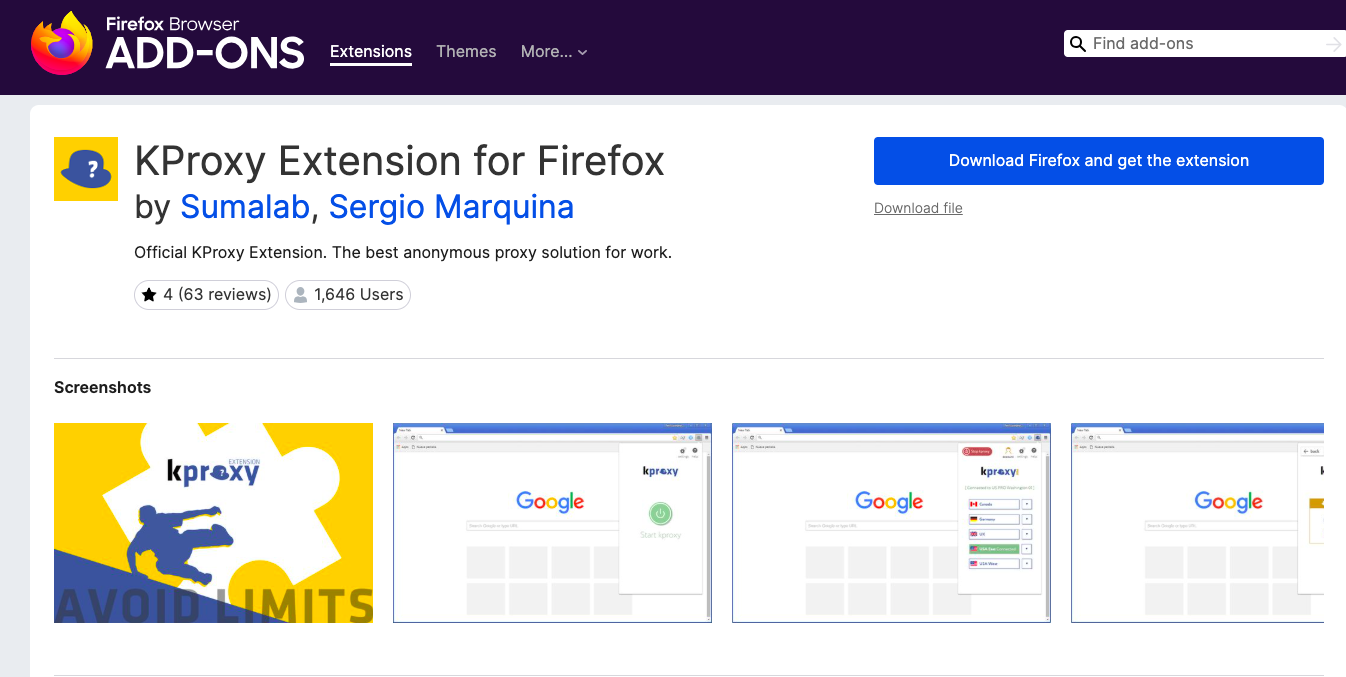
Independent testing roundups on CroxyProxy alternatives consistently point to KProxy as stronger than CroxyProxy at getting through tougher network filters, which is the exact itch it scratches for many searchers.
What KProxy offers
A free web proxy available both as a browser extension and a standalone website, with a paid Premium tier for higher bandwidth and additional server locations.
Browser extension and web-based access
Multiple proxy server locations
Encrypted connection for browsing
No signup required for basic use
Premium tier for higher bandwidth
Built specifically around unblocking restricted sites
Limitations
Free tier bandwidth is limited
Ads appear on the free tier
Not built for scraping, automation, or API use
Shared IPs can still get blocked on heavily filtered networks over time
Reality
Users on strict school or workplace networks who need a browser proxy that gets through more filters than CroxyProxy does.
When you need more than a browser proxy
A few recurring, practical use cases explain why people move from CroxyProxy toward full proxy infrastructure. These aren't hypothetical; they're the same reasons that show up repeatedly in searches for croxyproxy alternatives.
US IP address requirements: checking how a US-only page or ad renders, running localisation tests against a US audience, doing market research on US e-commerce listings, or verifying ad placements as they'd appear to a US visitor. CroxyProxy can get you a US-looking connection for one page load; it can't hold that identity steady across a multi-step research session.
UK IP address requirements: the same set of tasks, search-result checks, e-commerce research, ad verification, localisation testing, but for a UK audience, where CroxyProxy's server selection is even less precise.
Mobile IP requirements: platforms that are sensitive to how "real" a connection looks (social media management, ad platforms) often respond better to real carrier-network mobile IPs than to datacenter or browser-proxy traffic.
Residential IP requirements: for general web scraping, SEO tracking, or account management where a datacenter IP is too easy for a target site to flag, real residential IPs blend in like ordinary consumer traffic.
If your CroxyProxy alternative search started with one of these, it's a decent sign you need proxy infrastructure with real geographic and IP-type control, not just a different browser tab.
Which CroxyProxy alternative is right for you
If you only need occasional, free browser-based access → ProxySite.com or KProxy
If you're on a heavily filtered school or office network → KProxy
If you need a dedicated, stable IP → CyberYozh (static ISP residential)
If you need real residential IPs at scale → CyberYozh, Decodo, or IPRoyal, depending on budget
If you need mobile IPs → CyberYozh
If you need precise US or UK geo-targeting → CyberYozh
If you need automation or API access → CyberYozh or NodeMaven
If price is your biggest concern and you still need real proxies → IPRoyal or Webshare's free tier
If you need enterprise scale and compliance tooling → Bright Data
Pricing: Cheaper isn't always cheaper

It's tempting to sort every list of CroxyProxy alternative options by sticker price and stop there. That misses the actual cost of a proxy.
The lowest advertised price is not necessarily the lowest operating cost.
A cheap per-GB rate on a small, low-quality IP pool can mean more failed requests, more CAPTCHAs, and more retries, all of which burn bandwidth and time you're also paying for. When comparing options, weigh:
Entry cost vs. price per GB at the volume you'll actually use
IP type: residential, mobile, and datacenter aren't interchangeable, and the "cheap" option in the wrong category will cost more in failed requests
Session flexibility: sticky sessions for longer workflows vs. rotating for pure volume
Bandwidth rollover: does unused traffic expire monthly, or carry forward?
Scalability: can the plan grow with you, or will you need to switch providers again in six months?
CyberYosh's rotating residential pricing (from $2/GB) and flat-rate datacenter and mobile options let you match the payment model to the workload instead of forcing everything into one pricing shape.
Independent evidence vs. Provider claims
Every provider in this piece publishes its own pool size, success rate, and speed numbers, and those numbers are worth treating as a starting point, not a verdict.
Independent proxy testing outlets such as Proxyway run standardised benchmarks (pool size, success rate, response time, and IP-type composition) across multiple providers using the same methodology each year, which is a more reliable way to compare claims than reading marketing pages side by side.
If a specific benchmark matters to your decision, response time under load, or how a provider's advertised pool size holds up under real testing, check the latest independent report rather than relying on any single vendor's numbers, including ours.
If privacy is a part of why you're evaluating proxies or browser-based tools in the first place, it's also worth understanding what a browser proxy or VPN does and doesn't protect against; the Electronic Frontier Foundation's guide to choosing a VPN lays out the tradeoffs clearly and applies to browser proxies in similar ways, namely, that your traffic is only as private as the operator you're routing it through.
Common mistakes when switching
Choosing a provider on price alone, without checking if the IP type fits the task
Confusing a browser proxy with a full proxy service and expecting automation support that isn't there
Ignoring IP reputation and pool quality in favour of the largest advertised pool size
Overlooking whether you need sticky or rotating sessions before buying
Picking a proxy type (datacenter vs. residential vs. mobile) that doesn't match the target platform's sensitivity
Trusting a vendor's own benchmark numbers without checking independent testing
Selecting a plan with no room to scale, then having to migrate again in a few months