What Is Interstellar Proxy: A Network Administrator's Guide to How It Works
Quick answer: Interstellar proxy is an open-source web proxy built to bypass school content filters. It's not ambiguous or multi-purpose; its own documentation lists About: Blank cloaking, tab cloaking, and a built-in library of games as headline features, and its official hub describes it as "an interstellar unblocked games hub made by students, for students."
For IT administrators, the practical question isn't how to use it; it's how to recognize it and reduce how often students successfully deploy fresh copies.
TL;DR
Interstellar is a Node.js web proxy, maintained across dozens of GitHub forks, whose core purpose is bypassing filters like GoGuardian, Securly, Lightspeed, and Linewize.
Cloaking is the product. About: Blank cloaking hides the real URL in the address bar; tab cloaking disguises the tab as Google Classroom or a similar approved app.
Because it's open-source and free to redeploy on Render, Heroku, Codespaces, or a personal server, blocking one URL rarely stops it for long; new mirrors appear constantly.
Interstellar is one entry in a larger family (Titanium Network-descended proxies, Doge Unblocker, Utopia, Holy Unblocker); they share the same architecture and the same countermeasures work against most of them.
US schools that filter content do so partly because CIPA requires it as a condition of E-Rate funding; the filtering isn't arbitrary; it's a funding compliance requirement tied to student safety.
The bigger risk isn't the original project; it's the unofficial mirror sites layered on top of it, several of which exist purely to harvest credentials from students who don't check the domain.
What is Interstellar proxy
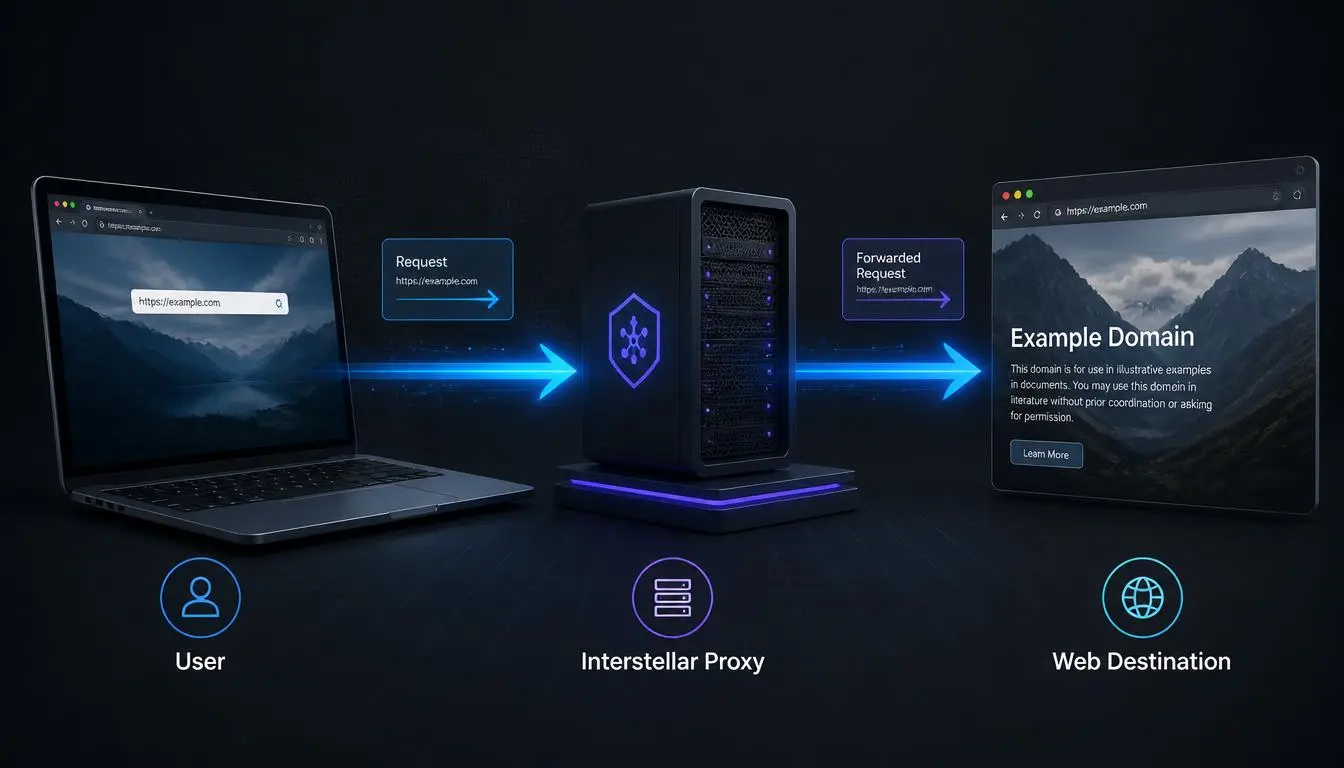
Interstellar is a JavaScript web proxy, technically a reverse-proxy application built on Node.js, distributed as open source on GitHub. The canonical repository (and its many forks, since anyone can copy it freely) says it has served over 8 million users since 2023.
Unlike a general-purpose proxy tool, its documented feature list is aimed at a specific use case:
Feature | What it does |
About: Blank cloaking | Makes the browser address bar display "about: blank" instead of the proxy's real URL |
Tab cloaking | Changes the tab's title and favicon to mimic an approved site, most often Google Classroom |
Built-in game/app library | Bundles emulators and game embeds directly into the proxy |
Password protection | Lets a deployer lock their instance so only people with the password can use it |
Now.gg / GeForce NOW support | Routes cloud-gaming traffic through the same tunnel |
None of that is incidental. A proxy meant for legitimate privacy or geographic-testing use has no reason to disguise itself as a different application in the tab bar. Cloaking exists to defeat visual inspection by a teacher or administrator glancing at a screen, that's its stated purpose, not an inference.
Why "Interstellar Proxy" isn't one single site
There is no single official Interstellar website: Because the project is open source under a permissive structure, dozens of independent people have forked the same codebase to their own GitHub accounts and deployed their own copies under names like unblock67/interstellar-proxy, hi9778/Interstellar, and UseInterstellarNetwork/Interstellar, all running nearly identical code, all functionally the same tool.
A community hub (hosted, tellingly, on Google Sites, itself normally an approved education domain) aggregates links to whichever mirrors are currently working, since individual deployments get blocked and replaced on a rolling basis. Social platforms like TikTok compound this by continuously recirculating "new working Interstellar link" content whenever a mirror goes down.
This matters for filtering strategy: you are not blocking a domain; you are blocking a codebase. Domain-based blocklists will always lag behind a project that redeploys in minutes on free hosting.
How schools' filters try to catch it and where they fall short
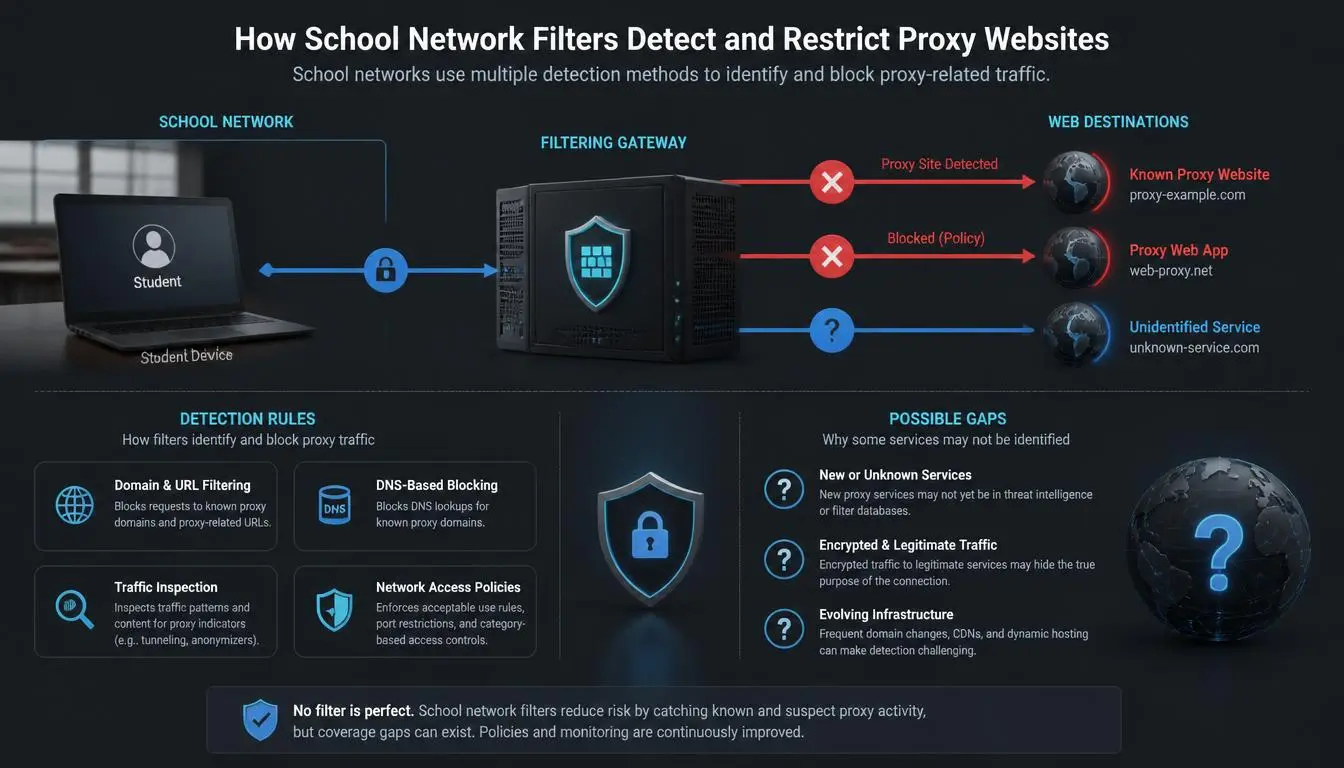
Three filtering approaches dominate US K-12 networks, and each has a different blind spot against proxy tools like this:
Category and domain blocklists (the traditional approach) fail fastest, because a new Interstellar mirror on a fresh domain simply isn't on the list yet.
On-device agents like GoGuardian install locally and can inspect activity more deeply, including browser extensions and locally running processes, but they run as an agent, which means anything that operates purely inside the rendered page (like a cloaked tab) is harder to flag by URL alone.
DNS-based filtering like some Securly deployments is lightweight and battery-friendly on Chromebooks and iPads, but can't inspect encrypted page content; it can see that a device reached a hosting provider's IP, not that the page rendered is a game proxy in disguise.
Newer filtering products have started shifting toward content-pattern and canvas-rendering detection to catch what URL blocking misses, inspecting how a page actually renders rather than only what domain served it, and flagging search behavior around phrases like "interstellar unblocked games" itself. That arms race is ongoing and unlikely to have a permanent winner on either side.
The practical implication for administrators: layering DNS filtering, an on-device agent, and category-based blocking closes more gaps than any single method alone, precisely because Interstellar-class tools are built to defeat one detection layer at a time, not three simultaneously.
The real risk isn't the code; it's the mirrors
The original Interstellar website project is, at minimum, a known quantity, public source code that can be inspected. The bigger danger sits one layer downstream, in the aggregator sites and "1000+ working proxy links" pages that compile mirror lists.
These pages have every incentive to include unverified, third-party-hosted copies, and student-facing guides routinely warn users to "always double-check the safety of any interstellar proxy link" and stick to official sources, advice that implicitly concedes fake and unsafe versions are common enough to need a warning.
For a parent or IT team, that's the actionable risk, more than the tool itself:
Credential harvesting. A cloned proxy page can present a fake login screen for Google, Discord, or another service the student already trusts.
Malware bundled into "installer" or "unlocker" downloads that claim to be required to run a mirror.
Unknown third-party ad networks injected into free-hosted proxy deployments, some of which serve malicious redirects.
No accountability. A Discord-community-maintained mirror can vanish, change hands, or get compromised with no notice to the people using it.
Use CyberYozh proxy infrastructure to find new mirrors
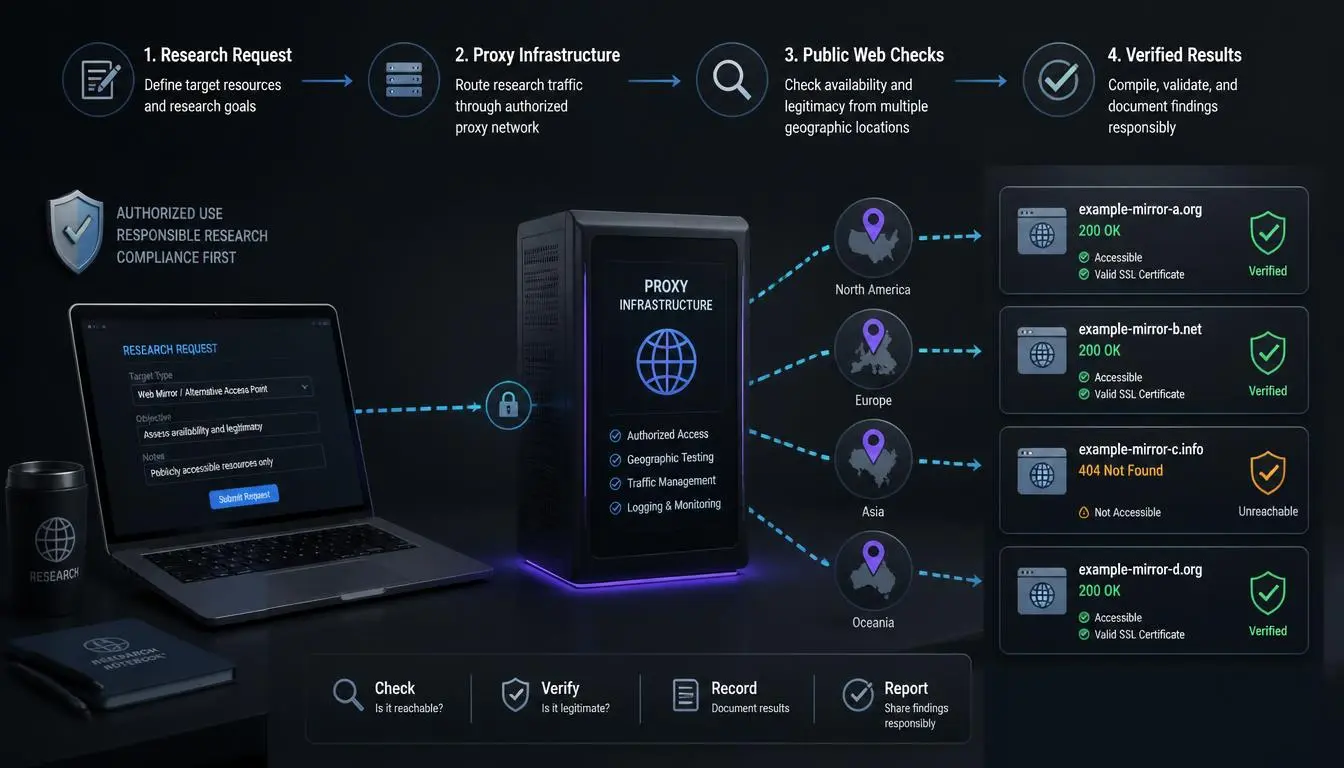
The core detection problem is visibility, not blocking: A new Interstellar mirror is invisible to your blocklist until someone reports it, usually a teacher who happens to notice a student's tab, days or weeks after it went live. By then, it's been circulating on Discord and TikTok for a while.
Proxy infrastructure addresses the visibility gap, not the blocking itself: it lets a security team look for new deployments on a schedule, instead of waiting to be told about them.
Why this needs proxies at all: Mirror-aggregator hubs, Discord invite pages, and the GitHub topic pages that list Interstellar forks are public, but scraping them repeatedly from a single school IP is exactly the kind of automated traffic pattern that gets rate-limited or flagged. Rotating through different IPs, and different IP types, solves two separate problems:
Coverage: A scheduled crawl across GitHub's topic pages and known aggregator domains, checking for newly created forks and freshly deployed Render/Heroku instances, can surface a mirror within hours of it going live rather than weeks.
Accuracy: Checking a candidate mirror from a residential or mobile IP shows what a student's home network or personal hotspot would actually see, which matters because some of these tools behave differently or load additional game/proxy content, depending on whether the visiting IP looks like a datacenter or a consumer connection. A datacenter-only check can undercount what's actually being served to real users.
This is fundamentally the same category of work as phishing-URL monitoring or brand-abuse detection, using distributed, realistic-looking IPs to see what a target site actually presents to different visitor types, on a repeatable schedule, against infrastructure you have a legitimate reason to monitor.
Relevant infrastructure for this specific workflow, at current verified pricing:
Rotating residential proxies, from $2/GB: pay-as-you-go, suited to periodic sweeps of aggregator and mirror-list pages without repeatedly hitting them from one traceable IP.
US mobile proxies, from $1.70/day with unlimited traffic: for confirming what a mirror actually serves to a real mobile-carrier connection, which most personal-hotspot bypass traffic resembles.
A documented API (Swagger reference) for scheduling recurring checks rather than running them manually.
None of this blocks anything by itself; it feeds a blocklist or an alert, which the school's existing filtering platform then acts on. And it's worth being explicit about the boundary again: this is monitoring public mirror-listing pages for threat-intelligence purposes, not accessing or interacting with any school's managed devices or student accounts.
What schools and parents can do
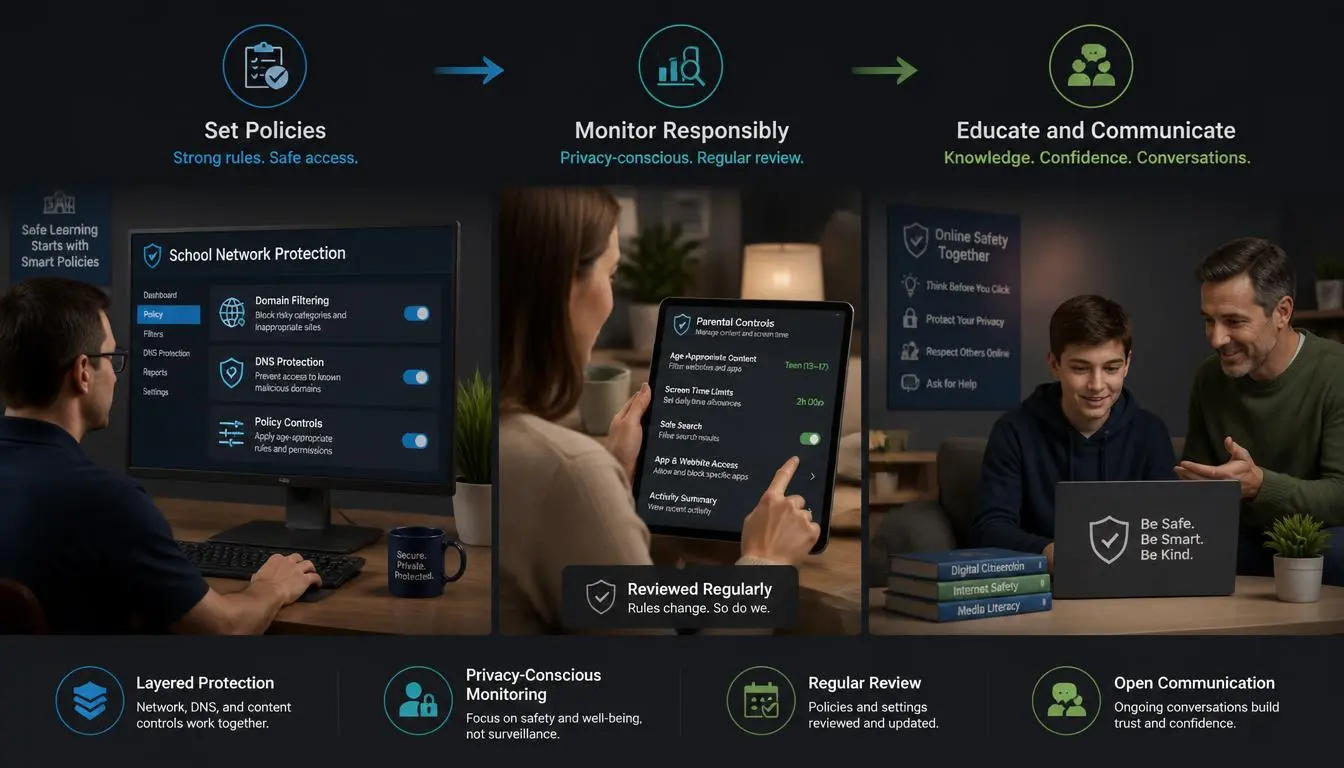
For administrators, this is less about winning a permanent technical fight and more about reducing exposure and having the right conversation:
Layer filtering methods rather than relying on one. Domain blocking alone is guaranteed to lag; pairing it with an on-device agent and DNS filtering closes the gap that any single method leaves open.
Treat "unblocked games" and "proxy" as search-term signals, not just destination URLs; several current filtering products flag the search pattern itself rather than waiting for a new domain to appear on a blocklist.
Talk to students about why the filtering exists. In the USA, CIPA ties school content filtering to E-Rate internet funding and requires monitoring of minors' online activity; it's a compliance obligation tied to student safety, not an arbitrary inconvenience, and that context changes the conversation with a teenager more than a technical block does.
Warn specifically about mirror sites, separate from the underlying tool. The credential-harvesting risk is real, and it's the part a student is least likely to have considered.
Use the school's actual override process. Every legitimate filtering platform has a mechanism for a teacher to whitelist a specific educational resource that got over-blocked; that's the sanctioned path when the filter is wrong, not a proxy.
Common mistakes
Blocking only the current known domain. Ignores the fact that the codebase redeploys in minutes.
Assuming GoGuardian or Securly alone is sufficient. Each has a documented blind spot the other partially covers.
Punishing without explaining the "why." CIPA-driven filtering has a real rationale; naming it changes the conversation.
Treating every Interstellar mirror as equally safe. The original codebase and a random unofficial clone are not the same trust level.
Overlooking the search-term signal. Blocking destinations without flagging the search pattern that leads to them misses an entire detection layer.
The bottom line
Interstellar isn't a mysterious or ambiguous product; it's a well-documented, openly built tool for one purpose, and understanding that purpose helps the people responsible for a network or a student's safety.
The realistic goal isn't eliminating every mirror; it's layering detection so no single gap becomes the whole hole, and having an honest conversation about why the filtering exists in the first place.