
Reliable Uber Registration: Network and SMS Setup Guide
Say you run a local delivery fleet and need to map routes on a new tablet. They open the app. They enter a standard internet phone number to keep their primary line private. The screen freezes. The connection drops completely. The tablet connects from Chicago, but that phone number resolves to a server rack in Nevada.
Everyday riders face the exact same wall. You land at a new airport and need a car. But you refuse to hand your real personal number over to a random driver. You try a free SMS app. The registration fails immediately.
Algorithms evaluate your network footprint before the interface even fully loads. Mismatched network signals trigger immediate rejections. Protecting your privacy during an Uber Eats setup or a standard ride request requires deep network isolation. You must shield your personal data at the protocol level. Because anti-fraud systems scan your connection origin directly against telecom provider databases in milliseconds. If those physical locations conflict, the system terminates your request.
👉 Run your exact setup through the CyberYozh Anti-Fraud checker right now to see your real trust score.
TL;DR: Reliable SMS verification for Uber Driver App
You need a specific technical stack to pass these automated checks. Drop the data center IPs entirely. Rent a virtual number for Uber sourced directly from a local mobile operator. Combine that line with a true residential internet connection. This exact setup aligns your network location perfectly. The platform simply sees a standard user logging in from their living room.
Stop using data center IPs and route traffic through residential networks.
Rent a virtual number for Uber sourced directly from local carriers.
Align your IP city exactly with your phone number region.
Run a fraud score check before requesting any verification codes.
Align network location to protect privacy during Uber Eats setup
Standard VPNs fail against modern anti-fraud systems. Registration networks compare your connection footprint directly against your telecom origin. If you attempt an Uber Eats setup or register a driver profile using a data center IP, the system flags the session immediately. They drop your request.
The security algorithm scans for specific commercial subnets. You must route your traffic exclusively through a residential ISP network. Static residential IPs mask your connection completely because they originate from real home internet providers. The platform simply processes your traffic as a natural, human user.
Geo-mismatches kill your trust score. If you buy a non-voip number for Uber online that belongs to a carrier in Dallas, your connection must originate from a Dallas residential subnet. You must match your IP city directly to your phone number region. Granular city-level targeting prevents automated security filters from dropping your session. You cannot just grab a virtual number for Uber and hope for the best. The underlying network connection has to be completely clean first.
Push your traffic through a real residential ISP to keep commercial subnet filters from dropping the connection.
Keep your proxy city and your phone number region exactly the same.
Use isolated browser profiles to feed the app natural OS and device signals. This stops immediate verification holds.
Rely on high stability residential IP addresses to maintain the connection during the entire registration process.
👉 Grab a dedicated residential proxy from the CyberYozh App dashboard to lock down your digital identity.
Why standard VoIP fails: You need a true Uber residential number
Public text sites share recycled lines across thousands of users. Registration algorithms see this data instantly. They ping the telecom registry the second you request an Uber SMS verification. They detect the virtual routing flag. The system drops your request right there. You lose time and burn through proxies trying to force a bad number.
Real carrier nodes operate differently. A premium virtual number for Uber connects directly to genuine consumer networks. The verification algorithm treats real mobile infrastructure with absolute trust. To lock in a private number for Uber driver access, you must rent a line physically tied to a local operator.
Do not guess if a number will work. Use an anti-fraud checker to evaluate the line before you initiate the registration process. This tool analyzes the exact telecom data the corporate firewall sees. You see exactly what the firewall sees - spam history, DNC lists, and data leaks. Because passing those automated filters requires a massive Trust Rate right from the start. A clean Uber registration requires high-quality infrastructure at every step.
Run a Fraud Score check on your telecom line before requesting any verification codes.
Rent a number for Uber sourced directly from actual local mobile operators.
Lock in a private number for Uber driver access to prevent cross-contamination.
Only use untouched carrier lines if you want reliable SMS verification for Uber driver app setups.
👉 Access the CyberYozh App residential number pool and secure your profile instantly.
How to Get a Residential Number for Uber Account Registration
Network setup is done. You have aligned your connection footprint. You want to know how to register Uber account without personal phone exposure. This requires locking in the actual telecom line. Execute this workflow exactly as written.
Fire up an isolated profile using Multilogin, AdsPower, or GoLogin. Ensure your residential proxy routes traffic through the exact city you plan to target. Open the CyberYozh App dashboard.
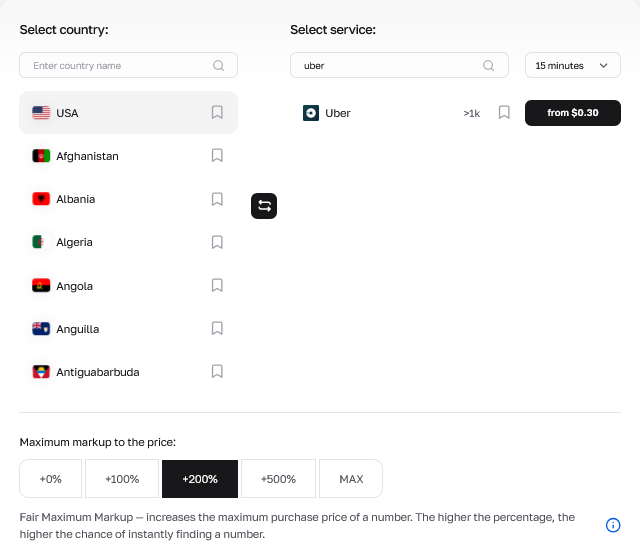
Navigate straight to the SMS section. Click the option to buy a non-voip number for Uber online. Standard virtual lines are cheap, starting at just $0.02 for a 15-minute window. But paying a bit extra for a $0.49 real residential ISP number actually guarantees the text arrives.
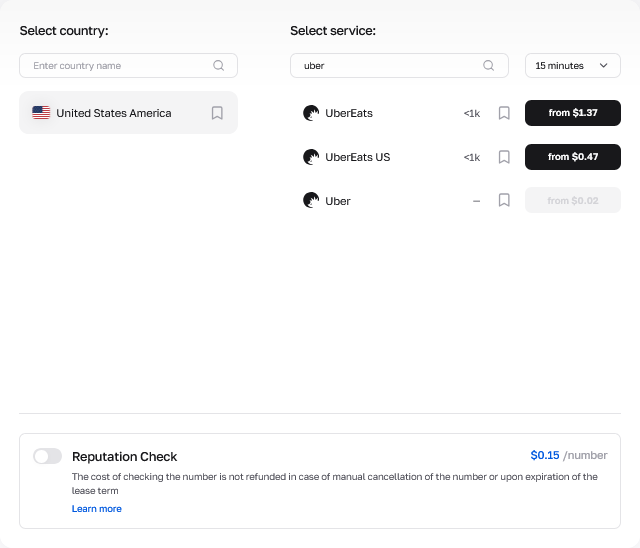
Grab the digits from the dashboard. Then open the app on your phone and punch them in.
Return to your desktop. Wait to receive your Uber SMS online via the cloud portal. Do not close the window. The system routes the incoming text directly to your screen within fifteen seconds.
Copy your one-time password (OTP). Paste the code directly into the app and authenticate the session immediately.
Launch your isolated browser profile and confirm your IP location.
Select the option to buy a non-voip number for Uber online inside the dashboard.
Submit the digits directly on the application screen.
Wait to receive your Uber SMS online via the cloud portal.
Copy your one-time password (OTP).
Drop that code into the application to finish your login.
Enterprise API and High-Volume Routing
Manual registration falls apart at scale. Logistics testing and automated fleet management demand completely hands-off infrastructure. Clicking buttons in a browser window cannot support a quality assurance pipeline running five hundred concurrent test profiles.
You must hook your scripts directly into a robust API integration. The CyberYozh platform exposes single unified REST endpoints built exactly for high-throughput environments. You stop managing individual browser tabs. Your scripts simply fire a request to /api/v1/numbers/, grab the telecom digits, and drop them into your automated forms.
Load management dictates success or failure here. Send a thousand identical requests from one IP and the platform blocks your entire subnet. Turn on per-request IP rotation to avoid subnet bans entirely. Rotating residential traffic costs as little as $0.90 per gigabyte. The proxy manager handles the connection cycling natively. Your core application never drops a thread.
Enforce digital footprint protection across massive automation workflows.
Hook your testing scripts into a robust API integration to eliminate manual clicking.
Turn on per-request IP rotation to avoid subnet bans entirely.
Keep your QA tests running around the clock with fully automated code delivery.
Power your production pipelines with infrastructure built for heavy loads.
👉 Wire your automation scripts directly into the CyberYozh API and stop clicking manually.
Beyond a virtual number: Complete digital footprint protection
Scaling your logistics testing requires more than just a virtual number for Uber. You need a unified infrastructure. CyberYozh App provides a complete platform for digital identity isolation.
You get direct access to over 50 million rotating residential IPs across 195+ countries. You manage dedicated mobile proxies pulled straight from real LTE or 5G carriers, starting from $1.70 a day. The platform integrates SMS reception seamlessly right alongside your proxy controls.
You can also issue tokenized virtual bank cards. Link these cards directly to your test profiles to evaluate payment gateways or pay for SaaS subscriptions. Run a quick fraud score check on your entire setup. Heavy testers can grab a $19 monthly premium tier covering thousands of automated checks. Verify your connection, your telecom line, and your card bin before spending a single dollar on a failed registration.
Lock down your private number for Uber Driver access
Relying on public VoIP lines burns time. Mismatched network signals destroy your trust score. You need clean carrier lines and real home IP addresses to maintain your connection.
Protect your network footprint at the protocol level. Run a fraud check before every single session. Build your QA workflows on an infrastructure designed for heavy automation.
👉 Get your number for Uber SMS verification and set up your testing environment today.
FAQs: Using a virtual number for Uber SMS verification
How to register Uber account without personal phone?
You need a residential phone line and a matching IP address. Free public SMS apps will not work.
Rent a dedicated number from a true telecom provider. Route your connection through a residential proxy located in the exact same city. This aligns your network location and satisfies the background checks.
Does a private number for Uber driver accounts actually work?
Yes. But only if you secure a true residential line.
The system flags basic VoIP digits instantly. Your number must connect directly to a local mobile carrier so the platform reads your profile as a standard applicant.
Why do I fail Uber SMS verification when using Google Voice?
Google Voice provides VoIP lines. Anti-fraud algorithms scan telecom registries the second you hit submit.
They see the virtual routing tag. They drop the request right there. You must use a non-VoIP carrier number to pass these automated filters.
Where can I buy non-voip number for Uber online safely?
Use professional infrastructure platforms like CyberYozh App. They source lines directly from real mobile operators.
Always run a fraud score check on the digits before you finalize the purchase. That guarantees the line has a clean history.
How do I protect privacy during Uber eats setup?
Shield your network footprint first. Connect via a static residential proxy. Then, rent a temporary carrier line just to catch the one-time password. You keep your personal data off their servers completely while maintaining a highly trusted connection profile.
Why didn't I receive SMS Uber online after paying?
You likely triggered a geo-mismatch. If your IP address shows New York but your phone line originates in London, the platform halts the text message entirely.
Always match your IP city precisely to your phone number region. Premium providers refund the cost automatically if the code drops.
Is an Uber residential number better than a standard virtual line?
Absolutely.
Standard virtual lines belong to corporate web centers. Residential numbers tie physically to real consumer SIM cards. The registration algorithm treats genuine mobile infrastructure with maximum trust.
How do QA teams maintain clean Uber registration flows at scale?
They ditch manual browser tabs. They wire their test scripts directly into a REST API.
Turn on per-request IP rotation to distribute the server load across millions of residential nodes. This prevents subnet blocks and keeps the testing pipeline running around the clock.