
Forward Proxy vs Reverse Proxy: Key Differences and When to Use Each

Quick answer: A forward proxy sits between a user and the internet, forwarding requests on the user's behalf and hiding their real IP. A reverse proxy sits in front of web servers, managing incoming traffic and protecting backend infrastructure. Picking the wrong one breaks scraping pipelines, automation setups, and account-based workflows. This guide covers how each works, the key differences, and where forward proxies fit for scraping, multi-accounting, and ad verification.
TL;DR
A forward proxy sits in front of the user, hides their IP, and controls outbound traffic. Used for scraping, automation, or managing multiple client accounts.
A reverse proxy sits in front of the server, managing inbound traffic. Used for load balancing, caching, server protection.
Use a forward proxy to control what you can reach. Use a reverse proxy to control what can reach you.
CyberYozh proxies cover the forward-proxy side: scraping, automation, and multi-account infrastructure.
What is a forward proxy and how it works
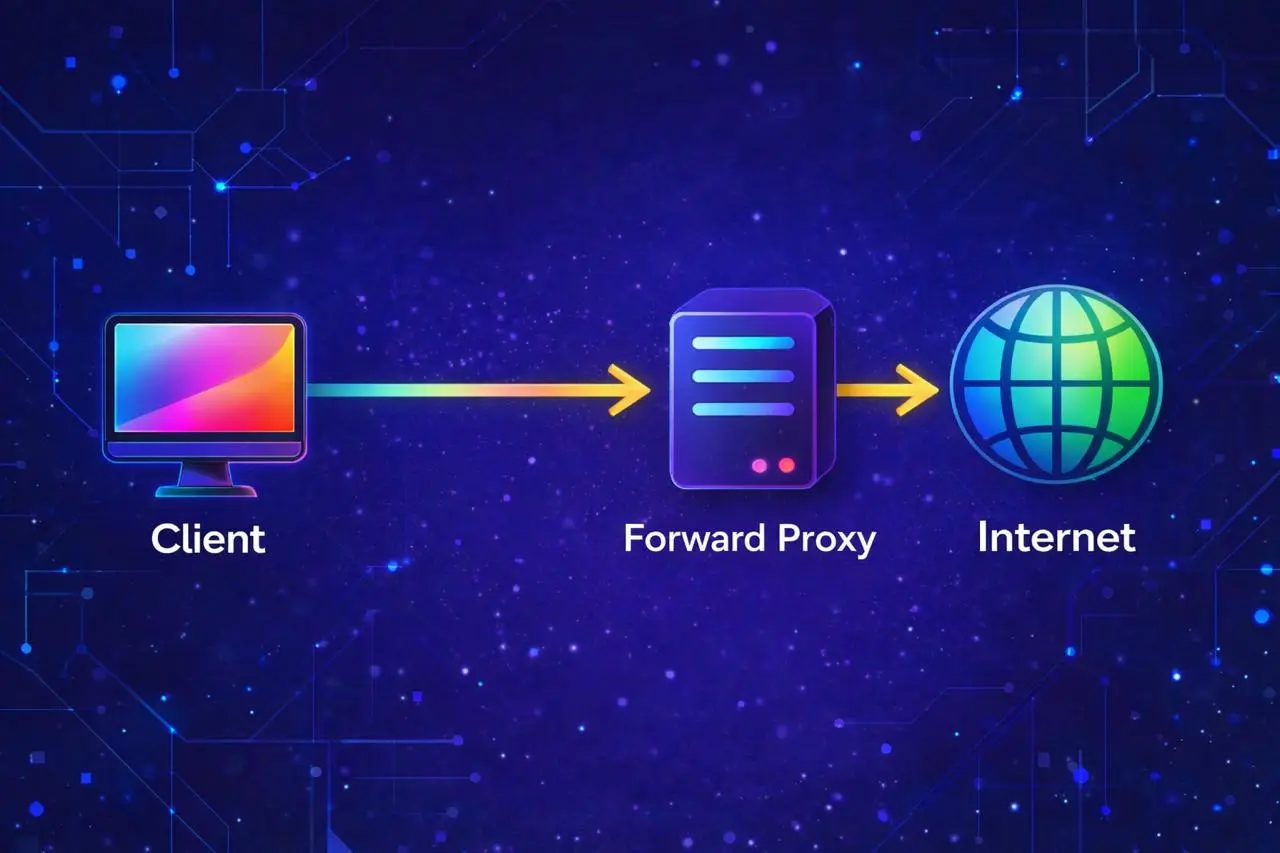
A forward proxy is an intermediary server between the client and the target site. Instead of connecting directly to a site, the user sends the request to the proxy first. The proxy forwards this request to the destination website and sends the response to the user’s device. And since the request is routed through proxy, the website sees the proxy’s IP address, not the user’s.
This setup allows the proxy to control outgoing traffic. It can hide IP addresses, block certain websites, and enforce company security policies.
Forward proxy example: A marketing agency runs 50 TikTok accounts for client campaigns. A forward proxy rotates IPs between accounts so the platform can't detect they're all operated from the same office — preventing mass TikTok bans.
Marketers, researchers, and automation teams rely on them for multi-account management, data collection, and web scraping. By distributing requests across multiple IPs, they make large-scale operations more stable and minimize website restrictions.
Forward proxy use cases
Businesses and developers use forward proxies for ad verification, data collection, managing social media accounts, or to control their visibility. To avoid disrupting operations, use high-quality proxies - like those CyberYozh provides. Here’s how you can use forward proxies:
Forward proxies for scraping
Forward proxy for scraping distributes requests across multiple IPs to avoid overload and improves request stability when scraping thousands of requests on social media or marketplaces. Sticky sessions maintain consistent IP assignment during longer runs, reducing CAPTCHA rates and session drops. Rotating residential proxies improve success rates and enable regional targeting at scale.
CyberYozh offers rotating residential and datacenter proxies with a 99.99% uptime, IP filtering, and high speed, helping maintain stable and uninterrupted data collection.
Forward proxies for multi-account management
Forward proxies isolate each account by routing it through separate IP sessions, preventing cross-account linking. Assigning a dedicated LinkedIn, Facebook or Instagram proxy to each account helps maintain session consistency and improve account stability while reducing verifications and blocks. Combined with anti-detect browsers and mobile proxies, they reduce verification triggers and improve account reliability.
CyberYozh provides dedicated mobile proxies and integrations with automation tools, helping keep accounts separated and lowering the chance of bans or verification loops.
Forward proxies for geo-targeting and ad verification
Forward proxies route traffic through IP addresses in different regions to verify ad placement without physical presence. Geo-targeted proxies help detect misplacements, fraud, and delivery inconsistencies on Google Ads, Meta Ads, or TikTok Ads. This ensures campaigns are served correctly to intended audiences.
CyberYozh provides IPs from 195+ countries, which allows teams to test content, ads, or search visibility from the exact region they care about.
Control internet access with forward proxies
Many companies deploy forward proxies as a gateway between employees and the internet. All outgoing requests pass through the proxy first, allowing the administrator to apply browsing rules, such as limiting browsing time or denying visiting certain websites, which helps maintain productivity during working hours.
Forward proxy for network performance improvement
Forward proxies act as intermediaries between users and the internet. Instead of each device sending requests directly to external websites, traffic goes through the proxy server, which can cache frequently requested content, compress data, and efficiently manage connections. Using forward proxy for caching means serving content from the cache instead of downloading again, which reduces bandwidth usage.
What are the forward proxy types
Forward proxies can also be categorized by the type of IP address they use.
Proxy type | Detectability | Speed | Best for |
|---|---|---|---|
Easier to detect — IPs are associated with hosting providers and can be flagged by many platforms | Fastest | Large-scale scraping, automation, and testing on low-sensitivity targets | |
Residential | Harder to block — IPs come from real ISPs and resemble ordinary home-user traffic | Moderate | Restricted content, account management, and data collection |
Highest trust — IPs route through mobile carrier networks such as Verizon, AT&T, or Vodafone | Depends on the carrier | Multi-accounting, ad verification, and workflows requiring high authenticity |
We compared mobile vs. residential proxies in our guide – see which one works better for your workflow.
Rotating vs static forward proxies
Rotating forward proxies automatically change IP addresses at set intervals or per request, helping distribute traffic and reduce detection during large-scale scraping and automation tasks.
Static forward proxies keep the same IP address over time, providing stable sessions that are useful for account management, logins, and workflows that require consistent identity.
What is the difference between HTTP forward proxy vs SOCKS proxy
HTTP forward proxies handle only HTTP/HTTPS traffic and can interpret and modify requests at the application level. It makes them suitable for web browsing, scraping, and content filtering.
SOCKS proxies operate at a lower level (session layer) and route any type of traffic — HTTP, HTTPS, FTP, SMTP, or UDP — without inspecting or modifying it. SOCKS5 supports both TCP and UDP protocols, making them more flexible for automation tools, gaming, streaming, and non-browser applications. SOCKS4 is older and does not support UDP or authentication.
Why choose CyberYozh forward proxies
CyberYozh forward proxies are built for operational workflows that require stable IP control, scalable automation, and multi-account infrastructure. The platform is designed as infrastructure combining mobile, residential, and datacenter networks with API access and integrated risk evaluation tools.
100M+ IPs across 195+ countries with mobile LTE/5G, residential ISP, and datacenter networks
99.95% uptime with managed infrastructure and continuously monitored IP pools
Full API support for Scrapy, Selenium, Playwright, Puppeteer, Postman, and custom scripts
Mobile LTE/5G proxies – real carrier IPs with unlimited traffic and OS fingerprint support
Session control – Rotating and sticky proxy sessions for long-running workflows
Multi-tool ecosystem with proxies, SMS activation, and fraud-risk evaluation combined in one platform
Supports HTTP, HTTPS, and SOCKS5 protocols for different automation stacks.
Trustpilot user: "Excellent speed and unlimited traffic"
Forward proxy vs. VPN
A forward proxy is best when you need control over individual connections, IP rotation, sticky sessions, and geo-targeting. This makes proxies more suitable for web scraping, automation, multi-account management, and ad verification.
A VPN works better for securing a user's overall internet connection. It routes traffic from the entire device through one VPN server and encrypts the connection between the device and VPN server.
For scraping and automation, use a forward proxy when you need multiple IPs, precise geo-targeting, or session-level control. For privacy and secure browsing, a VPN is usually the better fit.
What is a reverse proxy and how it works
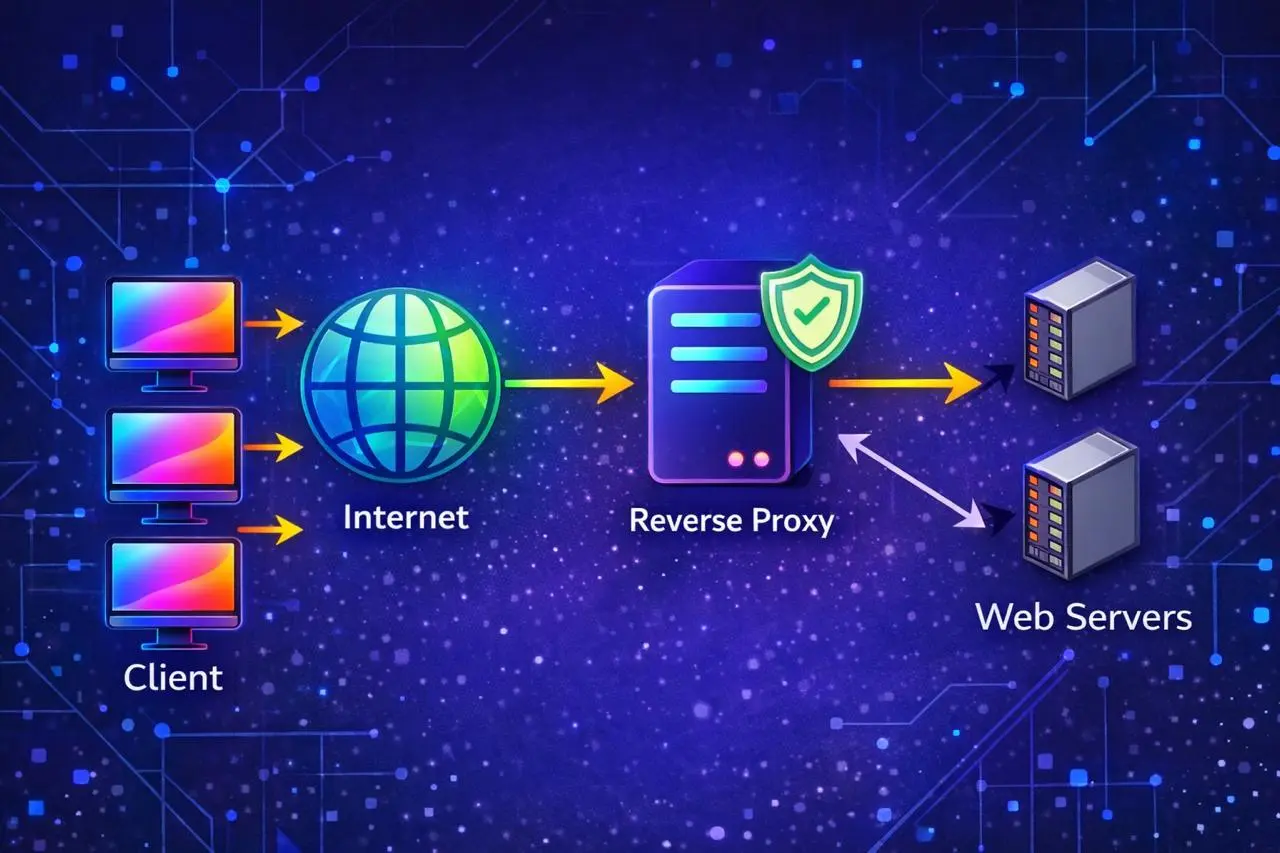
A reverse proxy is positioned in front of web servers rather than the user’s device. Instead of connecting directly to the backend server, visitors send requests to the reverse proxy first, which then forwards them to the appropriate server. After receiving the response, the proxy sends it back to the user.
This setup allows reverse proxies to manage incoming traffic. They distribute requests across multiple servers, improve performance through caching, and add security layers that protect backend infrastructure from direct exposure and attacks.
Example: Amazon CloudFront (AWS's content delivery network) is a reverse proxy that sits in front of thousands of e-commerce websites. When a user visits an Amazon-hosted store, the request hits CloudFront first — not the backend server. CloudFront caches product images, handles SSL termination, and routes only uncached requests to the origin server. This reduces backend load and speeds up page delivery globally.
Reverse proxy use cases
Reverse proxies are used by website owners, SaaS platforms, and high-traffic applications to manage incoming traffic and protect backend systems. Here are the most common use cases:
Reverse proxy for load balancing
A reverse proxy distributes incoming traffic across multiple backend servers instead of sending all requests to one machine. This prevents overload and keeps applications stable during traffic spikes.
Content caching
Reverse proxies store static content such as images, scripts, or pages. When users request the same content again, it is served directly from the proxy, reducing backend load and improving response speed.
Security and server protection
A reverse proxy sits between users and backend infrastructure, preventing direct access to servers. It filters, inspects, and blocks suspicious traffic before it reaches the application layer.
TLS/HTTPS termination
Reverse proxies handle SSL encryption for incoming connections. This reduces complexity for backend servers, which can focus on processing requests instead of encryption and certificate management.
Microservices routing
In distributed systems, reverse proxies route requests to different services (such as APIs, authentication, or frontend systems). This allows complex applications to operate as modular components behind a single entry point.
Reverse proxies are for website owners, SaaS platforms, and engineering teams that manage web applications and need to handle incoming traffic. They are not intended for client-side workflows such as web scraping, automation, or multi-account management. They do not control outbound traffic or provide IP-level control for user actions on websites.
Key differences between a forward proxy vs. reverse proxy
To further explain the difference between reverse proxy vs. forward proxy, we’ve gathered their key features in the table below:
Feature | Forward Proxy | Reverse Proxy |
|---|---|---|
Location | Placed between the user and the internet | Placed in front of web servers or backend infrastructure |
Visibility | Hides the client’s real IP address from websites | Hides the backend servers’ IP addresses from users |
Primary goal | Hide real IP, control outbound traffic, enable IP-based operations | Improve performance, security, and reliability of web applications |
Use cases | Web scraping, automation, multi-accounting, geo-targeted browsing | Load balancing, caching, server protection, traffic routing |
Typical users | Businesses running automation, marketers, researchers, developers | Website owners, SaaS platforms, large online services |
Conclusion
A forward proxy sits between the user and the internet, sending requests on the client's behalf. It controls outgoing traffic and enables use cases like multi-account management, automation, and large-scale scraping.
Reverse proxies work on the server side. Incoming traffic reaches the reverse proxy first, which routes requests to backend servers. This setup protects infrastructure, balances traffic, and maintains stability under heavy load.
For forward proxy use cases such as scraping, multi-accounting, and ad verification, CyberYozh provides mobile and residential proxy networks with API access, sticky sessions, and 99.9% success rate.