
How to Make Money on Twitch: A Realistic 2026 Roadmap
Most people searching for how to make money on Twitch aren't short on ideas, subs, Bits, donations, and sponsorships; it's not a secret. What trips creators up is not understanding how Twitch monetization actually works, which income streams make sense at their current size, and why a channel with real viewers can still earn almost nothing.
This guide walks through that in order: how to get monetized on Twitch, what's realistic at each stage, why most new streams fail to earn, and what to actually focus on first if your goal is to genuinely monetize Twitch rather than just accumulate followers.
TL;DR
Learning how to make money on Twitch starts with understanding two tiers: Affiliate (entry-level, achievable in weeks) and Partner (75+ average viewers, months of consistent work, manual review)
You can start building revenue-adjacent habits before you're even eligible: off-platform audience, a niche, a schedule; the requirements only gate Twitch's own tools, not your ability to build an audience
Subscriptions and Bits rarely pay real money below a genuinely engaged few hundred viewers; sponsorships and external income streams usually matter more, sooner
Revenue per viewer, not follower count, is what determines whether a channel earns anything at all
Equipment costs, burnout, and taxes are real parts of the "make money" question that most guides skip
US audience targeting matters commercially (sponsorship demand, ad rates, subscriber spending power), but it's a research and content question, not a "get a US IP" trick
How Twitch monetization works
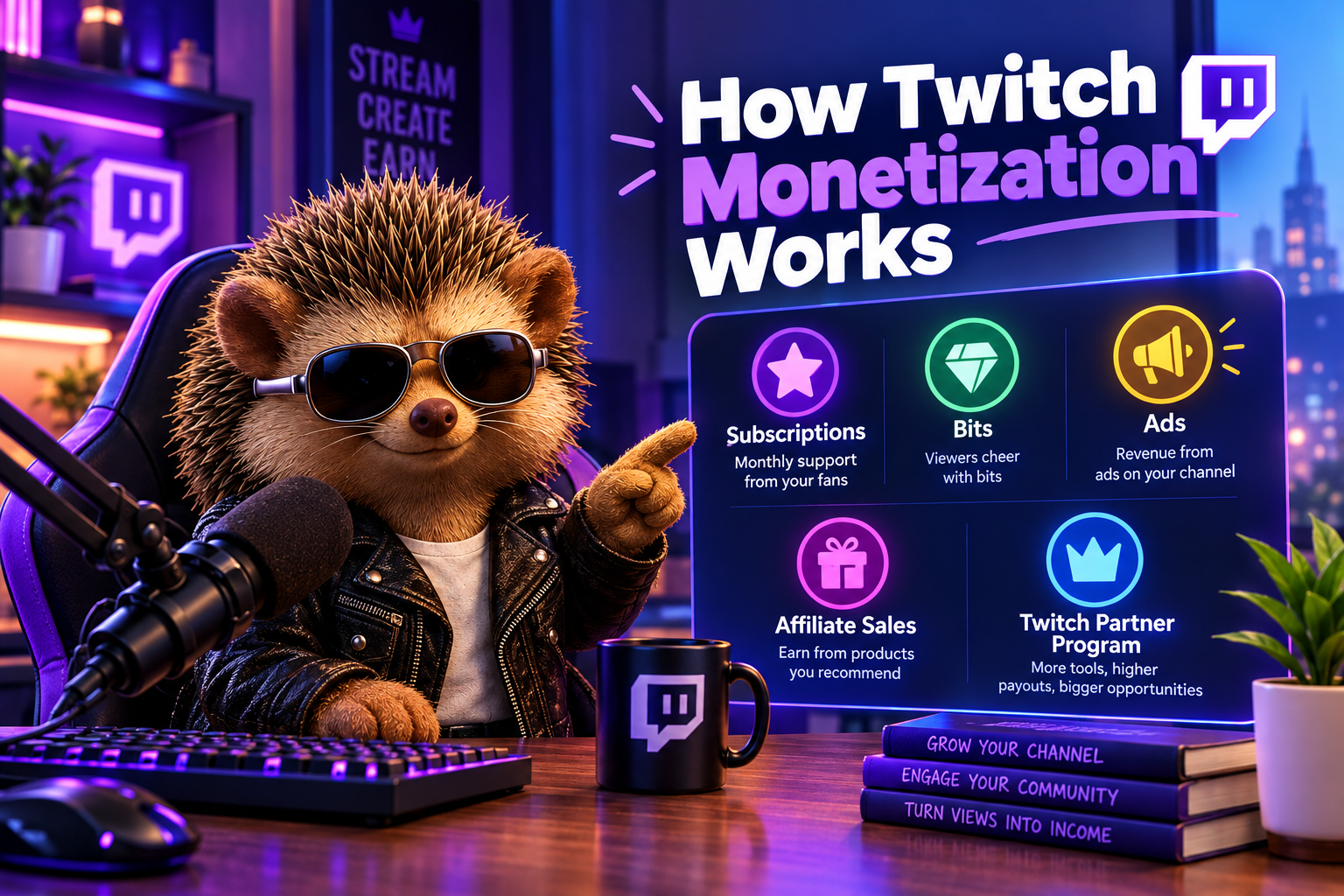
Twitch has two creator tiers:
Affiliate is the entry-level program: hit a small set of activity thresholds and Twitch invites you automatically, no application.
Partner is Twitch's top tier, reserved for channels with a real, consistent audience, and requires a manual review; you can't apply until you clear the viewer threshold, and clearing it doesn't guarantee acceptance.
Understanding how to get monetized on Twitch means understanding both tiers, since Affiliate is the door and Partner is what most people actually mean by "making real money."
Official requirement vs. practical advice, kept separate: the Twitch monetization requirements below are Twitch's stated program thresholds. Everything else in this guide- schedule advice, niche selection, audience-building- is practical guidance, not a platform requirement.
Twitch Affiliate (widely documented current threshold; verify on your Creator Dashboard before relying on it): at least 50 followers, a minimum of 500 total minutes broadcast, streaming on at least 7 unique days, and an average of 3 concurrent viewers, all within a rolling 30-day window. Meet all four, and Twitch sends an automatic invite.
Twitch Partner: average 75 concurrent viewers, 25 hours streamed, and 12 unique broadcast days, all within 30 days, before you're even eligible to apply. Twitch then manually reviews the application; content quality, community engagement, and consistency all factor in, not just the numbers.
A note on these figures: Twitch has adjusted Affiliate thresholds before, and some current sources describe a further reduction. Treat the numbers above as the well-established baseline and confirm your exact current requirements in your Twitch Creator Dashboard before planning around them.
Both tiers unlock subscriptions, Bits, and ad revenue at a 50/50 revenue split by default; Partners typically have more room to negotiate better terms as a channel grows, along with more ad formats and higher-value sponsorship access.
Payout timing differs too: Affiliates are typically paid on roughly a 60-day cycle and cover their own processing fees, while Partners generally see faster turnaround with fees covered by Twitch, one of several reasons Partner status compounds income beyond the viewer numbers required to get there.
Every real Twitch income stream and when it matters
Understanding how to make money on Twitch means knowing which of these actually pay at your current size, rather than chasing all of them at once:
Subscriptions
They are the core of Affiliate/Partner income, recurring monthly revenue at a 50/50 split by default (roughly $2.50 of a standard $4.99 Tier 1 sub), and the single best predictor of whether a channel can sustain itself.
As a rough, widely-cited order of magnitude: a small Affiliate channel with 20–30 active subs and modest Bits activity typically nets somewhere in the low hundreds of dollars a month- not a living wage; the jump to meaningful income usually tracks with reaching Partner-level viewership and sponsorship access, not subs alone.
Treat any specific figure, including this one, as a rough planning range, not a promise.
Bits
Bits let viewers pay small amounts to "cheer," useful as a supplementary stream but rarely a primary income source unless you have a genuinely large audience.
Ad revenue
Pays out per view but at low individual value; it adds up only at meaningful viewer volume.
Donations
(via third-party tools) Work the same way as Bits psychologically: a way for engaged fans to directly support a channel they already watch.
Sponsorships
Brand deals and paid placements typically become realistic once a channel shows consistent, engaged viewership, and they often pay more per deal than months of subs at small scale.
Affiliate marketing
Affiliate marketing (linking gear, games, or products for a commission) can start on day one, regardless of Affiliate status, since it doesn't depend on Twitch's own tools.
Merchandise and digital products
(overlays, presets, coaching) work best once a channel has a loyal community willing to buy something beyond a subscription.
Memberships and community-funding tools
Outside Twitch (Patreon-style platforms) let the most dedicated fans pay directly, independent of Twitch's cut.
External income streams
YouTube, TikTok, and a mailing list matter because they don't depend on Twitch's algorithm at all, which is the single biggest point of leverage a growing creator has.
Read more about how to watch multiple Twitch stream drops
Does Twitch's 50/50 split beat other platforms
Twitch defaults to a 50/50 subscription split for both Affiliates and Partners.
Kick, a newer competitor, offers a flat 95/5 split in the streamer's favor, which sounds decisive until the trade-offs are counted: Kick's overall audience base is smaller, and ad/brand-deal infrastructure is thinner, so 95% of a much smaller audience doesn't automatically out-earn 50% of Twitch's larger one.
YouTube's live-streaming monetization leans on watch-time and ad revenue rather than a subscription split, with off-platform video driving most discovery.
None of this makes one platform objectively better; it means the headline revenue-share number matters less than actual audience size and retention.
The realistic monetization roadmap by stage
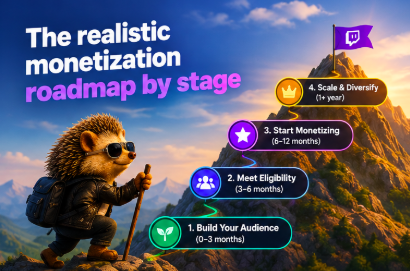
0–50 followers:
You're not eligible for Twitch's own monetization yet.
This stage is about niche, schedule, and finding your first real viewers, not revenue.
If you're still figuring out how to start streaming on Twitch, this is also the right time to nail down your setup and format before worrying about monetization.
Building a small off-platform presence (a clip account, a Discord) starts here too; it's the groundwork every later monetize-Twitch strategy depends on, even though it produces zero income right now.
50–100 followers, working toward Affiliate:
Focus entirely on the four Affiliate metrics.
Two hours per session, on a consistent schedule, is enough to clear the hours and days requirements within a few weeks.
This stage is really about building Twitch habits, a schedule, a format, more than building Twitch income, which mostly doesn't exist yet.
100–500 followers, early Affiliate:
Subscriptions and Bits exist now, but at this size they rarely add up to meaningful income.
This is the stage to start testing sponsorship-adjacent income, affiliate links for gear or games, small brand collaborations, and to build an audience outside Twitch, since Twitch's own discovery tools favor already-large channels.
500–1,000+ followers:
Subscriber income becomes more real if retention is genuinely good.
This is typically when the Path to Partner numbers become realistic, and when actual sponsorship outreach starts working, because a brand can now see a consistent, engaged audience rather than a promise.
The practical takeaway: revenue per viewer matters more than raw follower count. A channel with 200 loyal, returning viewers who convert to subs will almost always out-earn a channel with 2,000 passive, one-time viewers.
Why most new Twitch streams don't make money
The honest reasons rarely involve bad luck:
Poor discoverability: Twitch's own algorithm heavily favors already-large channels, so relying on it alone as a new streamer is a losing bet.
Inconsistent schedule: irregular streaming makes it hard for an audience to form a habit around you, which drives retention.
No clear niche: a channel that streams whatever, whenever, gives viewers no reason to specifically come back.
Treating followers as revenue: a follow costs a viewer nothing and converts to income at a very low rate; subscriptions and engagement are the real signal.
No income outside Twitch: creators who rely entirely on Twitch's own tools cap their income at whatever Twitch's algorithm decides to give them.
Spending on equipment before validating demand: a better camera doesn't fix a discoverability or niche problem.
Burnout: streaming five-plus hours a day to chase requirements without a sustainable pace is a common reason channels that were gaining traction simply stop.
The cost side of how to make money on Twitch
Twitch's requirements don't demand expensive gear; a decent USB microphone and a webcam most laptops already include are enough to clear Affiliate, and a functional starting setup like this runs somewhere in the low hundreds of dollars. A full "creator-grade" studio setup- a dedicated capture card, DSLR camera, professional lighting, a second monitor rig- can run well into four figures, and buying it before confirming anyone wants to watch is the single most common way new streamers lose money on a hobby that was supposed to earn it.
The practical order: validate that people return for your content on minimal gear, then reinvest specifically in whatever is actually limiting growth, usually audio quality or stream stability, rarely lighting or camera resolution.
Cross-platform strategy: Twitch alongside YouTube and TikTok
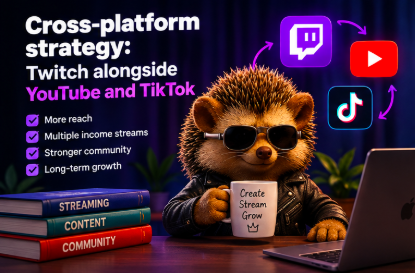
Twitch's own discovery tools favor channels that are already large, which is precisely why most successful smaller streamers don't rely on Twitch alone.
Clipping stream highlights to TikTok and YouTube Shorts is the most common on-ramp; short, algorithm-friendly clips can reach viewers who've never heard of your channel, and a portion of them convert into Twitch viewers.
A YouTube VOD channel built from stream archives adds a second, search-driven discovery path that doesn't depend on being live.
None of this replaces streaming itself; it's audience-acquisition infrastructure that feeds the Twitch channel rather than competing with it.
USA audience economics: why it matters and what it doesn't fix

Audience location genuinely affects commercial outcomes on Twitch; US viewers generally carry higher advertiser demand, stronger sponsorship rates, and higher subscriber spending power than several other major markets, which is exactly why brands often ask about audience geography before a deal. That's a real, legitimate factor in how much a given audience size actually converts to income.
What it doesn't mean:
Getting a US IP address doesn't create a US audience, affect Twitch's monetization eligibility, or manufacture viewers.
Twitch determines eligibility from actual account activity, real streaming hours, real viewers, real engagement, not from where your connection appears to originate.
Audience geography is a content and marketing question (what you stream, when you schedule it, who you target off-platform), not something a network trick solves.
Where a US-facing IP genuinely helps is research:
Checking how a US visitor's browser actually renders your linked storefront or landing page, testing regional pricing pages, or researching US-facing competitor content and promotions before building your own strategy around them.
That's legitimate market research infrastructure, not a monetization shortcut.
When CyberYozh proxy infrastructure fits into a Twitch creator's workflow
Most Twitch creators never need this. It matters only for the research and operational tasks above, not for anything that touches how Twitch counts viewers or evaluates an account:
Problem: checking what a US visitor sees on your linked store, sponsor page, or website. A US-based IP lets you view region-specific pricing, promotions, or layout the way a real US visitor would, which matters if you're running affiliate links or merch storefronts with region-based content.
Problem: researching US-facing competitor content or promotions for strategy purposes. A stable US connection supports that kind of market research without repeatedly triggering location-based redirects to your own region.
Problem: maintaining a consistent, private research environment across sessions. CyberYozh's current catalog lists dedicated US-capable mobile proxies (4G/LTE/5G) from $3.50/day with unlimited traffic, rotating residential proxies from $2/GB, API access to automate permitted research workflows, and SMS verification tools for legitimate account setup needs.
None of this is a shortcut for making money on Twitch itself; it's infrastructure for the research work that sits alongside growing a channel. Current plan details are published on CyberYozh's proxy catalog for anyone who reaches this specific need.
None of this creates viewers, influences Twitch's algorithm, or affects Affiliate or Partner eligibility; it solves a research and operations problem some creators run into as their streaming business grows.
Final takeaway
Learning how to make money on Twitch is less about discovering a hidden monetization trick and more about sequencing: hit the Affiliate metrics, build a niche and schedule that gives viewers a reason to return, treat revenue per viewer as the real metric instead of follower count, budget honestly for equipment and taxes, and build at least one audience channel outside Twitch so your income doesn't depend entirely on its algorithm. Twitch Partner and real sponsorship income follow from that foundation, not the other way around.