
Compared the 12 Best Data Collection Services in 2026

TL;DR
Data collection services give you the infrastructure (proxies, IP rotation, session control) to pull public web data at scale, without your requests getting flagged as a bot.
The real challenge in 2026 isn't finding a data collection service. It's that most sites now score behavior, not just IP address.
Most providers only sell you access (an IP address). Very few sell you the whole workflow: clean IPs, fraud/reputation checking, session management, and support that answers when something breaks.
CyberYozh bundles proxies, an IP-reputation checker, SMS verification, and full API access into a single dashboard, with rotating residential proxies priced at $0.90/GB, among the lowest published rates on the market.
We compared 12 real providers below with actual features and current pricing, not just the marketing-page version.
What is a data collection service and why do people use one
Strip away the jargon, and a data collection service does one thing: it automatically gathers public information from the internet, rather than a person doing it by hand.
That sounds simple until you try it yourself. Open a browser, visit a competitor's pricing page 50 times in a row from your home Wi-Fi, and you'll get blocked before request 20.
Websites are built to notice repeated, robotic-looking traffic and shut it down. A data collection service solves that specific problem: it routes your requests through real, rotating IP addresses so your traffic looks like it's supposed to: normal visitors, not a script.
People reach for these services for pretty ordinary business reasons: watching a competitor's prices change in real time, pulling product listings for a marketplace, tracking how a brand is reviewed across platforms, gathering leads from public directories, or building datasets to train an AI model.
None of that is exotic. It's just data that's publicly visible but too time-consuming, or too easy to get blocked, to collect by hand.
What kind of data can you collect
Most use cases fall into a handful of buckets:
E-commerce and pricing data: product listings, stock levels, competitor pricing that changes hourly
Search engine results (SERP): rankings, ads, and featured snippets for SEO and market research
Social media and public content: engagement numbers, trending topics, public profile data
Reviews and reputation data: what people are saying about a brand across Trustpilot, App Store, G2, and similar platforms
Travel and booking data: flight and hotel pricing that shifts by the minute
Real estate listings: pricing history, availability, and location data
Lead and business directory data: contact information from public listings
Text and language data for AI models: articles, forums, and reviews used to train or fine-tune AI systems
That last one has grown fast. A lot of teams collecting data in 2026 aren't marketers; they're building datasets for AI models, and the requirements are different: you need volume, variety, and IPs clean enough that you're not accidentally scraping the same handful of biased sources over and over.
Need verified accounts alongside your data collection? CyberYozh's SMS activation and virtual number rental cover phone verification for account creation without juggling a second vendor. See SMS verification options →
Why data collection got harder in 2026
A few years ago, avoiding a block mostly meant rotating your IP address often enough. That's no longer close to enough on its own.
Modern anti-bot systems, Cloudflare's bot management among the most widely deployed, now score behavior, not just origin: mouse movement, scroll speed, browser fingerprints, and session consistency all factor in. Two scrapers can use the same IP address and get completely different results because one appears to be a real session and the other doesn't.
On top of that, a growing share of the public web is now AI-generated, so datasets built for training AI models risk absorbing a warped copy of the internet instead of the real thing. And most providers still bill per gigabyte, which makes budgeting for continuous monitoring genuinely hard to predict.
Quick fact: A clean IP alone no longer guarantees a pass. Anti-bot systems increasingly flag behavior, session patterns, fingerprints, and request timing, so IP reputation checks before deployment are just as important as the IP itself.
Don't burn requests on flagged IPs. CyberYozh's IP Reputation Checker scores an address before you use it, so you catch a dirty IP before it costs you a blocked session. Check IP reputation →
The 12 best data collection services in 2026
Pricing below reflects publicly listed rates as of July 2026; always confirm current numbers before you buy.
CyberYozh
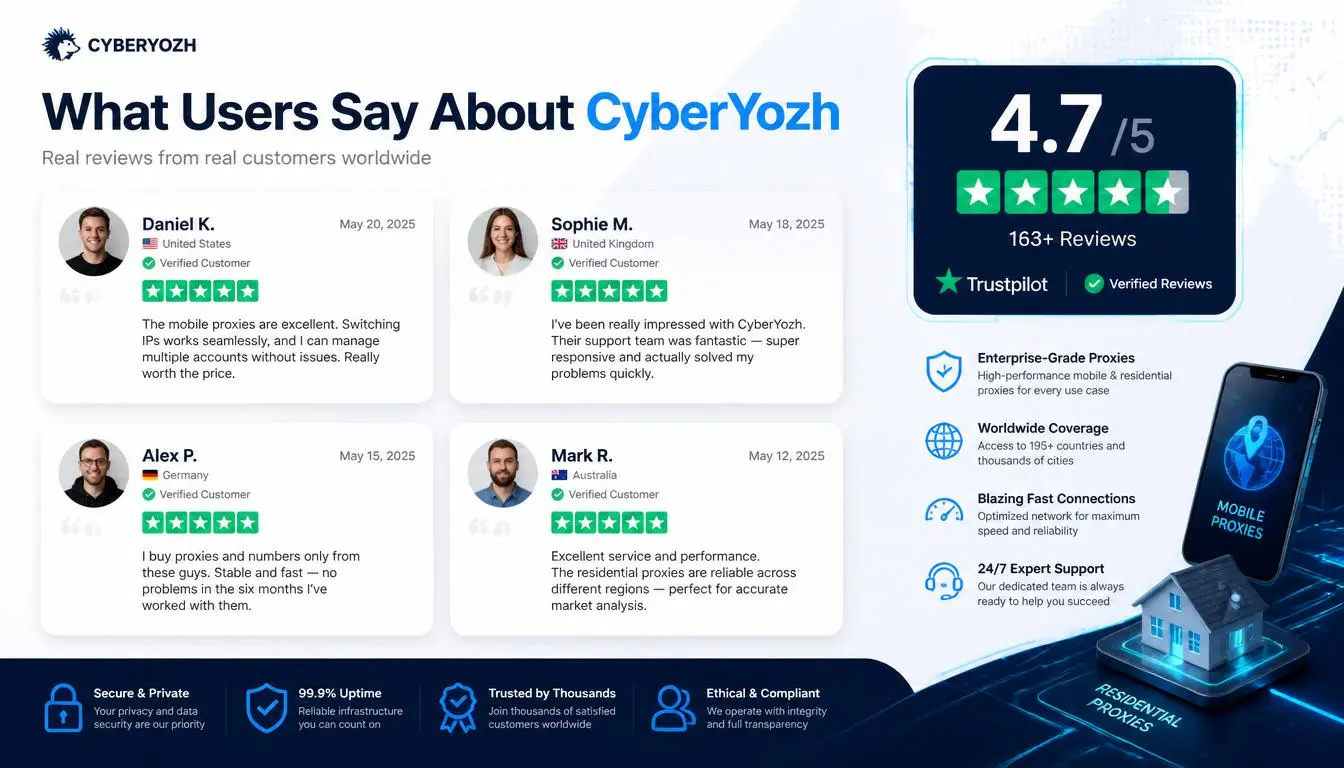
CyberYozh is built as a full infrastructure layer rather than a plain proxy seller; proxies, web scraping API, IP /phone/card reputation checks, and SMS verification all live inside one dashboard instead of being stitched together from separate tools.
Proxy types: Mobile LTE/5G, residential ISP (static), rotating residential, and datacenter, across 100+ countries
Built-in tools: IP/phone/card fraud-score checker, SMS activation and virtual numbers, full API for Selenium/Playwright/Puppeteer, plus the free Open Scraper toolkit
Any antidetector browser compatibility with an inbuilt fingerprinting option
Rotation and sticky session for up to 24 hrs.
Protocol support: HTTP, HTTPS, SOCKS, UDP
Pricing: Mobile from $1.70/day (unlimited traffic) · Datacenter from $1.90/month (unlimited traffic) · Residential ISP from $5.29/month per IP · Rotating residential from $0.90/GB, one of the budget-friendly options published per-GB rates in the market, well under Bright Data (~$8/GB) or Oxylabs (~$6-8/GB)
Trust signals: Roughly 4.6–4.8/5 across independent review platforms, with 24/7 support in multiple languages
Worth knowing: The CyberYozh proxy product launched in 2024, built by the team behind a cybersecurity training academy operating since 2014; there's no free trial, only a low-cost paid test period
Ready to test it on your own targets? Browse the CyberYozh proxy catalogue →
Building automated workflows? Full API access integrates with Selenium, Playwright, Puppeteer, Scrapy, Postman, and custom scripts, with manual and automated rotation. See API and automation docs →
Bright Data
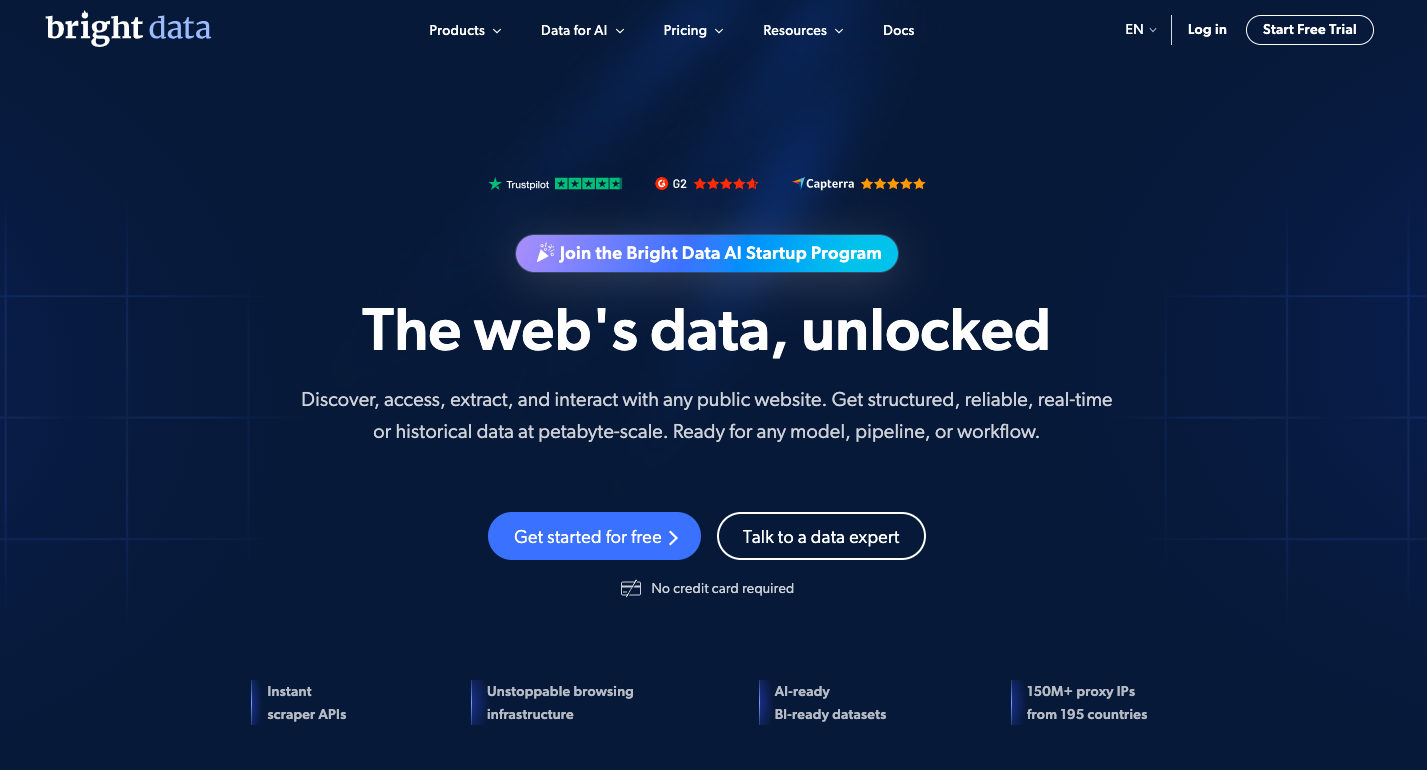
Bright Data: The proxy provider and web data platform, offering over 150 million IPs across 195 countries and a dataset marketplace covering 120+ domains. The complexity of the Bright Data dashboard frustrates new users.
Proxy types: Residential, ISP, mobile, datacenter, plus Scraping Browser and Web Unlocker
Network size: 150M+ residential IPs across 195 countries, the largest pool in the industry
Standout feature: Pay-for-success Web Unlocker handles CAPTCHA solving and fingerprinting automatically
Pricing: Residential from ~$8/GB pay-as-you-go, dropping to ~$3–4/GB on committed $499+/month plans; ISP from ~$1.50/IP/month
Trade-off: Mandatory KYC verification and enterprise-oriented onboarding make it slow to start for small teams
Oxylabs
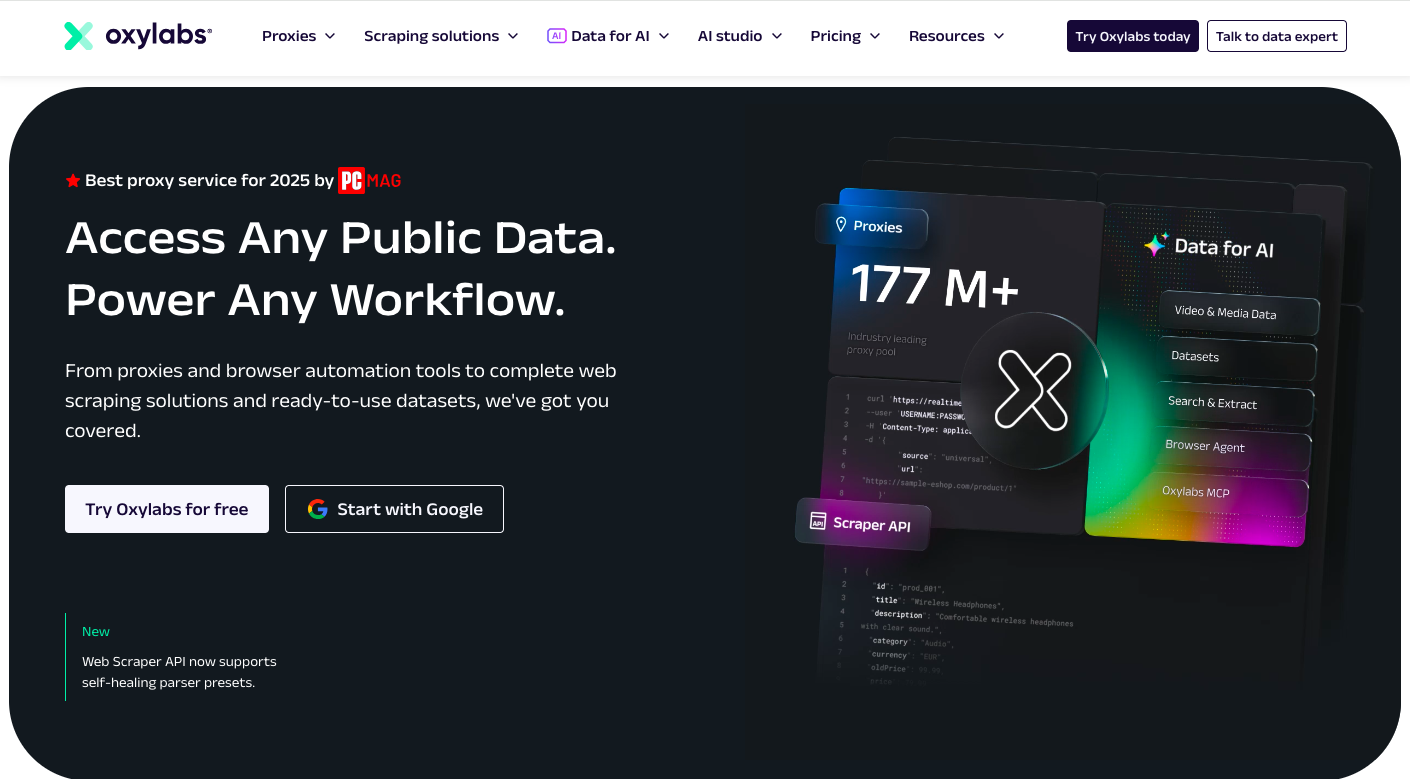
Oxylabs is an enterprise-focused provider with a proxy network and dedicated account management for bigger clients.
Proxy types: Residential, datacenter, ISP, mobile, plus Web Scraper/SERP/E-Commerce APIs
Network size: 175M+ residential IPs across 195 locations
Standout feature: Dedicated account managers and compliance documentation on enterprise tiers
Pricing: Residential Starter from $30/month (5GB, ~$6/GB), dropping to ~$2.50/GB at the $2,500/month Corporate tier
Trade-off: Per-GB savings only really kick in at higher, steadier monthly volumes
Decodo
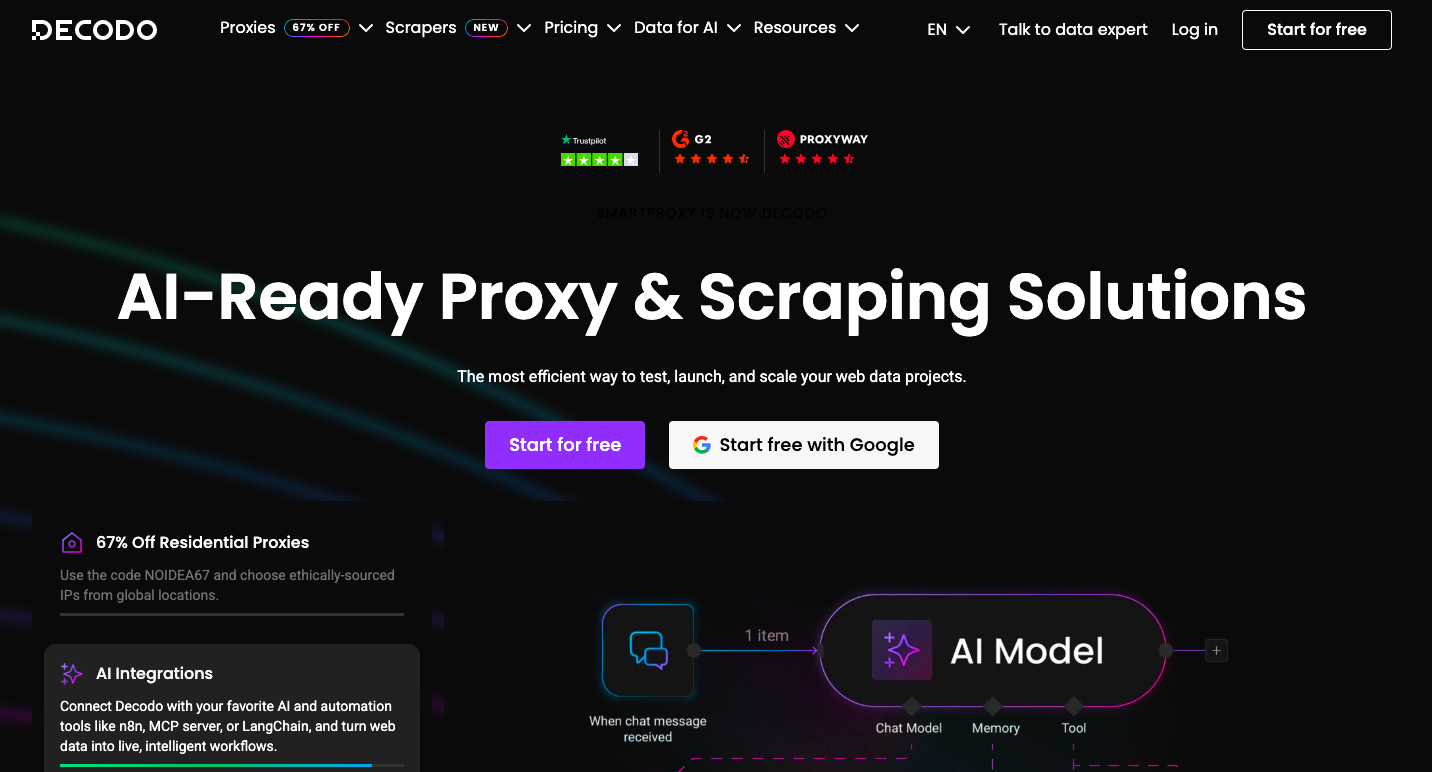
Decodo is a popular, easier-to-start option with a self-serve dashboard and a clean onboarding flow.
Proxy types: Residential, datacenter, mobile, ISP
Network size: 55M–100M+ residential IPs across 195+ countries
Standout feature: Fast setup and one of the more approachable dashboards in the category
Pricing: Residential from roughly $4–8.5/GB depending on plan, dropping toward ~$2/GB near the 1TB tier
Trade-off: No built-in IP-reputation checking or account/SMS tooling; it's proxy access only, so complex workflows need a second tool
IPRoyal
Flexible, pay-as-you-go proxy access with fairly granular location targeting.
Proxy types: Residential, datacenter, mobile, ISP; SOCKS5 supported
Network size: 34M+ residential IPs across 195+ countries
Standout feature: Non-expiring traffic and sticky sessions up to 7 days
Pricing: Residential from ~$7/GB pay-as-you-go, dropping to ~$1.75/GB at volume; rotating mobile from $4/GB
Trade-off: Support runs mainly through tickets rather than real-time chat
SOAX
Residential, mobile, ISP, and datacenter proxies with detailed pool filtering by location and network.
Proxy types: Residential, mobile, ISP, datacenter
Network size: 155M+ IPs across 195+ countries
Standout feature: Built-in Web Unblocker and Scraper API alongside raw proxy access
Pricing: Residential from $3.60/GB, dropping to ~$2/GB at 1,000GB; no pay-as-you-go option
Trade-off: No plans below 25GB, so it's a bigger commitment than budget-tier providers
What the $/GB sticker price doesn't show you: the cheapest listed rate isn't always the cheapest bill. A provider with a dirty or poorly vetted IP pool costs more per successful request once you account for retries and blocks; cost-per-success matters more than cost-per-gigabyte. Worth testing on your own target sites before committing to volume.
NetNut
Known for direct ISP-sourced proxies, which is genuinely useful for speed-sensitive collection jobs.
Proxy types: Residential (ISP-direct), static residential, mobile, datacenter
Network size: 85M+ IPs across 195+ countries
Standout feature: Direct ISP connections for lower latency than typical peer-to-peer residential pools
Pricing: Subscription-only, from $99/month (~10GB), dropping to ~$3.53–3.75/GB at 10TB
Trade-off: No pay-as-you-go option, which makes it a poor fit for occasional or small jobs
Rayobyte
A datacenter-proxy-focused provider with scraping utilities layered on top.
Proxy types: Datacenter (rotating and dedicated), residential
Network size: Datacenter pool in the millions; residential pool smaller than most on this list
Standout feature: Ethically-sourced IPs with US-based support
Pricing: Residential from a steep ~$15/GB entry, dropping to ~$0.90/GB at 1,000GB; rotating datacenter from ~$0.30–0.45/GB
Trade-off: Entry-level residential pricing is among the highest here unless you commit to real volume
DataImpulse
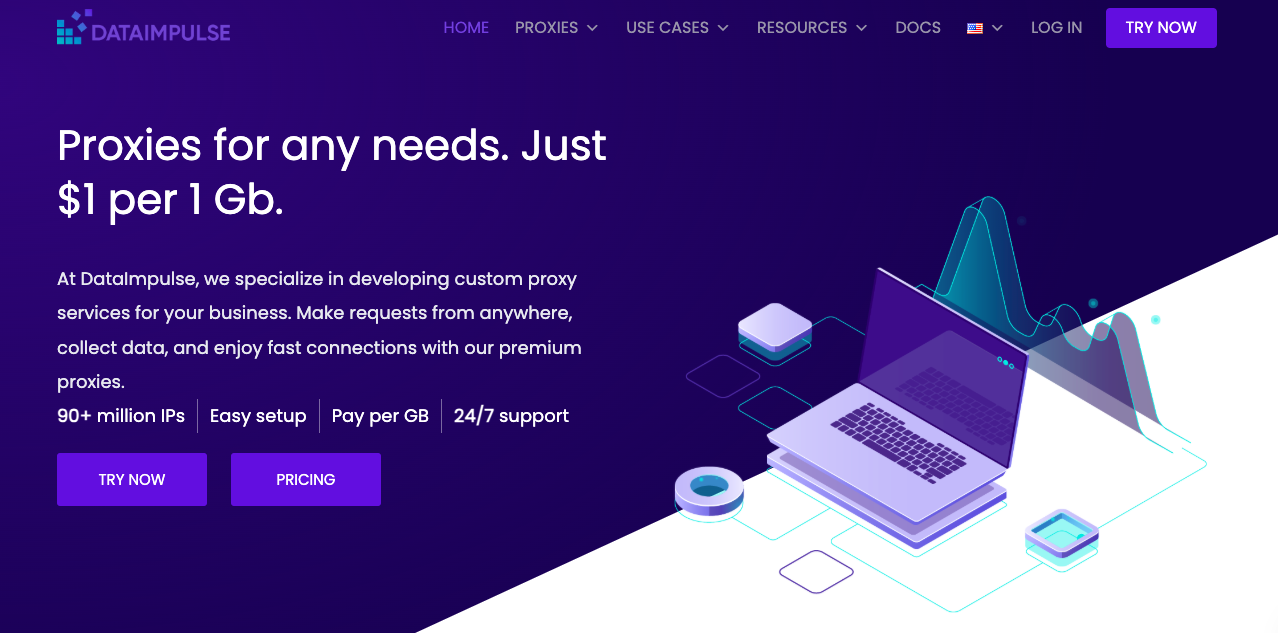
A budget, pay-as-you-go residential proxy option with no subscription commitment.
Proxy types: Residential, mobile, datacenter
Network size: 90M+ residential IPs across 195 countries
Standout feature: Pay-as-you-go with traffic that never expires
Pricing: Residential from $1/GB, mobile from $2/GB, datacenter from $0.50/GB — among the cheapest published rates anywhere
Trade-off: Budget positioning means lighter support coverage and fewer session-management features for multi-step workflows
NodeMaven
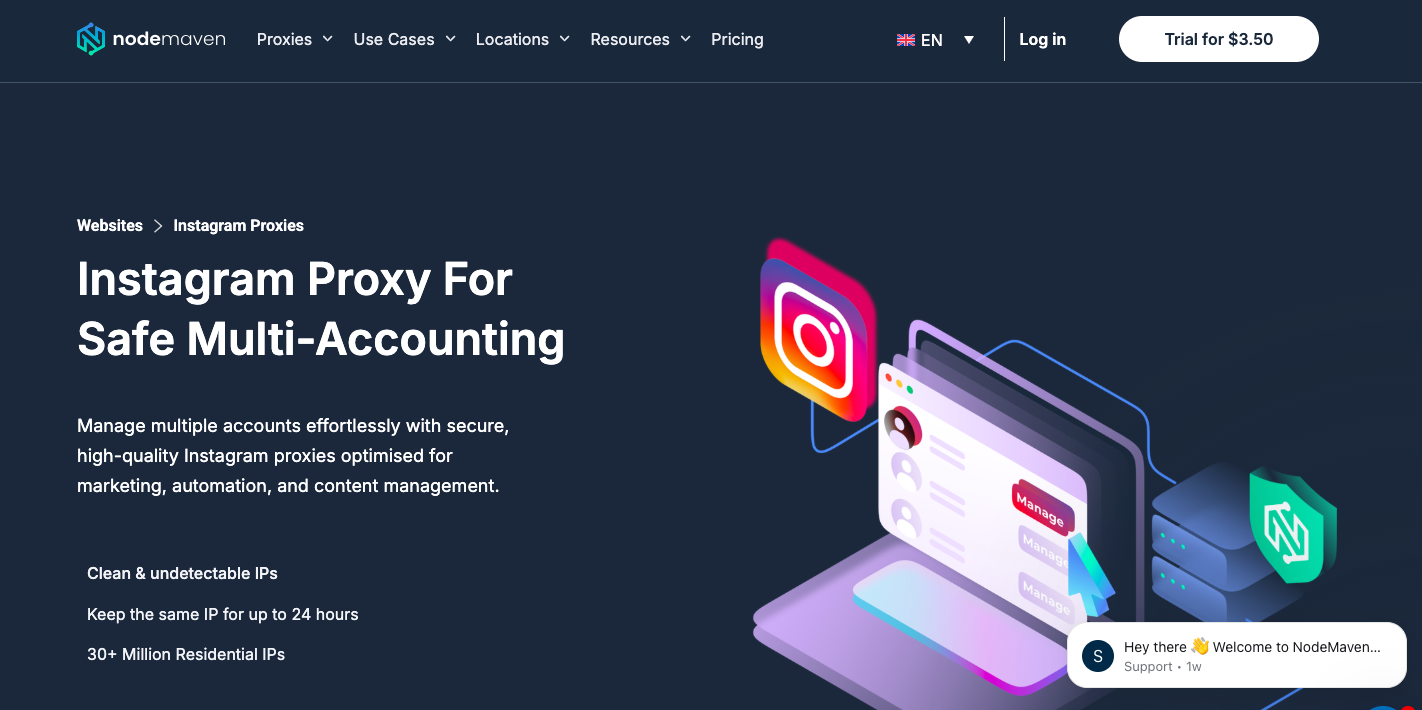
NodeMaven positions itself as an IP quality choice for account-management-heavy use cases, such as multi-account social media work.
Proxy types: Residential, mobile, filtered specifically for account-management use cases
Network size: Smaller than the major networks, positioned on quality over scale
Standout feature: Filtered IP pool aimed at 96–98% success rates on strict platforms
Pricing: Residential from $2.40/GB
Trade-off: Narrower country coverage than larger providers, with pricing at a premium for the quality tier
Proxy-Cheap
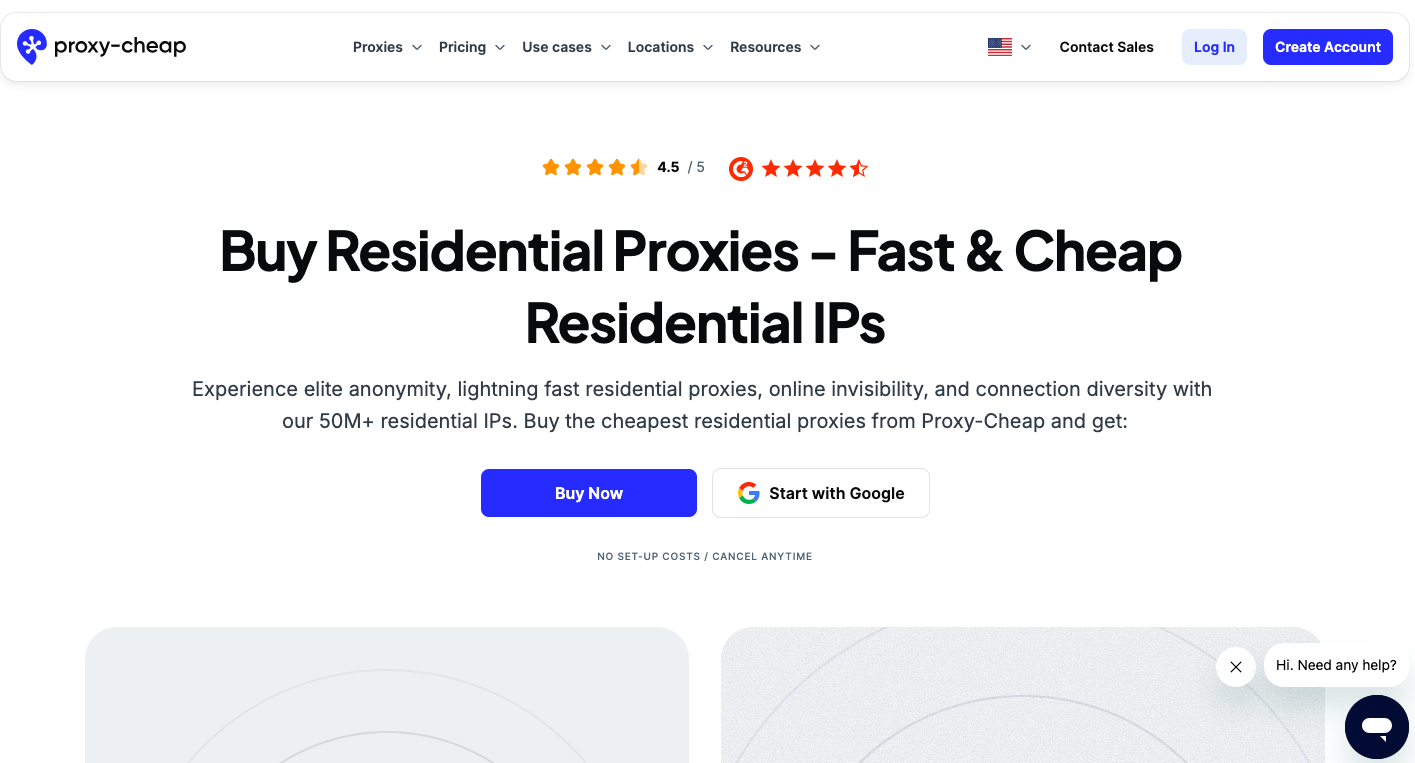
A budget-focused option mixing datacenter, residential, and mobile IPs at low price points.
Proxy types: Residential (rotating and static/ISP), datacenter, mobile
Network size: 7M+ IPs across 127+ countries
Standout feature: Straightforward, budget-first pricing across every proxy type it sells
Pricing: Rotating residential from ~$3/GB, static ISP from ~$1.99/IP, datacenter from ~$0.30/IP/month
Trade-off: Budget pricing in this industry usually correlates with a smaller, less rigorously vetted pool, which tends to show up as more frequent blocks on well-protected sites
Infatica
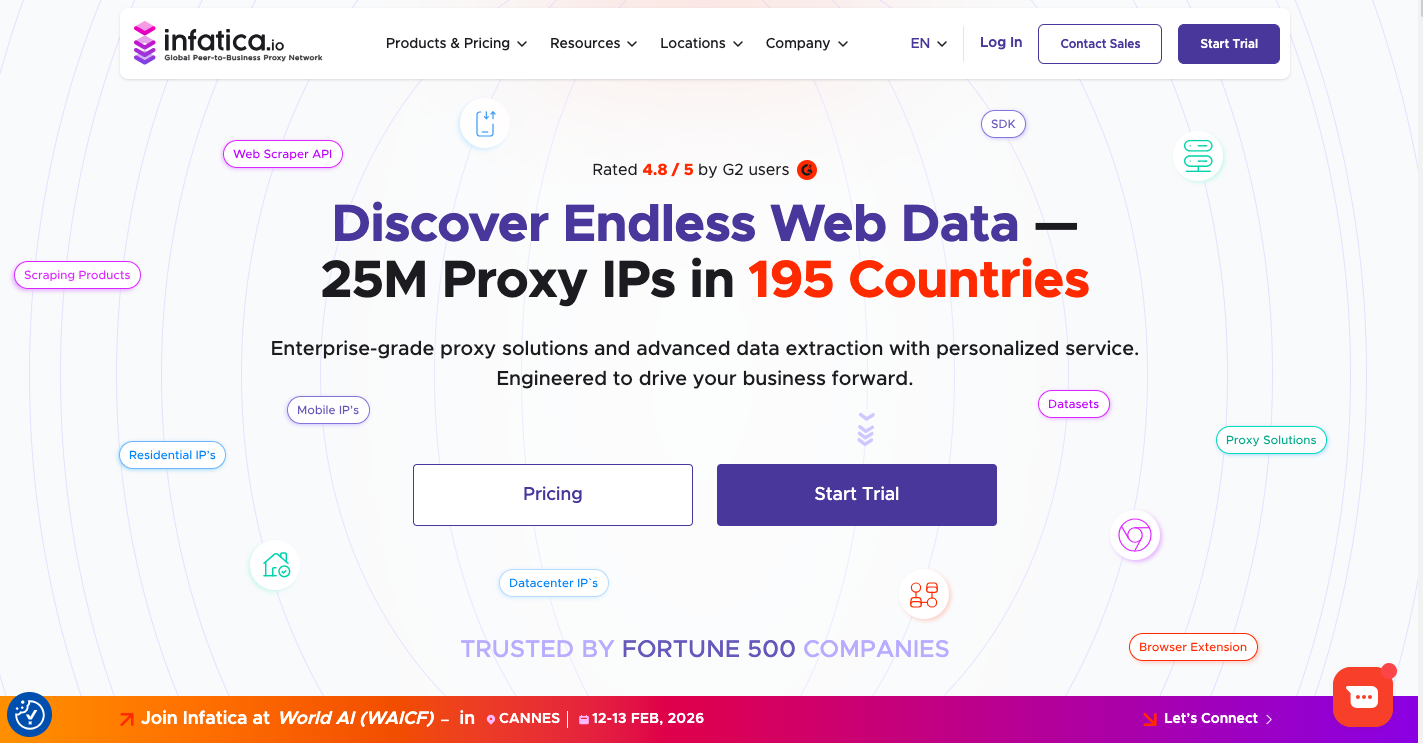
Runs a residential and mobile proxy network partly sourced through an opt-in SDK model.
Proxy types: Residential, mobile, datacenter (dedicated and shared)
Network size: Mid-sized pool, partly SDK-sourced from participating apps/devices
Standout feature: Flat $1.00/IP pricing on dedicated datacenter proxies
Pricing: Residential from ~$2.60/GB at volume (entry ~$4/GB); mobile from $4/GB
Trade-off: SDK-sourced IPs can mean less consistent availability in specific countries than carrier- or ISP-partnered networks
How to actually choose
Skip the feature checklist and ask three questions instead:
How predictable does my monthly cost need to be? Per-GB billing turns into a moving target as you scale. A mixed model, flat-rate for steady workloads, per-GB for bursty ones, gives you more control.
Do I need more than an IP address? If your workflow involves accounts, sessions, or repeated visits to the same targets, IP-reputation checking and session control matter as much as the proxy itself.
What happens when something breaks at 10 pm on a Friday? Every provider works fine in the demo. The difference shows up when a target site changes its detection, and your pipeline goes quiet.
Running scripts, not just browsing manually? CyberYozh's API supports manual and automated IP rotation, with full compatibility with HTTP, SOCKS5, and UDP, for teams building real automation, not just occasional lookups. Explore API and automation access →