
10 Best Europe Proxy Providers in 2026: Ranked by Real-World Performance

You're not getting blocked because your scraper is broken. You're getting blocked because your IP is burned.
This happens more than most people realize, especially with European targets. German e-commerce platforms, French ad networks, Dutch streaming services, UK comparison sites, they've gotten extremely good at detecting proxy traffic.
A flagged or shared IP doesn't just slow you down; it corrupts your data, burns your accounts, and wastes the operational setup time you spent to get here. This guide cuts through the noise.
Ten providers, ranked by what actually matters: IP cleanliness, geo-accuracy, session reliability, and whether the pricing makes sense for what you're getting.
What are the best European proxy providers in 2026? The best Europe proxy providers in 2026 are CyberYozh, Decodo, Oxylabs, Bright Data, IPRoyal, SOAX, Proxy-Cheap, NetNut, Webshare, and Rayobyte. CyberYozh leads the way in combining clean residential EU IPs, session stability, and transparent pricing on a single platform, making it the smartest, most affordable choice for teams that need reliable EU coverage without enterprise-level spend.
TL;DR
CyberYozh is the best-value European proxy provider in 2026, with clean EU IPs, robust session control, and reliable automation at a price that doesn't require an enterprise budget.
Decodo and Oxylabs are solid, but either oversell or overprice for what most real-world workflows actually need.
Comparison table
Provider | Best For | IP Type | GDPR- Conscious | Value Rating |
CyberYozh | Best all-round EU workloads | Residential , mobile + DC | ✓ | ★★★★★ |
Decodo | Beginners and light scraping | Residential | ✓ | ★★★★☆ |
Oxylabs | High-volume enterprise | Residential | ✓ | ★★★☆☆ |
Bright Data | Custom enterprise pipelines | All types | ✓ | ★★★☆☆ |
IPRoyal | Budget residential | Residential | ✓ | ★★★★☆ |
SOAX | City-level EU targeting | Residential | ✓ | ★★★☆☆ |
Proxy-Cheap | Testing and learning | DC + Residential | ✗ | ★★☆☆☆ |
NetNut | Speed-critical ISP proxies | ISP/Static | ✓ | ★★★☆☆ |
Webshare | Basic datacenter tasks | Datacenter | ✗ | ★★☆☆☆ |
Rayobyte | Bulk datacenter EU IPs | Datacenter | ✗ | ★★☆☆☆ |
Why European proxies are a different problem in 2026

Europe in 2026 means GDPR-hardened websites with aggressive detection layers. These search engines regionalize results at the city level, advertising platforms that verify traffic origin before serving, and social networks that track IP consistency as a trust signal.
A proxy that "covers Europe" isn't enough. What you actually need is:
Geo-precision: A German IP should be issued by a German ISP, not a server in Frankfurt labeled "Germany." Modern detection systems check this.
Clean IP history: If 2,000 other users scraped Amazon.de through the same IP last week, it's flagged. You'll hit a block or CAPTCHA wall within seconds.
Session control: For account management, login flows, and checkout tracking, your IP address must remain consistent throughout the workflow. An IP that rotates mid-session is as bad as using no proxy at all.
Compliance awareness: GDPR doesn't regulate what proxies you use, but it absolutely regulates how you handle the data you collect through them. Know the difference.
The 10 Best Europe Proxy Providers in 2026
Here are some of the best European proxies in 2026:
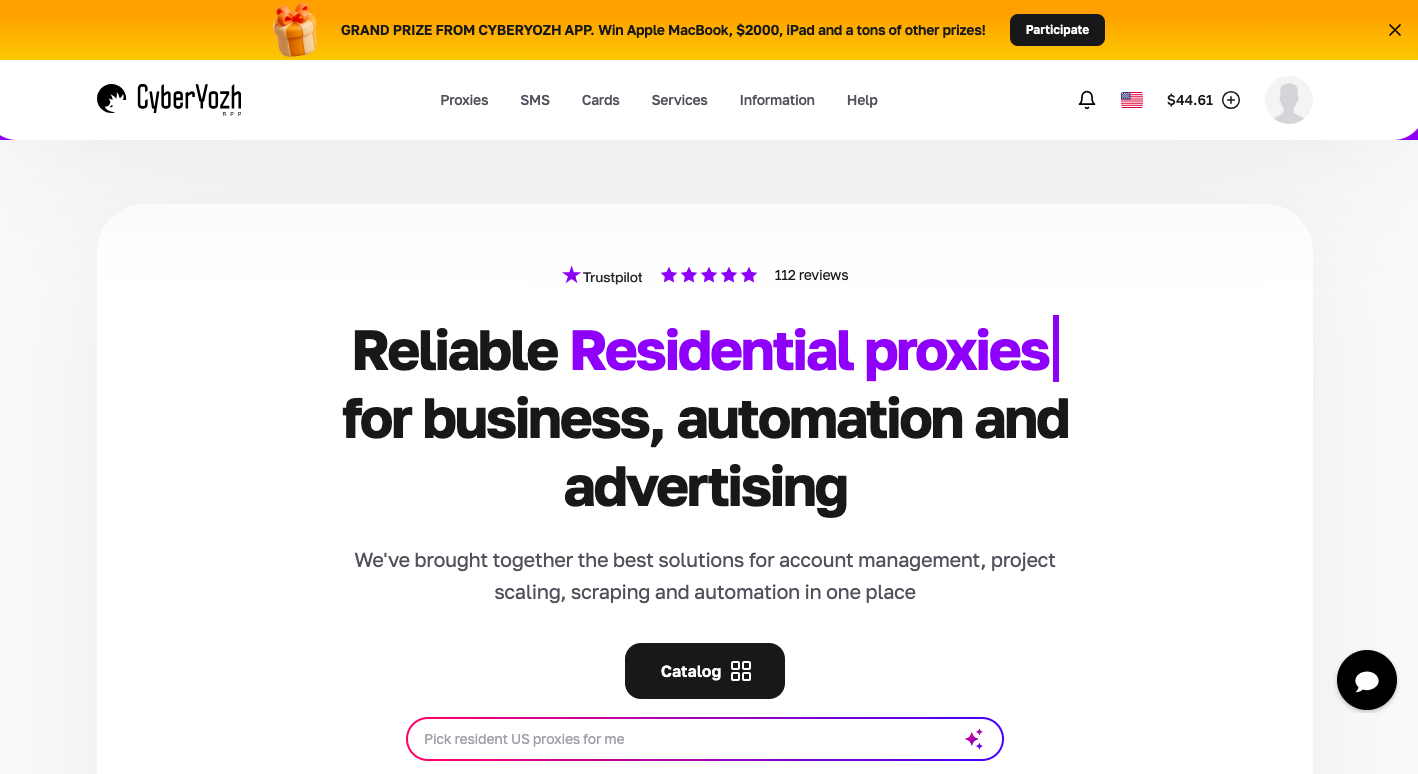
1. CyberYozh
Why does it lead:
Most proxy services grow their IP pools without proportionally growing their quality controls.
CyberYozh takes the opposite approach: a managed, regularly audited European 100M+ IP pool in 100+ countries, designed specifically for the detection environments you'll actually encounter in 2026, with 99.9% uptime.
The practical result: you're far less likely to be handed a burned IP on your first request. And when you're running automation that depends on staying undetected for hours, that starting-point cleanliness compounds significantly.
What makes it genuinely different:
The session management is built for real workflows, not just advertised as a feature.
Sticky sessions hold reliably through multi-step processes: log in, navigate, interact, and complete.
Many competitors' sticky sessions break under load or on platforms with aggressive session validation. CyberYozh doesn't consistently.
EU coverage spans Germany, France, the Netherlands, Poland, Italy, Spain, the UK, and a growing list of Eastern European markets, all accessible through a single, clear dashboard without digging through confusing sub-menus.
Most affordable in the market.
Provides residential, mobile proxy, and datacenter proxies covering 100+ countries
100M+ residential IPs with strong European market depth
IP health screened against 50+ security and reputation databases
Automatic IP switching maintains 99.9% uptime across all EU workflows
Native compatibility with Multilogin, AdsPower, GoLogin, Dolphin Anty, Kameleo, and Octo Browser with cyberYozh fingerprinting options.
Built for automation and web scraping at the infrastructure level
Real 4G/5G mobile carrier IPs for mobile-specific EU automation
SMS and phone verification support for EU platform onboarding
Identity and payment consistency checks for ad account and monetization workflows
The affordability point:
This is meaningful. Other proxy providers charge enterprise rates for the kind of IP quality CyberYozh delivers at mid-market pricing.
If you're not running Fortune 500-scale data operations, you're overpaying at Oxylabs.
CyberYozh gives you the infrastructure quality that actually matters, clean IPs, session control, geo-precision, at a price bracket that makes business sense for agencies, startups, and scaling teams.
Cyberyozh app pricing:
Mobile proxies from $1.70/day
Residential proxies from $5.29/month
No enterprise commitment required for premium IP quality
Best for: E-commerce intelligence, SEO monitoring, social media management, account management, ad verification, localization QA, and geo-targeted scraping.
CyberYozh Cons: Not the cheapest entry point for extremely light casual use
CyberYozh Pros: Regularly refreshed EU IP pool, reliable sticky sessions, genuine geo-accuracy, single dashboard for residential + datacenter, transparent pricing, automation-optimized
2. Rayobyte
Rayobyte competes on bulk datacenter pricing. For workflows that genuinely benefit from large volumes of datacenter IPs, certain types of data collection, IP rotation for low-sensitivity targets, and infrastructure testing, their pricing is competitive.
Limitation:
The same datacenter caveat applies: modern EU platform detection in 2026 is built specifically to identify and block this IP type.
Best for: Bulk datacenter tasks where detection resistance is not required.
Cons: Datacenter limitations in detection-aware environments
Pros: Competitive bulk pricing, reliable uptime, solid infrastructure
3. Webshare
Webshare is honest about what they are: affordable datacenter proxies. For basic tasks that don't involve modern bot detection, accessing publicly available geo-restricted content, basic anonymization, and light testing, they function fine.
Limitation:
Against anything with real bot detection in 2026, datacenter IPs are increasingly transparent.
This isn't a criticism of Webshare specifically; it's the nature of datacenter proxies in the current environment.
Best for: Non-detection-sensitive EU IP needs, basic geo-access.
Cons: The data center range is easily identified by modern detection systems
Pros: Very affordable, simple to use
4. Proxy-Cheap
Proxy-Cheap does what the name suggests. Their pricing is accessible enough for experimentation, and for users who want to understand how proxies work before investing in a serious service, it's a reasonable starting point.
The limitation:
For production workloads against modern EU targets, their datacenter-heavy offering is simply not equipped for 2026's detection landscape.
Cloudflare, Google, and most major EU platforms will quickly identify and block datacenter ranges.
Best for: Beginners learning the basics, testing proxy integration, and non-sensitive tasks.
Cons: Not reliable for modern detection environments, limited for serious automation
Pros: Very low cost, accessible entry point
5. Decodo
Decodo has a good onboarding in the industry, the documentation actually answers the questions beginners have, and their Western European residential coverage performs well on standard-difficulty targets.
The honest limitation:
When you scale up or move to competitive targets, major retail sites, social platforms, search engines, pool density becomes an issue.
More users sharing popular EU IPs means those IPs accumulate flags faster, which increases block rates during peak hours.
Affordability can be a concern for startups and small teams.
For teams just starting with EU proxies, Decodo can be an expensive choice.
For teams whose work depends on consistently clean data from competitive targets, you'll likely outgrow it.
Best for: Beginners, small teams, light-volume EU scraping, price monitoring on standard e-commerce sites.
Cons: Higher block rates on competitive targets during peak windows, pool density limitations at scale
Pros: Excellent documentation, intuitive UI, good entry-level pricing, decent EU coverage
6. Oxylabs
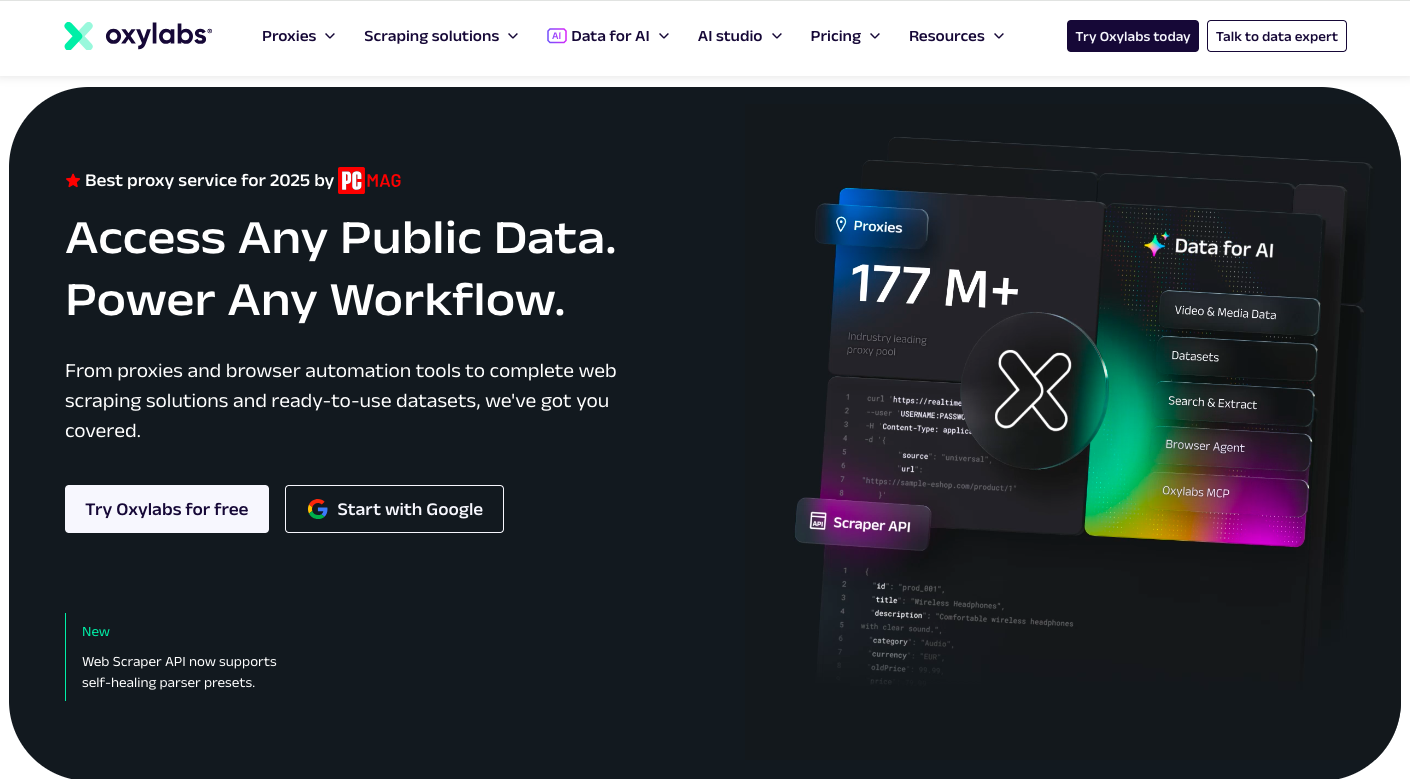
There's no question about Oxylabs' network. Their European residential proxy coverage is good, their compliance posture is enterprise-grade, and their infrastructure has been battle-tested by some of the world's largest data operations.
The honest limitation:
The question is whether you need that level, and whether you're prepared to pay for it.
Oxylabs' per-GB pricing sits at the top of the market, and their account structure is built for enterprise procurement processes, not self-serve teams.
For most mid-market users, you're funding infrastructure capacity you'll never use.
The IP quality over well-managed alternatives like CyberYozh is real but not proportional to the price difference.
Best for: Enterprise data teams with high-volume EU scraping requirements and budget to match.
Cons: Expensive for most real-world team sizes, complex pricing structure, overkill for mid-market use
Pros: Massive residential pool, strong uptime, compliance-ready, extensive SERP, and e-commerce scraping tools
7. Bright Data
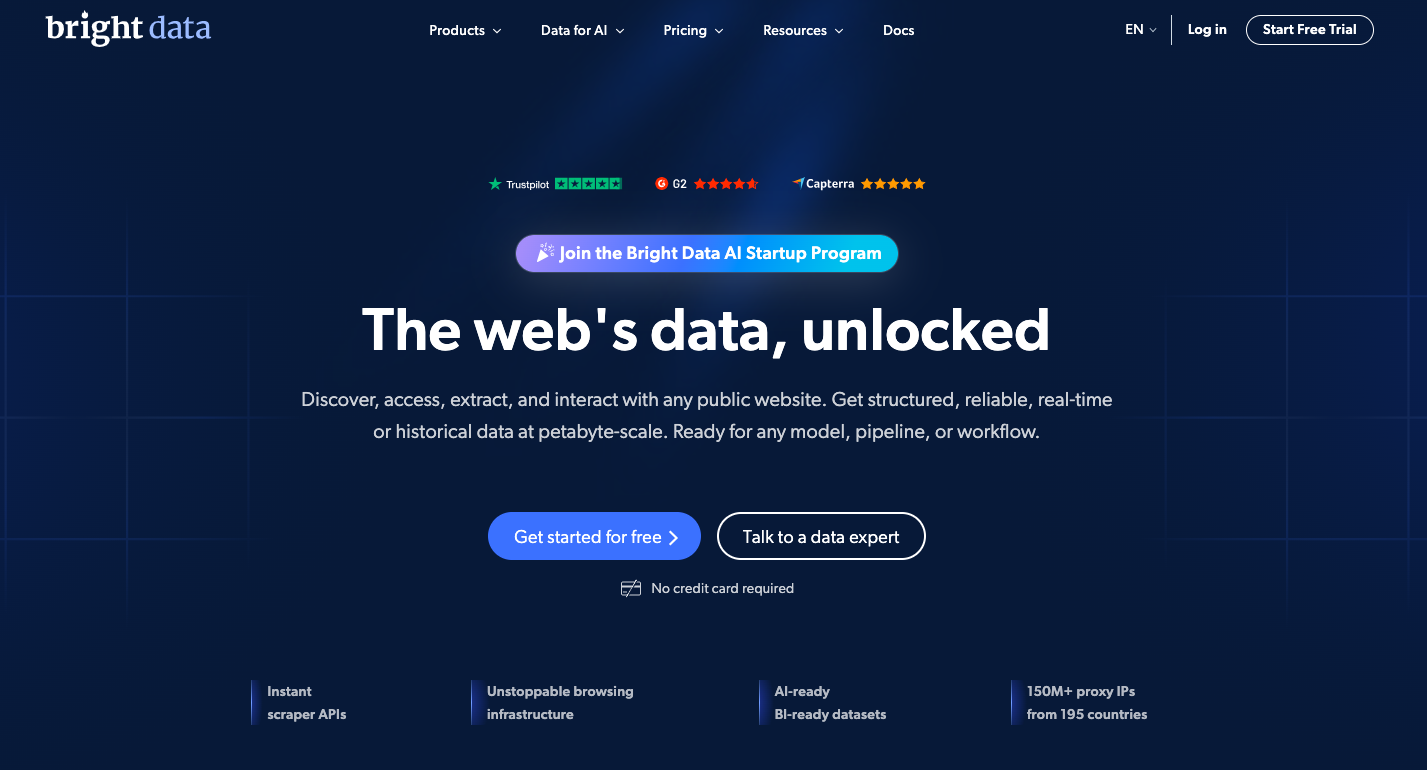
Bright Data's platform is legitimate; its ScrapingBrowsr proxy manager and data marketplace offer a robust proxy ecosystem.
The honest limitation:
New users consistently report a steep learning curve during setup, and the pricing model, which ties certain features to specific products, can lead to billing surprises if you're not tracking usage carefully.
"We didn't realize how much bandwidth that workflow was using" is a common story with Bright Data.
If you have engineers dedicated to the build and a data operation that genuinely requires Bright Data's depth, it's worth the investment.
For everyone else, the capability far exceeds practical need.
Best for: Engineering-led data operations at significant scale.
Cons: Complex setup, unpredictable billing without careful monitoring, high learning overhead
Pros: Industry-leading tooling, massive EU network, advanced anti-detection features
8. IPRoyal
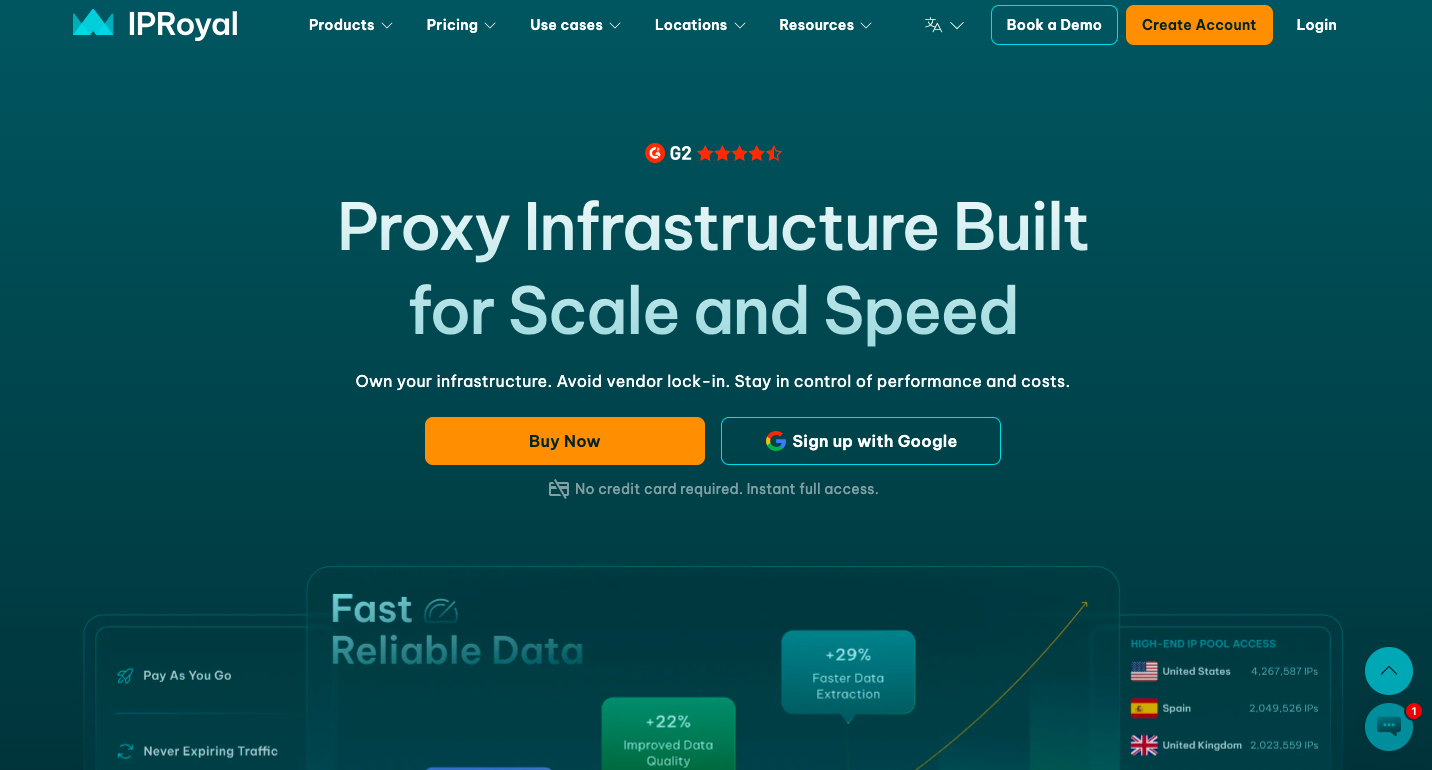
IPRoyal has carved out a clear position: residential proxies that work well for most standard use cases. Their static residential option, dedicated IPs issued by real ISPs, is a good one.
The limitation that matters:
Their rotating residential pool is smaller than that of top-tier providers.
On highly competitive EU targets, that smaller pool means you encounter burned IPs more frequently, particularly during peak hours.
Worth testing seriously if your use case is within the standard range.
Worth being cautious about if your targets actively invest in bot detection.
Best for: Budget-aware teams, static residential EU use cases, moderate-volume scraping.
Cons: Smaller rotating pool, higher block rates on detection-aggressive targets
Pros: Competitive pricing, good static residential value, decent EU coverage
9. SOAX
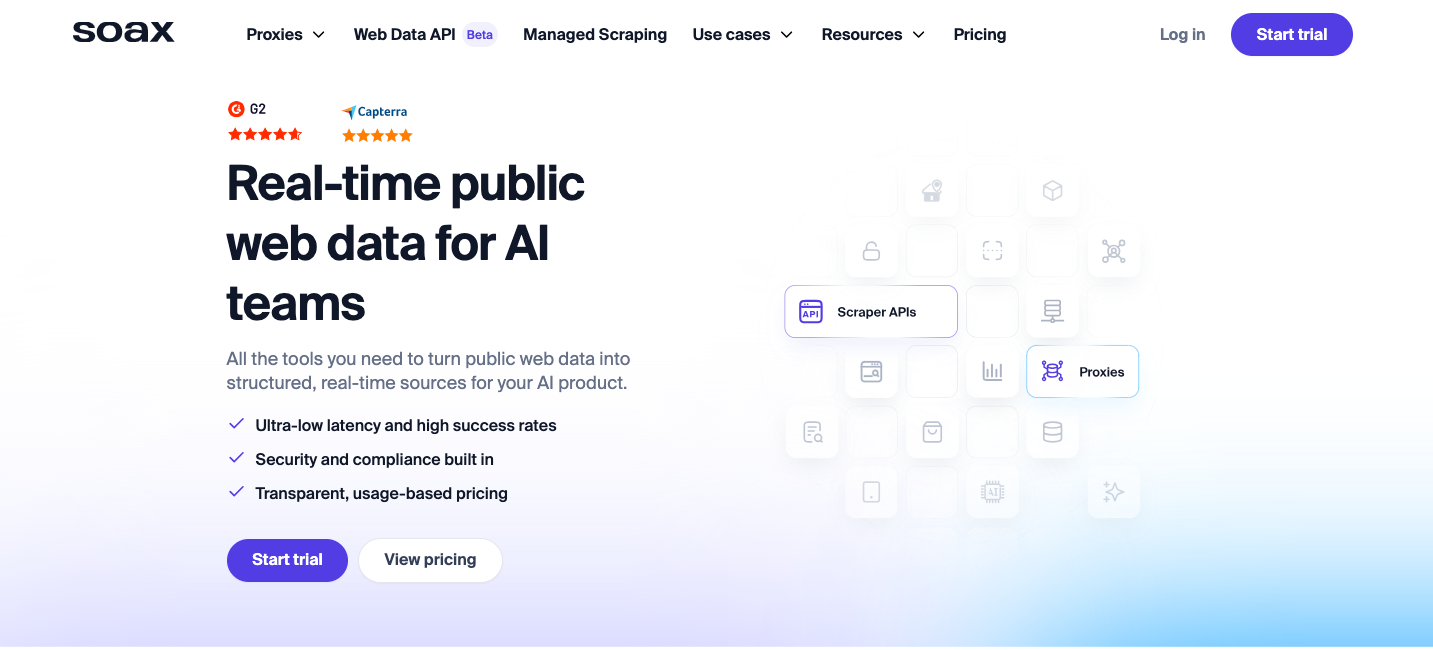
SOAX's city-level and ISP-level filtering is genuinely useful for localized European use cases, such as verifying ad display in Munich vs. Hamburg, or tracking search results at regional granularity within France.
The limitation:
That targeting precision comes from a smaller, more curated pool, which means less redundancy.
If your workflow exhausts their IPs in a specific city, fallback options are more limited than in larger networks.
Best for: Hyper-local EU targeting, localization verification, and regional-level research.
Cons: Smaller pool limits availability under heavy use in specific locations
Pros: Granular geo-filtering, ISP-level targeting, flexible plans.
10. NetNut
NetNut's core offering, ISP proxies, occupies an interesting position between residential and data center environments. The speed is closer to the datacenter; the trust signal is closer to residential. For use cases where both speed and IP trust matter, it's a genuine middle ground.
Limitation:
Their pricing is above average for the bandwidth you get, and support responsiveness has been inconsistently reported in community forums over the past year.
Best for: Speed-sensitive EU automation where IP trust signal still matters.
Cons: Premium pricing for bandwidth, inconsistent support quality
Pros: Fast ISP IPs, good EU coverage, solid trust signals
How to choose the right European proxy
Before you spend anything, answer these four questions:
1. What's your actual target? If it has Cloudflare, reCAPTCHA v3, or a modern WAF in front of it, you need residential. If it's a basic public-facing website, the data center may work fine.
2. Do you need sessions? Managing accounts, completing multi-step workflows, or maintaining a shopping cart requires sticky session support. Not all providers offer reliable sticky sessions, despite claiming to do so.
3. How specific does your geo need to be? Country-level is easy. City-level or ISP-level requires providers with genuine depth in your target region, not just a flag icon on a pricing page. Use IPinfo.io to verify your active proxy's country, city, and ISP
4. What does failure cost you? If burned accounts or blocked scrapers cost you time and money, invest in quality IP infrastructure from the start. The cost difference between a budget and premium provider is usually smaller than the time wasted by unreliable IPs.
5 mistakes that waste your proxy budget
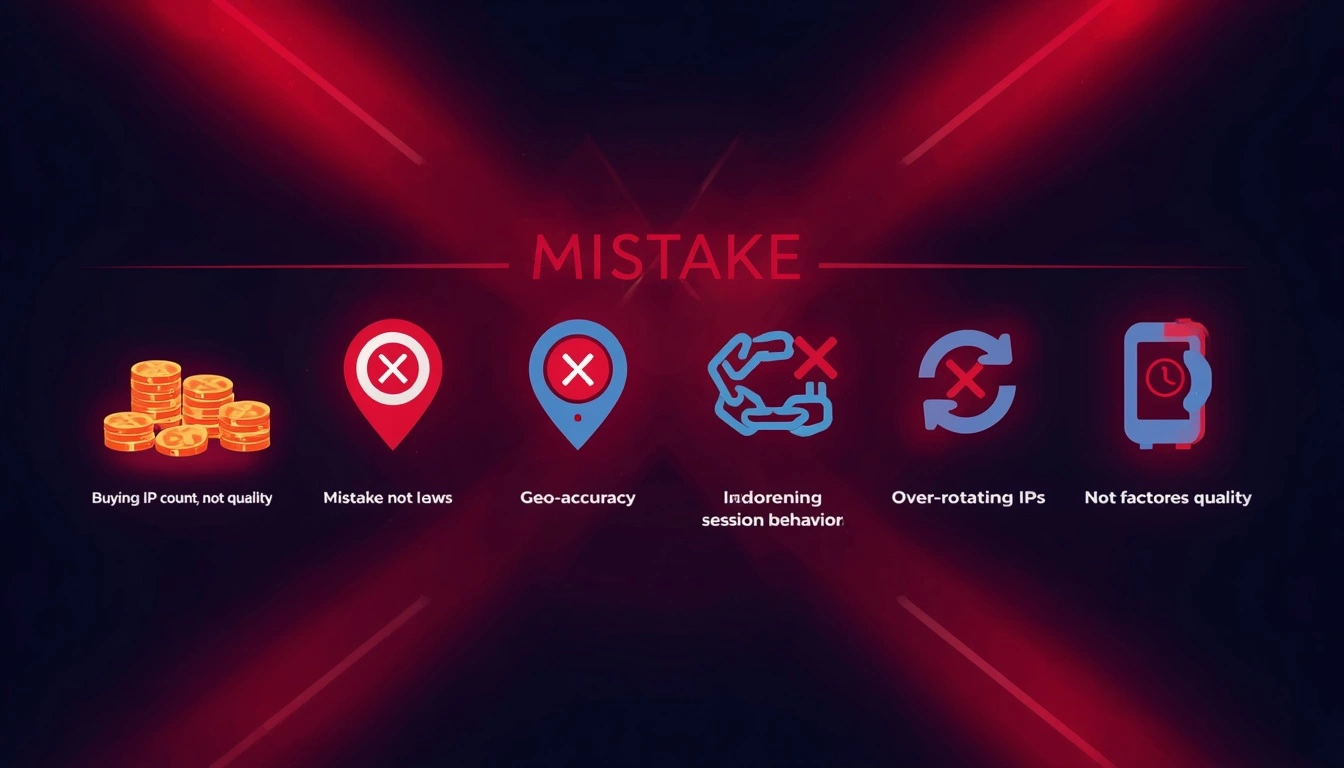
Buying IP count instead of IP quality. A pool of 10 million burned IPs is worthless. A pool of 500,000 clean, managed IPs is gold. Ask providers how often they audit and refresh their pools.
Not verifying geo-accuracy before scaling. Connect to your "German" proxy and verify it through ipinfo.io. A surprising number of proxies labeled as specific European countries route through mismatched ASNs.
Ignoring session behavior on account-based workflows. Test whether sticky sessions actually hold on your target platform, not just on a generic test site. Real-world session stability often differs from marketed specs.
Over-rotating IPs during scraping. Changing your IP on every request looks bot-like to modern detection systems. A real user doesn't change their home IP with every click. Match your rotation behavior to human browsing patterns.
Not factoring in support quality. The first time a workflow breaks at 3 am before a client delivers,n you realize support quality is a practical business consideration, not a nice-to-have.
Real-world use cases for European proxies
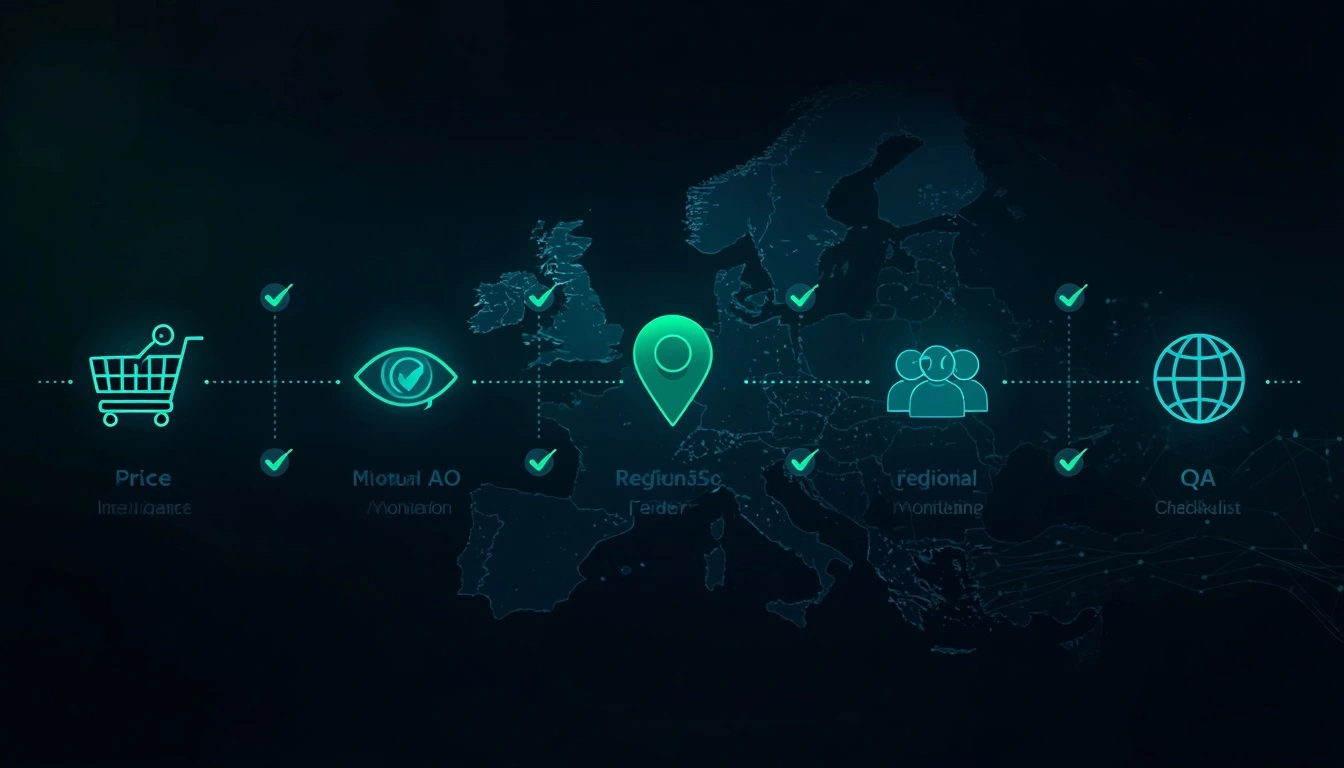
Competitive Price Intelligence: A UK retailer monitoring German, French, and Italian competitors' pricing in real time needs genuinely local IPs, localized pricing, currency formatting, and product availability that vary based on detected visitor location.[Cloudflare's Bot Management Overview to understand how EU platforms detect proxy traffic]
Digital Ad Verification: A brand's agency verifies that its French-language ads are displayed correctly across French publisher networks. Without a French IP, the verification system serves different content.
Regional SEO Monitoring: An SEO team tracking rankings for a client across Germany, the Netherlands, and Poland needs city-specific IPs for each market. Generic "Europe" IPs produce blended, inaccurate results.
Multi-Account Social Media Management: A social media agency managing client accounts across EU markets needs consistent, country-matched IPs for each account to avoid platform trust flags that can lead to restrictions.
Localization QA Before Launch: A SaaS company releasing a German-language version of their product uses German residential IPs to QA how the product renders for real German users, including payment flows, legal pages, and currency formatting.
The bottom line
If there's one thing this guide is designed to help you avoid, it's this: spending money on EU proxy infrastructure that fails the moment you point it at a real target.
CyberYozh earns its position at the top of this list not by being the most expensive or the most marketed, but by delivering the things that actually matter for real EU workloads in 2026:
Clean IPs
Session reliability,
Genuine geo-accuracy,
Pricing that makes sense for teams that aren't Fortune 500 data operations.
Decodo is a smart starting point. Oxylabs is the right call if your operation truly requires enterprise infrastructure. But for the middle of the market, agencies, growing e-commerce teams, SEO professionals, social media operators, CyberYozh is where the value math works out best.
Try it on your actual target before you commit to anything. That's the advice every honest proxy guide should end with.