
How to Build an AI-Assisted Content Workflow
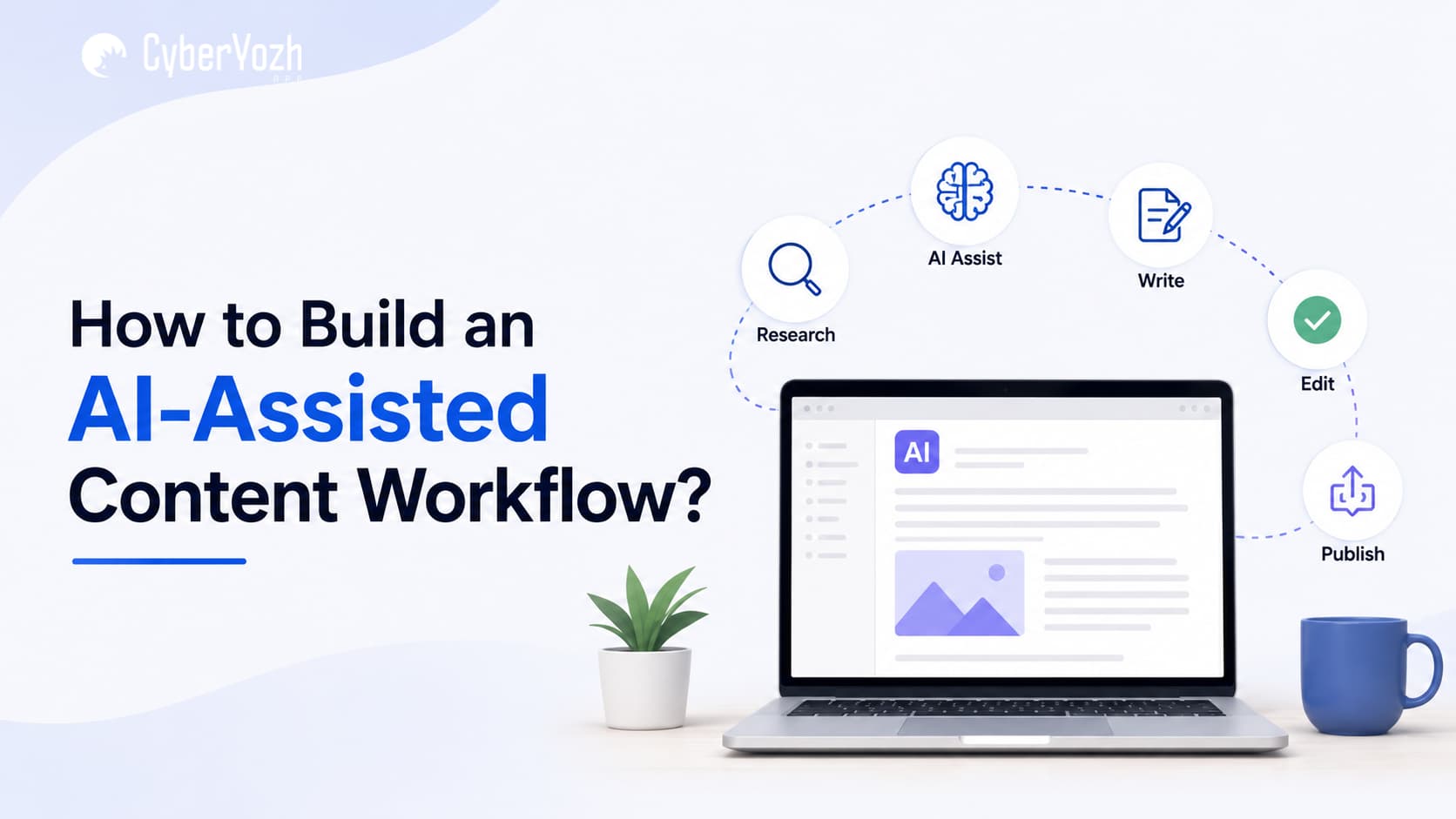
The continuous upgrades in AI models have completely revolutionized content creation. Two years ago, AI writing tools had already become helpful writing assistants. But in 2026, people are developing complete content workflows using AI.
AI has really increased the speed of content creation. No one can now doubt that. However, speed alone does not create great content. AI can help you write faster, but it still needs human guidance. That is why many writers now follow an AI-assisted content workflow.
What is an AI-assisted content workflow
An AI-assisted content workflow is a process where AI helps with repetitive writing tasks. But human efforts are involved too, especially in handling, creativity, accuracy, and quality.
Think of AI as your writing assistant that helps:
Research ideas
Organize information
Write a first draft
By adding your experience and opinion to AI drafts, you can align the content well with your needs and make it sound perfect. This way, you create content that is both efficient and valuable.
Read more about Janitor AI and Janitor AI alternatives in 2026, and more information about Google's guidance on creating helpful, people-first content
How can you build a good AI content workflow
Many people mistakenly think they can create good content pieces by giving one prompt to AI writing tools. Yes, you can create content with one prompt.
But is that content good enough? Generally, No. Even with AI, to create good content, you need a good workflow. Below are the essential steps to build a good AI-assisted content workflow this year.
Step 1: Plan before you prompt

Many people open an AI tool and immediately ask it to write an article. That often leads to generic content.
Instead, spend a few minutes planning first. Start by understanding why someone will search for your topic. A better approach is to search for the topic online. Then collect the main questions readers want answered.
After that, create a short content brief with your:
Target audience
Main keyword
Important points
When AI receives clear instructions, it usually produces a much better draft.
Read more about Claude and ChatGPT
Step 2: Create first draft
Once your plan is ready, let AI create the first version of your content. But don't do this in one go. A better recommended approach is to work section by section.
For example, you can ask AI to create the outline first. Then expand each heading individually.
This approach gives you better control over the final result. It also makes editing much easier because every section stays focused on one idea.
Step 3: Make AI content human

Nowadays, this is the most important step in the entire workflow. AI often writes clear content, but it can also sound repetitive or robotic. Readers notice this quickly, and so do experienced editors.
Start by removing repeated words and awkward phrases. Then improve sentence flow and use simple language that feels natural.
You can also use an AI humanizer that removes AI from your content. However, treat it as an editing tool instead of a shortcut. Humanizing text should improve readability while keeping the original meaning the same.
After that, read the article yourself and make any final adjustments.
Read about AI web scraping in 2026.
Step 4: Optimize content
After editing, optimize the article for both readers and search engines, in fact, the whole internet. To better optimize content for search:
Use your keywords naturally throughout the content
Add related terms where they fit naturally
Use headings that clearly describe each section
Include direct answers to common questions
Do good internal linking
Step 5: Review before publishing
The final review helps you catch mistakes that AI may miss. Check for grammar, punctuation, and spelling mistakes.
Checking AI detection and plagiarism is also a good practice. Also, check every fact and statistic. Remove anything that feels repetitive or unnecessary.
Researching what's already ranking often means checking SERPs across regions or monitoring competitor content directly, which gets rate-limited fast on a single IP. Browse CyberYozh's proxy catalogue if your research process involves pulling live SERP or competitor data at any real volume.
Is AI content workflow good for SEO
It depends on the type of workflow you are thinking about. If the workflow is like the one we just described above, yes, you can go with an AI-assisted workflow without any doubts.
However, if by workflow you mean content automation tools that publish at scale, be aware that your money will be wasted. Instead of wasting money on content automation, it’s better to hire an SEO writing agency. Search engines like Google penalize websites that publish AI content at scale with automation.
If your content workflow includes managing accounts across multiple publishing or distribution platforms, CyberYozh's SMS verification covers account setup without tying every account to one personal number.
Sum up
An AI-assisted content workflow is not about replacing writers. It is about helping them work faster without lowering quality.
Let AI handle research, outlining, and first drafts. Then spend your time improving and optimizing content for search. When AI and human editing work together, you create content that is useful, natural, and ready for the internet.