
Parsing Tools, Proxy Quality Checkers, and Automation Guide
Tools like session managers (account management software) and parsers (public data collection software) are essential daily instruments for analytics and marketing. They allow tasks that would take a human weeks to be completed in minutes: administering multiple profiles, scraping prices from hundreds of competitors, or analyzing search results across dozens of regions. The main issue is that they require sending a large number of requests within a short period, which can trigger request limits and may even result in IP flags and bans. Here, we’ll explain this process and see why high-quality proxies are required to solve this issue.
TL;DR
In digital marketing and web scraping, tools like session managers and parsers are essential for automating tasks and data collection, but they often face IP blocks and rate limits (HTTP 429) due to high request volumes. Using high-quality, rotating proxies solves this by distributing requests and mimicking human behavior.
Key Takeaways:
Parsing from a single IP triggers load balancers, resulting in CAPTCHA challenges and bans.
Proxies act as intermediaries, masking your IP to ensure continuous data collection.
Automated IP rotation prevents server overload and bypasses geolocation restrictions.
Antidetect browsers pair with proxies to manage session fingerprints for multi-accounting.
IP checkers are vital for verifying proxy health and fraud scores before automation.
Technical limits for data parsing tools
Anyone who launches automating processes directly from their local or server IP address inevitably faces the same problem: after a few dozen requests, efficiency drops. The target site either temporarily restricts access, requests verification (e.g., via CAPTCHA), or reduces connection speed. The error HTTP 429 (Too Many Requests) is a typical response, too.
Learn how proxies help with CAPTCHA in a dedicated article.
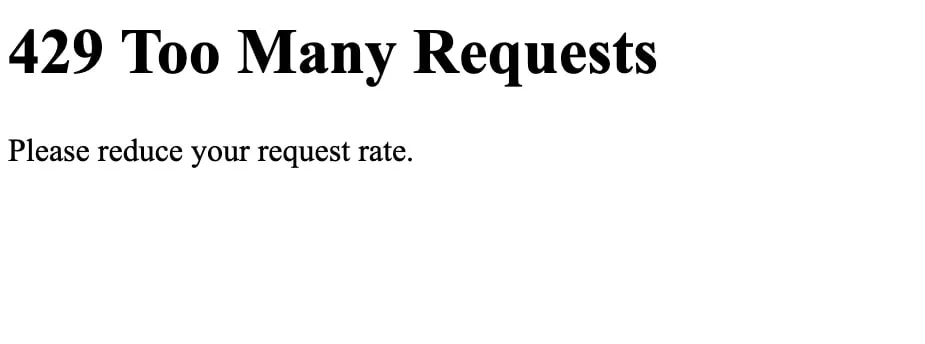
By launching data collection or automated account management from a single IP address, you place an excessive load on the target node. Modern web services and their load-balancing systems (Load Balancers, WAFs) restrict such activity to maintain site stability. If you persist, such systems may block your IP address, either temporarily or permanently, and flag it as untrustworthy, thereby reducing its trust score. Below are examples of typical restrictions.
Rate Limiting: This is standard practice. As soon as the number of requests from a single IP address exceeds a permissible threshold, the system temporarily restricts access (HTTP 429). For analytical software sending hundreds of requests, this means downtime.
Georestrictions: Many websites show different data for different countries. Attempting to collect product prices for the US market while locating in Europe, for example, will likely return irrelevant prices or an "unavailable" message.
Data Accuracy: Some systems may return cached, repeated, or incomplete data if they detect multiple requests from a single source. This is done to save resources, and such data is usually useless for analytics.
Verification Requests: During periods of high activity from a single address, the system may request a CAPTCHA entry to reduce load. For automated reports, this creates unnecessary delays and requires CAPTCHA-solving tool deployment.
Learn more about ethical web scraping to ensure that you respect the website’s Terms of Service and its robots.txt file.
IP rotation as a necessary condition for parsing tools
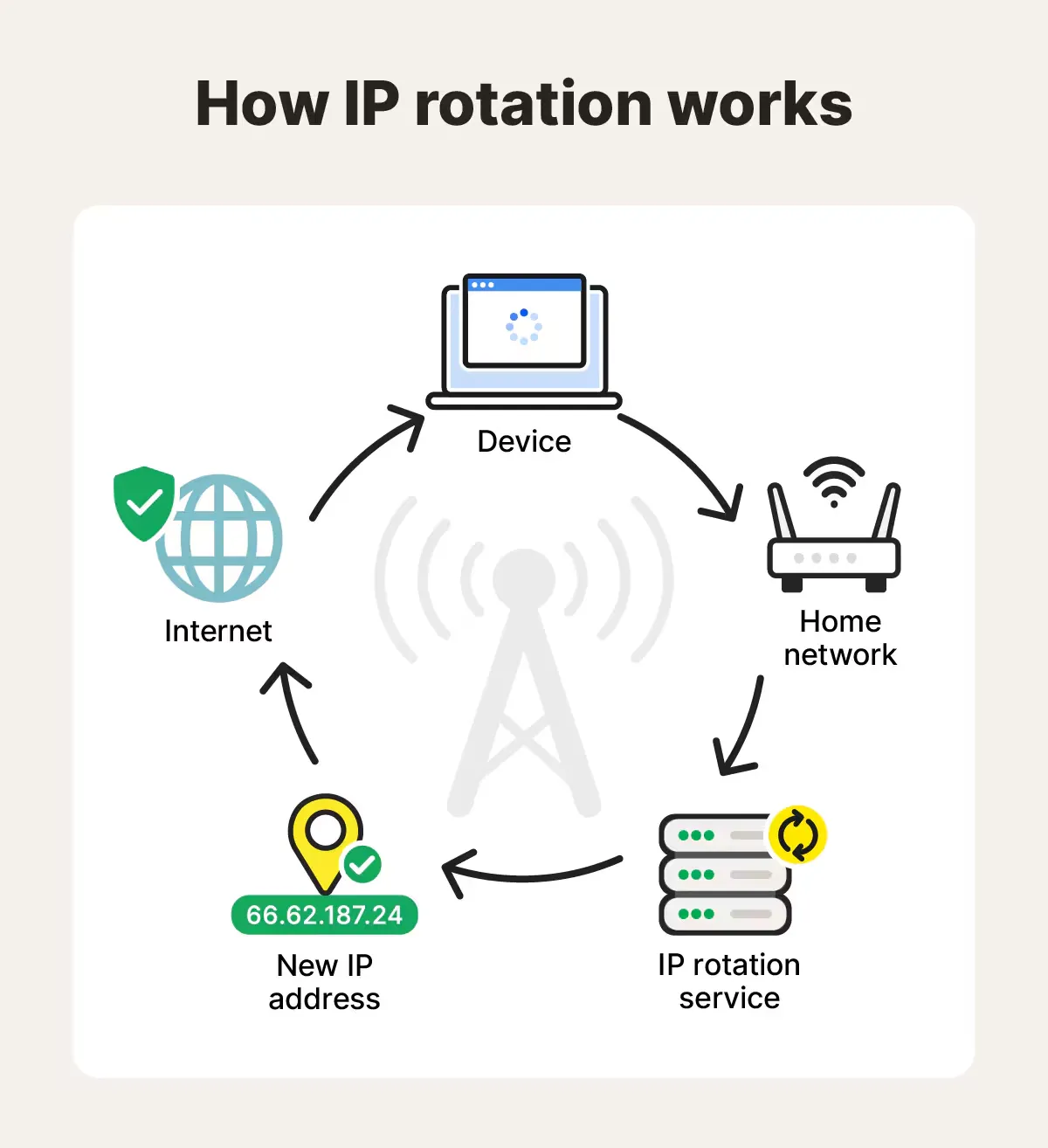
When automating web requests, proxies act as intermediaries between your scraper and the target server, masking your original IP address. IP rotation is the process of automatically changing your IP address at regular intervals, on request, or in response to triggers to mask your online identity and avoid detection. The process is essential to ensure that no single IP is overloaded, no data is restricted, and no CAPTCHA or HTTP 429 errors occur.
Here is how CyberYozh proxy service solves these issues.
Automated rotation via CyberYozh API. It can be integrated with Puppeter, Playwright, Selenium, Scrapy, Postman, and custom Python scripts. Various rotation strategies are supported, including random rotation and programmatic conditions.
IP quality check via IP Checker. Proxy checkers are essential tools that verify IP quality across databases to reduce issues, as websites constantly monitor IP quality and restrict or challenge low-quality IPs.
50M+ residential IPs in 100+ countries. It ensures that each rotation pipeline can be distributed across a large number of IPs in every relevant country. Scrape local data and launch campaigns targeting specific audiences in different countries with local IPs.
By implementing automatic IP rotation, scrapers can switch IP addresses after a set number of requests or under specific programmatic conditions. Connect IP Checker to your workflows to automatically check quality before rotating. Ensure you select the relevant geolocation for your IP address and stay consistent to avoid rapid geolocation shifts, as platforms instantly indicate and flag them. Check CyberYozh’s rotating residential proxies now, then customize them after purchase.
Session management setup for log parsing tools
Changing and rotating the IP is only part of the configuration. Modern platforms analyze technical connection parameters to optimize their work and restrict connections with suspicious behavior. Examples include:
User-Agent (browser type and OS).
Request Headers (HTTP headers).
Parameter Compatibility, which confirms the request originates from a compatible device (i.e., desktop or phone).
Parameter Consistency, which ensures that parameters are accordant to each other (i.e., no New York geolocation with Berlin time).
If multiple requests arrive from different IPs but with technically incorrect headers, access may be restricted. Therefore, professional work involves the competent setup of technical parameters (digital fingerprint) for each session. For this purpose, antidetect browsers are recommended, as they isolate each session with unique fingerprints, resembling each antidetect profile as a unique user.
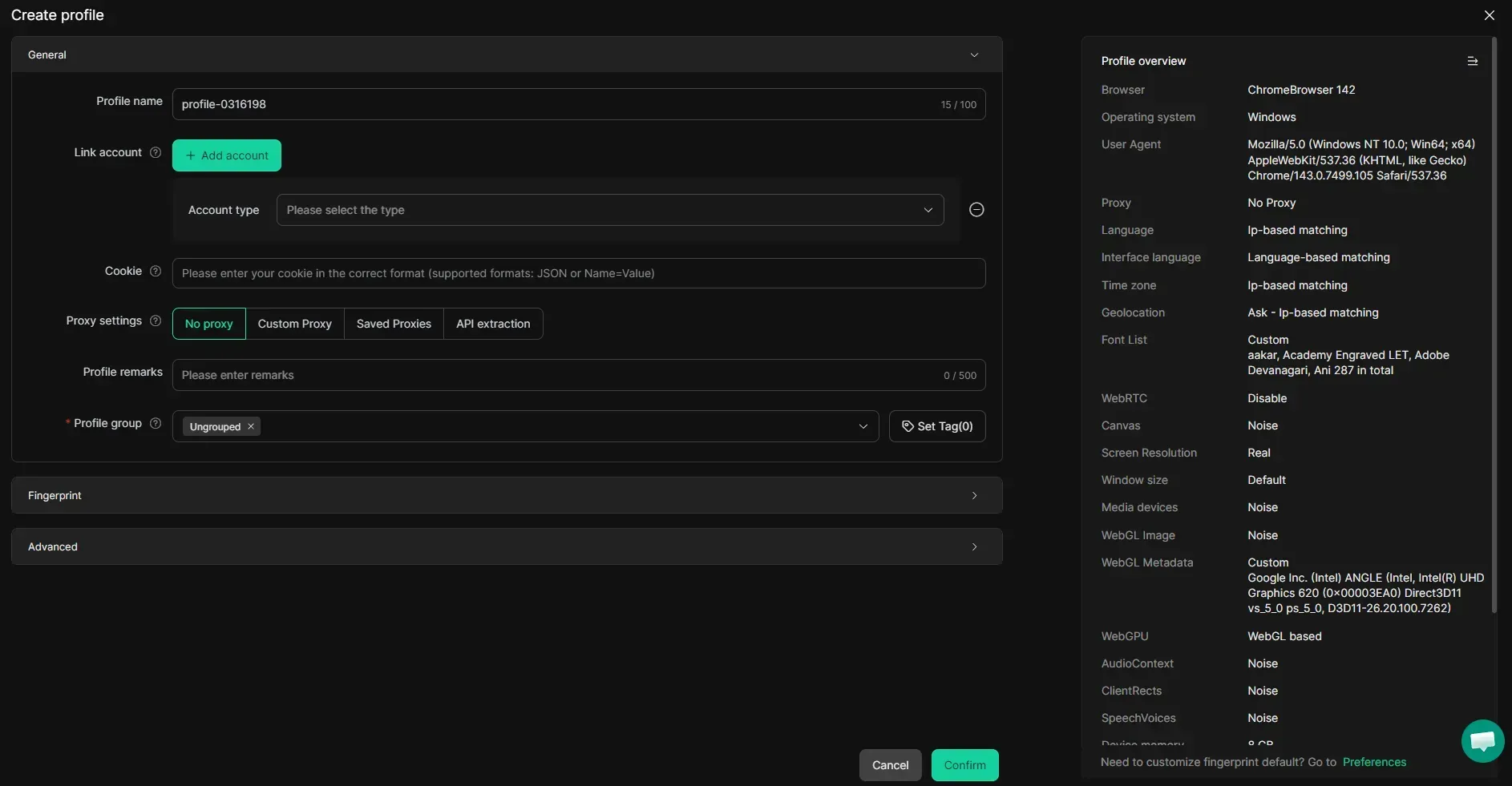
Proxies are still necessary, as they handle the network routing task, ensuring that requests are distributed across the IP pool. Explore the digital fingerprints in detail in CyberYozh's guide to know more.
Choosing the right proxy and checking its quality
So, we need a rotating proxy with unique fingerprint settings to minimize the chances of restrictions. Antidetect browsers are recommended in case of large-scale scraping and multi-accounting, as they emulate specific device and system fingerprint, ensuring complete profile isolation.
Datacenter proxies: Fast and affordable data server IPs. Suitable for simple tasks and working with open data, where speed is crucial. Less suitable for platforms with strict anti-bot firewalls, as they flag and restrict such IPs.
Residential proxies: The "gold standard" for most web activities. IP addresses from home ISPs deliver requests most reliably. Ideal for e-commerce and SEO. The rotation option allows for large-scale data parsing and analytics without restrictions.
Mobile proxies: High connection reliability. Indispensable for SMM and social media work. Traffic from a mobile IP is correctly perceived by mobile-first platforms, such as TikTok, Snapchat, and Instagram. Rotation allows social data scraping and user sentiment analytics.
Choosing the right operating mode and rotation strategy is crucial:
Static IP: A permanent address assigned to you for a long term. This is essential for SMM and account management. Using a persistent IP for each profile ensures a stable connection history and prevents re-authorization requests.
Rotation (IP change on request): IP address is regularly rotated, based on the programmable settings. As mentioned, it’s necessary for parsing and multiaccounting, where the request load must be redistributed across multiple IPs.
Sticky Sessions: A single IP is kept for the session duration and then rotates automatically. It’s used in scenarios requiring an IP to be held for a short time, for example, when completing multiple steps on a website within a single analytical session.
Each IP has a unique trust score, assigned based on its previous activity, and platforms evaluate its quality after each request sent via it. The trust score increases slowly as the IP is used for operations that resemble those of real users, and decreases when it’s used for fraudulent actions such as DDoS attacks or bot-like behavior. Datacenter IPs tend to have lower trust scores, while mobile IPs usually have the highest. Read about the proxy management cycle to learn more about these peculiarities.
Usage cases of data parsing tools
Let's consider tasks that depend on the quality of the automated network infrastructure.
Data scraping
Task: Setting up a CV parsing tool, collecting AI training data, and parsing LinkedIn names
Why a proxy is needed: Services like LinkedIn, GitHub, and other data-rich platforms check all incoming requests to ensure stable functioning. They restrict bulk requests and block low-quality IPs. Use rotating residential proxies for AI parsing tools and other similar tasks.
SEO analytics
Task: Monitoring SEO data, search results, site auditing, and checking link availability.
Why a proxy is needed: Search engines like Google and Yandex have strict limits on the number of queries. Bulk auditing from a single IP address results in verification codes. To obtain accurate data from different regions (e.g., search results for a New York resident), proxies with appropriate geo-targeting are required.
Marketplace analytics
Task: Monitoring pricing, product availability, and trend analysis on platforms like Amazon, AliExpress, Shopify, and Ozon.
Why a proxy is needed: Marketplaces serve data based on the region and user history. To get an objective market picture ("clean data"), residential proxies are required so that each request is processed as a query from a standard user in the desired region.
Profile management
Task: Administering multiple accounts, social media marketing, and working with communities on Reddit.
Why a proxy is needed: Simultaneously working with 10-20 profiles from a single IP address may be perceived by the platform as an error or as spam activity. This can lead to temporary or permanent account freezes. For safe management, mobile or high-quality residential proxies are mandatory, allowing a separate IP to be assigned to each working profile.
Market research
Task: Verifying database relevance, monitoring promos, and exploring market stats.
Why a proxy is needed: Bulk requests to servers can trigger temporary restrictions. Distributing the load through residential and datacenter proxies allows data validation tasks to be performed without interruption.
Typical Configuration Errors
Here, we’ll quickly review typical configuration issues for parsers and proxies. For more information, look at our top 7 fatal mistakes list in proxy management to ensure you won’t need to fix them.
Using the wrong proxy for data parsing
Mistake: Proxy type mismatch for the task. For example, using a datacenter proxy for resume/CV parsing tools will lead to quick restrictions on platforms like LinkedIn.
Result: Low data collection efficiency on strict platforms. Regular account bans and IP restrictions. Reducing IP quality is detrimental to further tasks.
Solution: Use residential proxies for large-scale data scraping on most resources. Use mobile proxies to scrape social data and manage mobile-first platforms.
IP cross-linking and profile restrictions
Mistake: Using one IP for multiple profiles. For example, when managing multiple Facebook or Google accounts for email parsing tools using a single IP address, these accounts are linked and may be quickly banned.
Result: Risk of cross-blocking or restricted access to a group of accounts. In the case of failed ad campaigns or affiliate marketing activities, this will lead to significant losses.
Solution: The "one profile — one IP" principle is crucial for account management. Rotate only when switching accounts.
Geotargeting issues: Wrong data and restrictions
Mistake: Ignoring geotargeting. When you scrape Indian or Russian services from outside these countries, you’ll see limited information, incorrect prices, and your account may be restricted.
Result: Obtaining incorrect prices or content (e.g., in the wrong currency). Some important content may not be visible. Increased chance of challenges or restrictions.
Solution: Always choose proxies for the specific region you are analyzing. Don’t forget to ensure consistency, and don’t change the region abruptly to avoid IP flags.
Conclusion: Proxy as a Quality Tool
In the context of data analytics and SMM, proxies are a tool for ensuring the quality and continuity of business processes. Without a properly configured proxy network infrastructure, even powerful software cannot ensure the collection of complete and reliable data due to platform restrictions. Data parsing tools and account management automation pipelines must work in conjunction with proxy checker tools to ensure the high quality of any IP address. Select the right proxy type and rotation strategy, and your business activities will never be restricted. Sign up to CyberYozh now, and select the proxy you need.