
Web Proxy Deutschland: How to Get a German IP Address in 2026
TL;DR
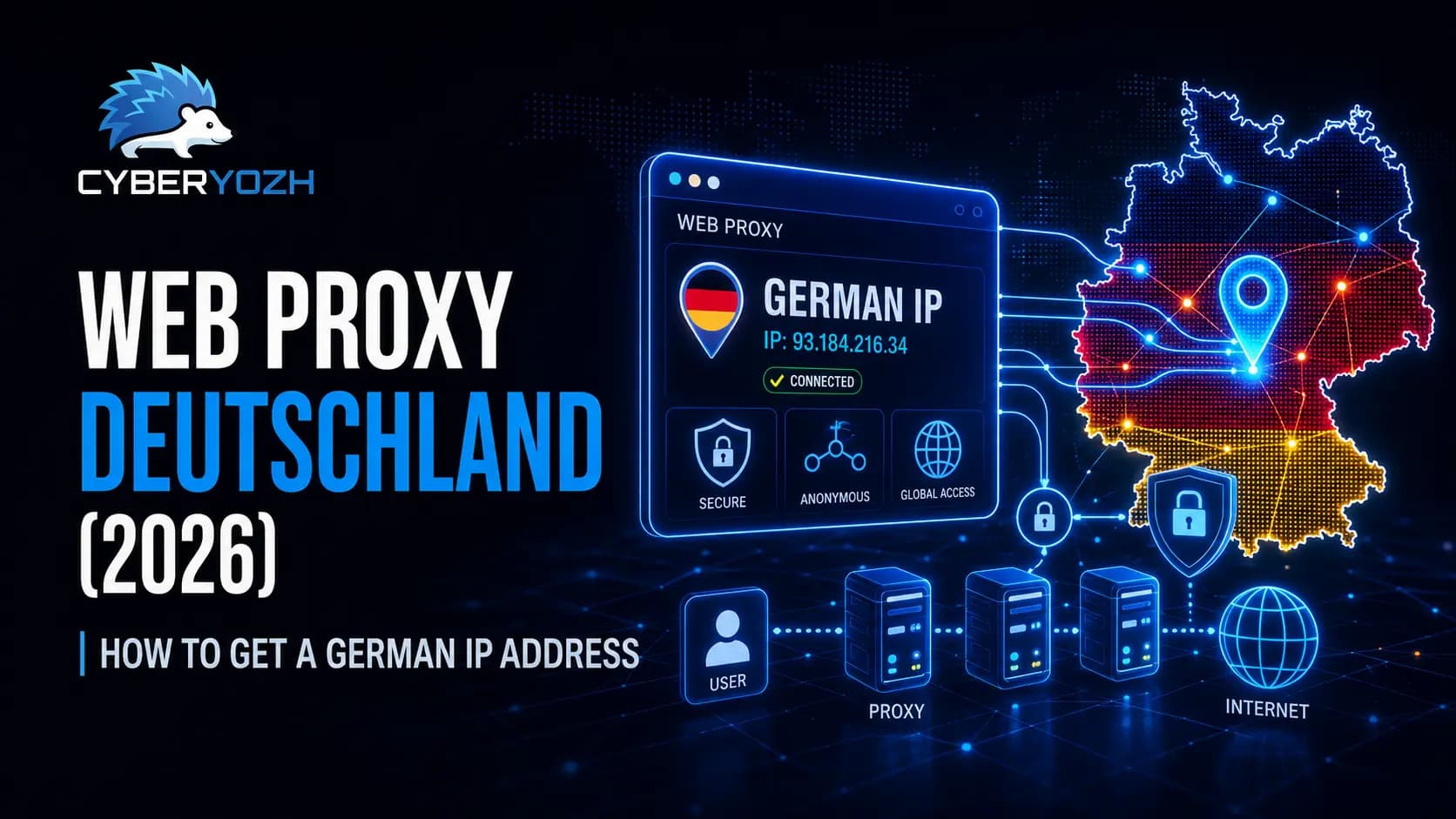
A web proxy Deutschland is a proxy server that routes your connection through a German IP address.
German residential proxies are useful for checking regional prices, product availability, German search results, and public web data.
Datacenter proxies are faster and often more affordable, but some websites recognize them more easily.
ISP proxies are better when you need one German IP for a longer session.
Mobile proxies suit Telegram, social media, mobile apps, advertising, and carrier-specific testing.
A proxy and a VPN can both change the IP address a website sees, but proxies offer more control over individual browsers, applications, crawlers, and sessions.
CyberYozh provides rotating residential, datacenter, ISP, and mobile proxy options with geo-targeting; sticky sessions of up to 24 hours on supported rotating residential plans; HTTP, HTTPS, SOCKS5, and UDP support across compatible products; anti-detect browser integrations; API access for Selenium and Puppeteer workflows; and IP reputation checks.
What is a web proxy Deutschland
Web proxy Deutschland means a web proxy or proxy server that gives you a German IP address.
When you connect through a German proxy, websites see the proxy’s German IP instead of the IP assigned directly to your phone, computer, server, or internet connection.
This can help you:
Open the German version of a website
Check prices shown to German customers
Monitor German search results
Test regional landing pages
Review German advertisements
Check local delivery options
Collect public data from German websites
Test websites and applications from Germany
Compare regional product availability
A proxy acts as an intermediary between your device and the destination website.
Your request goes to the proxy first. The proxy sends it to the website, receives the response, and returns it to you. For someone new to proxy infrastructure, understanding how a proxy server works makes it easier to choose the right connection.
The term “web proxy” can describe two different tools:
A browser-based proxy website where you paste a URL
A configurable proxy server that works with a browser, application, script, crawler, or automation tool
Both may give you a German IP address, but they are built for different jobs. A browser-based web proxy is usually enough for a quick page check. A configurable proxy is better for:
Ecommerce monitoring
SEO research
Account sessions
API requests
Regional testing
Quick tip: Start with a free browser proxy only when the task is simple and low risk. For repeated work, managed proxy infrastructure gives you better control over location, sessions, credentials, and performance.
How a German web proxy works
A German web proxy changes the route your request takes before it reaches a website.
The connection works like this:
You connect to the proxy server.
The proxy sends your request to the website.
The website sees the proxy’s German IP address.
The response returns through the proxy.
Because the website sees a German IP, it may show the version intended for German visitors.
That may include:
Prices in euros
German product availability
German delivery information
Local search results
German advertisements
Country-specific promotions
German-language pages
However, your IP address is not the only location signal a website may use. Websites can also check:
Browser language
Time zone
Cookies
Account country
Device information
GPS permissions
Payment method
Previous login history
A German proxy can help you view location-specific content, but it does not guarantee that every website will treat you exactly like a local user.
Understanding how geo-targeting works can help you decide whether you need country-level, city-level, ISP-level, or carrier-level targeting.
Why people use a web proxy Deutschland
People use German proxies for different reasons. Some simply want to open a German website from another country. Others need German IPs for ecommerce, SEO, social media, testing, research, automation, or data collection. Common uses include:
Opening German websites
Checking regional ecommerce prices
Monitoring German search results
Testing German landing pages
Reviewing regional advertisements
Checking product availability
Testing currencies and languages
Using Telegram through a German IP
Running approved social media workflows
Collecting public German data
Testing websites and applications
Monitoring competitors
The right proxy depends on the task. A free online proxy may be enough for one quick public-page check. It is rarely the best option for:
A logged-in account
A crawler
A checkout test
A social media profile
A business workflow
A task that must stay active for several hours
Ecommerce teams that need to monitor products, prices, or marketplaces can also use dedicated ecommerce proxy infrastructure. For larger data projects, CyberYozh explains how proxies fit into a complete web scraping workflow.
Best web proxy Deutschland by use case
There is no single German proxy that is best for every user or task. The easiest way to choose is by use case.
Use case | Best starting option |
Quick public-page check | Free browser proxy |
Ecommerce price research | Residential proxy |
German search monitoring | Residential proxy |
Fast regional testing | Datacenter proxy |
Long logged-in session | ISP proxy |
Telegram or mobile app testing | Mobile proxy |
Large scraping project | Rotating residential proxy |
Testing a website you own | Datacenter proxy |
German residential proxies
Residential proxies use IP addresses associated with internet service provider networks. A German residential proxy makes the request appear to come from a residential internet connection in Germany. This makes it useful for:
Ecommerce price monitoring
Product availability checks
Local search research
Regional website testing
Competitor monitoring
Advertising verification
Public web data collection
Travel research
Residential proxies can be rotating or sticky. A rotating residential proxy changes the IP after a request, session, or set period. A sticky residential proxy keeps the same IP for a defined amount of time; CyberYozh supports sticky sessions of up to 24 hours on supported rotating residential proxy plans.
Use rotation when
Requests are independent
You are checking many product pages
You are monitoring search results
You need a wider pool of IPs
You are collecting regional data at scale
Use a sticky session when
You need cookies
You are logged in
You are moving through several pages
You are testing a checkout process
The website expects session consistency
If you are unsure which setup fits your project, the guide to rotating IP addresses explains when to rotate and when to keep one IP. The value of a residential proxy is not simply that it has a German IP. The real value comes from combining:
German location targeting
Residential network identity
Rotation
Sticky sessions
API access
Reliable availability
The broader guide to the best residential proxies also explains how residential networks compare across providers and use cases.
Need German ecommerce prices or regional search data? Start with CyberYozh rotating residential proxies.
German datacenter proxies
Datacenter proxies come from cloud servers, hosting providers, and datacenters.
They are generally:
Fast
Affordable
Stable
Easy to scale
A German datacenter proxy may work well for:
Testing your own website
Checking German pages
Sending API requests
Software testing
Development
Public pages with light restrictions
High-volume tasks
The main disadvantage is that websites may recognize datacenter IP ranges more easily than residential IP ranges. That does not make datacenter proxies bad. It simply means they are better for websites that accept server-based traffic. Choosing between datacenter and residential proxies usually comes down to:
Cost
Speed
Location accuracy
Session needs
Target strictness
CyberYozh provides dedicated German datacenter proxies with static German IPs for approved workflows. Use German datacenter proxies when:
You need fast connections
Cost matters
The website accepts datacenter traffic
You are testing a service you control
You need one consistent German location
Looking for speed and lower costs? Compare CyberYozh datacenter proxies.
How to choose a German proxy
The best German proxy should match the exact task you are trying to complete.
Decide between free and paid
Choose a free proxy for:
Simple public browsing
One-off tests
Low-risk pages
Choose a paid proxy for:
Accounts
Business workflows
Automation
Scraping
Ecommerce
Long sessions
Important information
Repeated access
Choose static or rotating
Use a rotating IP for:
Product pages
Public listings
Search results
Price monitoring
Large scraping jobs
Use a static or sticky IP for:
Logins
Telegram sessions
Checkout tests
Browser profiles
Multi-step workflows
Knowing how to rotate an IP address is useful when one connection begins receiving rate limits.
Rotation should still be applied carefully because changing IPs during a login or checkout can break the session.
Choose the proxy type
Choose residential proxies for:
Ecommerce
Regional research
Local SEO
Public data collection
Choose mobile proxies for:
Telegram
Social media
Mobile applications
Carrier testing
Choose ISP proxies for:
Stable sessions
Logins
Long-term access
Choose datacenter proxies for:
Speed
Lower costs
Development
Testing
Accessible websites
Choose the protocol
Most websites work with HTTP or HTTPS proxies. SOCKS5 can be useful when you need wider application compatibility or non-HTTP traffic. The detailed comparison of SOCKS5 and HTTPS proxies can help you choose the right protocol.
Confirm that the IP is really German
Do not rely only on a German flag or product name. Check:
Actual German availability
IP type
Location accuracy
Speed
Session duration
Rotation options
Network provider
Uptime
Refund terms
A provider may advertise global coverage while having limited German stock when you need it. CyberYozh users can also check IP reputation before assigning a connection to an important workflow.
Check tool compatibility
A German proxy should work with the tools you already use. These may include:
Chrome
Firefox
Telegram
Python Requests
Scrapy
Playwright
Puppeteer
Selenium
Postman
cURL
For browser setup, the published guide to using a proxy server in Chrome explains the basic configuration process. If you are building a crawler, a Scrapy proxy can route requests through German IPs. For browser automation, you can use a Playwright proxy, Puppeteer proxy, or Selenium proxy.
Why CyberYozh works for German proxy workflows
CyberYozh gives users access to several proxy types instead of forcing every task through one network. Depending on the workflow, you can use:
German datacenter proxies
Rotating residential proxies
Static residential or ISP-style proxies
Mobile LTE and 5G proxies
Sticky session (up to 24 hours for rotating and residential proxies)
Rotating proxies
Geo-targeting
Multiple credentials
This matters because a German proxy for Telegram may not be the best option for ecommerce scraping. A fast datacenter proxy may work well for software testing but may not suit a location-sensitive marketplace. CyberYozh lets you choose the network based on the job.
For example:
Ecommerce teams can use rotating residential proxies for German product and price monitoring.
Developers can use datacenter proxies for fast regional testing.
Agencies can use German IPs for SEO and advertising checks.
Social media teams can use mobile proxies for carrier-based workflows.
QA teams can use stable residential connections for longer sessions.
Data teams can connect proxies to crawlers and browser-automation tools.
CyberYozh also supports:
A large residential network
Coverage across many countries
Sticky sessions of up to 24 hours on supported rotating residential proxies
HTTP, HTTPS, SOCKS5, and UDP support across compatible products
API access for Selenium and Puppeteer workflows
Anti-detect browser integrations
Mass credentials
IP reputation checks
Popular scraping and browser tools
Open-source scraping workflows
The goal is not simply to change your IP. It is to choose a German connection that gives you the right balance of:
Location
Speed
Stability
Session control
Cost
Best for ecommerce teams: Use rotating residential proxies when you need regional product data, prices, stock information, or local search results.
Best for developers: Use datacenter proxies when you need fast, stable German routing for tests and accessible websites.
Best for account sessions: Use a stable residential connection when login consistency matters.
Best for mobile workflows: Use mobile proxies when carrier identity or LTE and 5G traffic is important.
Need a German proxy for business use? Compare available networks in the CyberYozh proxy catalog.
Not sure whether an IP is suitable? Check it first with the CyberYozh IP reputation tool.
Final thoughts
A web proxy Deutschland gives you a German IP address, but the best option depends on what you plan to do. Use a free web proxy for quick, low-risk public browsing. Use a German datacenter proxy when you need speed, stability, and lower costs.
Use a residential proxy when you need local ecommerce data, German search results, regional content, or public web research. Use a stable residential proxy when you need the same German IP for a longer session. Use a mobile proxy when the task involves Telegram, social media, mobile applications, advertising, or carrier traffic.
Do not choose a proxy simply because it says “Germany.” Check:
IP type
Location accuracy
Speed
Session length
Rotation controls
Protocol support
Privacy policy
Tool compatibility
Total cost
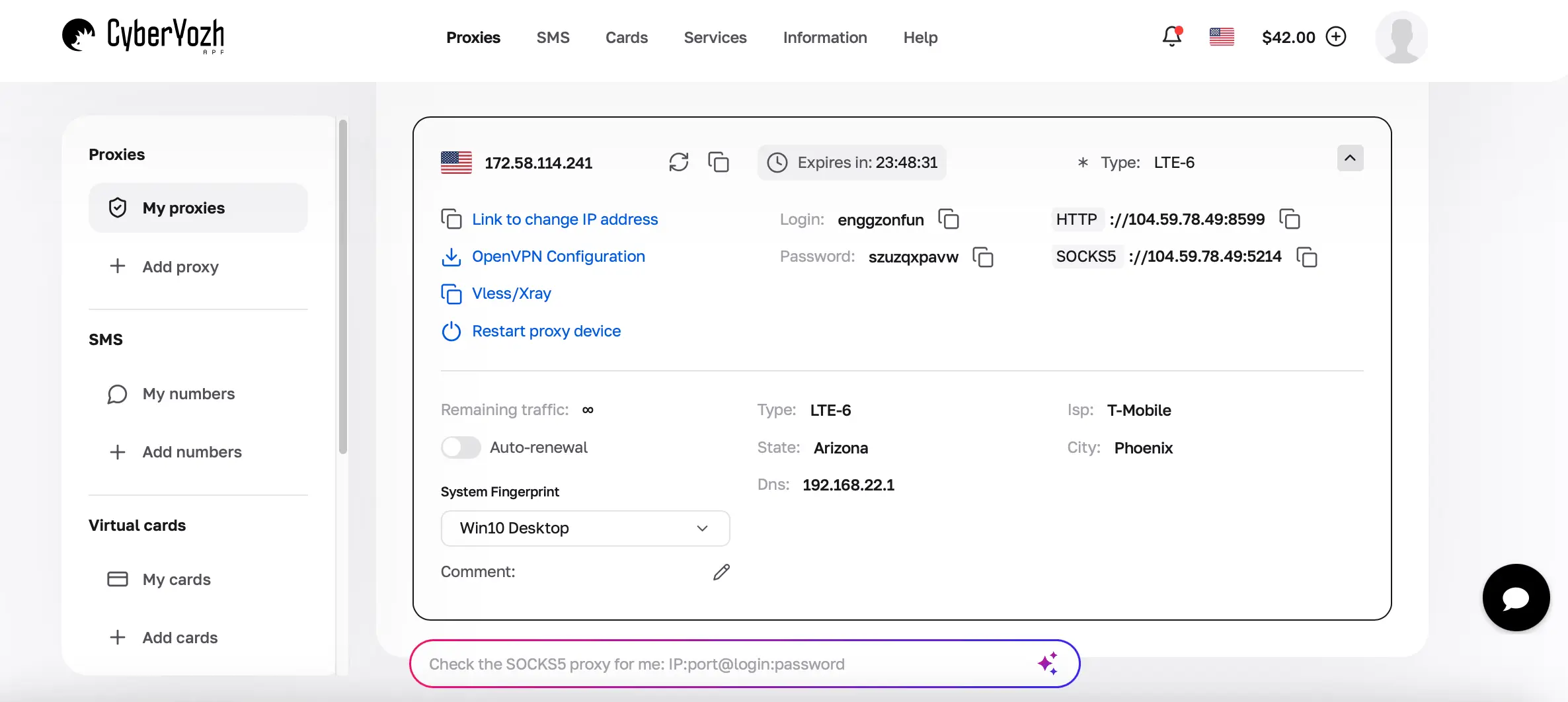
CyberYozh brings German proxy options together across residential, datacenter, static residential, and mobile networks, making it easier to choose the right connection for ecommerce, SEO, Telegram, scraping, testing, and automation.
Compare German proxy options in the CyberYozh proxy catalog.