
How to Build an E-commerce Scraper That Survives Production
You write a script. It runs flawlessly on your local machine. You pull product names, prices, and stock levels without a single error. Then you push that exact code to a production server.
Target platforms drop your connection instantly.
Your terminal fills with HTTP 403 errors and endless timeout warnings. This breaks your entire workflow. The problem has nothing to do with your Python or Node.js parsing logic. Stores watch every single hit. They track exactly how you connect. If your request comes from a known server farm, their firewall sees the datacenter ASN. They drop it. Real humans do not browse from AWS. Your scraper gets blocked because it lacks a messy, authentic network footprint.
TL;DR: How to build a resilient e-commerce scraper
Retail algorithms reject sterile network signatures. Security filters look for three specific red flags before they drop your socket:
Traffic originating from known cloud hosting providers rather than home internet connections.
Network requests missing standard browser headers and language coordinates.
High volume data pulls coming from a single static IP address.
This halts your entire operation before you extract a single row of data.
Because of this, you need an e-commerce scraper that actually survives outside a local testing environment. You must protect your network footprint at the infrastructure level. Your infrastructure must look exactly like a real person clicking links at home. It routes requests through real residential internet service providers. It handles JavaScript rendering just like a standard Chrome browser.
This guide breaks down the exact network mechanics required to build a stable, scalable data extraction pipeline.
👉 Deploy high-trust infrastructure: Stop fighting 403 errors. Build your e-commerce scraper on a massive global residential IP pool today and mimic natural human browsing behavior perfectly.
The core technologies behind e-commerce data scraping
Basic HTML parsing no longer works. A decade ago, you could send a simple Python requests call to a product URL and parse the exact price from the static HTML response. That era is over. Over 80% of top-tier retail platforms now run on complex JavaScript frameworks like React, Vue, or Next.js. They utilize Single-Page Application (SPA) architectures. You load the page. The initial HTML is basically empty. The actual prices and stock numbers show up a second later via hidden XHR requests. Grabbing that data requires the right engine.
You generally have four ways to build this:
1. Static parsers (BeautifulSoup, Cheerio, Scrapy)
The Features: They run fast and use almost zero RAM. You grab the raw source code and slice it up with XPath.
The Limitation: No JavaScript. If the site loads prices through an API, your script pulls blank text.
2. Headless browsers (Selenium, Puppeteer, Playwright)
The Features: You run real Chrome or Firefox invisibly. They render the whole page, run the JavaScript, click the cookie banners, and let you steal JSON right from the network tab.
The Limitation: They eat RAM. Trying to run a thousand headless Chrome tabs at once will melt a standard server.
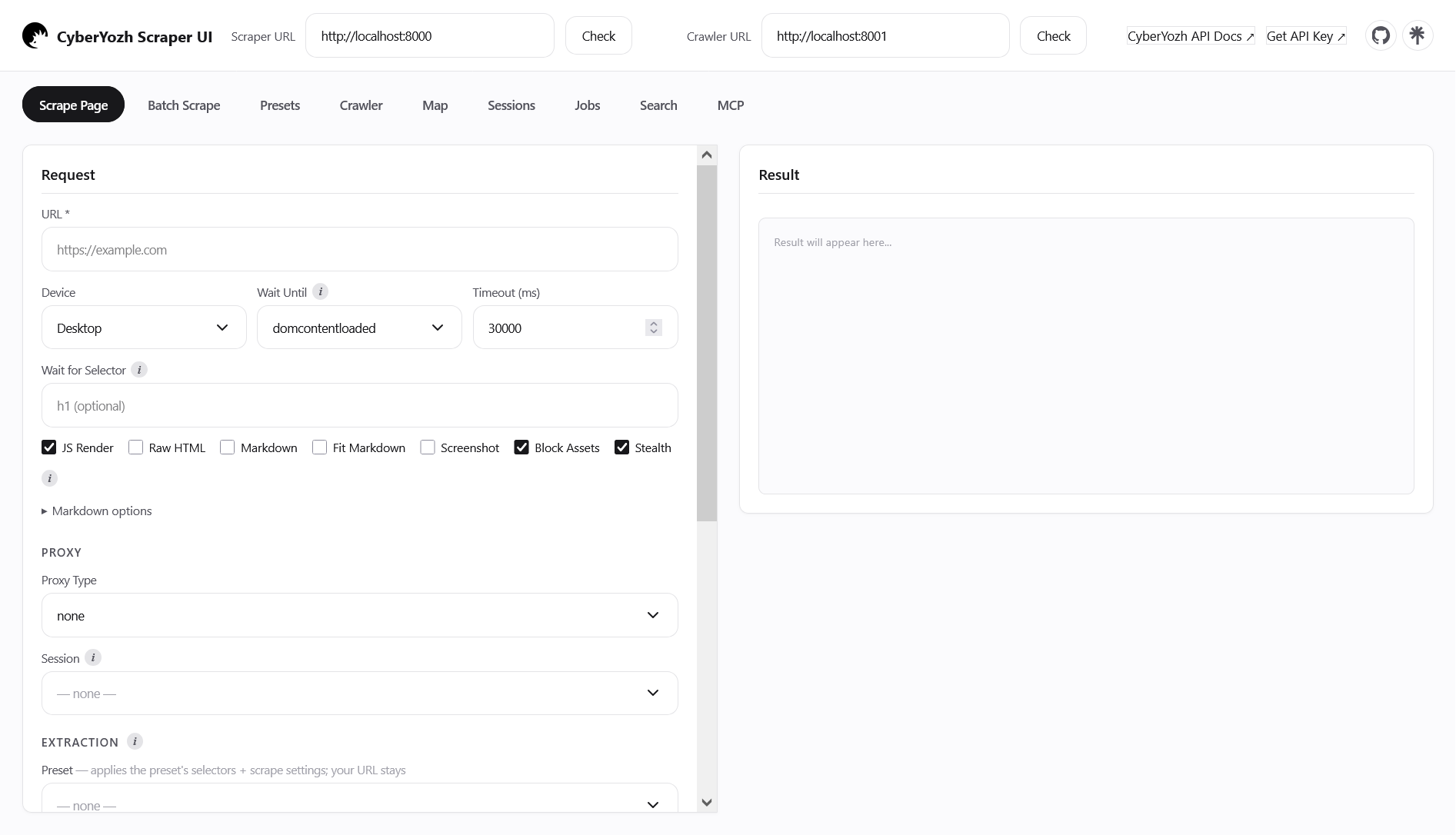
3. AI-driven visual scrapers (Yozh Scraper)
The Features: They put an AI brain on top of a headless browser. They handle your login cookies automatically. And if Target or Amazon changes their button classes mid-crawl, the LLM reads the raw page and fixes your CSS selectors on the fly.
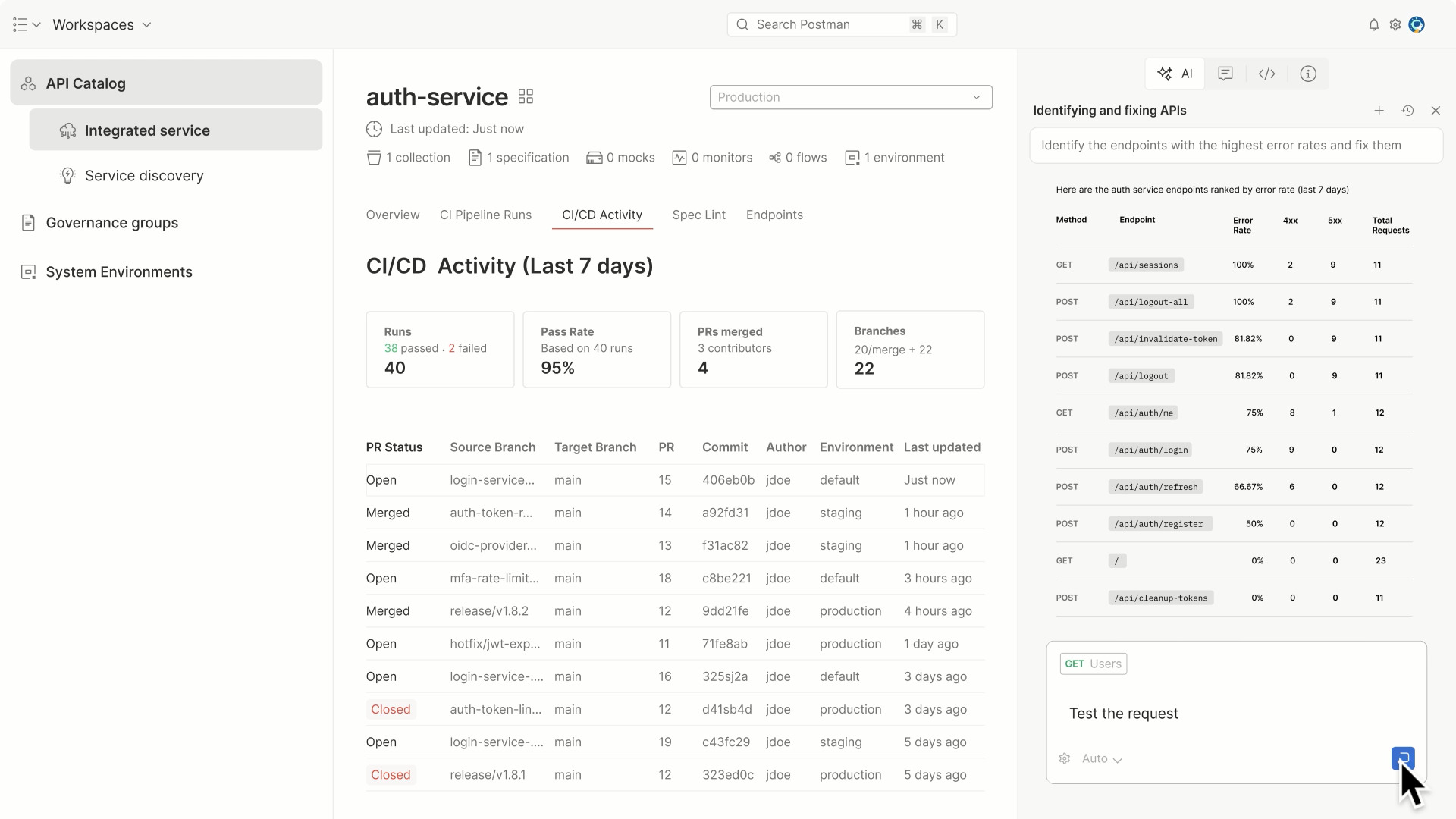
4. API clients (Postman, Insomnia)
The Features: You use these to hunt down hidden mobile APIs. You skip the webpage entirely. You just sniff the network traffic, find the endpoint giving out the prices, and test the authorization tokens directly.
The Limitation: You do this manually. It helps you reverse-engineer the site before you write the actual Python code.
If you scrape modern retail sites, your pipeline must execute headless browsers safely. But simply launching Playwright or Puppeteer fails in production environments. Out-of-the-box headless browsers broadcast massive red flags, including the standard navigator.webdriver = true property. Retail security systems read that hardware flag instantly. They terminate the connection before the target server even attempts to render the page.
To pull accurate product details without triggering security alarms, your headless architecture must manage several moving parts natively. Don't just rip the DOM instantly. Wait for the checkout button to physically render first. Build smart waits into your code instead of hardcoded five-second pauses. Retail platforms load at wildly different speeds. You need tight control over your browser threads to catch memory leaks and swap out dead nodes before the script crashes.
👉 Automate your data extraction: Download the free Yozh Scraper today. Execute headless browsers natively and extract dynamic JavaScript catalogs without writing complex rendering logic.
Overcoming retail network filters
A flawless parsing engine means nothing if you cannot actually reach the target server. Retail firewalls judge your digital footprint before they ever let your browser load the first pixel.
Why standard server hosting fails
IP reputation dictates your success rate. Standard server hosting guarantees immediate script failure. Cloud providers like AWS, DigitalOcean, and Hetzner assign predictable, commercial Autonomous System Numbers (ASNs) to their infrastructure. Big e-commerce platforms track these server ranges meticulously. They blackhole entire data center subnets instantly. If your script connects from a server farm, the target firewall drops the socket before you even send an HTTP request header.
Switching to residential IP networks
You must protect your network footprint. Route your webdrivers through a massive global residential IP pool. This architectural shift moves your automated scrapers away from static data center nodes. It distributes your requests across real, home internet connections instead. This deployment strategy forces target servers to treat your automated requests exactly like real human visitors. The destination platform sees legitimate consumer Internet Service Providers (ISPs) like Comcast, Verizon, or AT&T, which completely alters how the firewall evaluates your incoming traffic.
Overcoming security with high-trust IPs
This setup keeps your proxy success rates exceptionally high. You avoid IP blocking and account bans naturally because your data extraction pipelines blend into daily residential web traffic. Modern anti-abuse firewalls analyze incoming traffic patterns deeply. They check network data signatures much like modern search architectures evaluate grounded web pages for retrieval-augmented generation (RAG) systems. They look for authentic origin points. When your connection looks perfectly clean, the target platform lowers its defensive posture. You avoid CAPTCHAs entirely. Good network routing stops the security triggers before they ever fire. Modern scrapers do heavy lifting. They click menus, read visual layouts, and pull hidden variations. Running those actions requires clean traffic. You need ethically sourced, consent-based IPs so the target site trusts your connection from the first byte.
Keep your data flowing by setting three strict network rules:
Rotate your IP on every single request to spread the load across thousands of normal households.
Sync your browser's physical timezone directly to your proxy's exact coordinates.
Filter out dead or abused IPs automatically before your script ever tries to use them.
👉 Protect your network footprint: Route your webdrivers through our ethically sourced proxy networks. Start with aggressively low $0.90/GB pricing and maintain exceptionally high proxy success rates.
Location alignment and market targeting
Retailers do not serve a single, uniform global catalog. They fragment their inventory and pricing models based on physical geography. Major storefronts route traffic dynamically based on the nearest fulfillment center. You see completely different items, shipping times, and promotions in New York than you do in London.
If you scrape a US-based retailer using a European server, the platform delivers international pricing, EU tax structures, and overseas stock levels. This regional fragmentation destroys your data accuracy. Your database fills with irrelevant metrics.
You must align your network location to access local content accurately. Deploy granular city and ZIP-code targeting directly within your proxy constructor. When your network exit node physically resides in the target region, the retail server responds with the exact local dataset. You see exactly what the local consumer sees.
Utilizing hyper-precise geo-targeting down to ZIP code provides distinct advantages for your data pipeline:
Map localized stockouts to prevent skewed national inventory analysis.
Pull exact local shipping costs.
Watch regional competitor sales without leaking a weird timezone mismatch. Grabbing these local price tags takes very specific session routing. We wrote an entire workflow for this.
Tracking dynamic retail tags across different regions requires specialized request rotation and session control. We built a dedicated workflow for this exact task.
👉 Read our complete guide on price scraping to structure those precise network rules.
👉 Align your network location: Extract accurate regional data instantly. Utilize our granular city and ZIP-code targeting to map local inventory exactly as the consumer sees it.
Managing hardware fingerprints during data extraction
Changing your IP address only solves half the equation. Modern retail security filters interrogate your underlying browser hardware directly. They execute aggressive JavaScript challenges to inspect your Canvas rendering, WebGL hashes, and available system fonts. If your IP address registers in London but your system timezone broadcasts Tokyo, the algorithm catches the mismatch instantly. It drops the socket.
You must strip default automation markers from your code. Standard headless Chrome broadcasts a clear navigator.webdriver = true signal. Security algorithms read this before the page even renders. You have to overwrite this variable to maintain access. But manual code-level adjustments hit strict technical ceilings. Toggling a few Chrome settings will not change your graphics card hash. You need automatic fingerprint masking. This fakes real OS and device signals deep in the browser. It makes your traffic look human. To pull this off, follow strict hardware rules:
Force your WebRTC and timezone to match your proxy IP perfectly.
Align your user-agent string with the exact operating system you emulate.
Feed consistent Canvas and WebGL noise to prevent graphic card identification.
Running multiple buyer profiles means you need strict isolation. Put every account in its own browser container. Keep the cookies, local storage, and session tokens entirely separate. One flagged request does not infect your entire network. Developers do not build these complex masking environments from scratch. They deploy integrated anti-detect browsers for proxies to handle this heavy lifting in the cloud. You simply connect your extraction script to these ready-made profiles via a local API port. Your data pipeline remains stable, protected, and fully localized.
👉 Mask your hardware footprint: Connect your extraction scripts to integrated anti-detect browsers. Simulate real device signals and keep your isolated browser profiles completely clean.
How to choose the best proxies for an e-commerce scraper
Matching your proxy type to your specific scraping task is critical. Buying premium mobile IPs to scrape unprotected public pages burns your budget. Using cheap datacenter IPs on strict retail sites guarantees immediate bans. Choose your infrastructure based on your exact extraction goals.
Rotating residential proxies: Pick this option to pull massive catalogs. When your script hits thousands of product pages, this network hands you a fresh IP from 195+ countries on every single request. You avoid rate limits entirely. Need to fill out a complex multi-step checkout form? You can configure your rotation rules and lock a sticky session for up to 24 hours so your IP never drops mid-task.
Static residential (ISP) proxies: Grab these if you run accounts long-term. You get a real, dedicated home IP address with no data caps. It works perfectly when your code needs to log into a storefront and keep that session alive all day without getting booted.
Mobile proxies: Nothing beats a cellular connection for raw trust. Use mobile nodes to scrape hyper-strict targets or manage social media profiles that drive traffic to your ecommerce stores. Carriers share these IPs among thousands of actual smartphone users, meaning platforms cannot block them without banning legitimate customers.
You also get deep protocol support. You can push traffic through standard HTTP and SOCKS5, or route through heavy corporate firewalls using native UDP, OpenVPN, and VLESS/Xray links. You trigger IP resets manually or directly through the API.
How to scrape e-commerce websites at scale
Pushing ten requests a minute is easy. Pushing ten thousand requests a minute breaks things. High volume crushes cheap proxy pools. Server nodes crash. Connections timeout. When you try to scale your operations, standard data collection scripts drop the socket because the target firewall detects the sudden traffic spike. You lose massive amounts of data mid-extraction.
Building complex hardware masking, network rotation, and asynchronous retry logic from scratch takes months of engineering. You do not have to write this code. We solved these architectural bottlenecks inside a completely free, open-source tool: the Yozh Scraper.
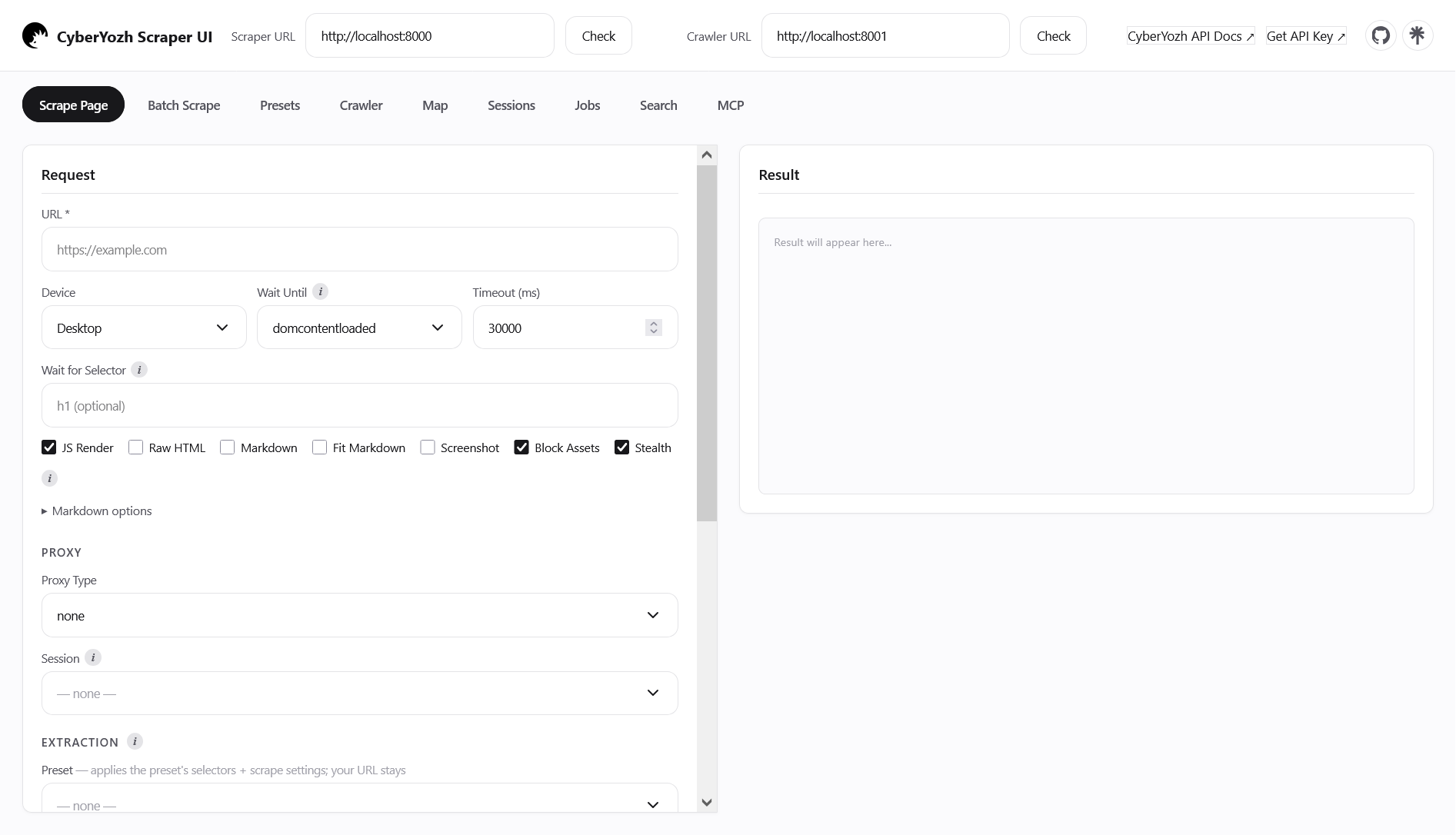
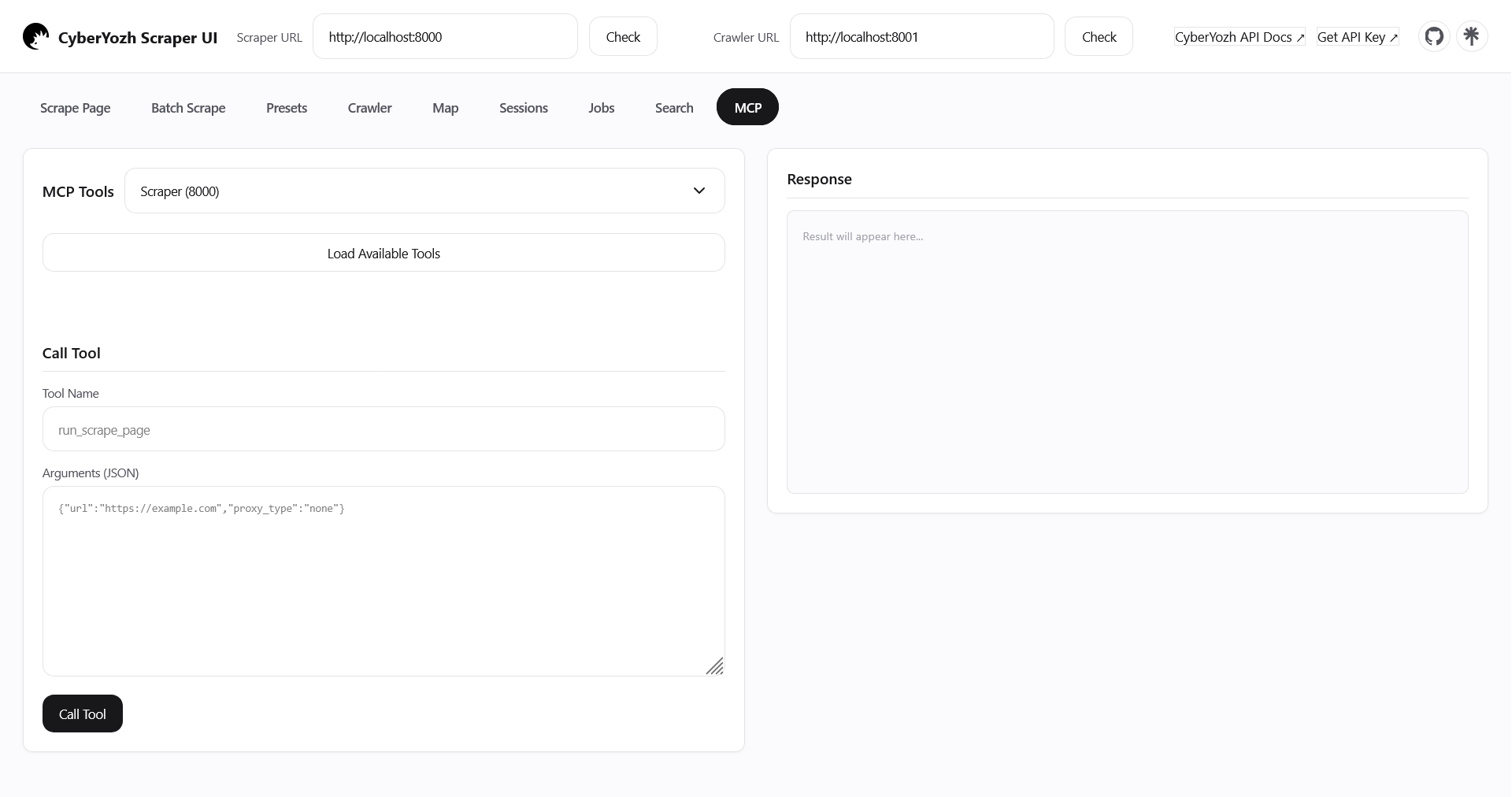
This visual web scraping studio handles the entire extraction lifecycle natively. You use it to scrape e-commerce website catalogs without fighting broken CSS selectors. The engine utilizes AI-driven self-healing parsers. If a retailer mutates their HTML layout during your crawl, the AI automatically reads the raw DOM, locates your missing data, and fixes the extraction schema on the fly. It also features server-managed authenticated sessions. You log in once using a declarative script. The server holds your context open, allowing you to maintain consistently stable long-lived sessions behind protected login walls. It even includes native Model Context Protocol (MCP) integration, meaning you can command AI agents like Claude to execute your data pipelines autonomously.
But an autonomous scraper requires an industrial network layer to survive. You must build enterprise-grade performance for production pipelines. The complete CyberYozh App ecosystem provides this exact foundation. We packed the entire infrastructure into one dashboard. You get the global proxy network, the SMS verification numbers, and the payment cards in a single place. It handles millions of concurrent sessions without choking your target application.
You control every aspect of your digital footprint from a single dashboard:
Scalable proxy infrastructure
Route your traffic through premium networks based on your specific target. We support everything from standard HTTP and SOCKS5 to UDP, modern OpenVPN, and VLESS/Xray for complex routing. Deploy high-trust mobile proxies (from $1.7/day) with OS fingerprint substitution. Use static residential (ISP) nodes ($5.29/mo) for permanent account farming. Activate rotating residential pools (50M+ IPs across 195+ countries from $0.9/GB) for mass data aggregation, or utilize ultra-fast datacenter servers.
Virtual and residential numbers
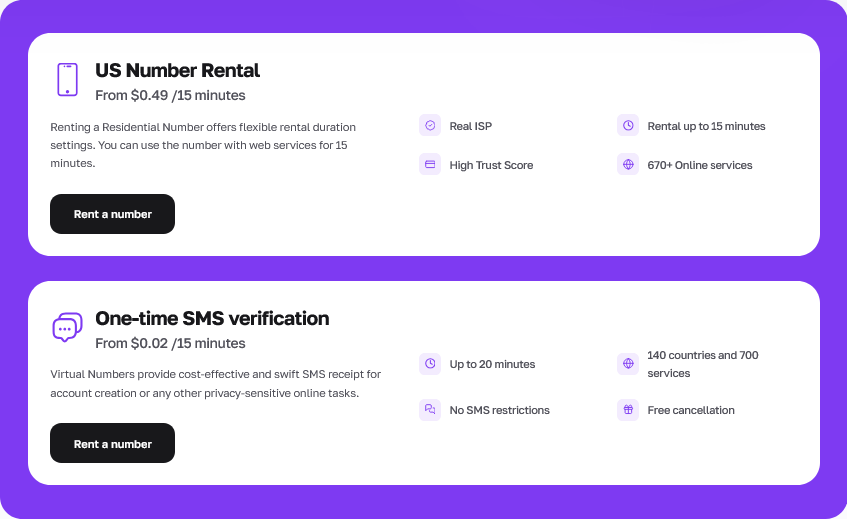
Register and verify accounts on over 700 platforms safely. Rent disposable numbers (from $0.02) or real ISP-backed residential phone numbers (from $0.49) for SMS verification with maximum trust rates, keeping your actual device entirely private.
Virtual bank cards
Issue tokenized payment cards instantly for international software, travel bookings, or ad account management. Assign strict limits, monitor shared balances, and link them directly to Apple Pay and Google Pay.
Deep fraud score evaluation
Stop guessing why your accounts get flagged. Run our Anti-Fraud checker (from $0.15 per check) before you launch. You see exactly how corporate firewalls view your IP address, phone number, and browser fingerprint using aggregated intelligence from ThreatMetrix, PerimeterX, and IPQualityScore.
We operate strictly on a no-logs policy, backed by 24/7 technical support and private payment systems. This unified ecosystem ensures you maintain extremely low latency response times across your entire infrastructure. You extract massive datasets, manage complex profiles, and execute heavy automation natively.
👉 Scale your operations safely: Handle millions of concurrent sessions. Deploy the complete CyberYozh App ecosystem to build cost-effective enterprise-grade reliability for your production pipelines.
Controlling bandwidth costs for high-volume web scraping
Modern e-commerce web scraping devours bandwidth. Loading complete digital storefronts requires downloading heavy JavaScript bundles, CSS files, and high-resolution product images. Scale this operation across tens of thousands of daily page requests. It drains your budget instantly.
👉 Lock in unlimited bandwidth: Stop paying per gigabyte on heavy extraction jobs. Deploy private, dedicated IPs with strictly unlimited traffic: high-speed datacenter proxies (from $1.90/month), real ISP residential proxies (from $5.29/month), or dedicated mobile proxies with built-in OS fingerprinting (from $1.70/day).
You protect your profit margins by optimizing both your code and your network billing structure. First, instruct your headless browser to intercept and abort unnecessary media requests. You do not need to render product photos to extract pricing text and inventory numbers. Dropping these heavy graphical assets reduces your network payload significantly.
Second, deploy cost-effective enterprise-grade reliability for your proxy infrastructure. Standard vendors force you into rigid monthly subscriptions. Your unused gigabytes vanish on the 30th of the month. The CyberYozh App ecosystem eliminates this financial friction entirely.
We structure our network to keep your market intelligence operations permanently profitable:
Access over 50 million rotating residential IPs starting at just $0.90 per GB.
Purchase traffic and bandwidth that never expires. Unused gigabytes roll over automatically to the next month.
Unlock competitive per-GB rates at scale without committing to massive, inflexible monthly contracts.
You stop paying for data you do not use. You pay strictly for the successful data you actually extract.
👉 Cut your operational costs: Stop losing unused data at the end of the month. Purchase non-expiring residential traffic at competitive per-GB rates and pay strictly for the data you extract.
Auditing proxy pool before you scrape an e-commerce website
Never launch your webdriver blindly. Many developers write perfect extraction logic but execute it through unverified nodes. Target platforms track automated activity continuously. If your assigned network node carries historical baggage, the firewall flags your session instantly. You burn accounts. You waste bandwidth.
Test your network credentials first. You must view your connection exactly how corporate security systems see it. Run real-time IP reputation and location checks before your script executes its first action. Drop high-risk nodes immediately. We built the CyberYozh ecosystem to handle this natively. You get access to built-in IP blacklist and reputation checkers to automate this exact pre-flight sequence.
Our Anti-Fraud Checker evaluates your digital footprint against leading databases like IPQualityScore, ThreatMetrix, and PerimeterX. It scores your connection on a 0 to 100 scale. Pause your script the second a node hits a score of 75. The tool flags datacenter contamination, identifies high abuse velocity, and verifies the exact carrier network.
And you do not have to perform these audits manually. Every single feature across our platform operates through a clean, convenient API. You can programmatically evaluate fraud scores, fetch SMS verification codes, issue virtual bank cards, and rotate your proxy endpoints directly from your code. We host complete API documentation on our website. You will find ready-to-use code snippets and templates to accelerate your pipeline integration immediately.
Start your data extraction only when the network validates as a clean, high-trust residential connection. You lock down your access. You protect your accounts. You guarantee that your automated pipelines run exclusively on exceptionally clean high-reputation IP pools.
👉 Audit your infrastructure: Never launch blindly. Run your exit nodes through our Anti-Fraud Checker to identify and drop high-risk IP addresses before you execute your first request.
Formatting e-commerce data extraction for AI and LLMs
Extracting raw HTML is no longer the final step. Modern retail intelligence relies on feeding competitor catalogs and pricing matrices directly into local Large Language Models (LLMs). But AI models fail when processing messy HTML. If you feed a neural network raw DOM elements, inline CSS, and JavaScript tracking tags, the model hallucinates. It loses the actual product data in the noise.
You need pure, structured text. The Yozh Scraper includes a dedicated noise-filtering engine designed specifically for this workflow.
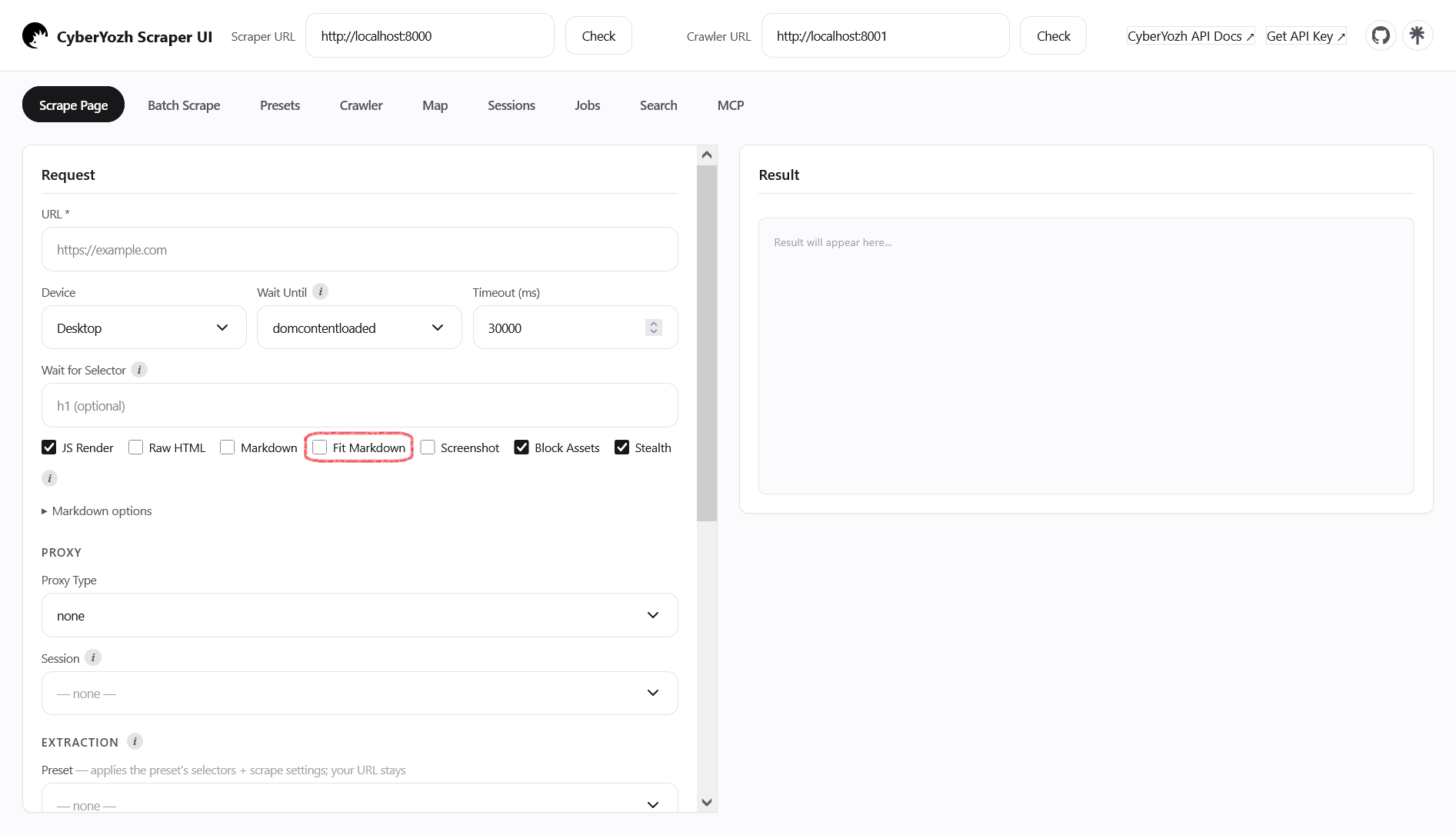
When you configure your extraction job, you simply request the fit_markdown format in your JSON payload:
"formats": ["fit_markdown", "links"],

"markdown_options": {

  "content_filter": "pruning",

  "citations": true

}
The engine handles the data cleaning natively. It automatically strips out advertising banners, navigation menus, and aggressive cookie pop-ups. You receive pure, structured Markdown optimized directly for AI consumption. You skip the complex regex filtering. You stop writing custom data pipelines to clean your datasets. You just pipe the output directly into LangChain or your local Claude environment to analyze market trends instantly.
👉 Prepare datasets for AI: Stop parsing messy HTML. Use Yozh Scraper to extract clean, noise-filtered Markdown files ready for immediate LLM training.
Protect your data pipeline now
Relying on public VPNs or cheap datacenter IPs guarantees failure. These generic network solutions leak your true footprint. They put your digital infrastructure at immediate risk of IP blocks and account termination.
Building a stable e-commerce scraper requires a professional foundation. Route your requests through exceptionally clean high-reputation IP pools. Audit your footprint before you launch. Utilize AI-driven parsers to survive dynamic layout changes. You stop reacting to unpredictable retail firewalls. You start operating with absolute predictability.
👉 Check your IP Fraud Score: See your digital footprint exactly how corporate platforms see it before you deploy your scraper.
👉 Start with $0.90 now: Deploy high-trust rotating residential proxies today and lock down your market data operations natively.
FAQs: Building and connecting an e-commerce scraper
How do I stop my e-commerce scraper from getting blocked?
Stop routing your traffic through cloud servers. Retail firewalls spot AWS or DigitalOcean ASNs instantly. You fix this by pushing your requests through a massive global residential IP pool. Target sites see a normal home internet connection instead of a sterile datacenter node.
Which proxy type is best to scrape e-commerce website catalogs?
Go with rotating residential proxies if you need to pull massive amounts of data. The system gives you a fresh IP on every single request. This prevents rate limits entirely. But if you need to log into a buyer profile and hold a long session, switch to static ISP proxies. Your network footprint stays exactly the same mid-task.
How do I connect residential proxies to my headless browser?
You pass the proxy credentials directly into your browser's launch options. Tools like Playwright and Puppeteer accept standard username:password@ip:port strings. Just bind the rotating proxy gateway to your script, and the provider handles the actual IP rotation on the backend automatically.
Is a rotating or static IP better for e-commerce web scraping?
It depends entirely on your script. Choose rotating IPs when you target thousands of public URLs. They split your traffic across different nodes to keep you under the radar and prevent request limits. But if you extract data behind a strict login wall, use a static ISP node. Swapping your IP address while logged into an account usually triggers an automatic security suspension.
How many concurrent threads can an e-commerce scraper run?
It relies entirely on your proxy infrastructure. A cheap proxy pool will crash if you run fifty concurrent threads. But an enterprise-grade residential network handles millions of concurrent sessions natively. Just ensure your local server has enough RAM to support the heavy headless browser instances.
How do I extract localized pricing during e-commerce data scraping?
You align your network node with the target market. Retailers show different prices in New York than in London. You simply pass a specific country or ZIP-code parameter into your proxy username string. The network assigns an IP from that exact location, forcing the site to serve the correct local data.
Will proxy rotation stop CAPTCHAs when I scrape an e-commerce website?
Yes, if your IP quality is high. CAPTCHAs trigger when a site detects abnormal behavior or a dirty network history. Routing your traffic through exceptionally clean high-reputation IP pools prevents the security algorithm from ever showing the CAPTCHA in the first place.
How can I lower my bandwidth costs during e-commerce web scraping?
Block images, fonts, and heavy media files inside your scraper code. You only need the raw DOM and JSON streams to get pricing data. Combining this code optimization with aggressively low $1/GB-level proxy pricing keeps your operational costs highly profitable.